Quebec’s 2021 Law and What Changed
It can feel overwhelming to keep up with all the rules and regulations that come with enjoying our off-road machines in Quebec. Many seasoned riders, myself included, remember a time when things felt a bit more… flexible. But as our sport has grown, so has the need for clearer guidelines, especially concerning safety and responsible use. This comprehensive guide will walk you through the significant changes introduced by Quebec's 2021 law, often referred to as the new Act respecting off-highway vehicles, and explain what they mean for you, the rider.
Why the Law Changed: Addressing Growing Concerns
Before 2021, Quebec's off-highway vehicle laws, specifically the Act respecting off-road vehicles, had been in place for a long time without major overhauls. While they served their purpose for many years, the landscape of off-roading in Quebec changed dramatically. More and more people were discovering the joy of quads and side-by-sides, leading to increased traffic on trails, more interactions with public roads, and unfortunately, a rise in incidents. The old rules simply weren't keeping pace with the reality on the ground.
Many riders, residents, and even municipalities expressed concerns about safety, noise, and environmental impact. There was a clear need to modernize the framework to better protect everyone involved – riders, passengers, other road users, and even the cherished natural spaces we ride through. The changes weren't about making things harder for enthusiasts; they were about creating a safer, more sustainable environment for our passion.
The Rise of Off-Road Recreation and Safety
Over the past couple of decades, the popularity of ATVs (or VTTs, as they're often called here) and UTVs (side-by-sides) has exploded across Quebec. What once might have been a niche activity for hunters and trappers has blossomed into a widespread recreational pursuit for families, adventurers, and nature lovers alike. With this surge in popularity came a greater diversity of riders, from experienced veterans to complete novices. Unfortunately, this also brought a rise in accidents and safety concerns, particularly regarding young riders and machines being used beyond their intended purpose.
The government, along with organizations like the FQCQ (Fédération québécoise des clubs quads), recognized that the existing rules, which had primarily focused on trail access, needed to evolve to prioritize rider safety. This meant looking closely at things like age restrictions, proper equipment, and the training needed to operate these powerful machines responsibly. The goal was to reduce serious injuries and fatalities, ensuring that everyone could enjoy the trails safely.
Harmonizing Rules Across the Province
One of the big frustrations for riders before the 2021 law was the patchwork of rules that sometimes felt inconsistent from one region or municipality to another. While the FQCQ worked tirelessly to create a unified trail network, local bylaws could still throw a wrench into a planned trip, especially concerning how and where you could access public roads to get to a trail or connect between sections. This inconsistency led to confusion, accidental infractions, and sometimes, a lot of unnecessary stress for riders trying to follow the rules.
The 2021 law aimed to bring a greater degree of uniformity to these regulations, particularly those related to using off-highway vehicles on or near public roads. By setting clear provincial standards, the hope was to reduce ambiguity and make it easier for riders to understand their obligations, no matter where they were in Quebec. This move was about creating a more predictable and user-friendly regulatory environment, making it simpler to plan your rides and ensuring everyone was playing by the same book.
Key Changes Introduced by the 2021 Law
The new Act respecting off-highway vehicles, which officially came into effect on September 10, 2021, brought in several significant changes that profoundly impacted how off-road machines are used in Quebec. These weren't minor tweaks; they were fundamental shifts designed to enhance safety, clarify responsibilities, and better integrate off-road vehicle use into the broader public space. It's crucial for every rider to understand these changes, as ignorance of the law is never a valid excuse for non-compliance. You can read more about [What the LVHR Replaced] to get a full historical picture.
The most talked-about elements of the law focused on who can ride, who can be a passenger, and where these machines are allowed to operate, particularly in relation to public roads and residential areas. These updates reflected a more modern approach to off-road recreation, recognizing both its popularity and the need for stricter controls in certain areas. It's a balancing act, for sure, between freedom and responsibility.
Age and Driver's Licence Requirements
Perhaps one of the most significant and widely discussed changes was the updated age and driver's licence requirements. Prior to the 2021 law, the rules for young riders had some grey areas, particularly concerning supervised riding. The new legislation tightened these up considerably. Now, if you're riding on a federated trail or any off-highway vehicle path open to the public, [Quebec Requires a Driver's Licence Since 2021]. This isn't just a suggestion; it's a hard rule.
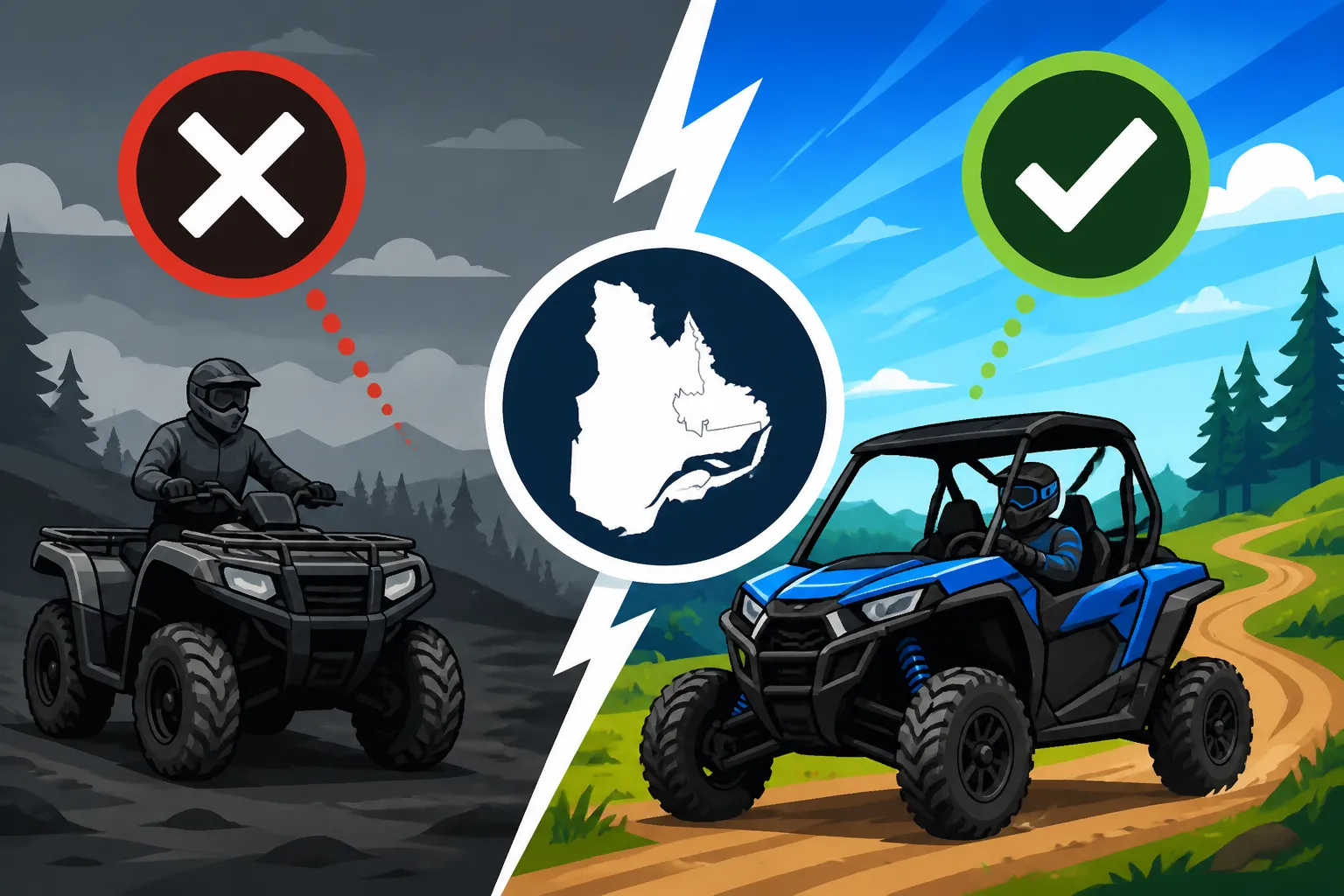
Specifically, [Quebec's Minimum Age of 16 for ATV Riders] on federated trails is now firm, and they must hold a valid driver's licence (class 5 or 6A, 6B, 6C) and have successfully completed an approved safety course from the FQCQ. For side-by-sides, the age requirement is even higher: [Quebec Requires 18 for a Side-by-Side] driver. This distinction reflects the perceived difference in power and handling between traditional ATVs and their larger, often more complex UTV counterparts. It's all about ensuring that those operating these machines have a foundational understanding of safe driving principles.
This also means that the days of younger kids riding independently on public trails, even with a parent nearby, are generally over. While supervised riding on private land with parental authorization still has its place, accessing the vast network of Quebec trails now demands both age and proper licensing, putting a greater emphasis on formal training and responsibility. The changes reflect a commitment to a higher standard of readiness for riders accessing shared spaces.
Passenger Rules and Machine Capacity
Another area that saw significant clarification was the rules around passengers. Before 2021, it wasn't uncommon to see multiple people squeezed onto an ATV, sometimes even children on the fuel tank. This practice, while perhaps common, was inherently dangerous, especially on uneven terrain. The new law is very explicit on this point: you can only carry the number of passengers for which the vehicle was originally designed and equipped by the manufacturer.
This means if your ATV is a single-rider machine, you cannot legally carry a passenger on a federated trail or off-highway vehicle path. For two-up ATVs and side-by-sides, the factory seating capacity is the limit. For example, a two-seat side-by-side cannot carry four people, even if they're small children. Every occupant must have a designated seat and, for side-by-sides, wear a seatbelt if the machine is equipped with them from the factory. [Quebec Rules for Passengers on a Quad] are now very clear and strictly enforced.
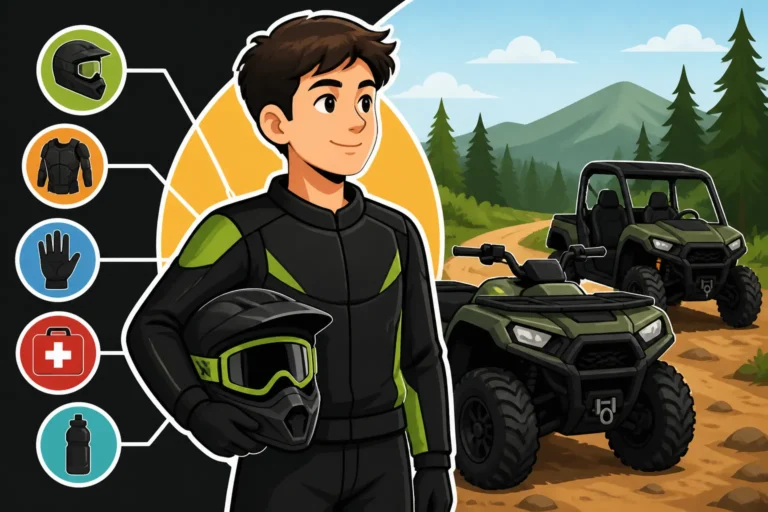
The law also emphasizes the use of proper safety gear for all occupants. For instance, [Quebec Helmet and Visor Rules] apply to passengers as much as to drivers. Everyone on the machine needs to be wearing an approved helmet with a visor or goggles. This change is a direct response to injury statistics, aiming to ensure that every person on an off-highway vehicle is afforded the highest level of protection possible, regardless of whether they are driving or simply enjoying the ride.
Road Access and Restrictions
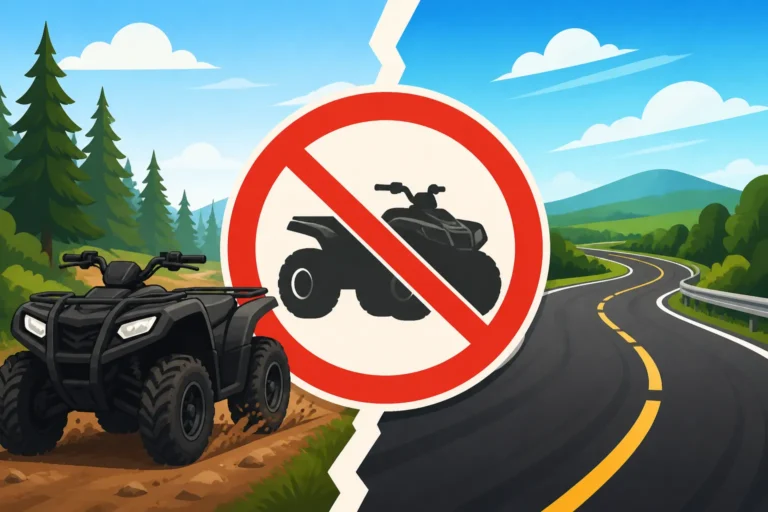
Perhaps the most impactful changes for many riders involved how and where off-highway vehicles can interact with public roads. The goal was to reduce conflicts with other traffic and enhance safety for everyone. Gone are the days of freely riding shoulders or short stretches of road without clear justification. The new law has significantly tightened access.
Now, [Quebec ATV Road Rules Under the LVHR] are much more restrictive. Generally, off-highway vehicles are prohibited on public roads. However, there are specific, limited exceptions. You might be allowed to cross a public road at a right angle, or ride a very short distance, typically up to [Quebec Municipal Road Access Up to 1 Kilometre], to connect two trail sections. These exceptions are only valid if the municipality has authorized them and clearly posted appropriate signage. This isn't a carte blanche for road use; it's a tightly controlled privilege for trail continuity.
Beyond these short connections, riding on public roads for convenience or to reach a destination is strictly prohibited. There are also new rules about minimum distances from dwellings and other sensitive areas. For example, [Quebec's 100 Metre Rule Near Homes] means you cannot ride within 100 metres of a dwelling, clinic, or school unless on a designated trail or private land. These regulations aim to minimize noise and disturbance for residents, reflecting an effort to balance rider access with community peace.
Impact on Owners: What You Need to Know Now
These legislative changes in 2021 weren't just about tweaking rules; they fundamentally altered the responsibilities of off-highway vehicle owners in Quebec. It's no longer enough to just have a machine and a trail pass. Now, owners must be acutely aware of how their vehicle is registered, insured, and equipped, and how those factors interact with the new regulations. Failing to understand these new obligations can lead to significant fines and other penalties, which can quickly put a damper on your riding season.
Many riders initially found the new rules confusing, wondering if their existing setups were still compliant. It meant a period of adjustment for the entire off-road community, from individual owners to clubs and retailers. Understanding your role as a responsible owner under this new framework is paramount to continued enjoyment of the sport. [Why September 10, 2021 Matters] is really about this shift in owner responsibility.
Registration and Insurance Implications
All off-highway vehicles in Quebec must be registered with the SAAQ (Société de l'assurance automobile du Québec) and carry mandatory liability insurance. This hasn't fundamentally changed, but the implications of the new law mean that ensuring your registration is up-to-date and your insurance coverage meets the minimums is more critical than ever. The SAAQ is both the registrar and insurer for basic liability.
The new law reinforces the importance of this registration for compliance with all other aspects of the legislation. For instance, if your machine is not properly registered and insured, any infraction you commit under the new rules could be compounded by the fact that your vehicle shouldn't have been on the trail or public access point in the first place. You need to always be ready to show proof of your [Quebec Insurance Minimum for an Owner] if asked by a patrol. [Quebec Penalties for Riding Unregistered] can be steep, so it's not something to take lightly.
Furthermore, ensure your registration accurately reflects your machine's type and capacity. If you've modified your machine, especially if it affects its seating capacity or intended use, it's wise to consult with the SAAQ to ensure your registration remains valid and covers your specific setup. This diligence is crucial for avoiding issues down the line, especially if you encounter a trail patrol or, heaven forbid, are involved in an incident.
Equipment Standards and Modifications
The 2021 law also brought a renewed focus on equipment standards, particularly for safety and environmental considerations. While it didn't introduce a completely new list of mandatory accessories, it underscored the importance of ensuring your machine meets basic safety requirements and isn't excessively modified in a way that would make it unsafe or overly noisy. This is where brands like SuperATV come in, offering a wide range of aftermarket parts that can enhance your machine's performance and utility, but it's important to ensure any modifications comply with Quebec's regulations.
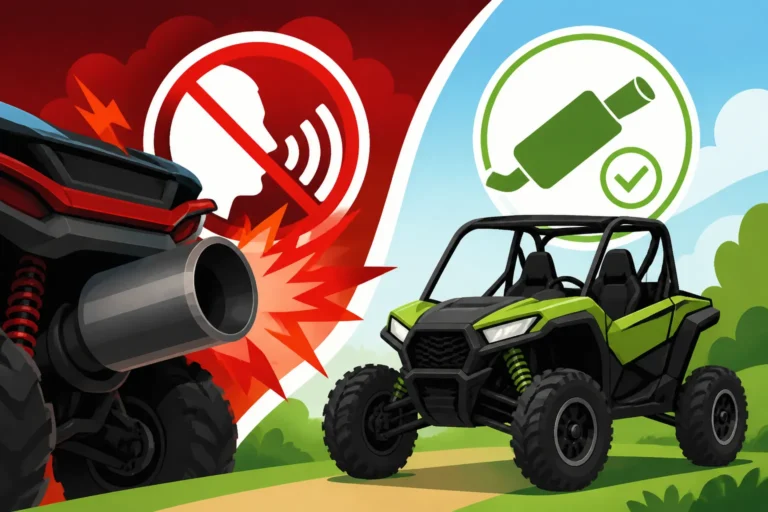
For example, all off-highway vehicles must have working headlights, taillights, brake lights, and a muffler that keeps noise levels within acceptable limits. Mirrors are also generally required if you're venturing near public roads, to improve situational awareness. Trail patrols are empowered to conduct [Quebec Equipment Checks by Patrols], and if your machine is found to be non-compliant, you could face fines. Modifications that significantly alter the machine's factory specifications, especially those related to speed, exhaust, or width, could draw unwanted attention.
It's important to remember that while certain aftermarket accessories from companies like SuperATV can enhance your riding experience – like winches, skid plates, or specific tire setups – they should not compromise the vehicle's inherent safety features or legal compliance. Always consider how any modification might affect your machine's legality on Quebec trails and access roads. When in doubt, it’s always best to err on the side of caution and ensure your machine meets all basic provincial requirements.
Enforcement and Penalties
With clearer, more stringent rules come stricter enforcement and higher penalties for non-compliance. The 2021 law empowered enforcement officers, including police and authorized trail patrols from federated clubs, to issue tickets for a wider range of infractions. This means that encountering a patrol on the trail or near a road crossing is a common occurrence, and you need to be prepared to present your documents and demonstrate compliance.
Fines for violations can vary widely depending on the nature of the offense. Riding without a valid driver's licence, operating an unregistered machine, carrying unauthorized passengers, or exceeding speed limits can result in substantial monetary penalties. For example, [Quebec Fines for Riding Without a Licence] can be quite significant, reflecting the serious nature of this infraction. Repeated offenses or very serious violations could even lead to your machine being impounded in some extreme cases.
The key takeaway here is that the authorities are serious about the new rules. The era of casual enforcement is largely over. Riders are expected to know the law, carry all necessary documentation (licence, registration, trail pass if applicable, and insurance proof), and operate their machines safely and responsibly at all times. This shift underscores the importance of being fully informed and compliant to avoid unpleasant surprises during your outings.
Adapting to the New Landscape: Tips for Riders
The 2021 law might have felt like a big shake-up, but it's really about moving forward with a more structured and safer approach to off-roading in Quebec. For those of us who love hitting the trails, adapting to this new landscape is essential if we want to continue enjoying our passion for years to come. It's not about being restricted, but about being responsible and ensuring the longevity of our riding privileges.
Think of it as evolving with the sport. Just as machines have become more sophisticated, so too have the expectations placed upon riders. Embracing this means not just knowing the rules, but embodying the spirit of safe and courteous riding that the law aims to foster. It’s about being a good ambassador for the sport, which benefits everyone in the long run.
Staying Informed and Education
The first and most crucial step in adapting to the new law is to stay informed. Regulations can change, and interpretations can evolve, so it's important to regularly check official sources. The SAAQ website and the FQCQ (Fédération québécoise des clubs quads) are your best resources for up-to-date information on the Act respecting off-highway vehicles. These organizations provide detailed guides, FAQs, and often update their sites with clarifications.
Consider taking a refresher safety course, even if you're an experienced rider. The FQCQ offers various training programs, and these can be an excellent way to not only brush up on your skills but also to learn about any subtle changes in riding techniques or safety protocols that align with the new law. For younger riders, completing the FQCQ training certificate is now mandatory if they are between 16 and 18 and riding on federated trails. This commitment to ongoing education helps ensure that you're always operating within the latest guidelines and best practices.
Engaging with your local ATV club is also a fantastic way to stay connected. Clubs are often the first to know about local municipal by-laws, trail closures, or specific enforcement initiatives in your area. They are on the ground, maintaining the trails, and are an invaluable source of community knowledge. Plus, you get to meet fellow enthusiasts!
Responsible Riding Practices
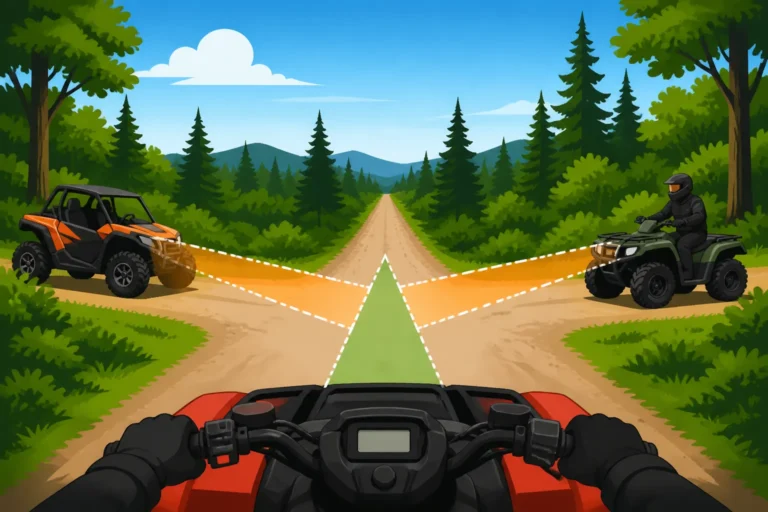
Beyond just knowing the letter of the law, adapting to the 2021 changes means embracing truly responsible riding practices. This goes beyond avoiding fines and delves into the core ethics of off-roading. One major aspect is respecting speed limits. [Quebec's 50 km/h Speed Limit for ATVs] on trails is there for a reason – it provides a safe operating speed for varied trail conditions and unexpected encounters. Pushing beyond this limit not only risks a ticket but, more importantly, endangers yourself and others.
Another crucial practice is to always be courteous to other trail users and residents. This means slowing down when passing hikers, cyclists, or horseback riders, yielding appropriately, and minimizing noise, especially near homes or cottages. The new [Quebec's 100 Metre Rule Near Homes] is a direct response to noise complaints, so being mindful of your sound footprint is vital for maintaining good relations with communities adjacent to trails. When using aftermarket parts, like exhaust systems from SuperATV, always ensure they meet Quebec's sound regulations to avoid being a nuisance or facing fines.
Finally, always "tread lightly" when riding. Stay on marked trails, avoid sensitive ecological areas, and pack out everything you pack in. The continued access to Quebec's beautiful wilderness relies heavily on off-road riders demonstrating a strong commitment to environmental stewardship. The new law is part of an ongoing effort to ensure our access to these spaces is sustainable, and responsible riding is how we demonstrate that we deserve that privilege.
Looking Ahead: The Future of Off-Roading in Quebec
The 2021 law was a major milestone, but it's important to understand that the regulatory landscape for off-highway vehicles is never static. As our machines evolve, as technology advances, and as the public's perception of off-roading shifts, so too will the rules and guidelines that govern our sport. The changes we've seen are part of an ongoing conversation about how to best integrate off-road recreation into Quebec's natural and social environment.
For all of us who are passionate about quads and side-by-sides, looking ahead means staying engaged, advocating for responsible access, and continuously proving that our community is committed to safety and environmental respect. The future of off-roading here isn't just about what laws are passed; it's about how we, as riders, choose to conduct ourselves on and off the trails.
Continuous Evolution of Regulations
While the 2021 law brought comprehensive changes, it's not the final word. Regulations are living documents, often reviewed and updated based on new data, public feedback, and emerging challenges. For example, discussions around further access to specific types of municipal roads or changes to equipment standards might continue. The SAAQ and the FQCQ consistently monitor the impact of existing regulations and may propose further adjustments in the years to come.
This continuous evolution means that riders should not just learn the 2021 rules and forget about them. Staying connected with the FQCQ, reading their publications like Sentier Quad Magazine, and keeping an eye on SAAQ announcements will be crucial. Future legislative changes could affect anything from trail passes (like how [Quebec Ended Reciprocity With Ontario] for trail passes) to machine classification or even more nuanced rules about specific accessories or modifications. Your active participation in surveys or public consultations can also help shape future policies.
Embrace the idea that adapting is part of the sport. Just as you might upgrade your machine or your gear, keeping your knowledge of the rules current is another essential part of being a dedicated and responsible off-road enthusiast in Quebec.
Balancing Access with Conservation
A central theme of the 2021 law, and indeed for the future of off-roading in Quebec, is the ongoing effort to balance public access to trails with the crucial need for environmental conservation. Quebec is blessed with vast natural beauty, and preserving these ecosystems for future generations is a shared responsibility. The rules around riding setbacks from waterways, sensitive habitats, and residential areas are all part of this delicate balance.
The growth of the sport, coupled with increasing awareness of climate change and biodiversity, means that environmental considerations will likely play an even larger role in future regulatory decisions. This could translate into stricter rules around trail building, limitations on access to certain fragile areas, or even greater emphasis on quieter, more fuel-efficient machines. As riders, supporting efforts by the FQCQ and local clubs to maintain trails responsibly and rehabilitate damaged areas is paramount.
Ultimately, the future of off-road vehicle access in Quebec hinges on the collective ability of the riding community to demonstrate that we are not just users of the land, but also its dedicated stewards. By adhering to regulations, practicing responsible riding, and actively participating in conservation efforts, we can ensure that the incredible experience of exploring Quebec's trails on a quad or side-by-side remains a cherished activity for years to come.
Disclaimer
This article is for general informational purposes only and does not constitute professional advice. Laws, prices and regulations vary by location and change over time. Consult a qualified professional for guidance on your specific situation.