What a 17-Year-Old Needs Before Riding a Trail
Navigating the world of off-highway vehicles in Quebec can feel a bit like trying to read a trail map upside down, especially when you're a parent trying to figure out what your 17-year-old needs to legally and safely hit the trails. It's not just about having a machine and a helmet; there's a whole framework of rules, certifications, and responsibilities that many find confusing. This guide is here to untangle all those requirements, laying out precisely what a 17-year-old needs to ride an ATV on Quebec's federated trails and what to watch out for.
Navigating Quebec's Off-Highway Vehicle Act for Teen Riders
When your teenager is eager to explore Quebec's vast network of ATV trails, it's easy to assume that if they're a good driver and have a helmet, they're all set. Unfortunately, the reality is a bit more complex, especially for those under the age of majority. Quebec has specific regulations in place to ensure the safety of young riders and others on the trails, and understanding these is the first crucial step. Ignoring them can lead to significant fines, not to mention putting your teen's safety at risk.
The General Age Rule and Its Nuances
Quebec's Off-Highway Vehicle Act (often referred to as the LVHR) sets clear age minimums for operating ATVs (known as VTTs in Quebec) and side-by-sides. For a standard ATV, the minimum age to operate on federated trails is 16 years old. This isn't just a suggestion; it's a legal requirement designed to ensure riders have a certain level of maturity and physical capability. However, simply turning 16 isn't the only hurdle. There are additional stipulations that apply specifically to 16 and 17-year-olds that distinguish them from adult riders.
For instance, while a 17-year-old can operate an ATV, they are still considered a minor. This means that even with all the necessary documents, there's an implied layer of parental responsibility that remains. It's not like getting your car driver's licence at 16, where you're fully responsible for yourself. On the trails, especially when it comes to potential liabilities or decision-making in unforeseen circumstances, the parent or guardian's role is still very much a factor. This distinction is often overlooked, leading to misunderstandings about supervision and accountability.
What the LVHR Changed for Young Operators
The landscape for off-highway vehicles in Quebec saw significant changes with the amendments to the LVHR on September 10, 2021. These changes brought about stricter requirements, particularly for younger riders, reinforcing the importance of proper training and licensing. Before these amendments, some of the rules were less explicit, which led to a variety of interpretations. The updated act clarified that possessing a valid driver's licence and a specific training certificate is no longer optional; it's mandatory for anyone under 18 wishing to ride on designated trails.
These legislative adjustments were largely driven by a desire to enhance safety and reduce accidents involving off-highway vehicles. The government recognized that while these machines offer incredible recreational opportunities, they also carry inherent risks, especially for inexperienced or inadequately prepared young operators. By introducing compulsory training and linking trail access to formal licensing, the aim was to equip young riders with the knowledge, skills, and respect for the rules necessary to operate these powerful machines responsibly. This means that a 17-year-old today faces a more structured pathway to trail riding than a peer might have just a few years ago.
Federated Trails vs. Private Land Riding
It's absolutely vital to understand that the rules for riding an ATV vary significantly depending on where you are. Quebec's vast network of [Quebec ATV Trails: The FQCQ Network] are maintained by dedicated clubs and operate under the strictures of the LVHR. These are the trails where all the requirements discussed in this guide — driver's licence, training certificate, registration, and trail pass — apply rigorously. Trail patrols routinely check riders for compliance, and failure to meet these standards can result in hefty fines and being turned away from the trail.
However, the situation changes when a 17-year-old is riding on private land. If the land is genuinely private, owned by a parent or guardian, or if explicit written permission has been granted by the landowner, some of the strict public trail requirements might be relaxed. For instance, while a driver's licence is still generally recommended for safe operation, the need for an FQCQ training certificate or a trail pass might not apply. Nevertheless, even on private land, fundamental safety principles, such as wearing a helmet and respecting the machine's capabilities, remain paramount. This is where [Quebec Parental Authorization on Private Land] often comes into play, outlining the specific conditions under which a minor can ride on non-federated land, usually under direct adult supervision. The key takeaway is: never assume private land rules apply to a federated trail; always be prepared with full documentation.
Essential Certifications and Documentation for 17-Year-Olds
Once you understand the basic age rules, the next step is to gather all the necessary official documents and certifications. This is where many riders, and their parents, often get tripped up, either by not having the right papers or by not having them on hand when required. For a 17-year-old, the requirements are precise, and there's no room for guesswork if you want to avoid a frustrating encounter with a trail patrol.
The Driver's Licence Requirement
One of the most significant changes introduced by the updated LVHR is the explicit requirement for a valid driver's licence for anyone operating an off-highway vehicle on a federated trail. For a 17-year-old, this means they must hold a valid Class 5 (passenger vehicle) or Class 6 (motorcycle) driver's licence. A learner's permit, whether for a car or a motorcycle, is explicitly not sufficient. The legislation is clear: a full, unrestricted driver's licence is a prerequisite for trail access. This might seem redundant to some, arguing that driving a car is different from an ATV, but the law aims to ensure a baseline level of road safety knowledge and experience.
The rationale behind this rule is multifold. Firstly, a driver's licence indicates that the individual has passed official tests demonstrating a fundamental understanding of traffic laws, road signs, and safe operating principles. While trail environments differ from public roads, many of these principles transfer directly to responsible off-highway vehicle operation. Secondly, it ensures a certain level of accountability. Holding a driver's licence means the individual is already entered into the SAAQ's system, simplifying enforcement and tracking. This requirement has been a point of confusion for many new riders, but as of [Quebec Requires a Driver's Licence Since 2021], it's non-negotiable.
The Mandatory Training Certificate
Beyond holding a driver's licence, 16 and 17-year-olds in Quebec must also possess a specific training certificate issued by the Fédération Québécoise des Clubs Quads (FQCQ) or an organization recognized by the SAAQ. This isn't just a generic safety course; it's a specialized program tailored to off-highway vehicle operation. The course covers crucial topics such as safe riding techniques, understanding trail signage, environmental responsibility, and emergency procedures. It's a hands-on learning experience designed to go beyond theoretical knowledge, putting riders in real-world scenarios in a controlled environment.
Many parents wonder if their child's natural aptitude for riding or years of experience on private land exempts them from this requirement. The answer, definitively, is no. The law applies to all 16 and 17-year-olds, regardless of their prior experience. This ensures a standardized level of safety education across the board. Obtaining this [Quebec FQCQ Training Certificates for Teens] is a clear signal to authorities that the young rider has made a concerted effort to learn and understand the specific challenges and responsibilities associated with quad riding in Quebec. Without this certificate, even with a driver's licence and a trail pass, a 17-year-old cannot legally ride on federated trails.
Carrying Your Papers on the Trail
Having all the right documents is one thing; having them readily available and accessible while you're actually riding is another. Quebec law is explicit: all required documentation must be carried on the machine or on the rider at all times when operating an off-highway vehicle on a federated trail. For a 17-year-old, this means they must have their valid driver's licence, their FQCQ training certificate, their machine's SAAQ registration certificate, proof of liability insurance (which is usually bundled with registration by the SAAQ), and their current FQCQ trail pass sticker (or proof of purchase if the sticker hasn't arrived).
While digital copies on a phone might seem convenient, it's always best practice to carry physical copies. Batteries die, screens crack, and reception is often nonexistent on remote trails. A plastic-sealed bag in a secure compartment on the ATV, or a small pouch on the rider, is highly recommended. [Carrying Papers on a Long Ride] is not just about avoiding a fine; it's about being prepared for any eventuality, including an accident or a mechanical breakdown, where identifying information might be crucial. Patrol officers will expect to see these documents upon request, and not having them can lead to an immediate fine and potentially being ordered off the trail.
Machine Rules: ATVs vs. Side-by-Sides for Young Drivers
Beyond personal qualifications, the type of off-highway vehicle a 17-year-old plans to operate is another critical factor in Quebec. While both ATVs and side-by-sides fall under the LVHR, there are distinct differences in who can drive them, primarily based on age. This is a common area of confusion, especially as side-by-sides (SxS) gain popularity for their perceived stability and passenger capacity.
ATV Operation for 17-Year-Olds
For a 17-year-old in Quebec, operating a conventional ATV (All-Terrain Vehicle), often called a quad or VTT, is permissible provided all the previously discussed requirements are met: a valid driver's licence, the mandatory FQCQ training certificate, and a current trail pass and registration for the machine. These machines are designed for a single rider or, in some cases, two riders if the machine is factory-designed and equipped with a second, designated passenger seat.
The focus for 17-year-olds on ATVs remains on safe and responsible solo or two-up riding, adhering to trail speed limits and etiquette. There aren't specific cubic centimeter (CC) restrictions tied directly to age for ATVs that have gone through SAAQ registration and FQCQ approval for trail use. The primary concern is that the machine is appropriate for the rider's skill level and the trail conditions. Parents should ensure their teen is comfortable and capable of handling the ATV's power and weight, regardless of its engine size. While aftermarket parts from companies like SuperATV can enhance performance or durability, any modifications should still comply with safety standards and not compromise the machine's intended design or the rider's ability to control it.
The Side-by-Side Age Restriction
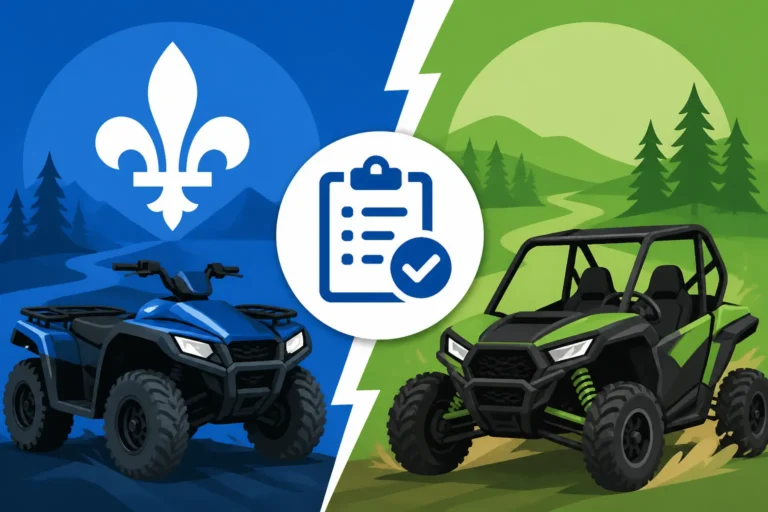
Here's where a significant distinction arises: side-by-sides (SxS), also known as UTVs (Utility Terrain Vehicles), are subject to a different age requirement. In Quebec, the minimum age to operate a side-by-side on federated trails is 18 years old. This means that even if a 17-year-old possesses a valid driver's licence and the FQCQ training certificate for ATVs, they are still legally prohibited from driving a side-by-side on club trails. This rule is often a source of disappointment for teens who see their friends or family riding these multi-passenger machines.
The reasoning behind the higher age limit for side-by-sides often relates to their different operating characteristics. While they may appear more stable due to their four-wheel design and steering wheel, they are also heavier, wider, and can carry multiple passengers, introducing different dynamics and responsibilities. The law views the operation of a side-by-side as requiring a higher level of maturity and experience, hence the adult age requirement. This is clearly outlined in Quebec's [Quebec Requires 18 for a Side-by-Side] regulations, and trail patrols are very vigilant about enforcing it. It's a non-negotiable point that parents and young riders absolutely must respect to avoid serious penalties.
Modified Machines and Compliance
The world of ATVs and side-by-sides is full of opportunities for customization and modification. From suspension upgrades to tire changes, riders often look to enhance their machine's performance, comfort, or aesthetics. However, for a 17-year-old, especially, it's crucial that any modifications comply with Quebec's regulations. While companies like SuperATV offer a wide range of quality aftermarket parts that can improve a machine's capabilities, it's the owner's responsibility to ensure these modifications don't render the vehicle unsafe or non-compliant with the LVHR.
For example, significantly altering the machine's dimensions or performance could, in rare cases, affect its classification or suitability for trail use, though this is less common with typical accessory upgrades. The main takeaway is that even if a machine is modified, it still must be registered, insured, and operated by a rider meeting all age, licence, and training requirements. Furthermore, extreme modifications that might compromise safety or exceed noise limits could draw unwanted attention from patrols. When considering any changes, always prioritize safety and regulatory compliance, and if in doubt, consult with your local club or the SAAQ.
Beyond the Basics: Trail Passes, Equipment, and Safety
Once the legal and machine-specific requirements are handled, a 17-year-old rider in Quebec still needs to consider a few more crucial elements before confidently heading out onto the trails. These elements are not just about compliance, but also about ensuring a safe, enjoyable, and responsible riding experience for everyone.
Getting Your FQCQ Trail Pass
For any 17-year-old to legally ride on Quebec's federated ATV trails, a valid FQCQ trail pass is absolutely essential. This pass is your ticket to access the vast network of maintained trails across the province, contributing to their upkeep and the services provided by the clubs. Think of it like a ski pass, but for off-road adventures. Without it, you are trespassing and subject to fines, regardless of having your licence and training certificate.
Trail passes are typically purchased online through the FQCQ website. There are different types of passes – annual, summer, and short-term (daily or three-day) – so you'll need to choose the one that best suits your riding plans. Once purchased, a sticker is issued that must be affixed to your ATV in a visible location, usually on the front fender. This allows trail patrols to easily verify your compliance. Remember that buying the pass also implicitly includes membership to an FQCQ affiliated club, which is fantastic for connecting with local riders and supporting the network. This [Quebec's Annual FQCQ Trail Pass] is a fundamental part of the Quebec riding experience.
Essential Safety Gear and Machine Checks
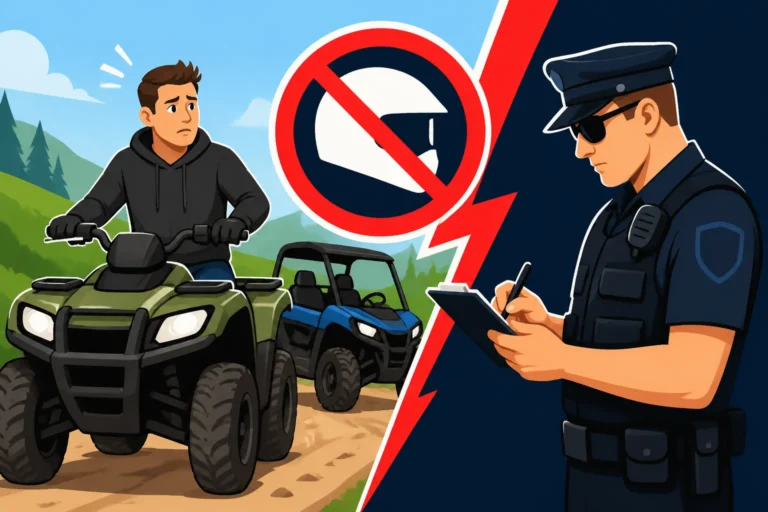
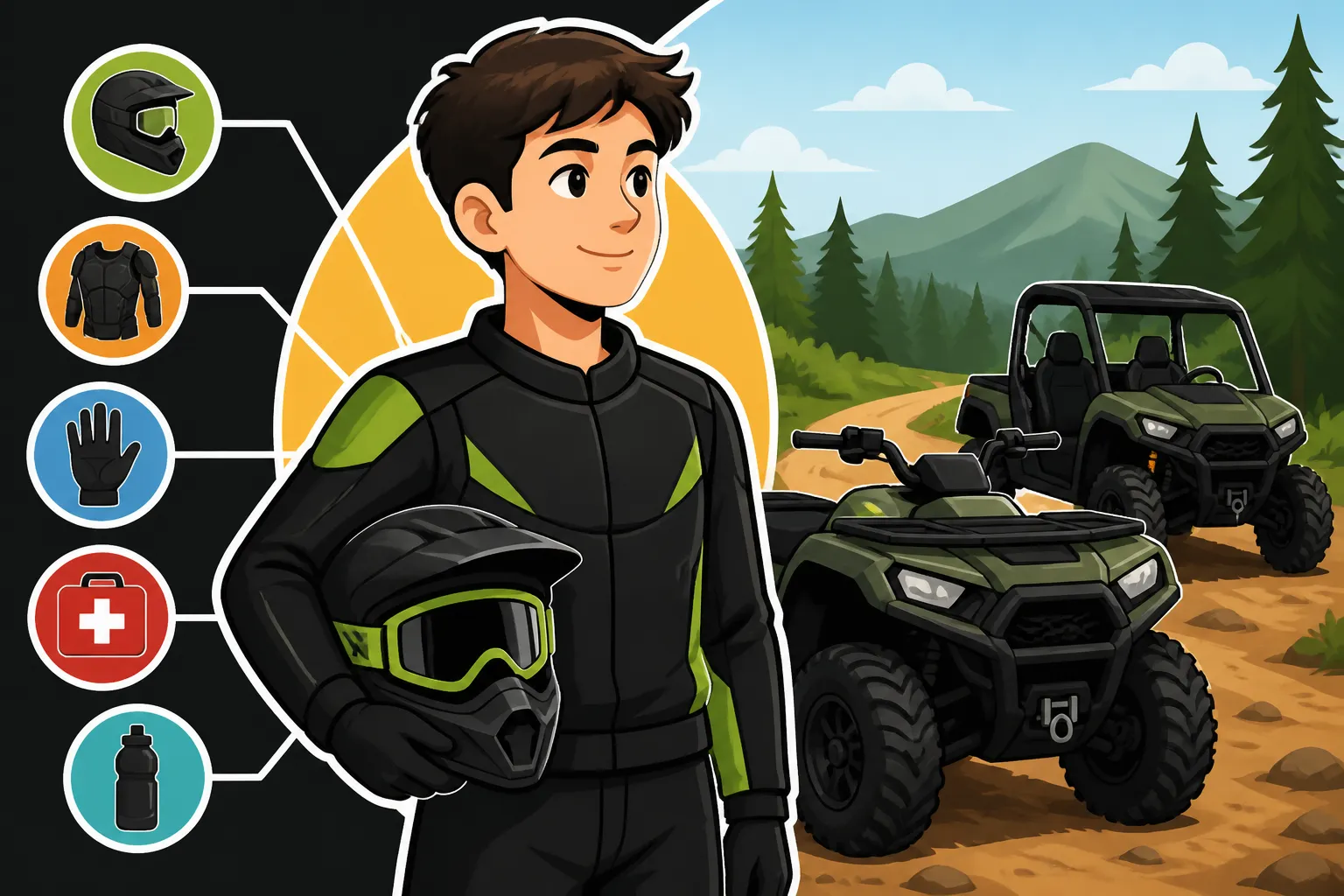
Safety gear is not just a recommendation; much of it is legally mandated in Quebec. For a 17-year-old, a properly fitted and approved helmet is non-negotiable. The helmet must meet safety standards (e.g., DOT, Snell, ECE) and, critically, it must be worn with a visor or goggles. [Quebec Helmet and Visor Rules] are strict on this point to protect riders' eyes from debris and environmental elements. Beyond the helmet, sturdy boots that cover the ankle, long pants, a long-sleeved shirt or jacket, and gloves are highly recommended to protect against scrapes, impacts, and the elements.
Before every ride, a quick but thorough machine check is vital. This "pre-ride inspection" should include checking tire pressure, ensuring brakes are functioning correctly, verifying fluid levels (oil, coolant), checking lights (headlights, taillights, brake lights) for functionality, and confirming that all controls operate smoothly. It's also wise to check for any loose components, especially after a rough ride. Investing in quality parts, whether OEM or aftermarket from reputable suppliers like SuperATV, can contribute to a machine's reliability and safety. Regular maintenance prevents breakdowns and keeps your teen safe on the trail.
Understanding Trail Etiquette and Rules
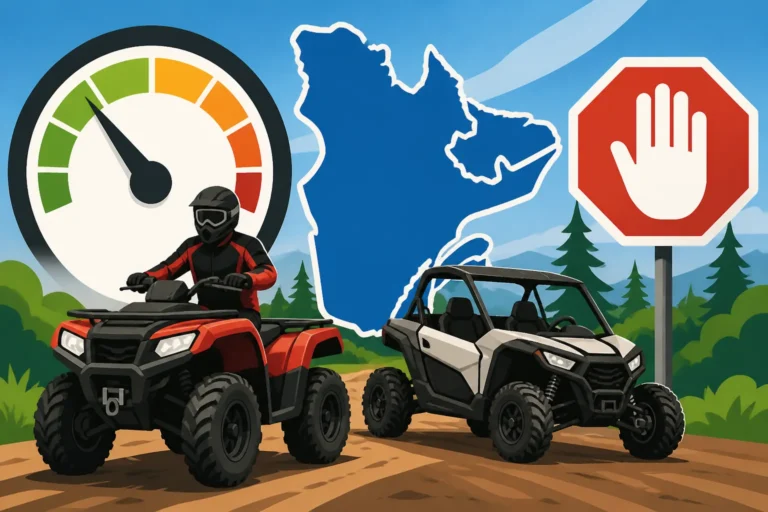
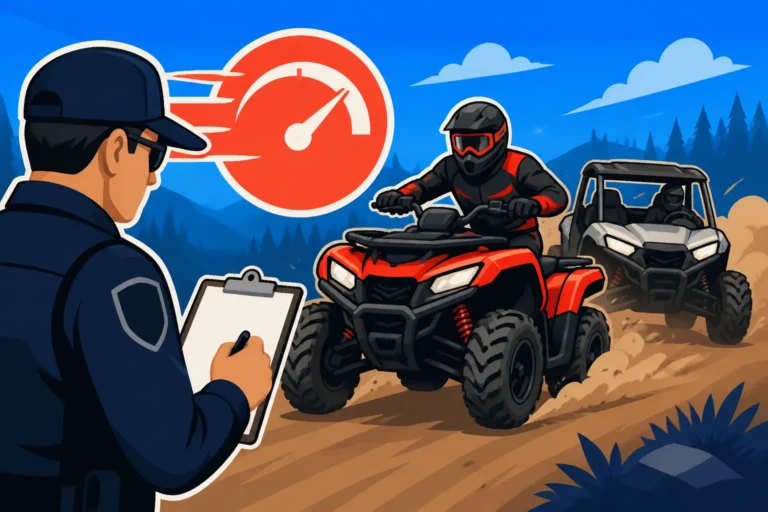
Riding on federated trails means sharing the experience with other enthusiasts and respecting the environment. It's not just about what's legal, but also about what's respectful and responsible. A 17-year-old rider needs to be well-versed in trail etiquette and specific rules beyond the basic requirements. This includes adhering to posted speed limits, which on most Quebec ATV trails is [Quebec's 50 km/h Speed Limit for ATVs], and slowing down in congested areas or when approaching other riders. Riding hours are also stipulated, generally from 6 a.m. to midnight.
Furthermore, riders must stay on marked trails, never venture onto private property without explicit permission, and yield to other users, especially snowmobilers on shared winter trails. Protecting the environment is also key: never litter, avoid damaging vegetation, and be mindful of noise levels, especially near residential areas. Understanding and practicing good trail etiquette fosters a positive riding community and ensures that these beautiful trails remain accessible for years to come. It’s about being a good ambassador for the sport.
Parental Guidance and Avoiding Common Mistakes
Even with all the rules and regulations, the journey of a 17-year-old on Quebec's ATV trails ultimately relies heavily on informed parental guidance and a proactive approach to safety and compliance. It’s not enough to just tick off the boxes; fostering a sense of responsibility and foresight in your teen is paramount.
The Role of Parental Authorization and Supervision
While a 17-year-old is old enough to hold a driver's licence and the FQCQ training certificate, they are still minors in the eyes of the law, which means parental involvement is crucial. For riding on private land, written [Quebec Parental Authorization on Private Land] is often required, outlining the terms and conditions under which the minor can operate an ATV. On federated trails, while direct, constant supervision might not be legally mandated if all other requirements are met, it is certainly highly recommended, especially for less experienced riders or on challenging trails.
Parents play a vital role in ensuring their teen understands the gravity of operating an off-highway vehicle, the potential risks, and the importance of respecting all rules. This includes discussing potential hazards, planning routes, checking weather conditions, and having emergency protocols in place. It's about empowering your teen to be a responsible rider, not just forcing them to comply with regulations. Open communication and leading by example are the most effective forms of supervision and guidance in this context.
Consequences of Non-Compliance
The penalties for failing to meet Quebec's ATV regulations can be significant and far-reaching, affecting both the 17-year-old rider and the machine's owner (often the parent). Riding without a valid driver's licence, the FQCQ training certificate, or a current trail pass can result in substantial fines, which can easily range into the hundreds of dollars for each infraction. For instance, [Quebec Fines for Riding Without a Trail Pass] are not just a slap on the wrist. Repeated violations or serious infractions, such as impaired riding, could lead to machine impoundment, suspension of driving privileges, and even criminal charges in severe cases.
Furthermore, non-compliance can have serious insurance implications. If an accident occurs while the rider or machine is not in full compliance with the law (e.g., no valid registration, no insurance, underage driver, or lack of proper certification), insurance coverage could be denied. This leaves the owner personally liable for damages, injuries, and legal fees, which can amount to hundreds of thousands of dollars. It's a risk simply not worth taking for the sake of cutting corners on paperwork.
Making Smart Choices for a Safe Ride
Ultimately, preparing a 17-year-old for ATV trail riding in Quebec is about making a series of smart, informed choices. It starts with ensuring all legal prerequisites are met, from licensing and training to machine registration and trail passes. It extends to outfitting the rider with appropriate safety gear and ensuring the ATV is well-maintained and in safe operating condition. Regularly inspecting components, even those from reputable aftermarket brands like SuperATV, is part of this commitment to safety.
Beyond the tangibles, it’s about instilling a mindset of responsibility, caution, and respect for the rules, the environment, and other trail users. Encourage your teen to ride within their skill level, avoid risks, and never ride alone or without letting someone know their route and expected return time. The objective is not just to comply with the law, but to ensure every ride is a safe and enjoyable adventure, creating lasting memories on Quebec's beautiful trails.
Summary of Key Requirements for 17-Year-Old ATV Riders in Quebec
To make it a little easier to digest all this information, here’s a quick overview of the essential requirements for a 17-year-old looking to hit the federated ATV trails in Quebec. Remember, missing even one of these can lead to significant issues.
| Requirement | ATV (VTT) for 17-Year-Olds | Side-by-Side (SxS/UTV) for 17-Year-Olds |
|---|---|---|
| Minimum Age to Operate | 16 years old | 18 years old (PROHIBITED for 17-year-olds) |
| Driver's Licence Required | Yes (Valid Class 5 or 6; Learner's Permit NOT accepted) | N/A (as they cannot legally operate) |
| FQCQ Training Certificate | Yes (Mandatory for 16-17 year olds on federated trails) | N/A (as they cannot legally operate) |
| SAAQ Registration | Yes (Machine must be registered with SAAQ) | Yes (Machine must be registered with SAAQ, but rider age is limiting) |
| Liability Insurance | Yes (Minimum $1M, often included with SAAQ registration) | Yes (Minimum $1M, often included with SAAQ registration) |
| FQCQ Trail Pass | Yes (Annual, Summer, or Short-term for federated trails) | N/A (as they cannot legally operate) |
| Helmet & Visor/Goggles | Yes (Mandatory, meeting safety standards) | Yes (Mandatory for any passenger or permitted driver, meeting standards) |
| Parental Authorization | Recommended, especially for private land; implicit for minors. | N/A (as they cannot legally operate) |
| Carry Documents on Trail | Yes (Licence, Certificate, Registration, Insurance Proof, Pass) | N/A (as they cannot legally operate) |
| Allowed Passengers | Only if machine is factory-designed for two and has a second seat | N/A (as they cannot legally operate) |
As you can see, while 17-year-olds can enjoy ATV riding, the side-by-side remains off-limits until they turn 18. Keep this table handy as a quick reference to ensure your teen is always in full compliance before embarking on their next Quebec trail adventure.
Disclaimer
This article is for general informational purposes only and does not constitute professional advice. Laws, prices and regulations vary by location and change over time. Consult a qualified professional for guidance on your specific situation.