Quebec Rules for a Side-by-Side Driver
Navigating the unique world of side-by-side (SxS or UTV) driving in Quebec can feel like trying to solve a puzzle with a few missing pieces. Many riders, especially those new to the province or upgrading from an ATV, find themselves scratching their heads over specific regulations for these larger, often multi-passenger machines. There's a real frustration when you just want to hit the trails or get some work done, but you're unsure about who can drive, where they can drive, and what paperwork you need to have in order. This comprehensive guide is here to untangle those complexities, giving you a clear roadmap to understanding the rules for side-by-side drivers in Quebec.
The Basics of Driving a Side-by-Side in Quebec
Alright, let's cut to the chase and talk about the fundamental requirements for anyone hoping to get behind the wheel of a side-by-side here in beautiful Quebec. It’s not quite as simple as hopping on a lawnmower, and for good reason—these machines are powerful and demand respect for safety and legal compliance. Ignoring these basics can lead to some hefty fines and, more importantly, put yourself and others at risk.
Age Requirements for Operating a Side-by-Side
This is one of the biggest points of confusion, so let's clarify it right away. Unlike traditional ATVs (or VTTs, as we often call them here), which have different age rules for 16 and 17-year-olds with specific training, side-by-sides in Quebec operate under a stricter minimum age. To legally drive a side-by-side on any federated trail or authorized road segment in Quebec, you must be at least 18 years old. No exceptions, no special training certificates for younger drivers that lower the age. If you're 16 or 17, even with an FQCQ training certificate, you are still not permitted to operate a side-by-side on public trails or roads.
This rule is a hard line, and it's there for a reason: side-by-sides, with their larger size, increased weight, and often greater power, handle differently than a typical quad. They have a different center of gravity, and their enclosed or semi-enclosed cabs can sometimes give a false sense of security. The province has decided that the maturity and experience associated with being 18 years old are necessary before someone can legally pilot these machines outside of private land. Remember, trail patrols and law enforcement take this very seriously, and getting caught with an underage driver will result in fines for both the driver (if applicable) and potentially the owner of the machine. You can dive deeper into this specific regulation by checking out [Quebec Side-by-Side Age Rule of 18].
Driver's Licence: What You Need
Beyond the age requirement, you're going to need a proper driver's licence. This isn't like riding a bicycle, where no licence is needed. In Quebec, to operate a side-by-side, you must hold a valid driver's licence. And no, you don't need a special "off-road vehicle" licence. Your standard Class 5 passenger vehicle driver's licence is perfectly acceptable. This is the same licence you'd use to drive your car or light truck.
It’s crucial that this licence is current and in good standing. If your car licence is suspended or expired, you absolutely cannot legally drive your side-by-side. Think of it this way: the province views the operation of a side-by-side as a serious responsibility, on par with driving a regular vehicle when it comes to basic licensing. So, always have your physical licence with you when you're out riding, whether it's on a trail, crossing a road, or even just heading to the gas station. A digital photo on your phone might not always cut it with a zealous patroller or law enforcement officer; they want to see the real deal. If you're still wondering about general licensing for off-road vehicles, you might find more clarity in [Do You Need a Licence for an ATV in Quebec?].
Training and Certification Beyond the Basics
While a special off-road training certificate is not required for an 18-year-old or older side-by-side driver (unlike the mandatory FQCQ certificate for 16 and 17-year-old ATV riders on federated trails), general safety training is always a good idea. Even if the law doesn't mandate it for adults, a professional course can significantly improve your skills, awareness, and overall safety on the trails. These courses often cover topics like proper braking techniques, handling different terrains, emergency maneuvers, and environmental responsibility.
There are many accredited training providers across Quebec, and while they won't issue you a legal certificate to drive a side-by-side if you're under 18 (because the age rule is absolute), they can equip adult drivers with invaluable practical knowledge. Investing in such training isn't just about ticking a box; it's about becoming a more confident, capable, and safer driver, which benefits everyone out on the trails. Think of it as enhancing your personal safety net, especially if you're tackling challenging terrain or riding with passengers.
Understanding Your Side-by-Side's Specifications and Legalities
It's not just about the driver; the machine itself needs to conform to certain rules to be legally operated in Quebec. Side-by-sides come in all shapes and sizes, and what's permissible for one might not be for another. Understanding your machine's original design and how any modifications might affect its legality is paramount.
Factory Seating and Passenger Rules
This is a big one for side-by-sides, as many are designed for multiple passengers. The cardinal rule here is simple: you can only carry as many passengers as your side-by-side was factory-designed to carry. This means if your machine has two seats from the manufacturer, you can carry one passenger. If it's a four-seater, you can carry three passengers. You cannot, under any circumstances, try to squeeze extra people onto the machine beyond its intended capacity. This includes passengers sitting on the cargo bed, standing, or creating makeshift seating.
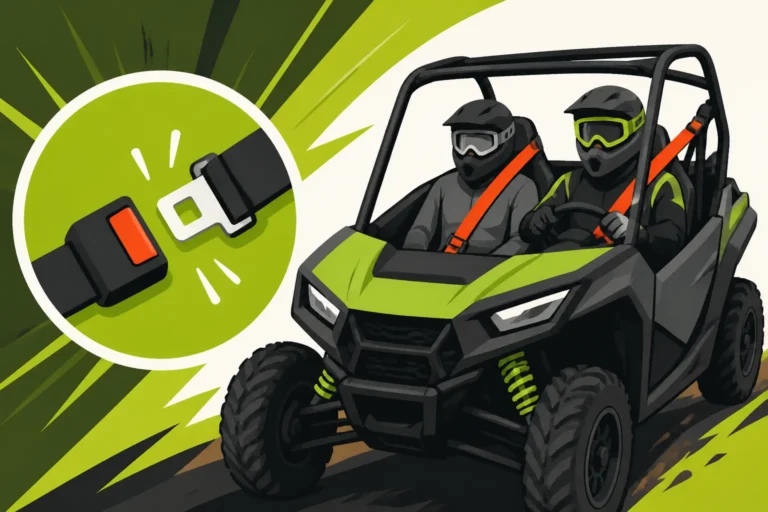
This isn't just a regulatory formality; it's a critical safety measure. Each seat is designed with specific weight distribution, occupant restraints (like seatbelts), and protection in mind. Overloading a side-by-side dramatically alters its handling characteristics, making it unstable and far more prone to rollovers. It also renders the factory safety features ineffective for those not properly seated. Always ensure all passengers are securely buckled in, using the machine's factory-installed seatbelts, and that they are wearing appropriate safety gear. For more on passenger rules, especially as they relate to quads, you can check out [Quebec Rules for Passengers on a Quad] and apply the principles to your side-by-side.
Modifications and How They Affect Legality
We all love to personalize our machines, don't we? Whether it's for aesthetics, performance, or practicality, modifying a side-by-side is a common pastime. Companies like SuperATV offer a vast array of aftermarket parts, from lift kits and larger tires to beefier suspension components and protective accessories. However, in Quebec, any modification you make must not compromise the machine's safety, stability, or its legal compliance.
Here are a few things to consider:
- Width and Height: While lift kits can give you more ground clearance, ensure that your machine doesn't become excessively wide or tall, which could affect stability or make it unsuitable for certain trails or road sections.
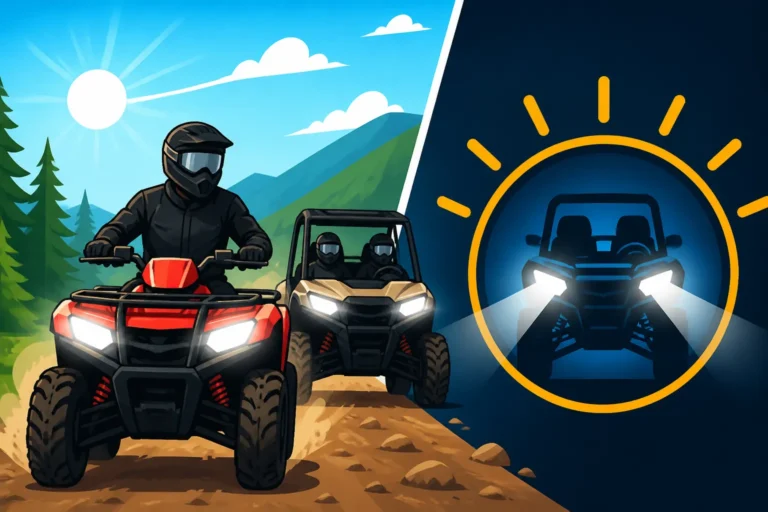
- Lights and Signals: Any added lighting must comply with provincial regulations, especially if you plan to use authorized road segments. Ensure your factory lights, turn signals, and brake lights remain fully functional and visible.
- Exhaust Systems: Loud exhaust systems are a major point of contention in many communities. Ensure any aftermarket exhaust still meets noise regulations, which are designed to reduce disturbance for residents and wildlife.
- Structural Integrity: Modifications that compromise the machine's frame, roll cage, or suspension components could lead to serious safety issues. Always prioritize professional installation and high-quality parts if you're making significant changes.
Ultimately, while modifications can enhance your riding experience, you are responsible for ensuring your altered machine remains safe and legal. A good rule of thumb is that if a modification drastically changes the vehicle's original operating characteristics or safety features, it might be scrutinized by authorities.
Registration and Insurance Essentials for Side-by-Sides
Just like a car, your side-by-side needs to be properly registered and insured in Quebec. The Société de l'assurance automobile du Québec (SAAQ) is your go-to for this. When you purchase a new or used side-by-side, you'll need to head to an SAAQ service outlet to get your VHR (Véhicule Hors Route) plate and registration certificate. This process confirms ownership and ensures your machine is recognized by the province. You can find more specific details about this process in [Registering a Side-by-Side in Quebec]. Your side-by-side falls under [Quebec's VHR Vehicle Class].
Part of this registration process involves mandatory liability insurance. In Quebec, all off-road vehicles, including side-by-sides, must carry a minimum of $1 million in civil liability insurance. This insurance is crucial because it covers damages you might cause to others or their property if you're involved in an accident. Without this proof of insurance, you cannot register your machine, and operating it unregistered and uninsured will lead to significant fines and potential seizure of your vehicle. Don't ever head out without both your registration certificate and proof of insurance on hand.
Where You Can and Cannot Drive Your Side-by-Side
Understanding where you're allowed to ride your side-by-side is just as important as knowing who can drive it. Quebec has a vast network of trails, but there are strict rules about accessing them, as well as limitations on road use.
Permitted Trails and the FQCQ Network
The vast majority of legal side-by-side riding in Quebec happens on the extensive federated trail network maintained by the Fédération Québécoise des Clubs Quads (FQCQ). This incredible network stretches for thousands of kilometers across the province, offering diverse terrains and stunning scenery. To access these trails, you absolutely need an FQCQ trail pass. This pass contributes to the maintenance, grooming, and policing of the trails, ensuring they remain safe and enjoyable for everyone.
Buying a trail pass is straightforward, usually done online through the FQCQ website. You'll receive a sticker that must be affixed to your side-by-side in a visible location, often on the fender, so trail patrols can easily verify it. Remember that trail passes are typically annual, running from November 1st to October 31st, though summer and short-term passes are also available. Riding on a federated trail without a valid pass is a serious offense and will result in a fine. For more in-depth information on Quebec's trail system, check out [Quebec ATV Trails: The FQCQ Network] and [Quebec Annual FQCQ Trail Pass]. Always check trail conditions and closures (especially during spring thaw) before you head out.
Road Access Rules for Side-by-Sides
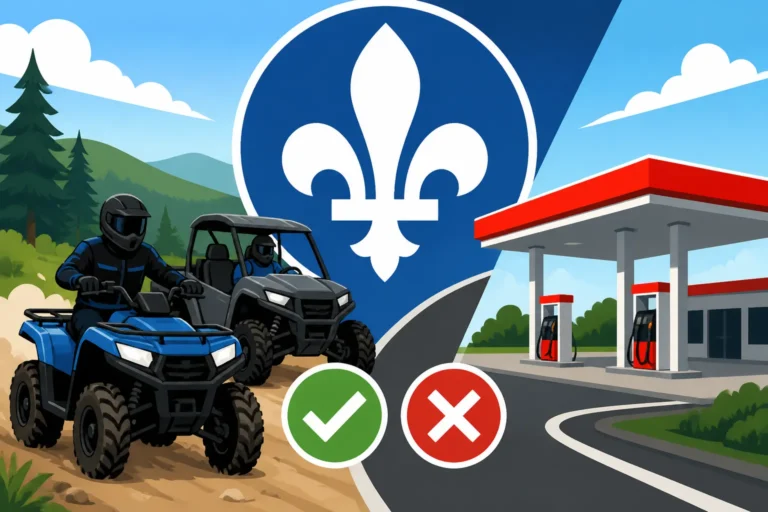
This is another area where many riders get into trouble. While side-by-sides might look more "road-worthy" than a traditional quad, Quebec's rules for off-road vehicle road access are highly restrictive. Generally, off-road vehicles, including side-by-sides, are not permitted on public roads. There are very specific and limited exceptions, primarily for crossing a road or traveling a short distance on a road to connect two trail sections.
Here’s what you need to know about road access:
- Crossing a Road: You can generally cross a public road at a right angle, after ensuring it's safe to do so. This is meant to connect two parts of a trail system, not for cruising down the highway.
- One-Kilometer Rule: You may be allowed to use a public road for a maximum distance of one kilometer if it's necessary to connect two segments of a federated trail, and if that specific road segment is explicitly designated and marked with signage for off-road vehicle use by the municipality. Without the proper signage, that one-kilometer rule does not apply.
- Emergency or Work-Related Use: Certain exemptions exist for workers operating off-road vehicles for specific tasks, but these are tightly controlled and usually require special authorization.
- Municipal By-laws: Some municipalities, after following a specific process and obtaining provincial approval, may implement by-laws that allow for greater road access than the standard one-kilometer rule. However, these are exceptions and must be clearly signed.
Riding your side-by-side on a public road without authorization or outside of these strict exceptions can lead to significant fines. Always assume roads are off-limits unless you see clear, official signage indicating otherwise. For a comprehensive look at road rules, refer to [Quebec ATV Road Rules Under the LVHR] and [Can You Ride an ATV on a Road in Quebec?].
Private Land, Farm Use, and Other Exceptions
The rules are a little different when it comes to private land. If you own the land, or have explicit permission from the landowner, you can generally ride your side-by-side on that private property. However, it's essential to understand that even on private land, some basic safety and ethical considerations still apply. For instance, noise bylaws may still be enforced, and you should always ride responsibly to avoid disturbing neighbours or damaging property.
For those using side-by-sides for specific purposes, such as farming or trapping, there are some nuances. Side-by-sides used exclusively for agricultural work on farmland, or for trapline maintenance, might have slightly different operational requirements compared to recreational use. However, if these machines ever venture onto public roads or federated trails, they must comply with all standard registration, insurance, age, and licensing rules. For detailed information on specific uses, refer to resources like [Quebec Registration for a Farm Machine]. Even on your own property, it’s always wise to exercise caution and prioritize safety, especially if you have passengers or are carrying equipment.
Avoiding Penalties and Staying Safe
Nobody wants a ticket or, worse, an accident. Understanding the common pitfalls and adopting safe riding practices will ensure your side-by-side adventures in Quebec are enjoyable and hassle-free.
Common Violations and Associated Fines
Quebec takes its off-road vehicle laws seriously, and infractions can lead to substantial penalties. Here are some of the most common violations for side-by-side drivers and the potential consequences:
- Underage Driving: Allowing someone under 18 to operate a side-by-side on a federated trail or authorized road segment is a serious offense. Fines can be significant for both the driver and the owner of the machine.
- No Driver's Licence: Operating a side-by-side without a valid driver's licence is a direct violation, similar to driving a car without one. This will result in fines, and potentially having your machine impounded. You can review [Quebec Fines for Riding Without a Licence] for more details.
- No Registration or Insurance: As discussed, your side-by-side must be registered with the SAAQ and carry mandatory liability insurance. Riding without either means you're operating an illegal vehicle, leading to fines and possible seizure.
- Illegal Road Use: Taking your side-by-side on public roads where it's not explicitly authorized and signed is a frequent cause of fines. This includes riding on the shoulder, paved roads, or highways.
- No Trail Pass: Riding on federated trails without a valid FQCQ trail pass will result in a fine.
- Speeding: Exceeding posted speed limits on trails (usually 50 km/h) or authorized road segments will lead to speeding tickets, just like in a car. See [Quebec Speeding Fines From $90] for an idea of the costs.
- Improper Passenger Seating: Carrying more passengers than your machine is factory-designed for, or having passengers seated unsafely (e.g., in the cargo bed), is a safety hazard and a finable offense.
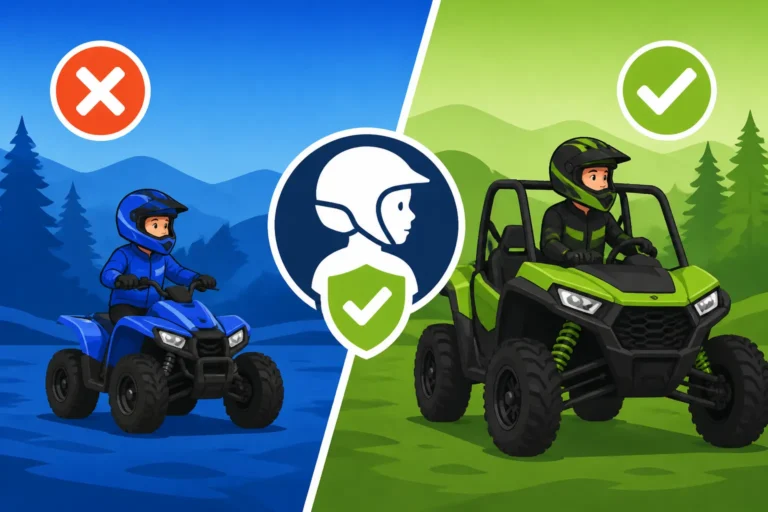
- No Helmet or Seatbelt: All occupants of a side-by-side must wear an approved helmet and use the installed seatbelts. Failing to do so can result in fines and, more importantly, severe injury.
It's always best to be overly cautious and ensure you're in full compliance before you head out. Ignorance of the law is never an excuse.
Essential Safety Gear and Practices
Beyond legal compliance, safety should always be your top priority. Side-by-sides are powerful machines, and while they offer a fantastic way to explore, they also come with inherent risks.
- Helmets and Eye Protection: Every person in the side-by-side, driver and passenger alike, must wear an approved helmet. Make sure it's properly fitted and securely fastened. A visor or goggles are also crucial to protect your eyes from dust, debris, and insects. For more on this, check out [Quebec Helmet and Visor Rules].
- Seatbelts: Always, always use the factory-installed seatbelts. They are your primary restraint in the event of a sudden stop, collision, or rollover.
- Appropriate Clothing: Wear long pants, long sleeves, and sturdy closed-toe footwear. Gloves can also improve grip and protect your hands. This protects you from abrasions, branches, and the elements.
- Stay on Marked Trails: Don't venture off marked trails. Going off-trail can damage fragile ecosystems, lead to trespassing fines, and put you in unpredictable and dangerous situations.
- Ride Sober: Never operate a side-by-side under the influence of alcohol or drugs. Impaired driving is just as illegal and dangerous on a trail as it is on a road.
- Know Your Limits: Don't push your machine or your skills beyond what you're comfortable with. Avoid reckless driving, excessive speed, or attempting maneuvers that are too challenging for your experience level.
- Pre-Ride Inspection: Before every ride, do a quick check of your side-by-side: tires, brakes, fluid levels, lights, and any aftermarket accessories from brands like SuperATV. Ensure everything is in good working order.
- Carry Essentials: Always carry a basic first-aid kit, a small toolkit, a communication device (like a cell phone or satellite messenger in remote areas), and enough water and snacks. Let someone know your planned route and expected return time.
By adhering to these rules and practices, you'll not only stay on the right side of the law but also ensure that your side-by-side adventures in Quebec are safe, memorable, and enjoyable for everyone involved.
Disclaimer
This article is for general informational purposes only and does not constitute professional advice. Laws, prices and regulations vary by location and change over time. Consult a qualified professional for guidance on your specific situation.