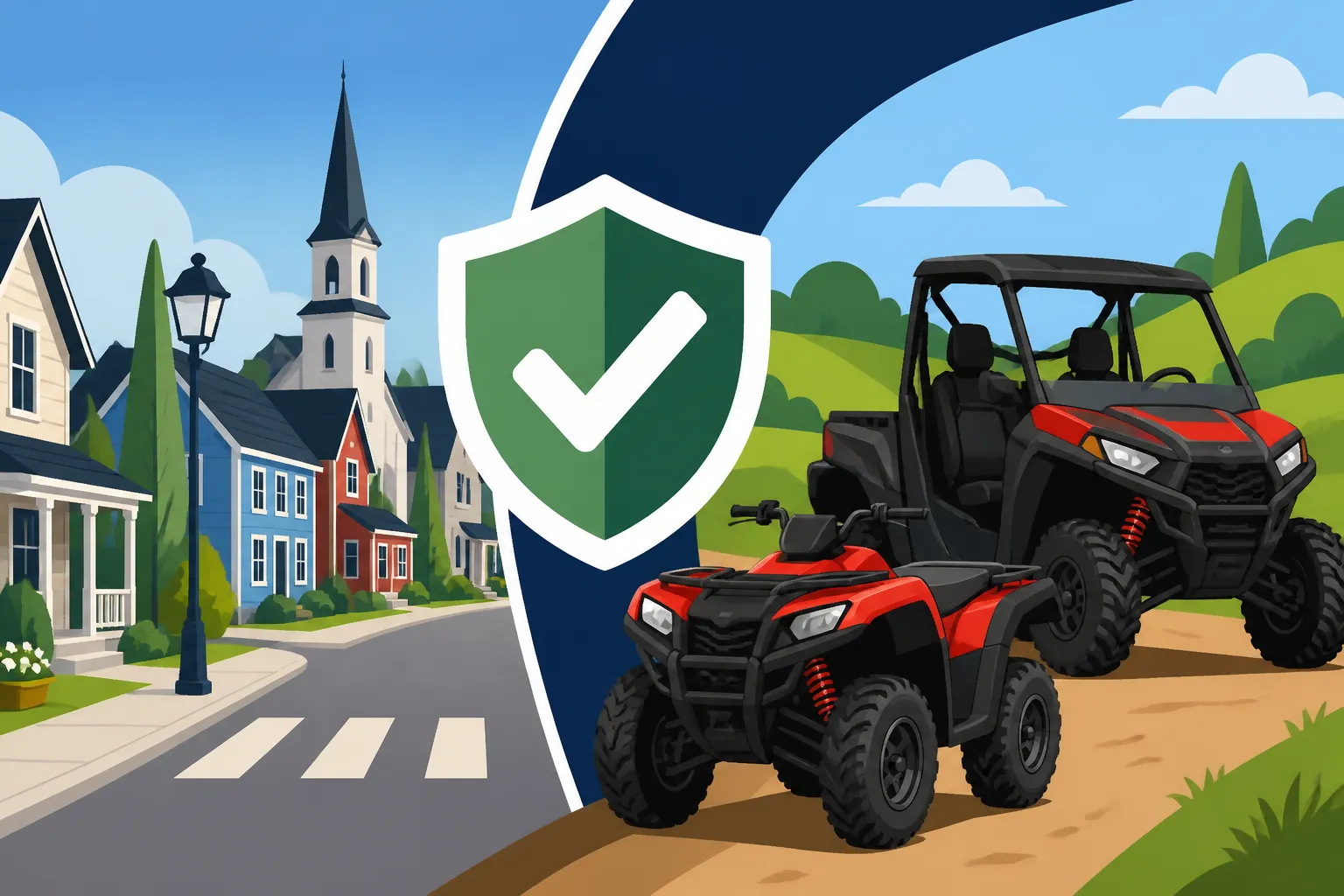
Quebec Rules for Riding in a Village
Trying to figure out where you can legally and respectfully ride your ATV or UTV in Quebec's charming villages can feel like navigating a maze. The rules aren't always crystal clear, and the last thing any rider wants is to accidentally break the law or disturb the peace of a small community. This guide is here to untangle the complexities of Quebec's off-highway vehicle regulations as they apply to village riding, helping you enjoy your machine responsibly and within the bounds of the law.
Understanding the Legal Framework for Village Access
It's easy to assume that because your ATV or UTV is registered, you can just cruise through any village to get to a trail or reach a gas station. Unfortunately, it's not quite that simple in Quebec. The province's Off-Highway Vehicle Act, often referred to as the LVHR, sets the baseline for where and how you can operate your machine, and it explicitly restricts riding on most public roads. However, there are crucial exceptions and conditions that can allow you to use municipal roads within villages.
The core principle is that public roads are generally off-limits unless specifically authorized. This means you can't just take the scenic route through a village street for leisure. The intent behind any road use must be functional – usually to access a trail, a service, or connect two trail sections. Understanding this fundamental distinction is the first step toward navigating village riding legally. Without proper authorization or adherence to strict rules, riding on a public road in a village could result in significant fines and unwelcome attention from local authorities or provincial police.
The Default Prohibition on Public Roads
Quebec's Off-Highway Vehicle Act is quite clear: off-highway vehicles, including ATVs and UTVs (or VTTs, as they're known locally), are generally prohibited from riding on public roads. This isn't just about highways; it applies to most municipal roads in towns and villages too. The reasoning behind this is safety – ATVs and UTVs are designed for off-road conditions and often lack the same visibility, braking, and handling characteristics as street-legal vehicles. Plus, there's the concern for noise and dust in residential areas.
This blanket prohibition can be a real point of frustration for riders, especially if a village lies directly between them and a fantastic section of the [Quebec ATV Trails: The FQCQ Network]. You might see other vehicles on the road, but that doesn't mean your quad can join them. It's vital to remember that the default is no unless an explicit exception or authorization applies. Ignoring this core principle is one of the quickest ways to earn a fine for [Quebec Fines for Riding a Public Road].
Specific Exceptions and Authorizations
While the default is no, the LVHR does carve out specific, limited exceptions for off-highway vehicle use on public roads, including those found within villages. These exceptions are critical for connecting trail systems, accessing services, and allowing riders to enjoy the vast network of trails Quebec offers. The most common exception is for accessing trails or services, but it comes with strict conditions.
For instance, you might be allowed to travel up to a certain distance on a municipal road to reach a trail or a service like a gas station or restaurant. However, this isn't a free pass. These road sections must be specifically designated and appropriately marked by the municipality. Without the proper signage indicating an authorized route, even a short jaunt on a village street remains illegal. This is where municipal cooperation and clear signage become absolutely essential for riders.
Specific Rules and Restrictions for Village Riding
When you are permitted to ride on a municipal road within a village, whether it's for a short access stretch or a designated crossing, you must adhere to a specific set of rules that govern your speed, equipment, and behavior. These regulations are designed to ensure the safety of everyone – riders, pedestrians, and other road users – and to minimize disruption to residents. Ignoring these rules not only puts you at risk of a ticket but also contributes to a negative perception of off-highway vehicle users in local communities.
It's not enough to simply know you're allowed on a particular stretch of road; you need to know how to ride there. This includes being aware of your surroundings, understanding speed limits, and ensuring your machine is properly equipped. It's a different riding environment than the open trail, demanding heightened awareness and adherence to traffic laws that you might not typically associate with ATV or UTV riding.
The 1-Kilometre Access Rule
One of the most commonly cited exceptions for road access is the 1-kilometre rule. This provision allows an ATV or UTV to travel a maximum distance of one kilometre on a public road within a municipality. The primary purpose of this rule is to allow riders to access a trail, an accommodation, a service (like gas or food), or to connect two authorized trail sections. However, this isn't an automatic right. For this rule to apply, the section of the road must be explicitly authorized by the municipality and identified by specific signage.
Without that signage, you cannot legally use the road, even if it's less than a kilometre. This is where the local municipality's role is crucial; they must decide to open these sections and put up the appropriate signs. For riders, it means you can't just assume a short stretch of road is fair game. Always look for the signs that indicate authorized [Quebec Municipal Road Access Up to 1 Kilometre]. If you don't see them, it's best to find an alternative, legal route or risk a fine.
Speed Limits and Setbacks
When riding on any authorized public road section in a village, your speed becomes critically important. While you might be used to higher speeds on open trails, the rules drastically change in residential areas. Quebec law sets a maximum speed limit of 50 km/h for off-highway vehicles on trails. However, when you're on a municipal road, even an authorized one, you must also respect the posted speed limits for that road, which are often much lower in villages – typically 30 or 40 km/h. Always prioritize the posted road limit.
Beyond speed, there's the crucial 100-meter setback rule. This regulation states that off-highway vehicles generally cannot be operated within 100 metres of a dwelling, with certain exceptions for designated trails or authorized crossings. While a designated road access might inherently bring you closer to homes, the spirit of this rule is to minimize noise and disturbance. Riders should be extra mindful of their noise levels and presence when passing through residential areas, especially if you've added performance exhausts that might not be as quiet as stock options – perhaps you've looked at aftermarket parts from companies like SuperATV for other modifications, but always remember noise regulations are paramount in villages. [Quebec's 100 Metre Rule Near Homes] is a key consideration.
Equipment Requirements and Riding Hours
To be legal on any public road section, your ATV or UTV must meet specific equipment requirements. This includes having proper headlights, taillights, brake lights, and a functioning muffler that keeps noise within legal limits. Mirrors are also essential for road use, allowing you to be aware of traffic around you. Many ATVs come with basic mirrors, but for extended road use or better visibility, some riders opt for more robust mirror kits, perhaps even from a brand like SuperATV, to ensure they can clearly see behind them in traffic.
Furthermore, there are strict rules about when you can ride. In Quebec, off-highway vehicles are generally permitted to operate only between 6 a.m. and midnight. Riding outside these hours, particularly late at night in a village, is a quick way to attract negative attention and potentially a fine. Respecting these hours is not just about avoiding tickets; it's about being a good neighbor and minimizing disturbance to residents.
Navigating Municipal By-Laws and Local Specifics
While the provincial Off-Highway Vehicle Act provides the overarching legal framework, individual municipalities in Quebec have the power to create their own by-laws that can further regulate or restrict ATV and UTV use within their borders. This is where things can get particularly confusing for riders, as what's permitted in one village might be prohibited just a few kilometres down the road in another. It's an important point to understand, as provincial authorization doesn't automatically override a stricter local rule.
These municipal by-laws might address aspects such as specific road sections open to ATVs, permissible riding hours (even tighter than the provincial standard), or even noise levels. It’s crucial for riders to not only understand provincial law but also to make an effort to be aware of any local ordinances in the areas they plan to ride through.
The Power of Local By-Laws
Municipalities hold significant power to control what happens on their local roads. They can, for instance, choose to allow off-highway vehicle access on specific streets to connect trails or access services, or they can choose to prohibit it entirely, even if the provincial law might otherwise allow for a one-kilometre access. This means that a village council could decide that ATVs and UTVs are simply not welcome on their roads, regardless of the provincial framework.
This dynamic often leads to frustration. Riders might see a logical route through a village but find it blocked by local rules. Before planning a route that takes you through any populated area, it's always a good idea to check with the local municipality or consult their website if available. Ignoring local by-laws can lead to fines, even if you believe you are following provincial regulations. Understanding [Quebec Municipal By-Laws on Riding Hours] or specific road access is key.
Identifying Authorized Routes and Signage
When a municipality decides to open a section of road for off-highway vehicle use, they are required to install clear signage indicating the authorized route. These signs are your best friends when riding through a village. They typically show an ATV or UTV symbol, sometimes with an arrow, indicating where you are permitted to ride and for what purpose (e.g., "accès au sentier"). Without these signs, you should assume the road is off-limits.
It's important to look for these specific signs, not just general trail markers. Trail markers indicate a federated trail, but a road sign indicates legal road access. If you're relying on a GPS or app, ensure it incorporates the most up-to-date municipal authorizations. Some apps, like iQuad, are excellent for this, showing federated trails and sometimes indicating authorized road links. Always double-check on the ground, however, as signs are the ultimate authority.
Practical Tips for Respectful and Legal Riding in Villages
Riding through a village, even on an authorized route, requires a different mindset than blasting down a forest trail. You are sharing the space with residents, pedestrians, cyclists, and other vehicles. Your actions directly impact how the community views off-highway vehicle riders as a whole. Therefore, it's not just about legality, but also about being a good ambassador for the sport.
A little courtesy and common sense go a long way in ensuring that these village access points remain open and that ATVers and UTVers are seen as responsible members of the outdoor community. Thinking about how your actions affect others can help preserve riding privileges for everyone.
Drive Considerately and Mind Your Noise
When you're on a public road in a village, slow down, be extra vigilant for children and pets, and always yield to pedestrians. Your machine is likely louder than a typical car, so try to keep engine revs low and avoid any aggressive driving. Even on stock machines, the sound can carry, especially in quiet residential areas. If you've modified your exhaust for more power or a different sound, be acutely aware of how much noise you're making. Aftermarket accessories are great for performance, and brands like SuperATV offer many options, but always ensure your modifications remain compliant with local noise regulations, especially in a village setting.
Dust can also be a significant issue in dry conditions. If you're on a gravel road in a village, reducing your speed dramatically will help minimize dust kicked up, preventing it from settling on homes, cars, or gardens. These small considerations make a huge difference in how residents perceive your presence.
Carrying Your Required Documents
Just like on the trail, you must always carry your necessary documents when riding your ATV or UTV on a public road in a village. This includes your valid [Quebec Requires a Driver's Licence Since 2021], your off-highway vehicle registration certificate (VHR plate registration), and proof of liability insurance. Quebec's minimum liability insurance coverage for off-highway vehicles is significant, ensuring you're covered in case of an accident.
If stopped by a law enforcement officer, they will ask to see these documents. Having them readily accessible, perhaps in a waterproof pouch on your machine or in a secure pocket, will make any interaction smooth and quick. Not having your papers can lead to unnecessary delays and potential fines, even if everything else about your ride is perfectly legal.
Planning Your Route in Advance
The best way to avoid unexpected legal issues or awkward encounters in a village is to plan your route carefully before you leave. Use updated trail maps, whether physical or digital, and look for clearly marked authorized road sections. Don't rely on old information or hearsay. If a route takes you through a village, try to confirm that the specific roads you plan to use are authorized for off-highway vehicles.
Consider your fuel range and plan stops at gas stations on authorized routes. If you anticipate needing food or other services in a village, confirm that you can legally access those establishments by ATV or UTV. A little reconnaissance goes a long way in ensuring a smooth and enjoyable ride.
Below is a summary of key rules and considerations for riding ATVs/UTVs in Quebec villages:
| Aspect | Provincial Rule (LVHR) | Municipal By-Law Impact | Rider's Best Practice |
|---|---|---|---|
| Road Access | Generally prohibited, with exceptions (e.g., 1 km access) | Can authorize specific roads or prohibit entirely | Look for official signage; do not assume access |
| Signage Required | Yes, for all authorized road sections | Municipalities responsible for placement and maintenance | If no sign, assume no access |
| Speed Limit | Max 50 km/h on trails; road limits apply on authorized roads | Can impose stricter local speed limits | Respect posted road limits; drive slowly and cautiously |
| Setback from Dwellings | 100 metres generally, with exceptions for trails/authorized roads | Can define specific zones or restrictions | Minimize noise and dust when passing homes |
| Riding Hours | 6 a.m. to midnight | Can impose stricter local hours (e.g., 8 a.m. to 10 p.m.) | Always respect local hours; avoid early/late riding |
| Required Equipment | Lights, mirrors, muffler, horn | May have specific local requirements | Ensure all equipment is functional and compliant |
| Driver's Licence | Mandatory | Not typically impacted by local by-laws | Always carry valid licence |
| Registration/Insurance | Mandatory (SAAQ VHR plate, $1M liability) | Not typically impacted by local by-laws | Always carry proof of registration and insurance |
| Respect/Courtesy | Implied through responsible operation | Often a focus of community complaints | Slow down, be quiet, yield to others, minimize dust |
Disclaimer
This article is for general informational purposes only and does not constitute professional advice. Laws, prices and regulations vary by location and change over time. Consult a qualified professional for guidance on your specific situation.