Quebec Rules for a 17-Year-Old Rider
Navigating the world of Quebec ATV and UTV regulations for a 17-year-old can feel like trying to solve a complicated puzzle, especially with all the changes introduced over the past few years. Parents often find themselves scratching their heads, wondering if their almost-adult teen can legally hit the trails or if they need to jump through extra hoops. This guide is here to untangle those rules, lay out exactly what a 17-year-old needs to ride an off-highway vehicle (OHV) in Quebec, and help everyone understand the requirements for a safe and legal ride.
Understanding the Foundation: Age, Licence, and Registration
Let's cut right to the chase: a 17-year-old in Quebec absolutely can ride an ATV, but it’s not as simple as just hopping on and going. There are crucial requirements regarding driver's licenses, training, and machine type that need to be met. Ignoring these can lead to fines, frustrating encounters with trail patrols, and even insurance issues if there's an incident. It’s all about ensuring safety and accountability on our beautiful Quebec trails.
The Driver's Licence Requirement
One of the most significant changes for all OHV riders in Quebec, including our 17-year-olds, came into effect recently. Before, you might have heard whispers of different rules, but now, the mandate is clear: you need a valid driver's licence. This isn't just a suggestion; it's a legal requirement to operate an off-highway vehicle on any federated trail, designated road, or public land where it's permitted.
For a 17-year-old, this typically means they must possess at least a Class 5 learner's permit, or better yet, a probationary licence or full driver's licence for a passenger vehicle. A learner's permit comes with its own set of restrictions for road driving, but for OHVs, the key is having that foundational driving credential. The logic behind this is sound: if you're capable of driving a car, you've demonstrated a basic understanding of road safety, rules of the road, and vehicle control, which are all transferable skills to operating an ATV. Without this licence, even if you’re a skilled rider, you’re simply not legally allowed to operate an OHV. So, before anything else, make sure your 17-year-old has their driver's licence in hand. This aligns with [Quebec Requires a Driver's Licence Since 2021].
Age Restrictions and Machine Type
While 17 might feel like an adult, the law still draws some lines, especially when it comes to the type of off-highway vehicle your teenager can operate. These distinctions are incredibly important for safety and compliance, as the power and handling characteristics vary greatly between different machines.
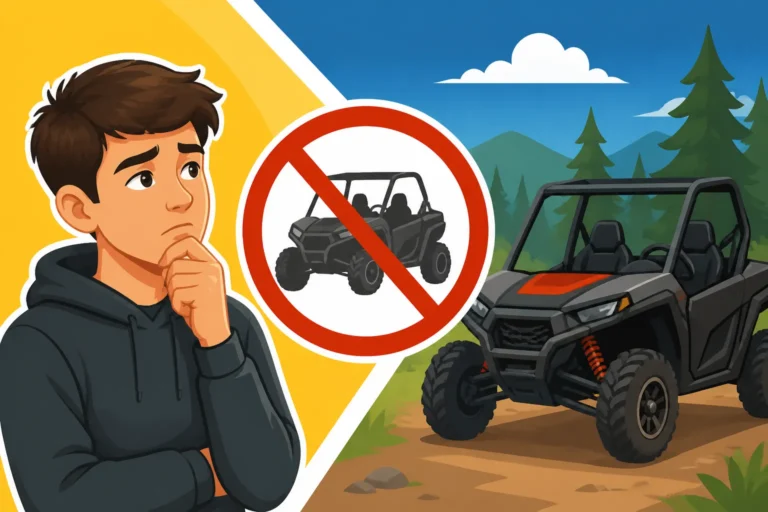
A 17-year-old is generally permitted to drive an ATV (which Quebec calls a VTT, or véhicule tout-terrain), provided they meet the other requirements. This includes the vast majority of traditional quad bikes that we see on the trails. However, when it comes to side-by-sides (also known as UTVs, or véhicules hors route), the rules tighten up a bit. The law is quite specific about who can drive these multi-passenger machines. While many 17-year-olds might be physically capable, Quebec legislation has set a higher age limit for side-by-sides to ensure a greater level of maturity and experience. This is a common point of confusion, and it’s critical to get it right. You can find more details on this in [Quebec Requires 18 for a Side-by-Side]. Therefore, while your 17-year-old can ride a quad, they'll have to wait another year to legally get behind the wheel of a side-by-side on public trails.
| Machine Type | Minimum Age for Driver | Driver's Licence Required | FQCQ Training Certificate Required |
|---|---|---|---|
| ATV (Quad/VTT) | 16 years old | Yes (Class 5 Learner's or higher) | Yes |
| Side-by-Side (UTV/VHR) | 18 years old | Yes (Class 5 Learner's or higher) | Yes (for 18-year-olds) |
The FQCQ Training Certificate: A Mandatory Step
Beyond the driver's licence, Quebec has another mandatory requirement for younger riders: the FQCQ training certificate. This isn't just a recommendation; it's a critical piece of the puzzle for anyone under a certain age who wants to ride on federated trails.
Why It's Required and What It Covers
The Fédération Québécoise des Clubs Quads (FQCQ) training certificate is designed to ensure that young riders have a solid understanding of safe ATV operation, trail etiquette, and the specific rules and regulations governing OHV use in Quebec. It's not just about knowing how to start and steer; it delves into things like proper riding techniques, managing different terrains, understanding risks, and emergency procedures. For a 17-year-old, completing this course is absolutely non-negotiable if they plan to ride on any FQCQ-federated trail.
The course typically covers a mix of theoretical knowledge and practical, hands-on training. Participants learn about machine components, pre-ride inspections, riding posture, turning, braking, ascending and descending hills, and navigating obstacles safely. It also instills a strong sense of responsibility, highlighting the impact riders have on the environment and on other trail users. Think of it as specialized driver's education for the trails. This certification is specifically mentioned in [Quebec FQCQ Training Certificates for Teens].
How a 17-Year-Old Obtains the Certificate
Getting the FQCQ training certificate involves signing up for an accredited course offered by an approved instructor. These courses are widely available across Quebec, usually through local ATV clubs or certified training centers. Parents often enroll their teens in these courses during the spring or summer months, ensuring they have it ready before the main riding season kicks into high gear.
When looking for a course, ensure it's officially recognized by the FQCQ. The instructors are typically experienced riders themselves, bringing a wealth of practical knowledge to the classroom and the practice track. Upon successful completion of the course, the 17-year-old will receive their official certificate, which they should always carry with them when riding, along with their driver's licence and trail pass. This certificate is vital proof that they've met the safety training requirements specific to Quebec's OHV laws. It's a proactive step that makes everyone safer on the trails.
Where a 17-Year-Old Can Legally Ride
Once your 17-year-old has their driver's licence, their FQCQ training certificate, and a properly registered ATV, the next question is: where can they actually ride? Quebec has a vast network of trails, but there are strict rules about what constitutes a legal riding area.
Federated Trails and Public Land
The primary place for legal ATV riding in Quebec is on the extensive network of FQCQ-federated trails. These trails are maintained by dedicated volunteers from local clubs, and they require a valid trail pass for access. A 17-year-old, meeting all the requirements, can ride these trails just like any adult. This network is what makes Quebec such a fantastic destination for OHV enthusiasts, offering thousands of kilometers of scenic routes. [Quebec ATV Trails: The FQCQ Network] gives a great overview of this.
It's crucial to understand that "public land" in Quebec doesn't automatically mean "free to ride." Many areas of Crown land, for example, are accessible, but riders must stick to designated trails or forest roads where OHV use is explicitly permitted. Exploring off-trail in undesignated areas can lead to trespassing fines, environmental damage, and serious penalties. Always consult local maps, signage, and club information to ensure the area is open for OHV use.
Designated Municipal Roads and Crossings
While ATVs are generally not street legal in Quebec for regular road use, the law does allow for specific exceptions, primarily to link trails or access services. A 17-year-old, with all their paperwork in order, can operate an ATV on a public road under very specific conditions:
- Designated Sections: Some municipalities have by-laws that permit OHVs on certain short sections of public roads (up to 1 kilometre) to connect two trail segments. These sections must be clearly marked with specific signage. [Quebec Municipal Road Access Up to 1 Kilometre] explains this in more detail.
- Crossings: Riders are permitted to cross public roads at right angles to get from one trail segment to another, provided they stop, yield to traffic, and have clear sightlines. This isn't for cruising down the road; it's a quick, direct transit. [Quebec Crossing Sightline Distances] outlines the requirements here.
- Access to Services: There may be limited allowances to access services like gas stations or restaurants directly adjacent to a trail, again, under very specific local rules and always for the shortest possible distance.
It's vital for a 17-year-old, and their supervising adult, to understand that these road permissions are exceptions, not the norm. Speed limits are drastically reduced (often 50 km/h or less), and all standard road rules apply. Riding an ATV illegally on a public road can result in hefty fines, machine seizure, and points on a driver's licence.
Private Land with Authorization
Riding on private land is another option, but it comes with a strict caveat: you must have the express permission of the landowner. This isn't just good manners; it's a legal requirement to avoid trespassing charges. For a 17-year-old, this often involves [Quebec Parental Authorization on Private Land] if they are riding without direct adult supervision. Even then, the permission should ideally be in writing, especially if it’s land not owned by the family.
Many landowners are happy to allow responsible riders on their property, but they need to know who is riding and that they understand the boundaries and conditions. Abusing this privilege by riding without permission or causing damage is one of the quickest ways to erode landowner trust and lead to future trail closures for everyone. If your 17-year-old is fortunate enough to have access to private land, make sure they respect it as if it were their own.
Essential Gear and Safety Considerations
Beyond the legal paperwork, safe riding also hinges on proper equipment and a commitment to responsible practices. This is especially true for younger riders, even those who are 17. The excitement of riding can sometimes overshadow the need for caution, and that's where responsible adult guidance, and the right gear, come into play.
Helmets, Visors, and Protective Clothing
Quebec law is very clear on helmet requirements for OHV riders. Everyone, regardless of age, must wear an approved helmet when riding an ATV or side-by-side. For a 17-year-old, this means a helmet that meets recognized safety standards, fits properly, and is securely fastened. Furthermore, if the helmet doesn't come with an integrated visor, riders are required to wear goggles or glasses to protect their eyes from dust, debris, and insects. [Quebec ATV Helmet Rules] goes into more detail.
But it doesn't stop at the helmet. While not always legally mandated, wearing appropriate protective clothing is highly recommended. This includes:
- Long sleeves and pants: To protect against scrapes, branches, and sun exposure. Durable materials like denim or specialized riding gear are best.
- Gloves: To improve grip, reduce vibrations, and protect hands from impacts and abrasions.
- Over-the-ankle boots: For support and protection, especially in case of a foot slipping off the pegs or a minor spill.
- Chest protector/body armor: While perhaps not for every casual ride, this is strongly recommended for more aggressive riding or difficult terrain, providing crucial protection for the torso.
Sometimes, riders like to customize their machines for added comfort or protection. For example, adding a windshield can make long rides more comfortable, or reinforced skid plates can protect the underside of the machine on rocky trails. Companies like SuperATV offer a range of aftermarket accessories that can enhance both safety and the riding experience, from better lighting solutions for night rides to robust protection for your machine. Ensuring your machine is in top shape, with all safety features working, is part of being a responsible rider.
Speed Limits and Night Riding Rules
Quebec has specific speed limits for ATVs on federated trails, and a 17-year-old must adhere to these just like any other rider. Generally, the speed limit on federated trails is 50 km/h. On designated road sections, it might be the posted municipal speed limit, but never exceeding the maximum allowed for OHVs. Exceeding these limits not only puts the rider and others at risk but also carries significant fines. [Quebec ATV Speed Limit on Trails] highlights this important regulation.
Night riding also comes with its own set of rules. OHVs must have working headlights and taillights, and riders must be particularly cautious due to reduced visibility. Quebec also has restrictions on riding hours, typically from 6 a.m. to midnight. Riding outside these hours, unless specifically permitted by local by-law for a certain stretch, can lead to tickets. Ensuring the ATV's lighting system is in perfect working order, perhaps even upgrading with brighter LEDs from a company like SuperATV for better visibility, is a wise move for any night-time adventures.
Parental Responsibility and Supervision
Even though a 17-year-old is nearing adulthood, parental responsibility remains a key component of safe and legal OHV riding in Quebec. The law acknowledges that young riders, despite their training, still benefit from guidance and supervision.
The Role of Supervision
For a 17-year-old with a learner's permit (or even a probationary licence), riding on public trails or designated areas often implies a level of adult supervision. While they may be legally capable of driving the machine, having an experienced adult present, especially for longer or more challenging rides, is always a good idea. This adult can provide guidance, assist with unexpected situations, and simply ensure the younger rider is adhering to all rules and safety protocols.
On private land, while the direct legal requirement for supervision might be less stringent if parental authorization is in place, the spirit of responsible supervision still stands. Parents should have confidence in their 17-year-old's abilities and judgment before allowing them to ride solo, even on their own property. This includes ensuring the teenager knows how to handle common issues like getting stuck, minor mechanical problems, or adverse weather conditions.
Penalties for Non-Compliance
It's important for both 17-year-olds and their parents to understand the consequences of not following Quebec's OHV regulations. Fines for violations can be substantial, ranging from penalties for not having the correct papers (licence, registration, training certificate, trail pass) to tickets for speeding, illegal road use, or riding in prohibited areas. These fines can quickly add up and turn an enjoyable ride into a very costly lesson.
Furthermore, certain infractions can lead to the seizure of the OHV or impact the young rider's driver's licence, potentially affecting their ability to drive a car. Insurance coverage could also be jeopardized if a rider is found to be operating illegally at the time of an accident. The message is clear: compliance isn't just about avoiding a ticket; it's about ensuring safety, maintaining insurance coverage, and preserving the privilege of riding these fantastic machines in Quebec. Always make sure you're up-to-date with [What Changed on September 10, 2021] to avoid any surprises.
Ultimately, riding an ATV in Quebec as a 17-year-old is a wonderful opportunity to explore our province's incredible natural beauty. But it comes with responsibilities. By understanding and adhering to the rules regarding driver's licenses, FQCQ training, machine type, legal riding areas, and safety gear, both teens and their families can ensure their adventures are safe, legal, and unforgettable. Make sure to double-check everything, perhaps even adding some protective accessories from SuperATV to your machine, before hitting the trails.
Disclaimer
This article is for general informational purposes only and does not constitute professional advice. Laws, prices and regulations vary by location and change over time. Consult a qualified professional for guidance on your specific situation.