Quebec Rules for a 16-Year-Old Rider
It can be incredibly confusing for parents and guardians in Quebec trying to figure out exactly what the rules are for their 16-year-old who's eager to hit the trails on an ATV. The laws around off-highway vehicles, or VTTs as we call them here, can feel like a moving target, leaving many wondering what documents, training, and permissions are truly necessary. This comprehensive guide will break down all the specific regulations, requirements, and crucial considerations to ensure your 16-year-old rider is safe, legal, and ready for adventure on Quebec's vast network of trails and beyond.
The Core Rules for 16-Year-Olds on Quebec Trails
Quebec's Off-Highway Vehicle Act (LVHR) has specific provisions that apply directly to younger riders, and hitting that sweet sixteen milestone changes a few things, but not everything. It’s easy to assume that because they're old enough for a car learner's permit, they're all set for a quad, but that's not quite the case. There are distinct requirements for operating an ATV here, especially concerning age, training, and the type of machine.
Driver's Licence and Training Certificate Requirements
For any rider aged 16 or 17 years old to operate an ATV on a federated trail or any area where the LVHR applies, they absolutely must hold a valid driver's licence. This isn't just any licence; it has to be a licence that permits them to drive a road vehicle, like a Class 5 learner's permit or a probationary licence. Without this, they are simply not allowed on the trails.
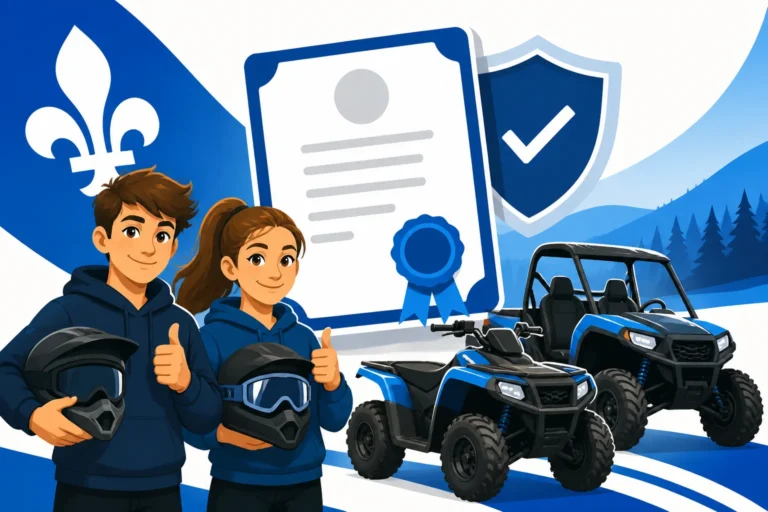
Beyond the driver's licence, there's another crucial piece of paper: the FQCQ training certificate. This isn't optional; it's a mandatory requirement for all 16 and 17-year-old riders. The Fédération Québécoise des Clubs Quads (FQCQ) is responsible for these safety courses, which are designed to teach young riders about safe operating practices, trail etiquette, and the specific laws governing off-highway vehicles in Quebec. This certificate ensures that young riders have a foundational understanding of how to safely handle their machine and navigate the trails, protecting both themselves and others. You can find more details on these courses in [Quebec FQCQ Training Certificates for Teens].
It’s important to understand that simply having a driver's licence isn't enough. Many riders, and even some parents, get tripped up on this point, thinking the licence covers all bases. However, the province has made it clear that specialized off-highway vehicle training is essential for this age group, recognizing the unique challenges and risks associated with ATV riding. So, make sure both the driver's licence and the FQCQ certificate are in hand before planning any excursions.
Age Restrictions for Different Machine Types
While 16 is the magic number for driving an ATV on federated trails with the right documentation, it’s a completely different story for side-by-sides, also known as VCCs. The rules in Quebec are very strict on this point: a driver must be 18 years old to operate a side-by-side. This means that even if your 16-year-old has their driver's licence and the FQCQ certificate, they cannot legally drive a side-by-side. This is a common point of confusion and a frequent source of fines for unsuspecting families.
The rationale behind this age difference often comes down to the perceived differences in machine handling and the passenger capacity of side-by-sides. These machines are generally heavier, wider, and can carry multiple passengers, which the province deems requires a higher level of maturity and experience to operate safely. So, if you own both an ATV and a side-by-side, be absolutely sure your 16-year-old sticks to the ATV, no matter how tempting it might be to let them try the larger machine. You can learn more about this in [Quebec's VHR Vehicle Class] and [Quebec Side-by-Side Age Rule of 18].
Many families find themselves with a mix of machines, and it’s easy to forget this critical distinction, especially if friends or relatives are visiting and want to swap rides. Always confirm that your 16-year-old is operating an actual ATV and not a side-by-side to avoid any legal trouble or, more importantly, a potential accident. Equipping a side-by-side, even with quality aftermarket parts from brands like SuperATV, won't change the fundamental age restriction for operating it.
Helmet, Visor, and Other Essential Gear
Safety gear is non-negotiable for all ATV riders in Quebec, and 16-year-olds are no exception. A properly fitting, approved helmet is the most critical piece of equipment. This isn't just a suggestion; it's the law. The helmet must meet safety standards, such as DOT, ECE, or Snell, and must be securely fastened.
In addition to the helmet, riders must wear eye protection. This typically means a helmet with an attached visor, or if the helmet doesn't have one, then goggles are mandatory. The idea is to protect the rider's eyes from debris, insects, and branches, which are common hazards on the trails. Without proper eye protection, visibility can be compromised, leading to dangerous situations. You can read up on the specifics in [Quebec Helmet and Visor Rules].
While not legally mandated in the same way as helmets and eye protection, wearing appropriate riding gear is highly recommended for all riders, especially younger ones. This includes sturdy boots that protect the ankles, long pants, a long-sleeved shirt or jacket, and gloves. This gear provides crucial protection against abrasions, impacts, and the elements. It’s about minimizing risk wherever possible, making every ride as safe as it can be.
Where a 16-Year-Old Can Actually Ride Legally
Understanding the "where" is just as important as the "what" when it comes to riding an ATV in Quebec. The province has a vast network of federated trails, but also distinct rules for private land and very limited access to public roads. Navigating these different zones legally is key to an enjoyable and worry-free experience for a 16-year-old rider.
Riding on Federated Trails FQCQ Network
The majority of organized ATV riding in Quebec takes place on the extensive FQCQ federated trail network. For a 16-year-old to legally ride on these trails, they must have everything discussed above: a valid driver's licence, the FQCQ training certificate, and a valid trail pass. A trail pass, purchased annually or for a shorter duration, grants access to this network and contributes to its maintenance and policing. [Quebec's 25,000 Kilometres of Federated Trail] is a testament to the dedication of clubs and volunteers, and passes help keep it going.
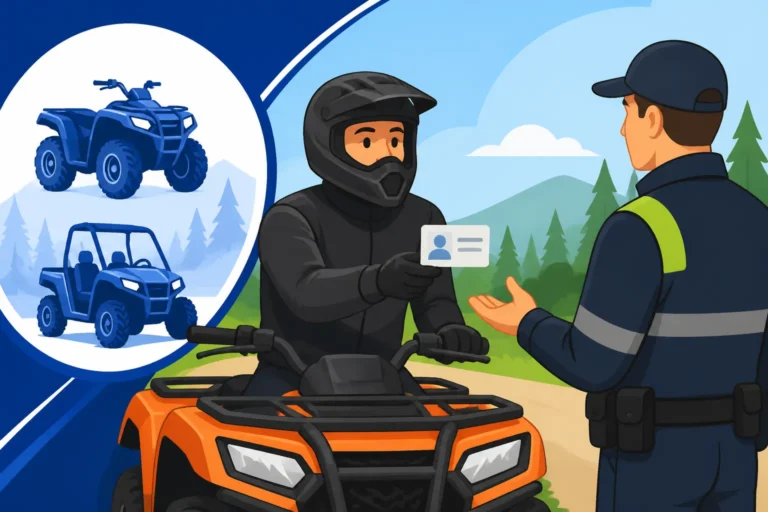
When riding on these trails, 16-year-olds are subject to all the same rules as adult riders. This includes adhering to speed limits (typically 50 km/h for ATVs), respecting signage, staying on marked trails, and yielding to other trail users. Trail patrols, often volunteers from local clubs, have the authority to check for proper documentation, including the driver's licence, training certificate, and trail pass. Being caught without any of these can result in significant fines and having the ride cut short.
It's also important to remember that these trails often cross private land where landowners have granted permission. Riders must always respect private property and never venture off the marked path. The FQCQ network is a privilege, built on the cooperation of thousands of landowners and volunteers, and maintaining good relationships is paramount. Any modifications or upgrades to a quad, even performance parts from SuperATV, must still ensure the machine remains compliant with trail rules and regulations.
Rules for Riding on Private Land
Riding on private land offers a bit more flexibility, but it's not a free-for-all. For a 16-year-old to ride an ATV on private land that they or their family owns, or on land where they have explicit permission from the landowner, the requirements for a driver's licence and FQCQ training certificate are still highly recommended for safety and liability, but the legal enforcement is different. Technically, the requirement for a driver's licence and training certificate primarily applies to designated trails and public lands governed by the LVHR.
However, "parental authorization" is critical here. While less formally regulated than federated trails, it is always wise to have clear, written permission if the land isn't owned by the rider's immediate family, and adult supervision is strongly advised. Even on private land, common sense safety rules still apply: wearing a helmet, avoiding reckless behaviour, and understanding the capabilities of the machine. The moment the rider steps off private property onto a public trail or road, even for a short distance, the full weight of the LVHR regulations comes back into play, requiring all the necessary documents and gear.
Remember, even on private land, if an accident were to occur, insurance implications can be significant. Ensuring the machine is properly insured, regardless of where it's ridden, is a smart move. Furthermore, while the provincial rules might be slightly relaxed on private land, local municipal by-laws could still impose restrictions. It's always best to check with the local municipality to ensure there are no surprises.
Limited Road Access and Crossings
Quebec's stance on ATVs on public roads is generally restrictive, but there are very specific, limited exceptions. For a 16-year-old, these exceptions are the same as for adults, meaning they can only ride on certain public roads under strict conditions. This usually involves very short distances, typically less than one kilometre, to connect two trail sections or to access services like gas stations or restaurants, and only where specifically authorized by municipal signage. You can look at [Quebec Municipal Road Access Up to 1 Kilometre] for more details.
When crossing a public road, the rules are equally stringent: riders must do so at a right angle to the road, after coming to a complete stop, and only when it is safe to do so. They must also have a clear line of sight, often specified at 50, 100, or 200 metres depending on the speed limit of the road. Fines for riding an ATV on an unauthorized public road can be substantial, and these rules are enforced to protect both ATV riders and other motorists.
It's critical that a 16-year-old rider understands these limitations. The temptation to "just quickly" ride down a road to a friend's house or to bypass a difficult trail section can be high, but the consequences are severe. Emphasize that public roads are not part of the ATV riding experience unless explicitly marked and legally permitted. Even the best-equipped ATV, perhaps with heavy-duty tires from SuperATV, is not exempt from these fundamental road rules.
Important Considerations for Parents and Guardians
As a parent or guardian, your role is absolutely vital in ensuring a 16-year-old rider has a safe and legal ATV experience in Quebec. It goes beyond just making sure they have the right paperwork; it involves active supervision, understanding liability, and being aware of the potential consequences of non-compliance.
Parental Authorization and Supervision
For any rider under 18 years old, parental authorization is a fundamental requirement under the LVHR. This isn't just a verbal agreement; it's often a written consent that confirms the parent or guardian grants permission for the minor to operate an ATV. While less strictly regulated on private family land, this authorization becomes legally binding when the 16-year-old ventures onto federated trails or any other area covered by the Act. This means you, as the parent, are acknowledging that your child is authorized to ride and that you accept the responsibilities that come with it.
Beyond the formal authorization, active supervision, especially for newer or less experienced 16-year-olds, is highly recommended. While they might be legally allowed to ride unaccompanied on federated trails with all their documents, having an experienced adult along, at least initially, can significantly enhance safety and provide guidance. This is particularly true for longer rides or when exploring new, unfamiliar terrain. Good supervision instills good habits and helps young riders develop better judgment on the trails.
Remember, your authorization implies a level of trust and responsibility. Discuss trail etiquette, environmental respect, and emergency procedures with your 16-year-old. Ensure they know what to do if they get lost, if the machine breaks down, or if they encounter an injured animal or person. Preparing them for various scenarios goes a long way in building their confidence and ensuring their safety.
Liability Insurance and Trail Passes
Every ATV operated in Quebec, regardless of the rider's age, must be covered by liability insurance. This is a mandatory requirement, and the minimum coverage in Quebec recently increased to $1 million. The good news is that this liability insurance is typically included as part of your annual VHR registration with the SAAQ. So, when you register the ATV for your 16-year-old (or the family ATV they'll be riding), the liability insurance is part of that package. [Quebec's SAAQ Is Registrar and Insurer] can provide more information on this.
It's critical to always carry proof of this insurance on the machine. This usually comes in the form of a registration certificate from the SAAQ. Trail patrols or law enforcement can ask to see this proof at any time. Without it, even if you have insurance, you could face fines. Ensuring the trail pass is also current and properly displayed is equally important for federated trail access. A 16-year-old cannot legally ride the FQCQ network without their own individual trail pass sticker affixed to the machine. [Quebec Trail Passes Cover Every Club] explains how these passes work across the province.
As the parent, you are ultimately responsible for ensuring the ATV is properly registered, insured, and has a valid trail pass. These aren't just bureaucratic hurdles; they are fundamental components of Quebec's off-highway vehicle system designed to ensure safety, fund trail maintenance, and provide financial protection in case of an accident. Ignoring these can lead to significant financial penalties and legal headaches.
Understanding Potential Fines and Penalties
The Quebec government takes off-highway vehicle regulations seriously, and non-compliance can result in hefty fines and other penalties. For a 16-year-old, these fines can be issued directly to them, and in many cases, parents or guardians can also be held responsible, especially if the infraction stems from a lack of proper authorization, documentation, or supervision. For instance, riding without a valid driver's licence or FQCQ certificate can lead to significant fines. Similarly, operating a side-by-side at 16 years old is a clear violation.
Fines can range from hundreds to thousands of dollars, depending on the severity and nature of the infraction. Beyond monetary penalties, repeat offenses or serious safety violations could lead to restrictions on riding privileges or even impoundment of the machine. These consequences are designed to deter unsafe and illegal riding, particularly among younger, potentially less experienced operators.
| Offence Category | Typical Consequence for 16-Year-Old (and often guardian) | Reference Link (Example) |
|---|---|---|
| No Valid Driver's Licence | Significant fine, potential machine impoundment | [Quebec Fines for Riding Without a Licence] |
| No FQCQ Training Certificate | Significant fine, restriction from federated trails | [Quebec Penalties for No Certificate] |
| Operating a Side-by-Side (VCC) | Significant fine, potential machine impoundment | [Quebec Side-by-Side Age Rule of 18] |
| No Valid Trail Pass | Significant fine, removal from trail | [Quebec Fines for Riding Without a Trail Pass] |
| No Liability Insurance Proof | Significant fine, potential machine impoundment | [Quebec Insurance Proof on the Machine] |
| Riding on Unauthorized Public Road | Significant fine, potential machine impoundment | [Quebec Road Riding Fines From $350] |
| Helmet Violation | Fine, immediate stoppage of ride | [Quebec ATV Helmet Rules] |
| Speeding on Trail | Fine, potential loss of driving privileges | [Quebec Speeding Fines From $90] |
Understanding these potential repercussions upfront is crucial. It’s not about fear-mongering but about ensuring your 16-year-old understands the importance of respecting the rules. A clear conversation about these penalties can be a powerful deterrent and reinforce the need for responsible riding.
Common Pitfalls and How to Avoid Them
Even with the best intentions, it's easy to fall into common traps when navigating Quebec's ATV rules for 16-year-olds. Being aware of these common pitfalls can help parents and young riders avoid unnecessary frustration, fines, and potentially dangerous situations.
The Side-by-Side Age Trap
One of the most frequent mistakes parents and 16-year-old riders make is assuming that the rules for ATVs (VTTs) apply equally to side-by-sides (VCCs). As discussed earlier, Quebec has a firm age limit of 18 for operating a side-by-side. This means that even if a 16-year-old has all their ATV paperwork in order – driver's licence, FQCQ certificate, trail pass – they are still legally prohibited from driving a side-by-side. This isn't just a minor technicality; it's a major regulatory difference that often catches people by surprise.
To avoid this trap, make it absolutely clear to your 16-year-old that the side-by-side is off-limits until they turn 18. If you own both types of machines, ensure there's no confusion about which one they are allowed to operate. Patrols are very aware of this age discrepancy and will not hesitate to issue a fine if a minor is caught driving a side-by-side. It's a key distinction that underscores the province's approach to different vehicle classes, and modifications from companies like SuperATV, while enhancing performance, don't change the legal classification or age requirements.
Educate your rider and any friends or family who might be supervising. It's better to be overly cautious than to face a significant fine and the potential for an accident involving a machine they are not legally allowed to control.
Riding Unregistered or Without a Pass
Another common oversight is riding an ATV that is not properly registered with the SAAQ, or riding on federated trails without a valid FQCQ trail pass. Both are mandatory requirements in Quebec. Every off-highway vehicle, including those owned by a 16-year-old's family, must have a valid registration, which also provides the mandatory liability insurance. This registration must be renewed annually, usually around the owner's birthday month. [Quebec ATV Registration Renewal Each Year] is a good resource here.
Similarly, a trail pass is required for every machine that uses the FQCQ network. Even if the family has multiple ATVs, each one needs its own sticker. Sometimes, parents forget to buy a pass for a new machine, or they might think one pass covers the whole family. This is not the case. The pass is linked to the machine and must be clearly affixed to it where a patrol can easily see it.
To prevent this pitfall, keep a checklist. Before every riding season, verify that the ATV's SAAQ registration is current, the liability insurance is active, and a fresh FQCQ trail pass sticker is on the machine. Make sure your 16-year-old understands they should never ride a machine that isn't fully compliant with these requirements. These are fundamental to legal riding in Quebec.
Modifying Machines
While customizing an ATV can be a fun part of the hobby, significant modifications can sometimes complicate adherence to regulations, especially for younger riders. Quebec's LVHR is primarily concerned with safety and machine classification. For example, if a machine is heavily modified to the point where its characteristics fundamentally change, it might no longer be considered a standard ATV in the eyes of the law. While aftermarket parts from companies like SuperATV can enhance performance and durability, owners must ensure these modifications do not compromise safety or change the vehicle's legal classification.
For a 16-year-old, riding a heavily modified machine introduces additional layers of scrutiny. Patrols might be more likely to inspect such a machine for compliance with noise limits, specific equipment requirements (like lighting or mirrors), or even structural integrity if the modifications are extreme. It’s vital that any modifications maintain the machine's factory passenger capacity and safety features, as altering these could lead to violations.
The best approach is to ensure any modifications are reputable, professionally installed, and do not make the ATV unsafe or non-compliant with the standard VHR definition. When in doubt, it’s always better to err on the side of caution and prioritize safety and legal compliance, especially when a young rider is at the controls. [Quebec Modified Machines and the Age Rule] touches on how modifications can interact with rider age.
Disclaimer
This article is for general informational purposes only and does not constitute professional advice. Laws, prices and regulations vary by location and change over time. Consult a qualified professional for guidance on your specific situation.