Why a 16-Year-Old May Not Drive a Side-by-Side
It’s a common scenario across Quebec: your teenager, who might already be driving a car or at least working towards their permit, looks at your side-by-side machine with longing eyes. They see the power, the utility, the shared adventure with passengers, and naturally wonder why they can’t be behind the wheel. The frustration for many families is palpable, especially when a 16-year-old can legally operate a standard ATV. This guide will dive deep into Quebec’s specific regulations, explaining exactly why a 16-year-old cannot legally drive a side-by-side, what the law says, and what alternatives exist for young enthusiasts.
The Core of the Age Restriction: Understanding Quebec's Law
Quebec's regulations concerning off-highway vehicles (OHVs) are quite clear, though sometimes a bit confusing given the distinctions between different machine types. When it comes to side-by-sides, often referred to as utility terrain vehicles (UTVs) or multi-purpose off-highway vehicles, the rules tighten considerably compared to a traditional all-terrain vehicle (ATV), which Quebec refers to as a VTT. This isn't just a suggestion; it's enshrined in the law.
The primary piece of legislation governing these machines is Quebec's Off-Highway Vehicle Act, which has seen significant updates over the years, most notably in 2021. These changes aimed to enhance safety, particularly for younger riders and those operating more complex or powerful machines. It’s critical to understand that the provincial government, through entities like the SAAQ (Société de l'assurance automobile du Québec), views side-by-sides as having different characteristics and risks than a typical quad, necessitating more stringent age controls.
The Specific Age Requirement for Side-by-Sides
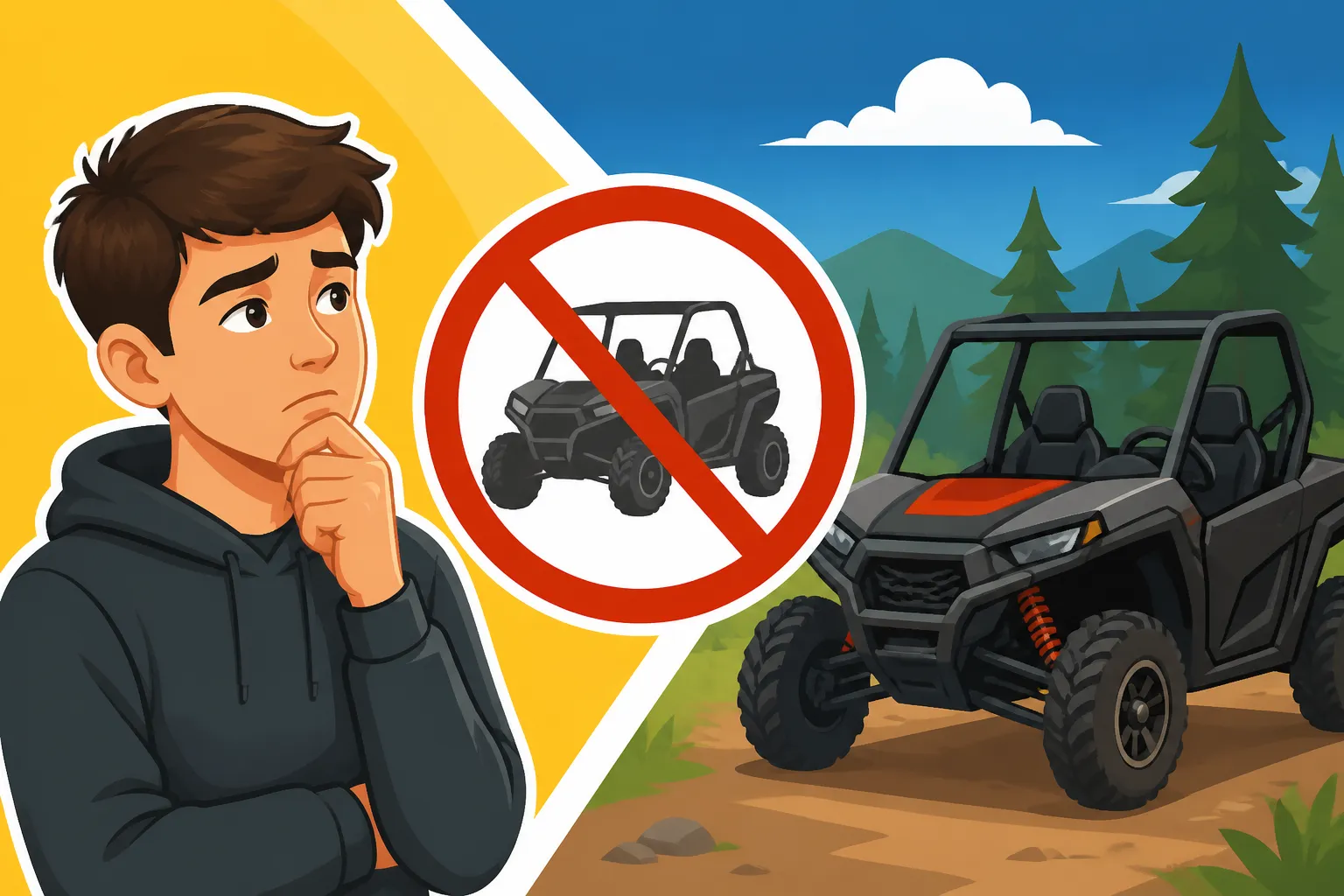
Under Quebec law, the minimum age to operate a side-by-side machine on federated trails or authorized public lands is 18 years old. This isn't just about getting a driver's license for a car; it's a specific requirement for the type of off-highway vehicle itself. So, even if your 16-year-old has their learner's permit for a car, or even a full Class 5 driver's license, it doesn't automatically grant them the right to drive a side-by-side.
This distinction is a major point of confusion for many. Parents often think that if their child is responsible enough to drive a car, they should be able to handle an OHV. However, the unique challenges of off-road terrain, the potential for carrying passengers in a more car-like configuration, and the sheer power of many modern side-by-sides contribute to this higher age threshold. The legislature considers an 18-year-old to possess a higher level of maturity, judgment, and experience to safely navigate these specific risks. You can read more about this in [Quebec Side-by-Side Age Rule of 18].
Why the Difference from ATVs?
It’s fair to ask: why the discrepancy? A 16-year-old, with a valid driver's license or permit and having completed the [Quebec FQCQ Training Certificates for Teens], can legally drive a standard ATV (VTT) on federated trails. So what makes a side-by-side different in the eyes of the law? There are several key factors.
First, side-by-sides often have a higher passenger capacity, allowing two, three, or even four people to ride together. This adds a layer of responsibility that single-rider ATVs generally don't carry. The presence of multiple passengers introduces different dynamics and potential for injury if an inexperienced driver makes a mistake. Second, many side-by-sides are significantly heavier and more powerful than standard ATVs. While a 16-year-old might handle a smaller quad, the increased mass and engine size of a UTV demand greater physical strength, reaction time, and understanding of vehicle dynamics. Third, their car-like controls (steering wheel, foot pedals) can sometimes lead to a false sense of familiarity, causing drivers to underestimate the distinct challenges of off-road driving compared to paved roads.
The law aims to mitigate risks associated with these factors. While accessories like beefed-up axles and heavy-duty suspension from companies like SuperATV can make any machine more robust, the base characteristics of a side-by-side remain distinct in the eyes of the legislation.
What Defines a Side-by-Side in Quebec's Eyes?
To truly understand why the age restriction exists, it helps to know how Quebec's regulations categorize these vehicles. It's not always as simple as "it has a steering wheel, so it's a side-by-side." The legal definitions are precise and impact everything from registration to riding rules. It's about ensuring clarity and enforcement on the trails.
The [Quebec's Off-Highway Vehicle Act and Your Papers] clearly distinguishes between different types of off-highway machines. While "VTT" (Véhicule Tout-Terrain) is the common term for a quad or ATV, side-by-sides fall into a slightly different, though related, category due to their design and intended use. Understanding these distinctions is crucial for owners, especially those with younger family members eager to ride.
Key Characteristics of a Side-by-Side (VHR)
In Quebec, side-by-sides are often referred to as VHRs (Véhicules Hors Route), an umbrella term for off-highway vehicles that aren't necessarily ATVs. More specifically, they are defined by several key features that set them apart from traditional quads. These characteristics often mirror those found in conventional automobiles, leading to the higher age requirement.
- Seating Arrangement: Side-by-sides feature a bench or bucket seating arrangement where the driver and passenger(s) sit side-by-side, much like in a car. This is a fundamental difference from an ATV, where the rider typically straddles the machine.
- Steering Mechanism: They are equipped with a steering wheel, as opposed to the handlebars found on an ATV. This car-like control interface contributes to the perception of them being more akin to an automobile.
- Foot Pedals: Operating a side-by-side involves using foot pedals for acceleration and braking, another feature shared with cars, contrasting with the hand levers and foot shifters of many ATVs.
- Roll-Over Protective Structures (ROPS): Most side-by-sides come standard with an integrated roll cage or ROPS, providing a degree of occupant protection. This design element acknowledges the potential for rollovers in off-road conditions and implies a different level of engineering for safety compared to an open ATV.
- Capacity: Side-by-sides are designed to carry at least one passenger in addition to the driver, with many models offering configurations for three or four occupants. This multi-passenger capability is a significant differentiator.
These combined features generally place side-by-sides under more restrictive operating conditions, including the age limit. Whether you're considering a utility-focused machine for work on a farm or a recreational one for trail riding, if it has these characteristics, it falls under the 18-year-old driver rule. For official information on registering these types of machines, you can look at [Quebec Registration for a Side-by-Side].
The LVHR and Its Impact
The Loi concernant les véhicules hors route (LVHR), or Off-Highway Vehicle Act, is the legislative backbone for all OHV rules in Quebec. The revisions made in 2021 specifically addressed many aspects of riding safety and access, including age requirements. The Act emphasizes responsible use and aims to protect riders, passengers, and other trail users.
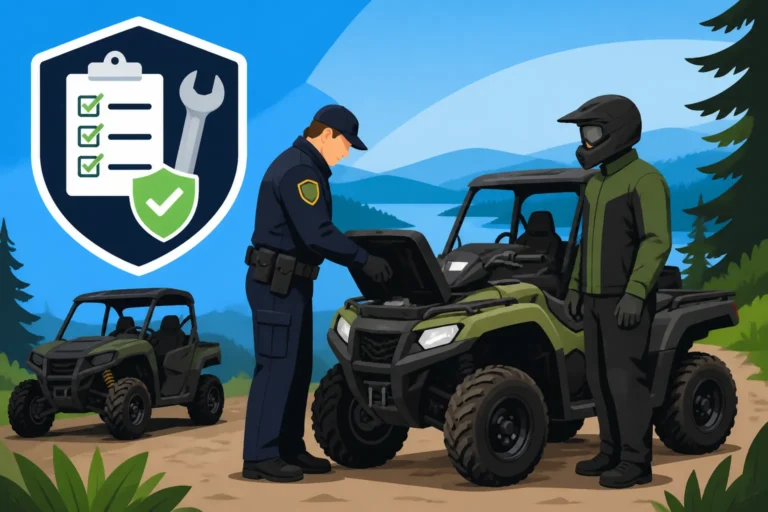
The LVHR's provisions reflect a legislative intent to ensure that operators of more complex or potentially riskier machines, like side-by-sides, have reached an age of greater maturity and possess the necessary experience to handle them. This aligns with the overall safety goals of the province regarding motorized recreational activities. When a patrol officer stops a rider, they will be looking for compliance with these specific age requirements, among other things, as detailed in [Quebec Equipment Checks by Patrols]. Ignorance of the law is not considered a valid defense, which is why understanding these distinctions is so important for Quebec residents and visitors alike.
Practical Implications for Young Riders and Families
Knowing the law is one thing, but living with its implications is another. For families with teenagers who are passionate about off-roading, the 18-year-old rule for side-by-sides can be a real sticking point. It forces choices and sometimes requires creative solutions to keep everyone engaged and safe, all while remaining compliant with Quebec's regulations.
The desire to share the outdoor experience with family is strong. Many parents purchase side-by-sides precisely for their multi-passenger capability, envisioning family outings on Quebec's vast trail network. Discovering that a key family member is legally excluded from driving can be a letdown. This section explores what this rule means in real life and how families can navigate it.
What 16 and 17-Year-Olds Can Drive
While side-by-sides are off-limits, it's crucial to remember that 16 and 17-year-olds are not entirely excluded from off-road adventures. As mentioned, with proper training and a valid driver's license or learner's permit, they can legally operate a standard ATV. This provides a valuable outlet for their enthusiasm and a way for them to gain crucial off-road experience.
For a 16-year-old to legally ride an ATV on federated trails, they must:
- Possess a valid driver's license or learner's permit (for any class of vehicle).
- Hold a valid safety certificate issued by the FQCQ (Fédération Québécoise des Clubs Quads) or an equivalent recognized organization. This certificate is specific to ATV operation and covers essential safety practices.
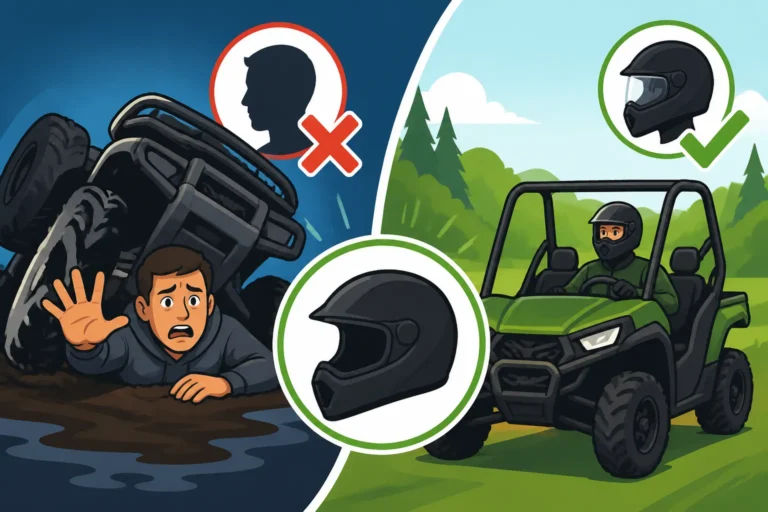
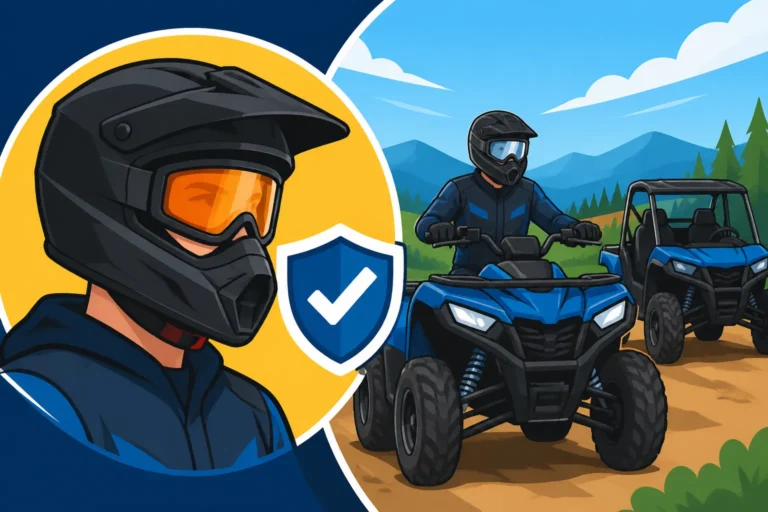
- Adhere to all other rules and regulations, such as wearing a helmet, respecting speed limits, and possessing a valid trail pass.
This pathway allows young riders to participate actively and develop their skills, preparing them for eventually driving a side-by-side once they turn 18. Details about these requirements can be found in [Quebec Rules for a 16-Year-Old Rider].
The Role of Passengers vs. Drivers
Another common point of confusion revolves around being a passenger. If a 16-year-old can't drive, can they at least ride along? Yes, as long as the machine is designed for passengers and the driver meets all legal requirements. Side-by-sides are built for multiple occupants, and as long as the 16-year-old is a passenger, this isn't an issue.
However, the adult driver must always be in full control and responsible for the safety of all occupants. This means ensuring seatbelts are worn (if equipped), adhering to the machine's factory-rated capacity, and driving responsibly. For example, a driver might have invested in a heavy-duty cargo bed or specialized tires from SuperATV to enhance their machine's utility or trail performance. Still, none of these modifications alter the fundamental rule that the driver must be 18 years or older. This distinction allows families to still enjoy trail rides together, even if only the adult can take the wheel. The rules for carrying passengers are very specific, which you can learn more about in [Quebec Rules for Passengers on a Quad].
Exploring Alternatives for Under-18 Riders
While the 18-year-old rule for side-by-sides might feel restrictive, it doesn't have to mean an end to off-road adventures for younger members of the family. Quebec offers various avenues for youth to engage with OHVs safely and legally. It’s about understanding the available options and making the most of them until the milestone birthday arrives.
The key is to focus on what is permitted, rather than dwelling on what isn't. This mindset allows families to find fulfilling ways to share their passion for the outdoors and prepare younger riders for future independence on the trails.
Focusing on ATV Riding and Training
For 16 and 17-year-olds, the most direct alternative is to embrace ATV riding. As discussed, with a driver's license/permit and an FQCQ safety certificate, they are cleared to ride on Quebec's extensive trail network. This is not a lesser experience; ATVs offer their own unique thrills and challenges, demanding different riding skills and techniques.
Encouraging them to take the required [Quebec Training Certificate Requirements] is a great first step. These courses not only fulfill a legal requirement but also impart vital safety knowledge, machine control techniques, and trail etiquette. Many clubs offer training programs, and successful completion instills confidence and competence. Moreover, riding an ATV allows them to explore the same beautiful Quebec landscapes as side-by-sides, from the [Quebec Laurentians Quad Trails] to the vast forests of Abitibi. It's a fantastic way to develop a deep appreciation for responsible off-road recreation.
Private Land Exceptions (with parental authorization)
For riders younger than 16, or for any age group, there's a specific nuance when it comes to riding on private land. While the general age limits apply to federated trails and public access points, a child under 16 may operate an ATV on private land if they have the express authorization of the landowner, and are under adult supervision.
It’s important to note a few things about this:
- Private Land Only: This exception is strictly for land that is privately owned and not part of any public or federated trail system.
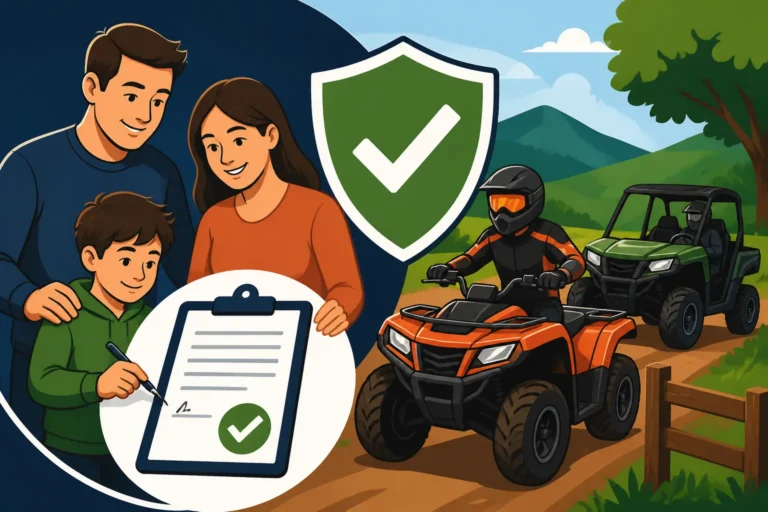
- Parental/Landowner Authorization: Written consent is crucial. This can be a significant pathway for younger kids (under 16) to gain experience.
- Adult Supervision: The rider must be supervised by an adult.
- Machine Appropriateness: The machine should be appropriate for their age, size, and skill level.
While this doesn't apply directly to a 16-year-old wanting to drive a side-by-side on a public trail, it's an important aspect of Quebec's OHV laws that allows for supervised introduction to off-roading for even younger family members. This provides a controlled environment for learning and building skills, which can then be applied to ATV riding on trails once they reach 16, or side-by-side driving at 18. You can find more details on this specific scenario in [Quebec Parental Authorization on Private Land].
Planning for the Future: The 18th Birthday
Ultimately, for those passionate about driving a side-by-side, the 18th birthday marks the official gateway. Leading up to this, families can plan and prepare. This could involve researching different side-by-side models, understanding their features and capabilities, and even trying out passenger rides with an accredited [Quebec Guided Quad Tours Worth Booking] operator.
Consider using this waiting period to outfit an adult-driven side-by-side with useful accessories. Products like improved lighting, storage solutions, or even protection bars from brands like SuperATV can enhance the machine's utility and safety for the family, making it an even more exciting prospect when the younger family members finally come of age to drive. The wait allows for anticipation to build and ensures that when they do get behind the wheel, they are fully prepared, legally compliant, and ready to enjoy Quebec's beautiful trails responsibly.
| Off-Highway Vehicle Type | Minimum Age to Drive (Federated Trails) | Required Driver's License/Permit | Required Safety Certificate | Passenger Eligibility (if machine designed for it) |
|---|---|---|---|---|
| ATV (VTT) | 16 years old | Yes | Yes (FQCQ) | Yes, if designed for it |
| Side-by-Side (VHR) | 18 years old | Yes | No specific one required | Yes, if designed for it |
| Youth Machine | Under 16 (on private land only) | N/A | N/A | N/A |
The rule against a 16-year-old driving a side-by-side in Quebec isn't arbitrary; it's a carefully considered piece of legislation designed to promote safety on the province's off-highway vehicle network. While it may cause some disappointment, understanding the reasoning behind it and exploring the many legal alternatives ensures that young enthusiasts can still enjoy the thrill of off-road riding responsibly.
Disclaimer
This article is for general informational purposes only and does not constitute professional advice. Laws, prices and regulations vary by location and change over time. Consult a qualified professional for guidance on your specific situation.