Quebec Mirror Requirements on a Quad
It’s a common frustration for quad and side-by-side owners in Quebec: the rules around mirrors. You want to stay safe and compliant, but sometimes the legal jargon can feel like trying to navigate a muddy trail blindfolded. This guide is here to clarify Quebec's mirror requirements for your off-highway vehicle, helping you understand what's needed, why it matters, and how to choose and install the right mirrors to keep you legal and safe on every ride.
Understanding Quebec's Official Mirror Regulations for Quads
When you hit the trails or even a short stretch of public road in Quebec, your off-highway vehicle (OHV) needs to meet certain equipment standards. Mirrors might seem like a small detail compared to, say, your engine or tires, but they're a critical component for both safety and legal compliance. The rules aren't just there to be difficult; they're designed to help prevent accidents and ensure everyone has a clearer view of their surroundings.
The Letter of the Law: What the LVHR Says About Mirrors
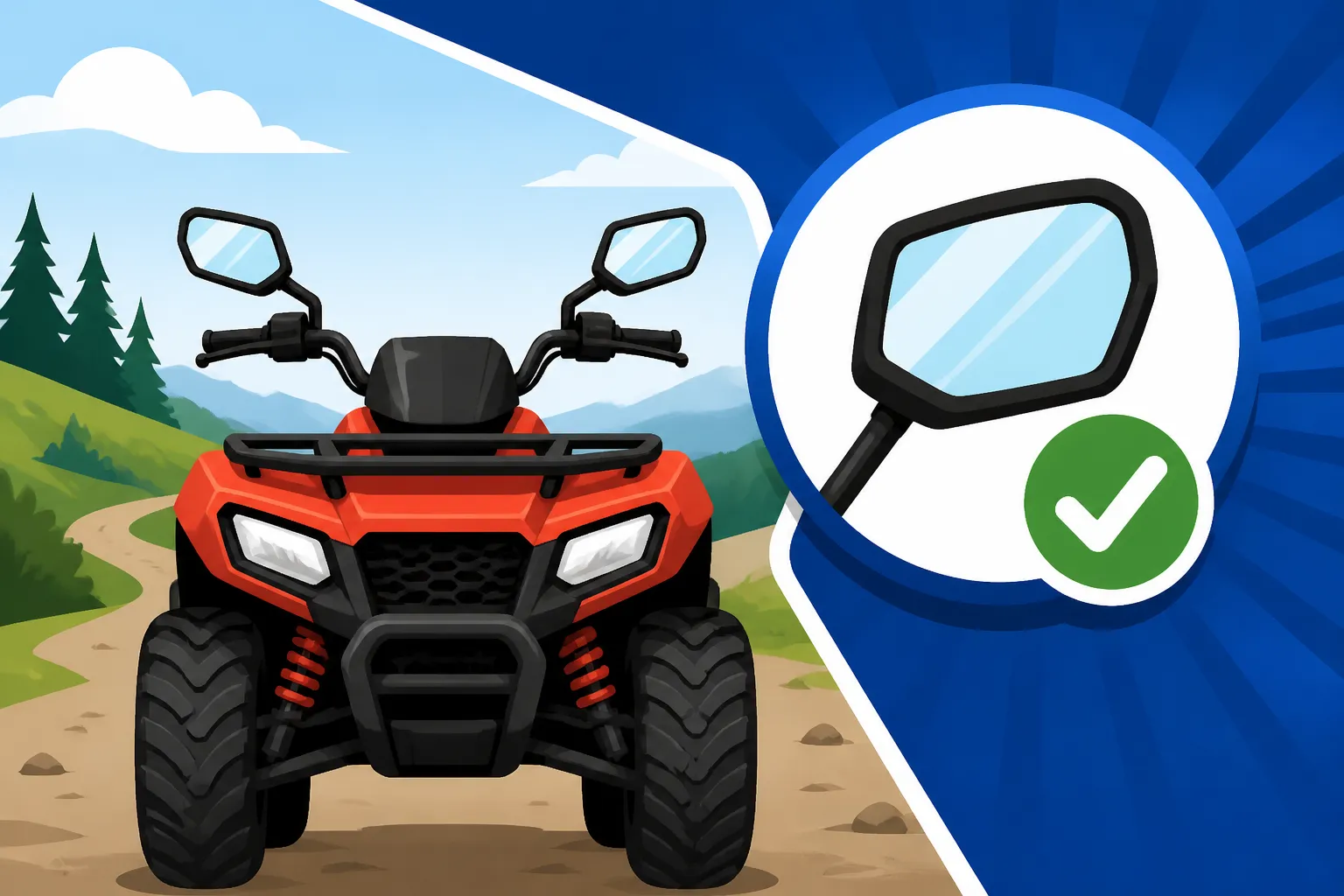
In Quebec, the primary piece of legislation governing off-highway vehicles is the Act respecting off-highway vehicles, or the LVHR (Loi sur les véhicules hors route). This act, and its accompanying regulations, lays out the specific equipment requirements for your quad or side-by-side. When it comes to mirrors, the law states, quite simply, that your off-highway vehicle must be equipped with at least one rear-view mirror that provides the driver with a clear and unobstructed view of the rear.
Now, that might sound straightforward, but the devil is often in the details, or in this case, the interpretation of "clear and unobstructed." There isn't a prescriptive list of dimensions or specific mirror types in the law itself, which can leave some riders wondering if their current setup is truly adequate. The intent is to ensure you can see what's happening behind you without having to constantly turn your head or guess. This is especially crucial when you're riding in a group, approaching an intersection, or sharing a trail with other users like snowmobiles during winter. It's about proactive safety and being aware of your environment, not just reacting to what's in front of you.
Beyond the Basics: Practical Interpretations by Patrols
While the law specifies "at least one," many experienced riders and trail patrols will tell you that having two mirrors, one on each side, offers a far superior field of vision. Think about it: a single mirror, often mounted on the left handlebar, gives you a limited view. What about your right blind spot, especially if you're on a wider side-by-side? A single mirror on an ATV might be sufficient for legal purposes, but from a practical safety standpoint, it leaves a lot to be desired.
Patrols, whether they're from the Sûreté du Québec or a federated club, are looking for mirrors that are functional. This means they need to be securely attached, not cracked or broken, and actually adjusted to provide a view of the rear. If your mirror is dangling by a thread, caked in mud to the point of being opaque, or pointing at the sky, it's not fulfilling its legal or safety purpose. They're looking for common sense application of the law. If your setup genuinely allows you to clearly see vehicles or other trail users approaching from behind, you're likely in good shape. If there's any doubt, it's worth upgrading or adding a second mirror. Just having something that technically qualifies as a mirror might not pass muster if it's not genuinely effective.
Why Mirrors Aren't Just a Legal Requirement – They're a Safety Imperative
Sometimes, legal requirements feel like a chore, another hoop to jump through. But with mirrors on your quad or side-by-side, the legal mandate goes hand-in-hand with common-sense safety. These aren't just arbitrary rules; they're designed to significantly reduce risks for everyone on the trail or road. The benefits extend far beyond simply avoiding a ticket, touching on crucial aspects of rider awareness and accident prevention.
Enhancing Situational Awareness on Trails and Roads
Riding an off-highway vehicle, whether it's an ATV or a side-by-side, means you're operating a powerful machine in dynamic environments. Trails can be winding, dusty, and busy. Roads, even for short distances, introduce traffic, pedestrians, and cyclists. In these scenarios, having a clear understanding of what's happening around you is paramount, not just what's directly in front. This is where mirrors become indispensable.
Consider these everyday riding situations:
- Group Rides: If you're leading or following in a group, mirrors allow you to keep track of your fellow riders without constantly craning your neck. This is not just about staying together; it's about being aware if someone falls behind or needs to stop suddenly.
- Passing: On wider trails or designated passing zones, mirrors are essential for safely checking for oncoming traffic or other riders before you make your move. Without them, you're relying purely on a quick head check, which can be risky at speed or when maneuvering.
- Dust and Debris: Quebec trails can get dusty, especially in dry conditions. Your mirrors allow you to monitor the dust cloud you're creating, giving other riders behind you a heads-up and helping you maintain proper spacing.
- Shared Corridors: In winter, many Quebec trails are shared with snowmobiles. Snowmobiles are fast and often much quieter than a quad. Mirrors provide that critical visual cue to know if a snowmobile is approaching from behind, allowing you to yield appropriately and safely. The same goes for encountering hikers, cyclists, or even wildlife that might have entered the trail behind you.
Good mirrors, correctly adjusted, become an extension of your natural senses, drastically reducing blind spots and giving you a comprehensive view of your surroundings. This enhanced [Quebec Equipment Checks by Patrols] means you can make more informed decisions, react sooner to potential hazards, and generally have a much safer and more enjoyable ride.
Avoiding Accidents and Fines: The Dual Benefit
Beyond just being aware, mirrors actively contribute to accident prevention. Imagine you're riding a short paved section to get to another trail. A car approaches from behind, maybe not expecting an ATV. Your mirror gives you the vital seconds to adjust your position or be prepared for their passing maneuver. Or perhaps you're backing up your side-by-side in a tight spot at a trailhead. Mirrors are your eyes in the back of your head, preventing you from bumping into another machine, a tree, or even a person.
The alternative to having proper mirrors isn't just a higher risk of an accident; it's also a higher risk of receiving a fine. Quebec's off-highway vehicle regulations are enforced, and equipment violations are taken seriously. Getting caught without the required mirror, or with a mirror that's deemed non-functional, can lead to [Quebec Ticket Costs for Trail Violations] that quickly add up. These fines are often accompanied by additional administrative fees and court costs if contested. Compared to the relatively modest cost of a good set of mirrors, the financial penalty for non-compliance is simply not worth it. For details on general enforcement, you might want to look into [What a Patrol Can Ask to See] when you're out riding. It's always best to have all your paperwork and equipment in order.
Selecting and Installing the Right Mirrors for Your Quebec ATV or Side-by-Side
Once you understand the importance of mirrors, the next step is choosing the right ones and getting them properly installed. The market offers a wide variety of options, each with its own advantages, so finding the perfect fit for your machine and riding style is key. Don't just grab the first set you see; think about durability, visibility, and how they'll integrate with your specific quad or side-by-side.
Types of Mirrors: Bar-End, Handlebar, and Side Mirrors
When you start looking, you'll notice a few main categories of mirrors designed for off-highway vehicles:
- Handlebar-Mounted Mirrors: These are probably the most common type for ATVs. They typically clamp directly onto your handlebars, either near the grips or closer to the center console.
- Pros: Easy to install, often offer a decent field of view, and are generally adjustable. Many come with break-away features to prevent damage in a rollover. Brands like SuperATV offer robust handlebar mirror options known for their durability on rough terrain.
- Cons: Can be susceptible to vibration, especially on older machines, which can make the image blurry. They also take up space on your handlebars, which might be an issue if you have a lot of other accessories like handguards, GPS, or cup holders.
- Side Mirrors (for Side-by-Sides): For UTVs, these are the equivalent of car side mirrors, mounting to the roll cage or frame.
- Pros: Provide an excellent, wide field of view, are very stable, and are less prone to vibration. They often integrate well with the aesthetic of a side-by-side. SuperATV is a prime example of a brand that offers high-quality side mirrors designed specifically for various UTV models, often with wide-angle convex glass for maximum visibility.
- Cons: Can be more expensive than handlebar mirrors. Their fixed position means they might be more vulnerable to damage from tight squeezes between trees or brush, though many now have break-away or fold-in designs.
- Bar-End Mirrors: Less common for traditional quads, but sometimes seen on sportier models or for a minimalist look. They mount to the very end of your handlebars.
- Pros: Clean look, often very stable.
- Cons: Can make your machine wider, potentially snagging on branches. The viewing angle might be more restricted than other types.
When making your choice, consider your primary riding environment. Are you mostly on wide, open trails, or are you navigating dense forest where mirrors might get clipped? Think about the width of your machine and how any added mirror will affect it. And, of course, always prioritize visibility and durability.
Installation Best Practices for Optimal Visibility and Compliance
Once you have your mirrors, proper installation is key. A poorly installed mirror is just as bad as no mirror at all. Here’s a quick guide to getting it right:
- Read the Instructions: Sounds obvious, right? But different mirrors have different mounting systems. Always start with the manufacturer's instructions.
- Choose the Right Location: For handlebar mirrors, find a spot on your handlebars that doesn't interfere with your throttle, brake levers, or other controls. For side-by-side mirrors, ensure they're mounted securely to the roll cage or designated points, providing maximum outward visibility without being overly exposed to trail hazards.
- Secure Mounting: Use the provided hardware and ensure all bolts and clamps are tightened to the recommended torque. You don't want your mirrors rattling loose on the trail. Many SuperATV products come with robust clamping mechanisms that are designed to withstand the rigors of off-road riding. You might even consider using threadlocker on the bolts for extra security.
- Initial Adjustment (Stationary): Sit on your machine in your normal riding position. Adjust each mirror so you have a clear view of the area directly behind you, as well as a good sweep of your blind spots. The goal is to minimize the need to turn your head excessively. For a side-by-side, have a passenger sit with you to ensure their view isn't obstructed if you plan to carry one often.
- Fine-Tuning on a Ride: Take a short, slow ride in a safe area. Adjust your mirrors as you ride to fine-tune them. You’ll quickly discover if they’re too loose (vibrating excessively) or if the angle needs tweaking to compensate for your body position or terrain changes.
- Regular Checks: Before every ride, give your mirrors a quick once-over. Are they clean? Are they secure? Are they still adjusted correctly? Mud, branches, or even just heavy vibration can affect them.
Remember, the goal is "clear and unobstructed." If you're struggling to see, your mirrors aren't doing their job, and you might find yourself on the wrong side of the law during a [Quebec Equipment Checks by Patrols].
Common Mirror Misconceptions and What Quebec Patrols Actually Look For
There's often a lot of chatter and misunderstanding among riders regarding specific equipment requirements. Mirrors are no exception. Let's clear up some of the common myths and focus on what really matters to Quebec trail patrols and law enforcement. Understanding these nuances can save you a headache and ensure you're riding with confidence.
Dispelling Myths: Single Mirror vs. Dual Mirror Requirements
One of the most frequent questions I hear from fellow riders is, "Do I need one mirror or two?" The law, as we've discussed, specifies "at least one rear-view mirror." This means, legally, a single, properly functioning mirror can be enough to comply with the letter of Quebec's law. However, here's where the "clear and unobstructed view" clause becomes critical.
While technically one mirror can be sufficient, achieving truly clear and unobstructed visibility of your rear surroundings with just one mirror can be a challenge, especially on wider machines like side-by-sides. If you're on a compact ATV, a single handlebar mirror on the left side might give you enough information to satisfy a patrol. But if that single mirror is small, mounted awkwardly, or doesn't allow you to see a significant portion of the area behind you without leaning, it might be deemed insufficient in practice.
For this reason, most seasoned riders and nearly all side-by-side owners opt for two mirrors. It's a pragmatic choice that offers a much broader field of vision, reduces blind spots, and ultimately makes for a safer ride. While the law allows for one, it doesn't discourage more, and having two mirrors is almost always a better option for safety and peace of mind. Consider it a best practice, even if not a strict legal mandate beyond the singular minimum.
Beyond Just Having a Mirror: Functionality and Condition
It’s not enough to simply have a mirror attached to your machine. Patrols are looking for mirrors that are genuinely functional and in good condition. Think about it from their perspective: if the mirror isn't helping you see, it's not fulfilling its purpose.
Here's what they'll typically be assessing:
- Clear, Unbroken Glass: The reflective surface must be intact. Cracks, chips that obscure the view, or missing glass mean the mirror is compromised. If your mirror is cracked, replace it. It's not just about compliance; a distorted view is a dangerous view.
- Proper Adjustment: Is the mirror actually pointed to show you what's behind you? If it's facing the sky, the ground, or your own elbow, it's useless. Patrols will observe if your mirrors appear to be correctly angled to provide a rearward view. This goes for all types of mirrors, whether you're riding on a trail or a [Quebec Municipal Road Access Up to 1 Kilometre] stretch.
- Secure Mounting: A mirror that wobbles, dangles, or is about to fall off is not considered securely mounted. It won't hold its adjustment, and it poses a safety risk. Check the tightness of clamps and bolts regularly. Vibration is a constant enemy on quads and side-by-sides, so ensure your mounting hardware is robust and tightened appropriately.
- Visibility: Can you actually see behind you with it? This is the ultimate test. If your mirror is too small, obstructed by other accessories (like a GPS mount or a flag), or constantly vibrating so much that the image is a blur, it's not providing that "clear and unobstructed view."
When a patrol stops you for an [Quebec Equipment Checks by Patrols], they are assessing the overall safety and compliance of your machine, not just checking boxes. A functional, well-maintained mirror is part of that assessment. Ensuring your mirrors meet these practical criteria will keep you compliant, safe, and ready for any of [Quebec ATV Road Rules Under the LVHR] you might encounter on your rides.
| Mirror Type | Common Placement | Pros | Cons | Visibility |
|---|---|---|---|---|
| Handlebar-Mounted | ATV handlebars | Easy install, adjustable, often break-away | Prone to vibration, takes up bar space, may be small | Good for immediate rear |
| Side Mirror | UTV roll cage/frame | Wide, stable view, robust, integrated appearance | Can be expensive, more exposed to impacts, specific fit | Excellent, wide rear view |
| Bar-End Mirror | ATV handlebar ends | Clean aesthetic, stable | Can increase machine width, limited viewing angle | Restricted rear view |
| Helmet-Mounted | Rider's helmet | Moves with head, wide field of view with head turn | Can be distracting, less common for OHV, not a legal substitute | Varies with head movement |
| Roll Cage Rearview | UTV roof/frame (center) | Wide panoramic view, unobstructed by rider, very stable | May require specific mounting, not suitable for ATVs | Excellent panoramic rear |
Disclaimer
This article is for general informational purposes only and does not constitute professional advice. Laws, prices and regulations vary by location and change over time. Consult a qualified professional for guidance on your specific situation.