Showing Your Licence and Pass
There's nothing quite like hitting the Quebec trails on your ATV or side-by-side, feeling the fresh air and soaking in the stunning scenery. But that feeling of freedom can quickly be overshadowed if you're stopped by a trail patrol or law enforcement officer and realize you're scrambling for the right paperwork. This guide is all about helping you understand exactly what documents you need to carry, who might ask for them, what happens when you're stopped, and practical ways to keep everything organized and accessible so you can enjoy your ride without a worry.
The Essential Documents Every Quebec Rider Needs to Carry
Before you even think about putting your quad in gear and heading out onto Quebec's incredible trail network, you need to make sure your paperwork is in order and, crucially, that you have it with you. Forgetting a key document at home can turn a fantastic day into a frustrating, and potentially expensive, one. Think of these documents as your ATV's passport and your own rider's license to adventure.
Your Driver's Licence: The Foundation
First and foremost, you need a valid driver's licence. This isn't just a suggestion; it's a legal requirement in Quebec for anyone operating an off-highway vehicle (OHV), which includes ATVs (or VTTs, as they're called here) and side-by-sides. Since the changes introduced by the Off-Highway Vehicle Act, specifically in 2021, you absolutely must possess a driver's licence that is valid for an automobile, motorcycle, or OHV. This means your regular car licence (Class 5 in Quebec) is perfectly acceptable.
It's not enough to simply have a licence; you must have the physical card on your person when you're riding. A patrol officer will ask to see it, and a verbal confirmation or a photo on your phone isn't going to cut it. They need to verify your identity and your legal authorization to operate a motorized vehicle. If you're a newer rider, or perhaps someone who's just moved to Quebec, make sure you understand [Do You Need a Licence for an ATV in Quebec?] and that your licence status is current. This is the very first piece of identification that identifies you as a legal operator on the trail system.
Proof of Registration and Insurance: Your Machine's Identity
Just as your car needs to be registered and insured, so does your ATV or side-by-side in Quebec. The Société de l'assurance automobile du Québec (SAAQ) is the governing body for this, handling both registration and the mandatory minimum liability insurance. When you go to [Quebec ATV Registration With the SAAQ], you'll receive your registration certificate, which includes proof of the minimum required liability insurance.
The key here is carrying that physical proof of registration and insurance on your machine or on your person. This certificate proves that your machine is legally allowed on public land and federated trails, and that you meet the minimum insurance requirements, which are crucial for everyone's safety. Quebec mandates a significant liability insurance minimum, and having the proof shows you're compliant. Think about it: if there's an incident, proving you're covered is paramount. Many riders keep this document tucked into a waterproof bag in a storage compartment on their quad, or in a clear plastic sleeve attached to the machine in a visible, yet protected, spot. This ensures that in the event of a stop or, heaven forbid, an accident, you can immediately provide the necessary details.
The All-Important FQCQ Trail Pass
If you plan to ride on any of Quebec's extensive network of federated ATV trails – and let's be honest, that's where most of the fun is – you absolutely need an FQCQ trail pass. The Fédération Québécoise des Clubs Quads (FQCQ) is responsible for managing, maintaining, and policing these trails, and your pass is what grants you legal access. This isn't just a fee; it's your contribution to the upkeep and future of the trails we all love to ride.
When you purchase an [Quebec Annual FQCQ Trail Pass] (or a seasonal, three-day, or daily pass), you'll receive a sticker that must be affixed to your machine in a visible location, typically on the front fender or a prominent part of the frame. You'll also usually get a paper receipt or confirmation. While the sticker is the primary visual proof for patrols, having the paper confirmation or a digital copy can be helpful if there's any doubt about the sticker's validity or if it gets damaged. Trail patrols are constantly out checking for these passes, especially in popular riding areas. They're looking for that sticker as the first sign you're a legal user of the system. Without it, you're trespassing, and the consequences can be severe.
Special Cases: Youth Certificates and Parental Authorization
Quebec has specific rules for younger riders, particularly those aged 16 and 17. While these riders can operate an ATV on federated trails, they have an additional requirement: they must hold a valid FQCQ training certificate. This certificate proves they've undergone approved safety training, which is a vital step in ensuring they understand safe riding practices and the rules of the trail.
If you're a parent with a 16 or 17-year-old rider, ensure they've completed this course and carry their [Quebec Training Certificates for Teen Riders]. This is a document that trail patrols are specifically trained to look for when they encounter younger operators. For children under 16, the rules are even stricter, generally limiting riding to private land with parental supervision. While they may not need a trail pass or full driver's licence, any parental authorization for riding on private land should ideally be in writing, especially if you're not physically present. Having this documentation ready demonstrates your commitment to safety and compliance with the province's youth riding regulations.
What Happens When You're Stopped on a Quebec Trail?
It's a pretty common scenario: you're enjoying a beautiful stretch of trail, and up ahead, you see a patrol vehicle or a group of individuals in uniform. Don't panic! Being stopped on a Quebec trail is usually a routine check designed to ensure everyone is riding safely and legally. Knowing what to expect can make the interaction smooth and stress-free.
Who Can Ask for Your Papers?
In Quebec, several types of officials have the authority to stop you and request to see your documents. The most common are the FQCQ trail patrollers, often volunteers from local clubs, who are dedicated to ensuring compliance with trail rules and regulations. These patrollers are usually identifiable by their uniforms, club vests, or distinctive vehicles. They are the eyes and ears of the federated trail network.
Beyond club patrollers, you might also encounter municipal police, the Sûreté du Québec (provincial police), or even wildlife officers (conservation officers). These law enforcement agencies have broader powers and jurisdiction, not just limited to federated trails but also on public lands, unorganized territories, or even permissible road sections. Regardless of who stops you, it's essential to cooperate politely and efficiently. Remember, they are there to enforce safety and order, ultimately for the benefit of all riders. Understanding [What a Patrol Can Ask to See] can help you feel more prepared.
The Interaction: What to Expect
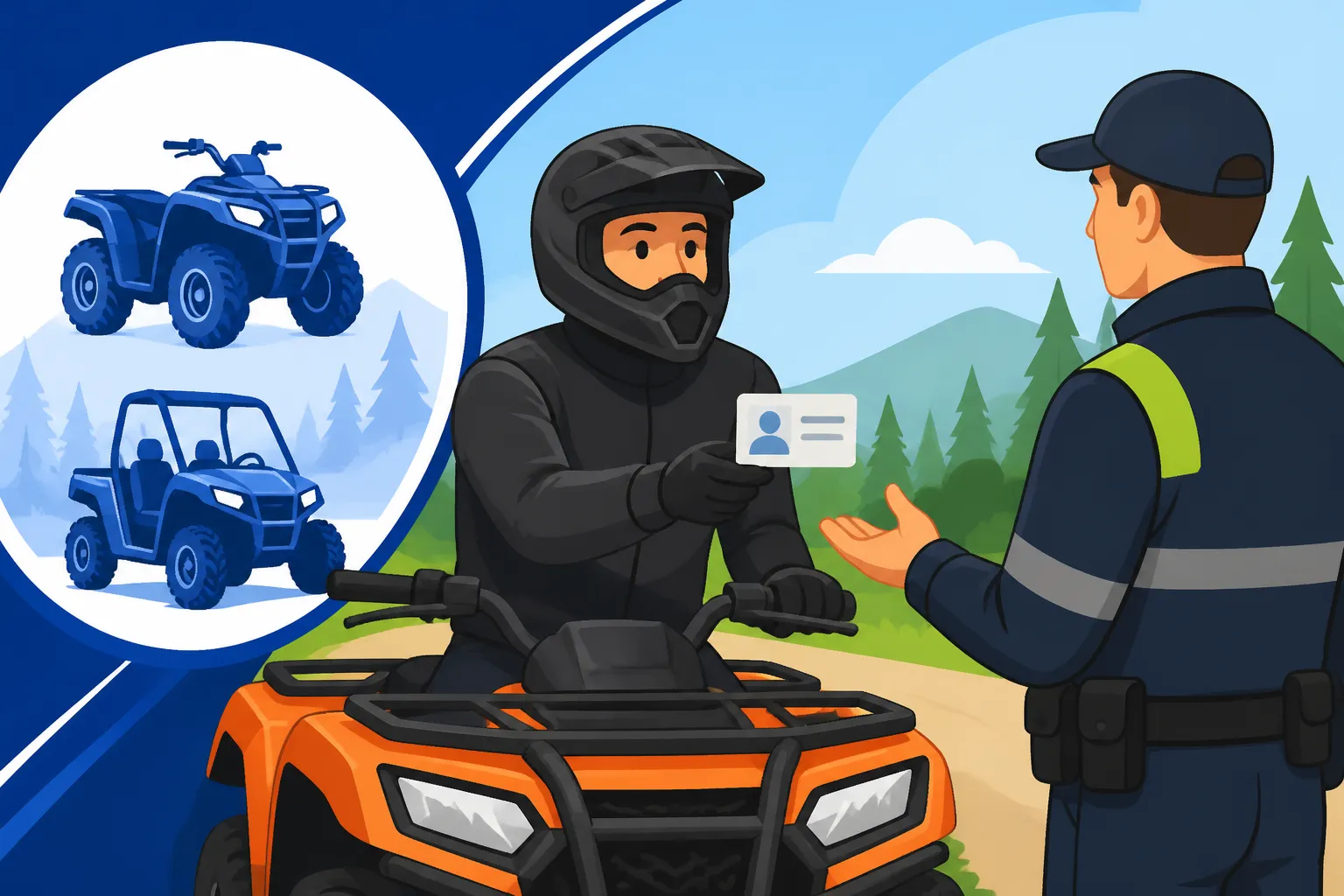
When you're stopped, the officer or patroller will typically approach your machine and greet you. They will then identify themselves and state the reason for the stop, which is almost always a routine check for documents. They will ask you to produce your driver's licence, your ATV's registration certificate (which includes proof of SAAQ insurance), and your FQCQ trail pass. If you're a younger rider (16 or 17), they'll also ask for your FQCQ training certificate.
During this interaction, it's best to keep your helmet on until instructed otherwise and keep your hands visible. Be polite, answer questions clearly, and retrieve your documents in a calm manner. Avoid any confrontational or defensive behaviour. The goal is to quickly verify your compliance and allow you to continue your ride. They might also quickly check your machine for basic equipment like mirrors or proper lighting, depending on the conditions and the specific type of patrol. A smooth interaction means you're back on the trail quickly. If you're curious about the general process, reading about [Being Stopped on a Trail] can offer more insights.
Common Checks a Patrol Will Perform
Beyond simply asking for your documents, patrols might conduct a few quick visual checks. These often include:
- Trail Pass Sticker: Is it properly affixed and visible on your machine? Is the year valid?
- Driver's Licence Photo: They'll compare your face to the photo on your licence to ensure it's you.
- Registration Details: They might cross-reference the VIN (Vehicle Identification Number) on your machine with the VIN on your registration to ensure it matches and that the machine isn't reported stolen.
- Machine Capacity: For side-by-sides, they may verify that you're not exceeding the manufacturer's passenger capacity.
- Age and Rider Status: If you look young, they'll be particularly vigilant about checking for the required age and, if applicable, the FQCQ training certificate.
- Basic Safety Equipment: This can include a quick check for headlights, taillights, a working horn, and mirrors. While not directly document-related, if they spot a major deficiency, it could lead to further questions or a warning.
These checks are usually quick and non-intrusive. The goal isn't to hold you up, but to maintain a safe and legal environment for everyone enjoying Quebec's incredible quad network. Being prepared means these checks are a formality rather than a potential problem.
The Repercussions of Incomplete or Missing Documentation
You might think, "What's the big deal if I forget one paper?" In the moment, it can feel like a minor oversight. However, under Quebec's Off-Highway Vehicle Act, failing to produce the required documents can lead to significant headaches, including fines, denial of trail access, and even complications with insurance. It’s definitely not worth the risk.
Fines and Penalties for Non-Compliance
Let's not beat around the bush: forgetting your documents can cost you money. The SAAQ and the FQCQ have established clear penalties for various infractions. For instance, operating an ATV or side-by-side without a valid driver's licence can lead to a substantial fine. Similarly, riding on federated trails without an [Quebec Penalties for Riding Without a Trail Pass] will incur a fine, as you're essentially trespassing on private land managed by the clubs.
Missing your registration or insurance proof can also lead to fines, as these are mandatory for operating any OHV in Quebec. For younger riders, not having that FQCQ training certificate, even if they have a licence, means they're riding illegally and can also face [Quebec Penalties for No Certificate]. These aren't just minor tickets; they can range from several hundred dollars to more, depending on the specific infraction and whether it's a repeat offence. The fines are designed to deter non-compliance and encourage all riders to respect the rules that keep the trails safe and accessible for everyone.
Being Refused Access or Turned Back
Beyond financial penalties, a patroller or officer has the authority to deny you access to the trail or even order you to turn back if you don't have the proper documentation. Imagine driving hours to reach a trailhead, only to be told you can't ride because you forgot your pass at home. It's a frustrating situation that's entirely avoidable.
This isn't done out of malice; it's a matter of enforcing the rules. The clubs, through the FQCQ, have agreements with landowners to cross their property, and those agreements often hinge on all riders being properly registered, insured, and having a valid trail pass. If you're found without these, you're putting those agreements, and the future of the trail network, at risk. Being turned back can ruin your day and waste a lot of time and effort you put into planning your ride. It's a strong incentive to always perform a quick check before you leave.
Impact on Insurance Claims
This is perhaps one of the most serious, yet often overlooked, repercussions. If you are involved in an accident while riding without a valid driver's licence, without proper registration, or without the mandatory liability insurance, your entire insurance claim could be compromised. Even if you have insurance, if you were operating the vehicle illegally at the time of the incident, your provider might deny coverage.
This could leave you personally liable for damages, medical expenses, and repair costs, which can easily run into the tens or even hundreds of thousands of dollars. The SAAQ provides mandatory basic liability insurance with your registration, but if your actions (like riding without a licence) invalidate that coverage, you're exposed. Always ensure you're riding legally, not just to avoid fines, but to protect yourself and your assets in the event of an unforeseen incident. Review your own policy as well, as some private policies might have clauses related to legal operation.
Practical Strategies for Carrying Your ATV Documents Safely
Nobody wants to be fumbling around in their jacket pockets or digging through a muddy storage box when a patroller asks for their papers. Having a system in place for carrying your documents safely, securely, and accessibly is a small effort that pays huge dividends in peace of mind.
Waterproofing and Accessibility
Quebec trails can be wet, dusty, or muddy, sometimes all in the same day. Your precious paper documents need protection from the elements. A simple, yet effective, solution is to place all your documents in a heavy-duty, zip-top plastic bag (like a freezer bag) or, even better, a dedicated waterproof document pouch. These can be found at outdoor gear stores or through ATV accessory providers. Many riders opt for waterproof cases or bags, often finding great options from accessory providers like SuperATV, to keep their important papers dry.
Once protected, consider where you'll store them. The best spot is a secure, easily accessible compartment on your ATV or side-by-side. Many machines have small glove boxes, under-seat storage, or handlebar bags that are perfect for this. The key is that it's easy for you to get to, but also secure enough that it won't fall out on a bumpy trail. Avoid putting them in a place that's difficult to open while wearing gloves or in an awkward position. For riders who really want to be organized, a compact, waterproof pouch designed for documents that can be securely attached to your machine, perhaps even one that integrates with larger storage systems from a brand like SuperATV, can be a game-changer. This ensures they're always with the machine and not accidentally left behind.
Digital Copies Versus Physical Originals
In today's digital age, it's tempting to rely on digital copies of your documents stored on your phone. While a photo of your registration or insurance might seem like a good backup, it's crucial to understand that under Quebec law, you generally need to produce the original physical document for your driver's licence, registration, and FQCQ training certificate. A physical trail pass sticker is also mandatory.
However, having digital copies of some documents, like your insurance certificate or a photo of your trail pass, can be a good secondary measure. It could potentially help if your physical document is damaged or lost mid-ride, but it will unlikely satisfy a legal requirement on its own. It's always best to carry the original physical documents. You definitely don't want to get into a debate with a patroller over [Does a Phone Photo Count as Proof on Trail?]. The safest bet is always to have the hard copies.
Pre-Ride Checklist Habits
The single best strategy for ensuring you have all your documents is to develop a consistent pre-ride checklist. Make it a habit to physically check for your:
- Driver's Licence: In your wallet, on your person.
- Registration Certificate: Waterproofed, in a secure compartment.
- Insurance Proof: Usually on the registration certificate, but if separate, keep it with the registration.
- FQCQ Trail Pass: Sticker affixed, and paper confirmation (if you have it) waterproofed and with the other documents.
- FQCQ Training Certificate (if applicable): Waterproofed, with other documents.
This quick routine, performed before every ride, will save you a lot of potential stress. Beyond just documents, a well-prepared machine makes for a smoother interaction if you're stopped. Making sure your machine is up to par with quality mirrors, lights, and perhaps even protective gear like skid plates, some of which you can find through suppliers such as SuperATV, ensures you're not just compliant but also safe on the trails. You might even have a designated "document pouch" that you grab and go, knowing everything you need is inside. Establishing this habit will ensure that every time you head out on the trails, you're fully prepared for whatever comes your way, including a friendly chat with a trail patroller. Keep in mind that for [Carrying Papers on a Long Ride], having them readily accessible and protected becomes even more critical due to varying conditions and distances.
Disclaimer
This article is for general informational purposes only and does not constitute professional advice. Laws, prices and regulations vary by location and change over time. Consult a qualified professional for guidance on your specific situation.