Quebec Fines for Riding Without a Licence
There's nothing quite like the feeling of hitting the trails in Quebec, the wind in your hair, the roar of your machine under you, and the vast wilderness stretching out before you. But that blissful feeling can come crashing down fast if you're stopped by a trail patrol or police officer and can't produce the right paperwork. One of the most common, and unfortunately, most costly, mistakes riders make is hitting the trails without a valid driver's licence. This guide is going to walk you through exactly why a licence is mandatory, what kind of penalties you face if you're caught without one, and how to make sure your next ride is worry-free.
The Harsh Reality: Why a Licence is Non-Negotiable in Quebec
It's a common misconception, especially for those new to off-road riding or visiting from other provinces, that an ATV or UTV is "just a recreational vehicle" and doesn't require the same level of legal formality as driving a car. I hear it all the time from folks who tell me, "But I'm only on a trail, not a road!" or "My machine isn't registered, so why would I need a driver's licence?" The truth, my friends, is a lot simpler and far more serious: if you're operating an off-road vehicle (what Quebec officially calls a VHR, or véhicule hors route) anywhere beyond your own private, completely enclosed property, you must hold a valid driver's licence.
Since September 10, 2021, the Quebec government really tightened the reins with its new Off-Highway Vehicle Act (often referred to by its French acronym, LVHR). This law clearly states that any person operating an off-road vehicle must hold a Class 1, 2, 3, 4A, 4B, 5, or 6A, 6B, 6C, or 8 driver's licence. Essentially, if you can legally drive a car or a motorcycle on the road, you're good to go. This isn't just about safety; it's about accountability. The province wants to ensure that anyone behind the handlebars or wheel of these powerful machines has demonstrated a baseline understanding of road rules and responsible operation, even if they're not technically on a road. This fundamental requirement is often overlooked, leading to some truly unpleasant encounters on the trail. Just because your machine is set up with awesome SuperATV accessories doesn't mean you're exempt from the basic legal requirements for operating it.
The intent behind this rule is multifold. Firstly, it ensures that riders have passed some form of driving test, proving they have basic control skills and knowledge of traffic laws. Even on trails, you're still interacting with other riders, pedestrians, and sometimes crossing public roads. Secondly, it provides a layer of identification and accountability in case of an accident. If something goes wrong, law enforcement needs to be able to identify the operator quickly and reliably. Finally, it integrates off-road vehicle operation into the broader framework of vehicle regulations, making it easier for authorities to enforce safety standards and manage incidents.
What Kind of Licence Do You Actually Need?
So, you know you need a licence. But what kind of licence exactly? This is where some folks get tripped up, especially if they've only ever held a specific class of licence. The good news is that Quebec's Off-Highway Vehicle Act is quite inclusive regarding driver's licences for off-road vehicles.
The law explicitly states that a driver must hold a Class 1, 2, 3, 4A, 4B, 5, or 6A, 6B, 6C, or 8 driver's licence. For most of us, this means if you have a regular Class 5 driver's licence, the one you use to drive your car, you're all set. If you're a motorcycle enthusiast with a Class 6 licence, you're also covered. Even those with heavy vehicle licences (Classes 1-4) or farm machinery licences (Class 8) are good to go. The key takeaway here is that you need some form of valid driver's licence issued by the SAAQ or an equivalent authority if you're visiting from out of province or country. It must be a full, valid licence, not a learner's permit, unless you are strictly on private land under specific conditions. Remember, you can read more about this in [Quebec Requires a Driver's Licence Since 2021].
The age requirements are also tied into this. While a 16 or 17-year-old can obtain a training certificate to ride an ATV, they still need to meet the licensing requirements for the type of machine they're operating, especially for side-by-sides. If you're riding a two-up ATV, a traditional single-rider quad, or a utility vehicle, your standard Class 5 car licence typically covers you. However, for specific types of machines or if you're under 18, there might be additional stipulations or training requirements. Always carry your physical licence with you when riding. A photo on your phone might not cut it for a trail patrol officer who needs to verify your identity and licensing status on the spot. This is critical for [What a Patrol Can Ask to See].
| Licence Class | Typical Vehicle Type | Valid for Off-Road Vehicles? | Notes |
|---|---|---|---|
| Class 1 | Heavy Vehicles | Yes | Covers large trucks, trailers. |
| Class 2 | Buses | Yes | Covers buses with 25+ passengers. |
| Class 3 | Trucks (medium) | Yes | Covers trucks with two axles. |
| Class 4A | Emergency Vehicles | Yes | Covers ambulances, police cars, etc. |
| Class 4B | Taxis | Yes | Covers taxis, remunerated transport. |
| Class 5 | Passenger Vehicles | Yes | Your standard car licence. Most common. |
| Class 6A | Motorcycles | Yes | Covers all motorcycles. |
| Class 6B | Motorcycles (limited) | Yes | Covers limited-speed motorcycles. |
| Class 6C | Motorcycles (scooters) | Yes | Covers motor scooters, mopeds. |
| Class 8 | Farm Vehicles | Yes | Covers farm tractors, special vehicles. |
It's clear from this table that the SAAQ intends for off-road vehicle operators to have demonstrated general driving competency. This broad inclusion simplifies things for most riders but leaves no room for operating without any licence at all.
The Fines: What Happens When You're Caught Without a Licence
Alright, let's get down to the nitty-gritty: the fines. This is where things can get really uncomfortable, really fast. The Quebec Off-Highway Vehicle Act (LVHR) is quite specific about the penalties for not having a valid driver's licence. It's not just a slap on the wrist; these fines are designed to deter riders from taking unnecessary risks and ensure compliance.
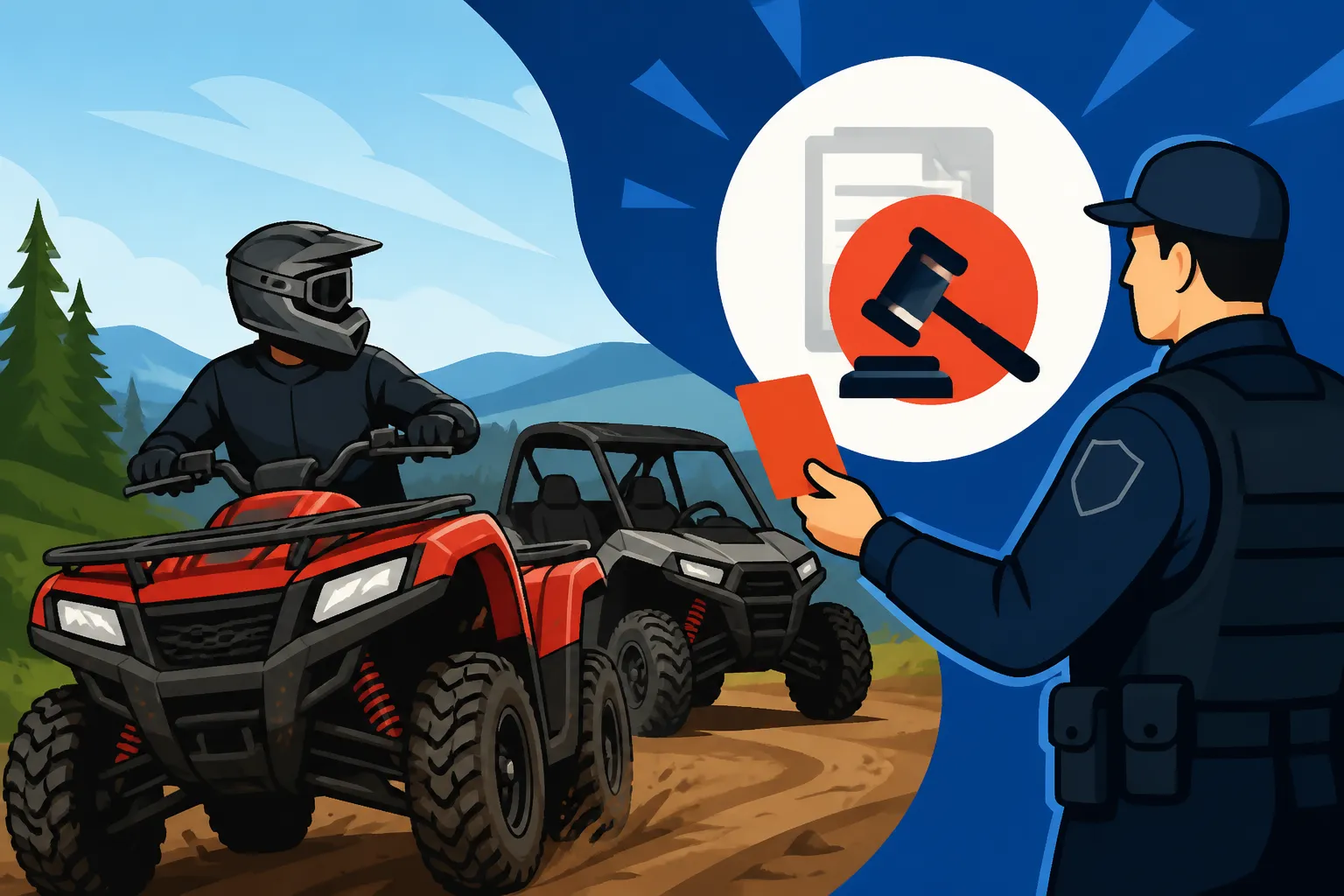
If you are caught operating an off-road vehicle without a valid driver's licence, you're looking at a fine ranging from $350 to $700. And trust me, that's just the starting point. This doesn't include administrative fees or potential additional charges if other infractions are discovered during the stop. Imagine planning a fun weekend ride, maybe with some new SuperATV gear you just installed, only to have a significant chunk of your budget wiped out by a single, avoidable fine. It's enough to sour anyone's day, if not their entire season. This is explicitly covered in Quebec Fines for Riding Without a Licence.
And it's not just about the money. Being caught without a licence can lead to other complications. Your machine could be impounded, especially if the officer deems it a repeated offence or if you're operating in a particularly reckless manner. Getting your machine back from impound can be a logistical nightmare and will certainly add to your expenses, including towing and storage fees. This kind of situation can easily turn a few hundred dollars into over a thousand, plus the sheer inconvenience and stress. It really emphasizes why you need to be familiar with [Quebec Penalties for Riding Unregistered] too, as these two often go hand-in-hand. An unregistered machine without a licensed driver is a double whammy.
Beyond the immediate financial hit, there are other long-term implications. While operating an off-road vehicle doesn't directly impact your road driving record in the same way a speeding ticket in your car might, frequent run-ins with law enforcement can flag you for future scrutiny. It's simply not worth the risk. Always ensure you have your licence, your registration, and your trail pass before you even think about putting the key in the ignition. Your best bet is to review [Quebec Registration Paperwork Checklist] before every ride.
Beyond the Fine: Other Consequences and How to Avoid Them
The immediate fine is just the beginning if you're caught without a proper licence. There are several other consequences, both direct and indirect, that can make your life much more complicated. Let's talk about insurance, for starters.
Your off-road vehicle insurance, which is mandatory in Quebec (every machine carries a minimum liability as part of its registration), is typically contingent on you operating the vehicle legally. If you're involved in an accident while riding without a valid driver's licence, your insurance provider could absolutely deny coverage. This means you would be personally responsible for all damages, injuries, and legal costs arising from the incident. Think about it: if you cause an accident and the other party suffers serious injuries, you could be facing hundreds of thousands, or even millions, of dollars in claims. That mandatory $1 million liability insurance that comes with your SAAQ registration is only there to protect you if you're following the rules. If you're deemed to be operating illegally, that protection could vanish. This is a huge risk, far outweighing the cost of a licence or the perceived convenience of skipping the licensing process. Always be sure to carry proof of insurance with you, as outlined in [Quebec Insurance Proof on the Machine].
Then there's the legal hassle. Being caught without a licence can escalate if you don't cooperate with law enforcement or if other infractions are present. You might find yourself having to appear in court, which means taking time off work, hiring legal counsel, and enduring a stressful, drawn-out process. This isn't just a simple ticket anymore; it's a legal proceeding with potentially serious repercussions beyond just the fine. For example, if you're involved in an accident and don't have a licence, it significantly complicates [Quebec Accident Reporting Rules] and can make an already stressful situation much, much worse.
So, how do you avoid all this grief? It's really quite simple:
- Get a Licence: If you don't have one, enroll in driver's education and obtain a valid Class 5 (car) or Class 6 (motorcycle) licence. It's a foundational step for any motorized vehicle operation in Quebec.
- Always Carry Your Licence: Make it a habit. Just like your wallet and keys, your driver's licence should be with you every time you ride. Don't rely on a phone photo; carry the physical card.
- Know the Rules: Stay informed about the current Quebec Off-Highway Vehicle Act. Rules can change, and it's your responsibility as a rider to know what's expected of you. Sites like SuperATV are great for parts, but for rules, you need to check official SAAQ or FQCQ resources. You can learn more about general regulations in [Quebec ATV Road Rules Under the LVHR].
- Stay Sober: While not directly about licensing, impaired riding significantly compounds any penalties, especially if you're also unlicensed. It's a recipe for disaster and severe legal consequences.
Being a responsible rider means more than just knowing how to handle your machine; it means understanding and respecting the laws that govern its use. A valid driver's licence is the cornerstone of that responsibility in Quebec.
Disclaimer
This article is for general informational purposes only and does not constitute professional advice. Laws, prices and regulations vary by location and change over time. Consult a qualified professional for guidance on your specific situation.