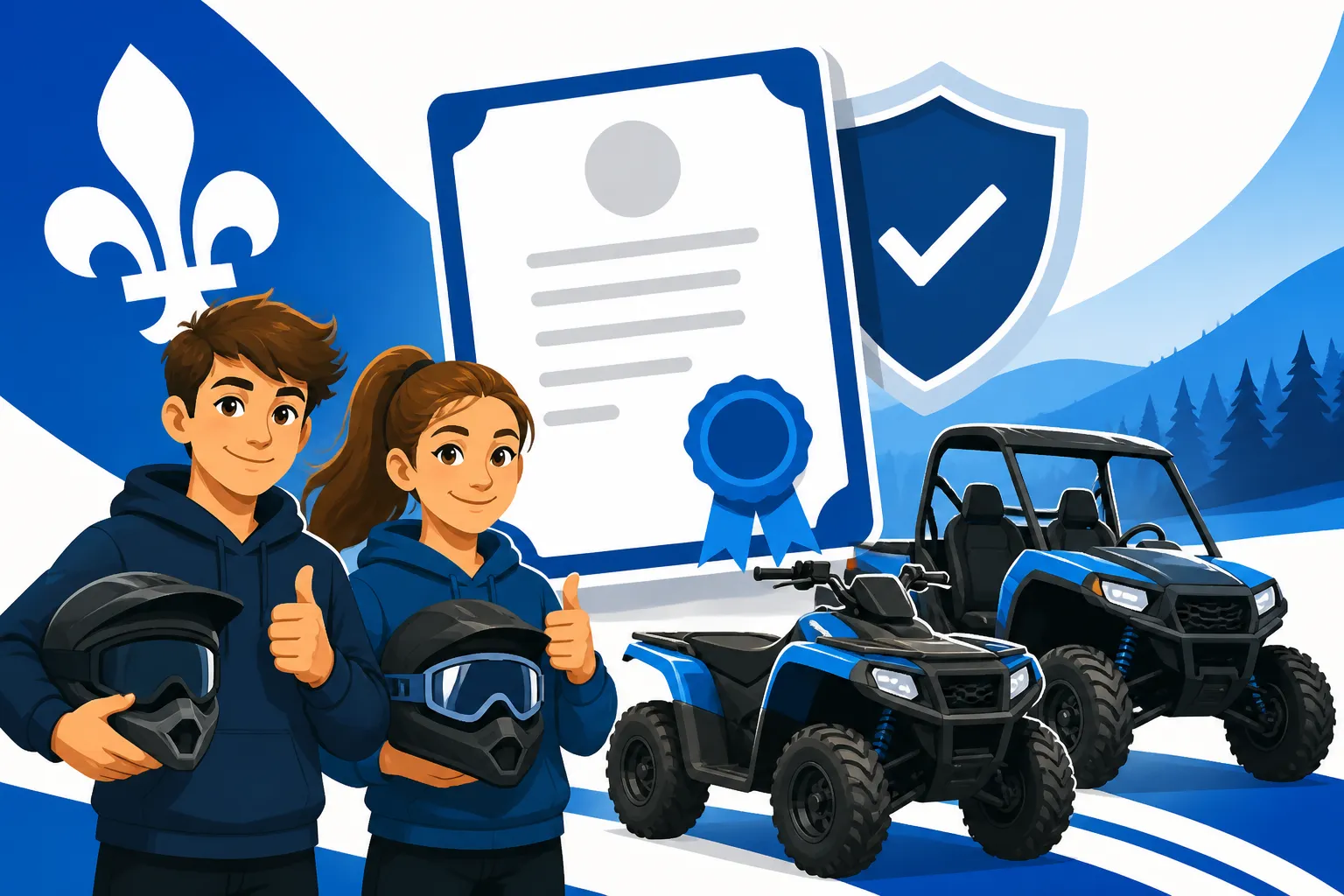
Quebec FQCQ Training Certificates for Teens
It can be incredibly frustrating for teenagers in Quebec who are eager to hit the trails on an ATV, only to discover that the rules are far more complex than just having a machine and a helmet. Many parents also feel a bit lost trying to navigate the specific requirements to ensure their kids can ride legally and safely. This comprehensive guide will walk you through everything you need to know about the mandatory FQCQ (Fédération Québécoise des Clubs Quads) training certificate for teen riders in Quebec, ensuring they can enjoy the sport responsibly.
Understanding Quebec's Rules for Teen Riders
Quebec has put significant emphasis on safety for off-highway vehicle (OHV) riders, especially when it comes to younger operators. These rules are designed to protect both the rider and other trail users, acknowledging that ATVs and side-by-sides are powerful machines that require skill and respect. It's not about stifling fun, but about ensuring everyone comes home safe.
Why the FQCQ Certificate is Mandatory
The introduction of stricter regulations, particularly with the amendments to [What Quebec's Off-Highway Vehicle Act Changed for Owners], has made formal training a cornerstone of legal ATV operation for teenagers. The FQCQ training certificate isn't just a piece of paper; it represents a commitment to understanding the nuances of safe riding, trail etiquette, and emergency procedures. The province recognizes that a supervised ride around the backyard doesn't necessarily prepare a young person for the varied terrains, potential hazards, and shared spaces found on the vast network of Quebec's federated trails. This mandatory certificate ensures a baseline of competence and knowledge for these young riders before they encounter real-world trail conditions. It's a proactive measure to reduce accidents and foster a culture of safety.
Age Requirements and Machine Types
One of the first hurdles for eager young riders and their parents is understanding the specific age requirements for different types of off-road machines. In Quebec, the rules are quite clear: a person must be at least 16 years old to operate an ATV on a federated trail or any other authorized off-road area. However, being 16 is just the starting point; it also comes with the strict requirement of holding that FQCQ training certificate. The rules get even more specific when it comes to side-by-sides (SxS). For these larger, often more powerful machines, the minimum age jumps to 18 years old, regardless of whether the driver holds an FQCQ certificate or not. This distinction between ATVs and side-by-sides is crucial and often overlooked by newcomers to the sport. It's not just about horsepower, but also about the stability, handling characteristics, and the potential for carrying passengers that differentiate these vehicle types in the eyes of the law. You can delve deeper into these nuances by reading [Quebec ATV Age Requirements].
What Happens Without a Certificate
Ignoring the requirement for an FQCQ training certificate for teen riders aged 16 and 17 who want to ride on designated trails can lead to significant consequences. It’s not just a slap on the wrist; patrols on federated trails, whether they are police officers or authorized club volunteers, have the authority to stop riders and request proof of their license, registration, and, for teens, the training certificate. Without this certificate, a teen driver is essentially operating illegally, and this can result in substantial fines for both the young rider and potentially their supervising adult or parent. Imagine planning a fantastic weekend trip, driving hours to a beautiful trail, only to be turned back or fined because a critical piece of paperwork is missing. Beyond the financial penalties, there’s the very real risk of insurance complications in the event of an accident. An insurance company might deny coverage if the operator was not legally qualified to ride, leaving you personally liable for damages or injuries. It's far better to invest the time and effort upfront to secure the certificate than to face the fallout of non-compliance. You can learn more about the specific consequences in [Quebec Penalties for No Certificate].
What the FQCQ Training Certificate Entails
The FQCQ training certificate isn't a rubber stamp; it's a comprehensive program designed to instill practical skills and theoretical knowledge crucial for safe and responsible ATV operation. It goes beyond basic machine control, covering everything from risk assessment to environmental considerations.
Course Content and Structure
The FQCQ training course is meticulously designed to provide a well-rounded education for teen ATV riders. It typically combines classroom theory with extensive hands-on practical exercises. In the theoretical portion, participants will learn about the current [Quebec's Off-Highway Vehicle Act and Your Papers], including traffic laws specific to off-road vehicles, trail signage, environmental protection, and basic machine mechanics. There's a strong emphasis on risk assessment, understanding the effects of alcohol and drugs, and emergency procedures. This isn't just memorizing facts; it's about developing a safety-first mindset.
The practical component is where the real learning happens. Under the direct supervision of certified instructors, teens get behind the handlebars and practice essential maneuvers in a controlled environment. This includes starting and stopping safely, proper turning techniques at various speeds, navigating obstacles, ascending and descending hills, and managing different types of terrain. They also learn about proper body positioning, weight transfer, and how to react to unexpected situations on the trail. The goal is to build confidence through competence, ensuring that when they encounter varied conditions on a real trail, they have the muscle memory and decision-making skills to handle it safely. The typical [Quebec Training Course Length] ensures enough time for both theory and practice to sink in.
Who Can Teach the Course
For an FQCQ training certificate to be valid, the course must be delivered by an instructor who is certified and accredited by the FQCQ itself. You won't find just anyone offering these courses; there's a specific training program for instructors to ensure they meet the high standards set by the federation. These instructors are not only skilled riders themselves but are also trained in teaching methodologies, safety protocols, and first aid. They understand how to effectively communicate complex information, demonstrate maneuvers clearly, and provide constructive feedback to developing riders. Often, these courses are organized through local ATV clubs affiliated with the FQCQ or through independent training centers that have received official accreditation. It's always a good idea to confirm the accreditation of any course provider before enrolling, ensuring that the certificate your teen earns will be officially recognized.
How Long the Certificate is Valid
One of the common questions parents and teens have is about the validity period of the FQCQ training certificate. The good news is that once a teen successfully completes the course and receives their certificate, it's generally considered a one-time requirement. There isn't an annual renewal process like you might find with some other licenses or passes. However, while the physical certificate itself doesn't expire, the skills and knowledge it represents do need to be maintained. Just like any other skill, ATV riding proficiency can diminish over time if not regularly practiced. The FQCQ encourages riders, even those with long-standing certificates, to periodically refresh their knowledge and skills, especially if they haven't ridden in a while or are transitioning to a different type of machine. Think of it as a driver's license for a car – once you have it, you don't re-test every year, but you still need to drive regularly to stay sharp and safe.
The Process of Obtaining the Certificate
Getting the FQCQ training certificate for your teen might seem like a daunting task, but by breaking it down into manageable steps, you'll find it's a straightforward process. The key is knowing where to start and what to prepare.
Finding an Approved Training Provider
The first step in securing that all-important FQCQ training certificate is locating an approved training provider. The most reliable place to start your search is on the official FQCQ website. They maintain an updated list of accredited instructors and training centers across Quebec. Many local ATV clubs, which are members of the FQCQ, also organize and host these training sessions. These clubs are often fantastic resources, not only for training but also for connecting with the local riding community, finding out about trail conditions, and getting advice from experienced riders. When you contact a provider, be sure to ask about their upcoming course dates, locations, and what’s included in the course fee. Some providers may offer specific courses tailored to different age groups or experience levels, so clarifying this upfront can be helpful. Don't be shy about asking questions; a good provider will be happy to explain their program thoroughly.
Registration and Prerequisites
Once you've identified a suitable training provider, the next step is registration. This typically involves completing an application form and paying the course fee. It’s always best to register in advance, as courses can fill up quickly, especially during peak seasons like spring and summer. Before your teen can begin the course, there are a few important prerequisites to keep in mind. First and foremost, the teen must meet the minimum age requirement of 16 years old to ride an ATV. They will also need to bring a valid form of identification, often a birth certificate or passport, to verify their age. While not always a strict prerequisite for the course itself, it's worth noting that to legally ride on federated trails, a driver's license is required, so working towards that is also important. The training provider will outline any other specific requirements, such as bringing appropriate riding gear (helmet, boots, gloves), a specific type of ATV if they are using their own, or any [Quebec Parental Authorization Forms] if applicable. Ensuring all these details are taken care of before the course begins will make the entire process much smoother.
What to Expect During the Course
A typical FQCQ training course is an immersive experience designed to build both theoretical knowledge and practical skills. On the first day, often starting with classroom instruction, teens will cover the basics of ATV safety, the laws governing off-highway vehicles, and environmental awareness. This theoretical session sets the foundation for understanding why certain riding techniques and safety precautions are so vital. Following the classroom portion, the focus shifts to hands-on practical training. Teens will spend a significant amount of time on ATVs, guided by certified instructors through various drills. They'll practice turning, braking, emergency stopping, navigating ascents and descents, and crossing obstacles. These exercises are conducted in a safe, controlled environment, allowing riders to make mistakes and learn from them without real-world consequences. Instructors provide constant feedback, correcting posture, throttle control, and steering techniques. There's often a mix of individual practice and group exercises, fostering a sense of camaraderie among the young riders. By the end of the course, there's usually a short written assessment to confirm theoretical understanding and a practical evaluation to demonstrate proficiency. The feeling of accomplishment when that certificate is handed over is truly rewarding.
Costs, Renewal, and Proof of Certification
Understanding the financial commitment, the lack of a renewal process, and the importance of carrying proof are all crucial aspects of the FQCQ training certificate. These details ensure you're fully prepared for legal and safe riding.
Understanding the Fees Involved
When considering the FQCQ training certificate, it's natural to wonder about the [Quebec Training Certificate Cost]. While specific figures can fluctuate and vary between different training providers, it's important to view this as an investment in safety and compliance, rather than just an expense. The fee typically covers the instructor's time, the use of training facilities, course materials, and the administrative cost of issuing the certificate itself. Some providers might include the use of an ATV and safety gear, while others might require participants to bring their own. It's always best to inquire about the full cost breakdown when you register to avoid any surprises. Remember, this is a one-time fee for the certificate itself, and it opens the door for legal riding on Quebec's extensive trail network for years to come. Compared to potential fines for riding without a certificate or the costs associated with an accident where proper training was lacking, the course fee is a small price to pay for peace of mind and safe enjoyment.
Carrying Proof of Certification on the Trail
Once your teen has successfully completed their FQCQ training and received their certificate, it’s imperative that they carry proof of it whenever they ride on a federated trail or any public off-road area. This is not a suggestion; it is a legal requirement. Trail patrols, whether from the Sûreté du Québec or authorized club volunteers, have the right to stop riders and request to see their documentation. Along with a valid driver's license (or learner's permit with conditions), ATV registration, and proof of liability insurance, the FQCQ training certificate is a mandatory piece of paperwork for 16 and 17-year-olds. A physical card or document is typically provided upon completion of the course, and it should be kept in a safe, waterproof place on the machine or on the rider, easily accessible if requested. A laminated copy or even a clear, readable photo on a smartphone might be accepted in some instances, but it’s always safest to have the original document or a high-quality copy. Failing to produce this proof can lead to fines, even if the teen has completed the training. Make sure your teen knows exactly where to keep their documents and understands the importance of presenting them respectfully when asked. This is also covered under [Carrying Papers on a Long Ride].
When the Certificate Isn't Needed (and Why)
While the FQCQ training certificate is mandatory for 16 and 17-year-olds riding ATVs on federated trails, there are specific, limited circumstances where it might not be required. The primary exception is when a teen is riding exclusively on private land that they or their immediate family own, and which is not part of any federated trail network. In these cases, the Quebec Off-Highway Vehicle Act's requirements for registration, insurance, and the training certificate generally do not apply. However, even on private land, common sense and safety dictate that proper training is always advisable. Additionally, if a 16 or 17-year-old is participating in a supervised, organized event or activity specifically designed for training purposes on a closed course, the certificate might not be required for that specific event, as it is part of the learning process itself. It's crucial not to misinterpret these exceptions as loopholes. The moment a teen rider steps a wheel onto a designated trail, a public road shoulder (where permitted), or any other area covered by the Act, the certificate becomes mandatory. Always err on the side of caution and ensure compliance if there's any doubt about the riding location. Even for activities on private land, parents should consider [Parental Authorization in Writing] for specific situations.
Beyond the Certificate: Essential Safety for Teen Riders
While the FQCQ training certificate is a vital first step, true safety for teen ATV riders extends far beyond completing a course. It encompasses proper gear, well-maintained machines, ongoing parental involvement, and making smart choices about the ATV itself.
Proper Gear and Machine Maintenance
Having the FQCQ certificate is a huge step, but it's only one part of the safety puzzle. Equipping your teen with proper riding gear is non-negotiable. This includes an approved helmet that fits correctly, eye protection (whether a visor or goggles), sturdy over-the-ankle boots, gloves, and durable long pants and long-sleeved shirts. This gear isn't just for show; it's designed to protect against impacts, abrasions, and flying debris. You can find more details on [Quebec Helmet and Visor Rules].
Beyond personal protection, the ATV itself needs to be in tip-top shape. Regular machine maintenance is critical. This means checking tire pressure, oil levels, brakes, lights, and ensuring all controls are functioning smoothly before every ride. A well-maintained machine is a predictable machine, reducing the chances of mechanical failure on the trail. For those who want to enhance the durability and protection of their teen's ATV, considering aftermarket parts like heavy-duty skid plates or A-arm guards from companies like SuperATV can provide an extra layer of peace of mind. These additions can absorb impacts from rocks and roots, safeguarding critical components and making the machine more resilient to the inevitable bumps and scrapes of trail riding. Ensuring the machine is ready is just as important as ensuring the rider is ready.
Parental Responsibilities and Supervision
Even after a teen receives their FQCQ training certificate and begins riding on authorized trails, parental responsibilities don't end there; they simply evolve. For 16 and 17-year-olds, the law still requires a level of supervision. While they gain more independence with their certificate and driver's license, parents remain key in fostering a continued culture of safety. This means regularly discussing trail conditions, checking in on their riding habits, and ensuring they are always adhering to speed limits and other trail rules. It also means leading by example – if you ride, ensure you're always wearing your gear and following regulations. For younger teens, or those riding on private land, [Adult Supervision Off Family Land] remains crucial. Parents should also ensure their teen has emergency contacts, knows basic first aid, and understands how to use a cell phone or other communication device on the trail, especially in areas with limited signal. The certificate is a foundation, but ongoing guidance from parents helps build a truly responsible rider.
Choosing the Right Machine for a Teen
Selecting the appropriate ATV for a teen rider is a decision that significantly impacts their safety and enjoyment. It's not just about what looks cool; it's about matching the machine's size, power, and features to the rider's skill level, physical stature, and maturity. Starting with a machine that is too powerful or too large can quickly overwhelm a new rider, leading to loss of control and potential accidents. Look for ATVs that are appropriately sized, allowing the teen to comfortably reach the handlebars, footpegs, and controls, and to shift their weight effectively. Engine size also plays a critical role. Many manufacturers offer models specifically designed for youth or intermediate riders with governed speeds and less aggressive power delivery.
It's tempting to think about upgrades, but for a developing rider, simplicity and reliability are often more valuable than raw power. However, if you're looking to enhance safety and control through specific modifications, reputable brands like SuperATV offer components that can improve handling, stability, and rider comfort. For instance, replacing worn suspension components, adding ergonomic handlebars, or improving lighting for better visibility can all contribute to a safer riding experience without necessarily increasing the machine's speed. Always refer to the manufacturer's recommendations for age and weight limits for any ATV. The goal is to provide a machine that allows the teen to build confidence and skills gradually, fostering a lifelong love of the sport rather than an early, negative experience.
| Requirement / Item | Teen (16-17) ATV Rider (Federated Trail) | Teen (16-17) ATV Rider (Private Land) | Adult (18+) ATV Rider (Federated Trail) |
|---|---|---|---|
| FQCQ Training Certificate | Mandatory | Not required | Not required |
| Valid Driver's License | Mandatory | Not required | Mandatory |
| Quebec VHR Registration | Mandatory | Not required | Mandatory |
| Quebec Liability Insurance | Mandatory | Not required | Mandatory |
| Helmet & Eye Protection | Mandatory | Highly recommended | Mandatory |
| Minimum Age for ATV | 16 | Varies (Parental Discretion) | 16 |
| Minimum Age for Side-by-Side | 18 | 18 (Private Land May Vary) | 18 |
| Parental Authorization (if req.) | Yes (for license/some activities) | Yes | Not applicable |
| Carrying Proof on Trail | Mandatory | Not applicable | Mandatory |
Disclaimer
This article is for general informational purposes only and does not constitute professional advice. Laws, prices and regulations vary by location and change over time. Consult a qualified professional for guidance on your specific situation.