30 km/h With Frequent Stops
Navigating the rules for ATV and UTV use in Quebec can sometimes feel like trying to hit a moving target, especially when it comes to specific exceptions for work-related activities. Many riders wonder if there's any leeway on speed limits or even helmet requirements when they're simply doing their job. This guide will clarify the nuances of the "30 km/h with frequent stops" rule, explaining who qualifies, why it exists, and how to ensure you're always riding within the spirit and letter of Quebec's off-highway vehicle laws.
Understanding the "30 km/h With Frequent Stops" Rule
When you think about ATV riding in Quebec, the general speed limit that often comes to mind for off-highway vehicles on federated trails is 50 km/h. This is the standard expectation for recreational riding, keeping everyone safe on shared paths. However, Quebec's Act respecting off-highway vehicles (LVHR) acknowledges that not all ATV use is for leisure. There are specific, essential tasks that require a different approach, particularly when it comes to speed and the need for constant vigilance.
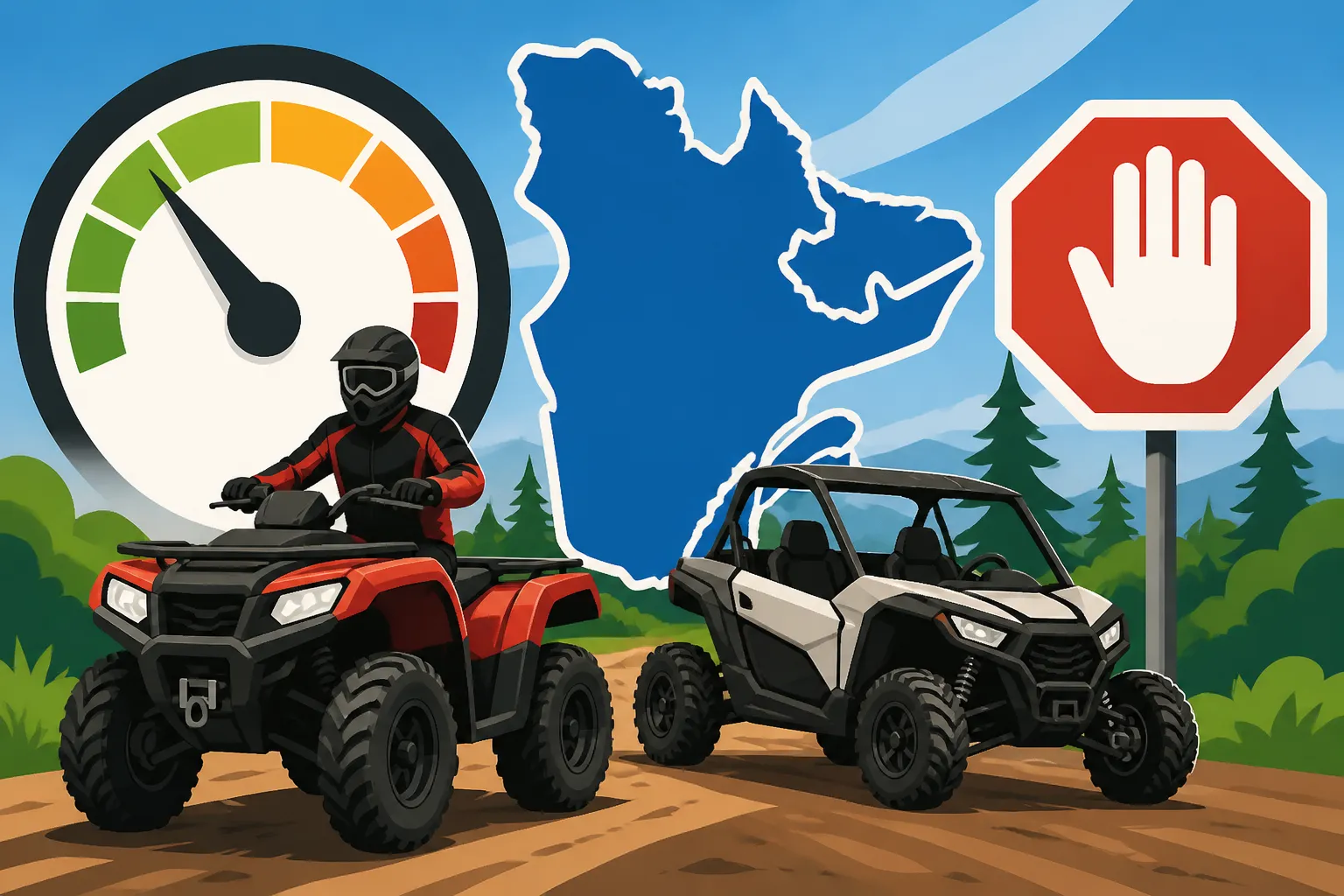
The "30 km/h with frequent stops" rule is one of these crucial exceptions. It's not a suggestion or a general guideline; it's a defined condition under the law that allows certain individuals to operate their off-highway vehicles at a significantly reduced speed for specific purposes. The core idea here is that if you're engaged in work that inherently demands lower speeds and repeated pauses, the law provides a framework to accommodate that. This isn't about simply choosing to ride slowly; it's about the nature of the activity itself dictating the operational parameters. It's a recognition that hauling equipment, inspecting a trapline, or checking livestock requires a different pace than zipping down a scenic trail.
This exception is designed to support practical, often remote, work without unduly penalizing those who contribute to Quebec's economy and land management. It's a fine line, though, between legitimate work and leisurely riding, and understanding the criteria is paramount. Misinterpreting this rule can lead to fines and unnecessary headaches, so knowing when and how it applies is key to staying compliant. It's a reflection of Quebec's attempt to balance recreational enjoyment with the practical realities of using ATVs as essential work tools in vast and varied terrains.
Who Qualifies for This Specific Exemption in Quebec?
The "30 km/h with frequent stops" exception isn't a blanket permission for anyone to ride slowly. It's specifically tailored for individuals whose work requires them to move at a reduced pace, often in remote or challenging environments, and to stop regularly to perform tasks. The primary beneficiaries of this rule are often trappers, farmers, and certain types of workers whose jobs take them off the beaten path.
Trappers and Their Unique Needs
One of the most common and clear-cut examples of someone who qualifies for the "30 km/h with frequent stops" rule is a trapper. Imagine traversing a vast, remote trapline, checking dozens of traps, often in dense bush or over uneven terrain. This isn't a high-speed activity. A trapper needs to navigate slowly, scan the surroundings, dismount frequently to check traps, reset them, or collect pelts. The speed limitation of 30 km/h perfectly reflects this deliberate, stop-and-go nature of their work.
Furthermore, this is where the [Trapping Under 30 km/h Without a Helmet] exception comes into play. When a trapper is operating at this specific low speed, with frequent stops, and performing their professional duties, the requirement to wear a helmet is relaxed. This isn't because helmets aren't safe, but because the nature of trapping often requires heightened peripheral vision and hearing to identify signs of wildlife or to navigate complex, overgrown areas, which can sometimes be hampered by a full helmet or visor. The emphasis is on the professional activity being conducted at a very low speed with constant interruptions. It's a highly specific concession to the realities of a traditional livelihood.
Farmers Using ATVs for Agricultural Work
Farmers in Quebec also frequently rely on their ATVs and UTVs as essential tools for daily operations. Whether it's inspecting miles of fencing, moving feed to livestock in distant pastures, checking crop conditions, or accessing remote parts of their land, these tasks demand slow, deliberate movement with many stops. For instance, a farmer might be driving along a field edge, stopping every few hundred feet to examine plants for pests or disease, or to make minor repairs to irrigation systems.
These scenarios clearly fit the "30 km/h with frequent stops" criteria. The machine is being used as a work vehicle, not for recreation. The tasks involve a direct, hands-on engagement with the land and require a speed that allows for detailed observation and frequent dismounting. For farmers, their ATV or side-by-side isn't just transport; it's a mobile workstation. Companies like SuperATV offer a range of utility accessories, from robust cargo boxes to plows, that enhance the functionality of these machines for agricultural purposes, making them even more indispensable for tasks requiring frequent stops. Knowing the [Quebec Rules for a Farmer on a Quad] helps farmers stay compliant while getting their critical work done.
Workers in Remote or Specialized Fields
Beyond trappers and farmers, other professionals whose work often takes them into remote areas or requires specialized operation of an off-highway vehicle might also fall under this exception. This could include forestry workers conducting surveys, hydro line inspectors checking remote power lines, or even certain environmental researchers. Their activities often involve navigating rough terrain, carrying specialized equipment, and stopping to take measurements, perform maintenance, or conduct observations.
In these cases, the "30 km/h with frequent stops" rule allows them to operate their machines safely and effectively within the parameters of their job. The key distinction remains: is the ATV or UTV being used as a tool for specific, necessary work that demands this operational style, or is it merely being ridden for leisure? The intent and nature of the activity are what truly matter. These workers also benefit from durable equipment, and many might customize their machines with heavy-duty components from brands like SuperATV to withstand the rigors of constant stopping and starting in tough conditions.
Practical Considerations and Proving Your Eligibility
While the "30 km/h with frequent stops" rule offers flexibility, it comes with the responsibility of being able to demonstrate that your use of the ATV or UTV aligns with the exception. This isn't a "get out of a ticket free" card; it's a specific legal provision that requires clear justification if challenged.
What Constitutes "Frequent Stops"?
The law doesn't define "frequent stops" with a precise number or interval, but it implies a pattern of operation that is distinctly different from continuous travel. It means you're not just cruising slowly; you are regularly pausing, dismounting, or engaging in an activity that necessitates stopping the machine. For a trapper, this might be every few minutes to check a snare. For a farmer, it could be every hundred feet to inspect a fence post.
The context of your activity is paramount. If you're simply riding slowly along a trail without any apparent work being done, a patrol officer might question the applicability of the exception. The "frequent stops" element is intrinsically linked to the purpose of your travel. It's about performing a task, not just reducing your speed. A trail patrol or Sûreté du Québec officer will be looking for evidence that you are actively working and that your pace and stops are a direct result of that work.
Documentation and Visible Proof
If you're relying on this exception, you need to be prepared to prove your eligibility. This often means carrying relevant documentation and having visible signs of your work. For a trapper, this could be your trapping license, proof of your trapline registration, or even the tools of your trade like snares, bait, or a collection bag for pelts. For a farmer, it might be farm registration papers, documents related to land ownership or rental, or equipment that clearly indicates agricultural work (e.g., a small sprayer, tools for fence repair). [Carrying Papers on a Long Ride] is a critical habit for any off-highway vehicle owner.
For other workers, an employer letter, work orders, or identification that clearly states your profession and the need for off-highway vehicle use in your duties can be essential. It’s about having a credible narrative supported by tangible evidence. The absence of such proof can quickly turn a legitimate exception into a fine for speeding or helmet violation. Consider how you would explain your situation to an officer and ensure you have the necessary items on hand to back up your claim. This includes understanding the [Quebec Rules for a Worker on a Quad]. Equipping your quad with appropriate gear, such as durable racks or towing hitches from companies like SuperATV, further reinforces the image of a working machine.
Where This Exception Applies
It's also important to understand where this exception is most likely to apply. While recreational trails have standard speed limits, work-related use often occurs on private land, logging roads, utility corridors, or even short stretches of authorized municipal roads where specific work might be taking place. This rule is less about being on a federated trail system and more about the specific activity being performed, regardless of the precise path.
However, even on authorized road sections, the context of "work" remains crucial. If you're on a short section of a public road, travelling at 30 km/h with frequent stops, it must be demonstrably linked to your professional activity. Simply driving slowly on a road for personal reasons will not qualify for this exemption. Always refer to [Quebec ATV Road Rules Under the LVHR] for the general rules surrounding road access.
Helmet Rules and Broader Quebec ATV Regulations
The "30 km/h with frequent stops" rule has a direct and significant link to Quebec's helmet regulations, creating a very specific scenario where the standard requirements are relaxed. This particular nuance is often misunderstood, and it's vital to grasp its exact limitations.
The Helmet Exception: A Specific Carve-Out
Under normal circumstances, Quebec law is very clear: anyone operating or riding as a passenger on an off-highway vehicle must wear a compliant helmet. This is a fundamental safety rule, and for good reason. Accidents can happen quickly, even at moderate speeds. However, the LVHR makes a specific exemption for those operating an ATV or UTV at "30 km/h with frequent stops" for the purpose of their professional activity, such as trapping. This is why [Trapping Under 30 km/h Without a Helmet] is a specific point of discussion.
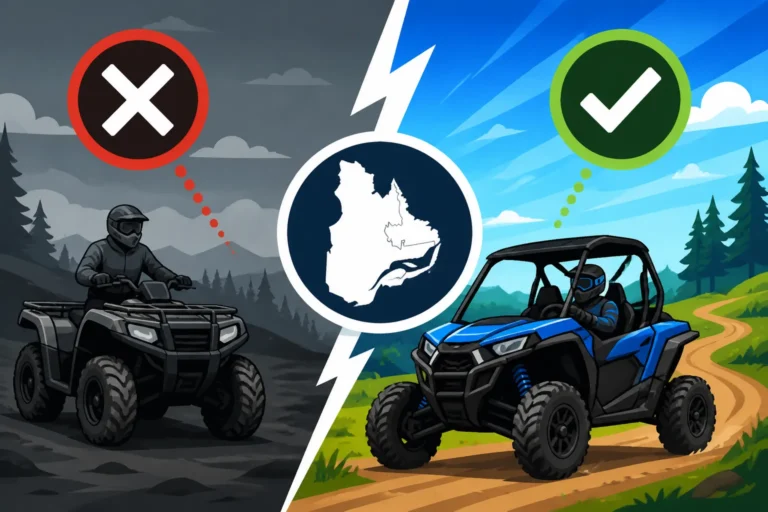
It's critical to understand that this is a narrow exception. It's not a free pass to ditch your helmet every time you feel like riding slowly. The exception hinges on two key factors: the speed (30 km/h or less with frequent stops) and the nature of the activity (a professional task like trapping or farming, where a helmet might genuinely impede necessary functions like precise visual scanning or acute hearing for safety). If you're just out for a leisurely ride, even if you keep your speed below 30 km/h, the helmet rule still applies. The burden of proof for this exemption falls entirely on the rider.
General Speed Limits and Fines
For all other recreational use of ATVs and UTVs in Quebec, the standard speed limit on federated trails is 50 km/h. On forest roads or other designated off-highway vehicle paths, specific signage might indicate different limits, but 50 km/h is the baseline for most trail riding. This is a significant difference from the 30 km/h work-related exception, underscoring that the latter is indeed a special circumstance.
Failing to adhere to these speed limits, or misusing the "30 km/h with frequent stops" exception, can result in substantial penalties. [Quebec Ticket Costs for Trail Violations] can add up quickly, not to mention potential court costs. Law enforcement and trail patrols are well-versed in the regulations and are trained to distinguish between legitimate work-related use and recreational riding that simply isn't adhering to the rules. Always be prepared to present your driver's license, proof of registration, and trail pass when stopped by a patrol.
Summary of Key Differences
To help illustrate the distinctions, here's a quick comparison:
| Feature | General Recreational Riding | Work-Related Riding (30 km/h with Frequent Stops) |
|---|---|---|
| Typical Speed Limit | 50 km/h on federated trails | 30 km/h or less |
| Helmet Requirement | Mandatory for all riders and passengers | May be exempt if performing professional activity |
| Purpose | Leisure, sport, touring | Professional duties (e.g., trapping, farming) |
| Frequent Stops | Not typically a defining factor | Essential part of the operational pattern |
| Required Documentation | Driver's license, registration, trail pass | All above, plus proof of professional activity |
| Common Locations | Federated trail network | Traplines, farm fields, remote work sites |
| Aftermarket Gear Focus | Performance, comfort, aesthetics | Utility, durability, cargo capacity (e.g., SuperATV) |
Understanding these distinctions is paramount for any ATV or UTV owner in Quebec. While the "30 km/h with frequent stops" rule offers vital flexibility for certain workers, it is a highly specific exemption, not a general allowance. Staying informed and prepared will ensure your rides, whether for work or play, are always compliant and enjoyable.
Disclaimer
This article is for general informational purposes only and does not constitute professional advice. Laws, prices and regulations vary by location and change over time. Consult a qualified professional for guidance on your specific situation.