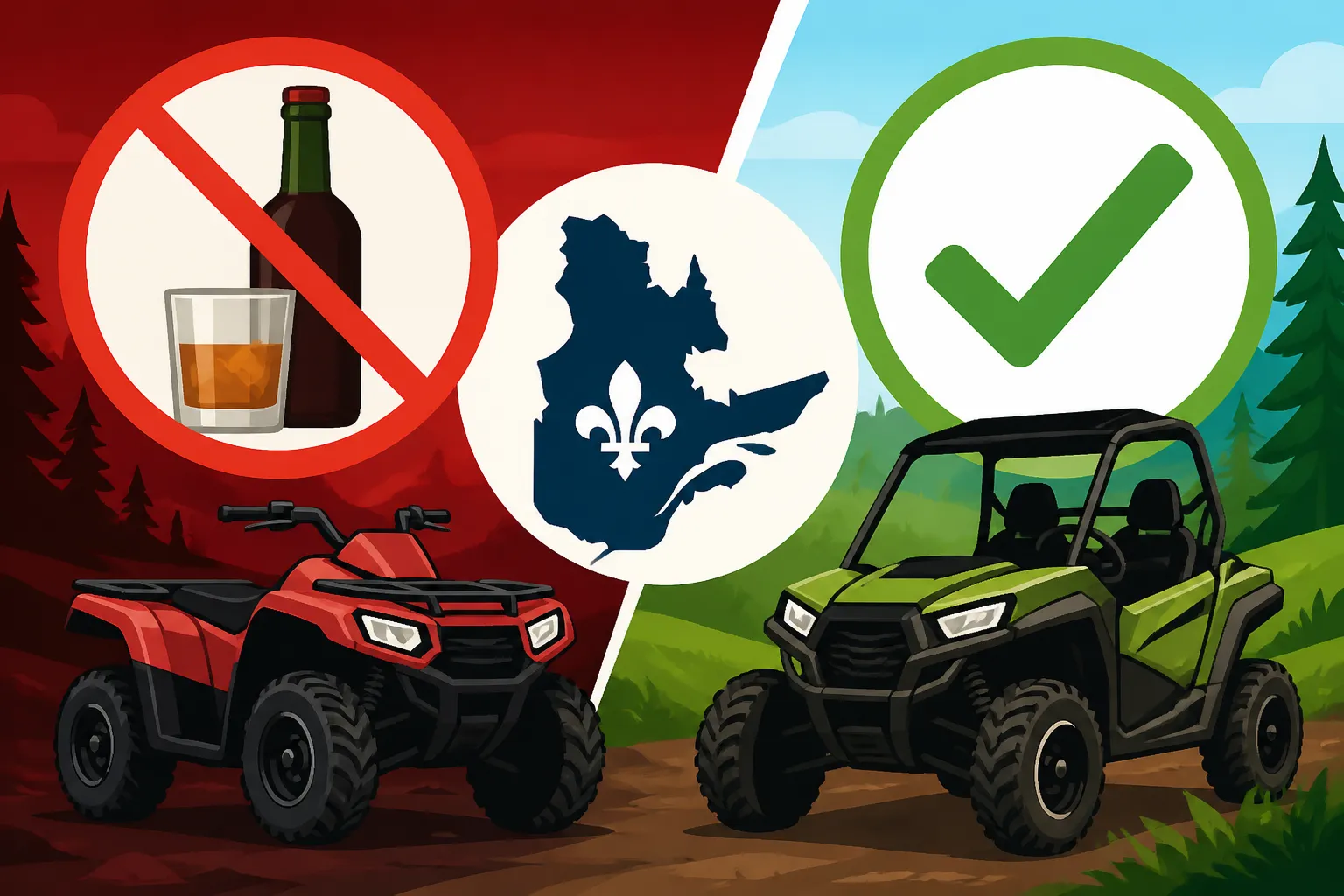
Quebec Alcohol Rules on Trails
Alcohol rules on Quebec ATV and UTV trails can be confusing: a trail stop or campsite may feel different from a public road, but riding impaired can still have serious legal consequences. The safest rule is simple: keep alcohol away from anyone who may drive, and arrange a sober ride before the first drink.
How Quebec’s alcohol rules apply on ATV and UTV trails
An ATV or UTV is still a motorized vehicle when it is being operated on a trail. A federated trail, private trail or remote route is not a safe place to assume that impairment rules stop applying. Quebec’s off-highway vehicle rules and impaired-operation laws can both matter, depending on where and how you ride.
The key issue is operating the machine while impaired. That can involve alcohol, drugs, or a combination of substances. It is not necessary to be driving on a public highway for impaired-operation laws to become relevant. A trail ride remains vehicle operation, even if the route is far from town or the group is only travelling a short distance.
| Situation | Practical takeaway |
|---|---|
| Drinking before or during a ride | Do not operate an ATV or UTV afterward. |
| Stopping at a restaurant, lodge or campsite | Leave the machine parked if anyone drinks; arrange another way back. |
| A passenger drinks while the driver stays sober | The driver must remain fit to operate, and the group should follow the operator’s rules about alcohol and passengers. |
| A machine is parked but ready to move | Do not assume that being stopped removes every legal risk. Keep the keys with the sober person and do not restart it after drinking. |
| Riding on private land | Private property is not a blanket exemption from impaired-operation rules. |
This distinction matters because people sometimes treat a trail like a backyard gathering place. A stop for food or a drink does not turn the route into a no-law zone. If you plan to drink, make the decision before the ride: leave the machine behind, stay overnight, or use a sober driver who is not going to drink.
The rules can also overlap with other riding requirements. Riders still need to follow applicable age, licence, helmet, passenger and equipment rules, as well as trail access conditions. Quebec ATV Road Rules Under the LVHR explains how the main operating rules fit together. A trail pass or permission to use a route does not authorize impaired riding.
Drinking, impairment and the difference between a stop and a ride
There is no dependable “safe waiting time” that lets every rider know when it is lawful or safe to get back on a machine. Alcohol affects people differently, and the effect can last longer than a rider expects. Food, coffee, a shower or a short break does not reliably make someone fit to drive.
Impairment is not only a question of whether someone feels drunk. A rider may have slower reactions, poorer balance, reduced attention or weaker judgment without recognizing the change. Those effects are especially dangerous on uneven ground, in mud, on narrow corridors, near other trail users or when a group is travelling in low visibility.
The risk is not limited to high-speed riding. A low-speed rollover or collision can still cause severe injury. An impaired rider may also make poor choices about passing, trail edges, water crossings or whether a route is safe for the machine. For more detail on how impairment can be assessed, see What Counts as Impaired on a Quebec Trail.
A passenger’s drinking does not make an impaired driver safe. The operator is responsible for controlling the machine and responding to changing conditions. A passenger who is intoxicated may also create practical risks by shifting suddenly, interfering with controls, or being unable to follow instructions. On a side-by-side, the operator must also respect seat-belt and passenger-capacity requirements.
What if the machine is parked?
A genuine break with the machine secured and no plan to operate it is different from continuing to ride after drinking. Still, a rider should not rely on a quick stop or an engine being switched off as a legal safeguard. The relevant circumstances can include whether the person has control of the machine and whether it appears they are about to operate it.
For a safer break:
- Park in a permitted location away from the travel path.
- Switch off the engine and secure the machine.
- Have a sober person keep the keys.
- Do not restart or move the machine after drinking.
- Arrange a sober ride or a place to stay before anyone begins drinking.
The practical message is not that every person holding a drink beside a parked ATV has committed an offence. It is that the line between stopping and operating can become difficult to explain after an incident, and the safest choice is to keep the keys out of the hands of anyone who has been drinking.
Does private land make drinking and riding acceptable?
No. Private property can change which access, trail-pass or road rules apply, but it should not be treated as permission to operate while impaired. A field, camp road, private trail or family property can still involve serious injury and legal consequences.
If a gathering is taking place on private land, separate the social area from the riding area. Park the machines before serving alcohol, keep keys with a sober person, and do not let a guest take “just one quick lap” after drinking. If a ride is planned later, it is safer to postpone it until the next day rather than trying to judge sobriety by appearance.
What can happen if a rider is stopped or involved in an incident
A patrol or police officer may investigate what is happening on a trail. The circumstances can include the rider’s behaviour, the way the machine is being operated, statements from people nearby, and observations made during a stop. A roadside or trail-side check can become more serious if there are signs of impairment or a collision.
Trail patrols may check documents and compliance with trail requirements, but a pass check is not the same thing as an impaired-driving investigation. If you are stopped, stay calm, follow lawful directions and avoid arguing about the law on the trail. Being Stopped on a Trail covers the practical basics of a patrol stop, while Quebec Impaired Riding Penalties discusses the possible consequences of impaired operation.
Depending on the facts, impaired riding can bring criminal and provincial consequences. The outcome may affect a rider’s ability to drive, use a machine or continue a trip. A collision can create further legal, insurance and injury-related problems. Exact consequences depend on the circumstances and the applicable law, so do not assume that a trail location makes the matter minor.
A crash also creates immediate safety duties. If anyone is hurt, get help and make the area safe without putting others at risk. Do not leave an injured person alone or move a machine in a way that creates another hazard. Quebec Accident Reporting Rules explains when an incident may need to be reported and what information to preserve.
Insurance should not be treated as a substitute for staying sober. Coverage and exclusions depend on the policy and the circumstances of a claim. A rider who assumes that an insurance policy will cover every loss after impaired operation may be left with unexpected costs or disputes. Read the policy before the season and ask the insurer how exclusions apply to the machine and the intended use.
It is also a mistake to assume that a trail pass, club membership, rental agreement or permission from a landowner protects an impaired rider. Those permissions address access or use; they do not make unsafe operation lawful. Rental operators may have their own alcohol rules as well, and ignoring them can end a booking or leave the renter responsible for damage under the agreement.
Plan a ride that keeps alcohol out of the driver’s seat
The easiest way to avoid a bad decision is to settle the transport plan before the group starts riding. Once everyone is tired, far from the trailhead or already drinking, the choices are harder and less safe.
Use a simple group plan:
- Choose sober operators. Identify who will drive each machine and make clear that those people will not drink during the outing.
- Set a no-riding-after-drinking rule. Do not leave the decision to the end of the day or to a rider’s own estimate of how affected they feel.
- Plan stops in advance. If the route includes a restaurant, lodge or campsite where alcohol may be served, decide where the machines will stay and how the group will travel afterward.
- Keep keys under control. A designated sober person can hold keys once the group has stopped for the day.
- Arrange an overnight option. A room, cabin or campsite can be safer and easier than trying to find a ride from a remote trail location.
- Check operator and route rules. Trail access, municipal restrictions and business policies can differ. Confirm requirements before setting out rather than relying on assumptions.
- Speak up if someone plans to ride impaired. Offer to take the keys, arrange a sober driver or ask the group to stop. Protecting a friend is more important than keeping to a schedule.
For a multi-day trip, include alcohol in the itinerary rather than treating it as an afterthought. Decide which evening is the last riding period, where the machines will be stored, and who will be responsible for moving them the next day. If a rider has been drinking the night before, do not assume they are ready to ride simply because the group has breakfast and a planned departure.
The same approach works for a one-day outing. If anyone expects to drink at lunch or at the end of a ride, make sure the machines will not need to be operated afterward. A designated operator is only useful if that person remains sober for the entire period they may be driving.
For groups with passengers, agree on the plan together. A passenger should not pressure the operator to continue after drinking, and an operator should not let group enthusiasm replace a safe decision. If there is any doubt, leave the machine parked and find another way back.
Quebec’s trail network can take riders far from quick transport or reliable cell coverage. A sober ride plan is therefore not just a legal precaution; it is basic trip planning. For remote routes, include a backup contact, a meeting point and an overnight option in case the original plan changes. Packing for a Multi-Day Ride can help with the broader preparation, but the most important alcohol-related item is a clear agreement about who will not ride after drinking.
A useful rule for the whole group is simple: if alcohol is part of the stop, the ride is over for anyone who drinks. It avoids guesswork, protects passengers and other trail users, and makes it easier to enjoy the evening without worrying about who should take the machine back.
Disclaimer
This article is for general informational purposes only and does not constitute professional advice. Laws, prices and regulations vary by location and change over time. Consult a qualified professional for guidance on your specific situation.