Quebec Impaired Riding Penalties
There’s nothing quite like hitting the trails on your ATV or side-by-side here in Quebec, feeling the fresh air and the thrill of the ride. It’s part of our culture, a fantastic way to explore our beautiful province. But along with that freedom comes a serious responsibility, one that too many riders overlook until it’s too late: the danger and severe consequences of impaired riding. It's not just about alcohol; it encompasses drugs, fatigue, and anything that diminishes your ability to operate your machine safely. This guide is here to walk you through exactly what impaired riding means in Quebec, the immediate and long-lasting penalties you face, and why making smart, responsible choices on the trail is absolutely non-negotiable for your safety and everyone else’s.
Understanding Impaired Riding in Quebec: It's More Than Just Alcohol
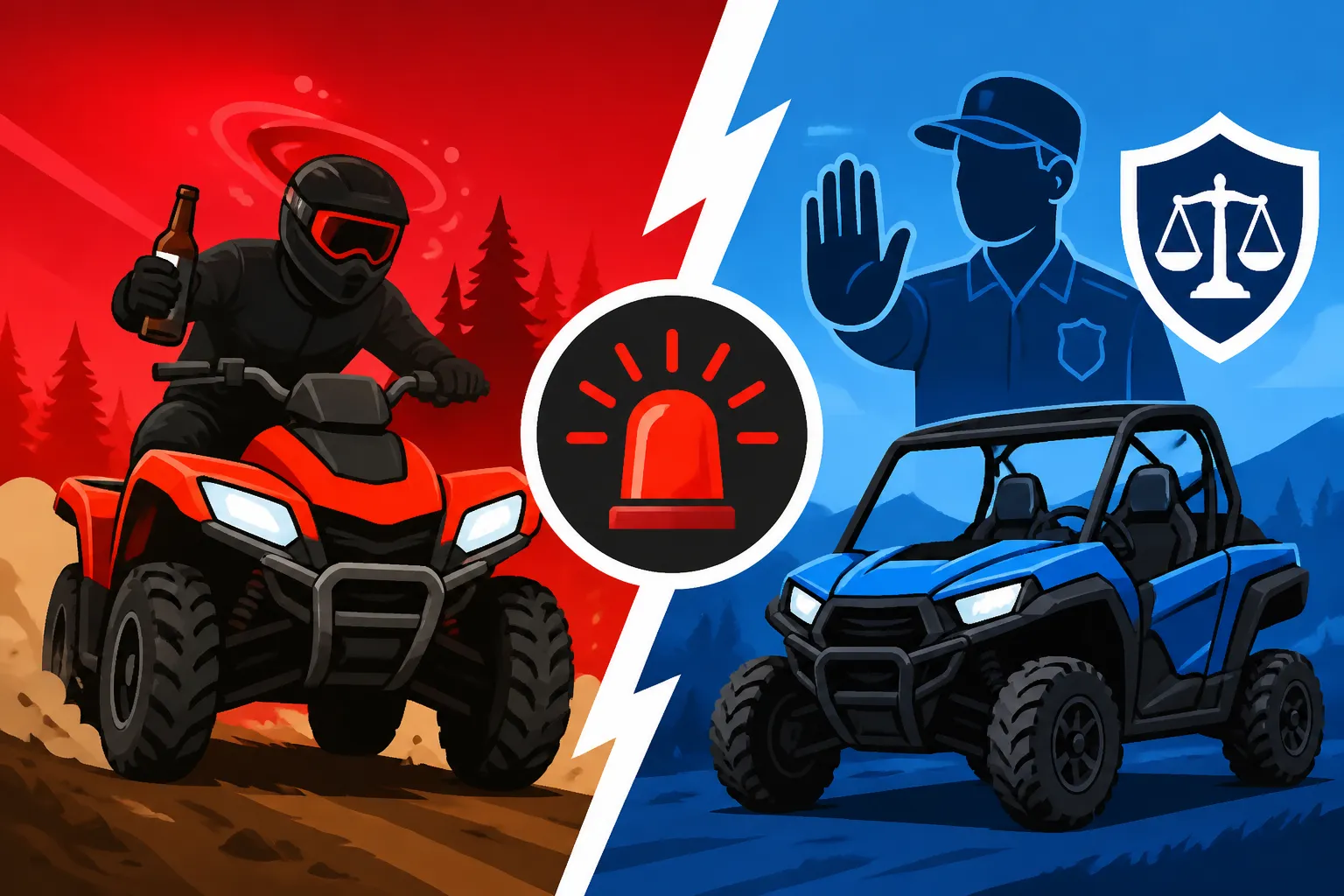
When we talk about impaired riding, many people immediately think of alcohol, and yes, that's a huge part of it. But Quebec law, like the rest of Canada, casts a much wider net. Being impaired means your ability to safely operate your off-highway vehicle (VHR) is compromised, and that can happen for a multitude of reasons. It's about ensuring you're in full control of your faculties when you're in control of a powerful machine.
The Legal Definition of Impairment on the Trail
The legal framework for impaired driving in Canada, including Quebec, is rooted in the Criminal Code. This means that whether you're behind the wheel of a car, a truck, or an ATV, the same serious charges apply if you're found to be operating it while impaired. The key here is that your ability to operate the vehicle must be "impaired by alcohol or a drug." This isn't just about blowing over a certain blood alcohol concentration (BAC) limit; it's also about any substance that affects your judgment, coordination, or reaction time.
Think about it:
- Alcohol: This is the most common and often understood form of impairment. Even a couple of beers can significantly slow your reflexes and impair your judgment, making obstacles harder to spot or reacting to sudden changes on the trail much more difficult.
- Drugs: This is a broad category. It includes illicit drugs, of course, but it also covers prescription medications and even some over-the-counter drugs. If your doctor tells you not to operate heavy machinery while on a certain medication, your ATV definitely counts as heavy machinery. Imagine someone taking strong painkillers for a chronic condition, thinking they're fine because they're prescribed. Out on a bumpy, unpredictable trail, those meds could make them drowsy or disoriented, putting themselves and others at extreme risk. It's about how the substance affects you and your ability to control your machine.
- Fatigue: While not a "substance," severe fatigue can mimic the effects of alcohol or drugs, leading to delayed reactions, poor decision-making, and even micro-sleeps. After a long day of physical work or a night with little sleep, heading out on a technical trail is a recipe for disaster. While you might not get a criminal impaired charge for fatigue alone, if it contributes to an accident, it could lead to other serious charges or significantly impact any civil liability.
The point is, the law isn't just looking for an arbitrary number; it's looking for any sign that your capacity to ride safely is diminished. You have a responsibility to your fellow riders and to yourself to be at your best when you're on the machine.
How Quebec Law Applies to Off-Road Vehicles (VHRs)
It’s a common misconception that because ATVs and UTVs are "off-road" vehicles, the rules are somehow more relaxed or different than for cars. Let me be absolutely clear: that is not the case in Quebec. The provincial [Quebec's Off-Highway Vehicle Act and Your Papers] and the federal Criminal Code apply fully to the operation of these machines. If you're riding impaired on a federated trail, a forest road, or even crossing a short section of municipal road where permitted, you are subject to the same penalties as someone driving a car on the highway.
This means:
- No "off-road" exemption for impairment: The moment you start that engine, you are responsible for operating it safely and soberly. Being in a remote area or on a private trail doesn't somehow make impaired riding legal or less dangerous.
- Driver's Licence Requirements: Don't forget, [Quebec Requires a Driver's Licence Since 2021] to operate an ATV or side-by-side on any designated trail or public land. If you're riding impaired, you're not just risking charges for impairment, but potentially for operating a machine while your licence is suspended, should that happen.
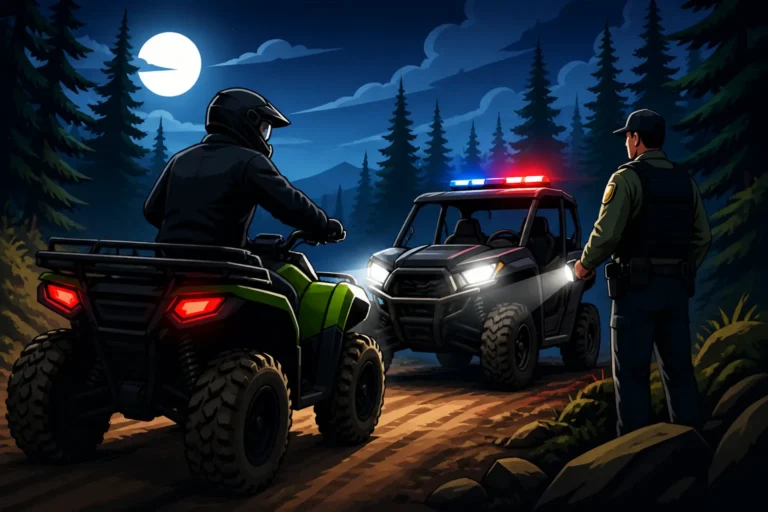
- Trail Patrols and Police: Law enforcement, including provincial police (Sûreté du Québec) and authorized trail patrols, have the authority to stop you and investigate suspected impaired riding. They are trained to recognize the signs and administer tests, just like on public roads. [What a Patrol Can Ask to See] includes your driver's licence, registration, and trail pass, but also extends to their observations of your conduct and sobriety.
So, while you might be enjoying the freedom of the trails, remember that the law is always present, ensuring that everyone can ride safely. Thinking that the rules don't apply out in the woods is a dangerous and costly mistake.
Immediate Consequences: The Trailside Reality
Getting caught riding impaired is an incredibly stressful and immediate reality. The consequences hit hard and fast, impacting your freedom, your finances, and your ability to drive any vehicle, not just your ATV. It's not just a slap on the wrist; it's a serious legal encounter that will immediately change your day, and potentially your life.
Fines, Licence Suspension, and Vehicle Seizure
Let's not sugarcoat it: the moment a police officer or authorized patrol determines you're impaired, things get very serious, very quickly.
- Significant Fines: While I can't give you exact figures that change over time, know that [Quebec Impaired Riding Fines From $450] are a minimum, and they can easily climb much higher, especially for repeat offenses or if there's an accident involved. These aren't just traffic tickets; they are criminal charges carrying substantial financial penalties. You'll also likely face additional administrative fees, court costs, and charges related to towing and impounding your vehicle.
- Immediate Licence Suspension: This is a shock for many. Being charged with impaired driving, even on an ATV, almost always results in an immediate administrative licence suspension. This means your driver's licence, for all classes of vehicles (car, truck, motorcycle, ATV), is suspended on the spot. You cannot legally drive anything. This suspension can be quite lengthy, often starting at 90 days or more, before you even get to court. Imagine having no way to get to work, run errands, or even drive your own car simply because of a bad decision on the ATV trail.
- Vehicle Seizure and Impoundment: Your ATV or side-by-side will be seized and impounded. This means it will be towed away, often to a police compound, where it will stay for a mandatory period (typically 30 days or more, depending on the severity of the charge and any previous offenses). You, the owner, are responsible for all towing fees and storage costs, which can quickly add up to hundreds, if not thousands, of dollars. Retrieving your machine after the impoundment period can be a bureaucratic nightmare and another significant financial hit. It truly makes for a miserable end to what might have started as a fun day out.
Consider a scenario: you're out with friends, maybe enjoying a campfire lunch with a couple of beers, and decide to take one last spin before heading back. A trail patrol, perhaps alerted by your erratic riding, stops you. Next thing you know, your licence is gone, your machine is being loaded onto a tow truck, and you're facing a long, expensive trip home without your primary mode of transportation. It's a rude awakening to the reality of Quebec's strict laws regarding impaired riding.
Interaction with Law Enforcement and Patrols
When you're stopped on suspicion of impaired riding, the interaction with law enforcement is governed by strict protocols. It’s important to understand what to expect.
- Initial Stop: Patrols or police officers may stop you if they observe signs of impaired driving, such as erratic steering, swerving, operating at unusual speeds, or if they receive a report from another rider. They might also conduct checkpoints, though these are less common on trails than on roads.
- Observation and Questions: The officer will observe your demeanor, speech, and physical coordination. They might ask you questions about your day, where you're coming from, and if you've consumed any alcohol or drugs. While you have the right to remain silent, refusing to cooperate with lawful commands can lead to further charges.
- Standardized Field Sobriety Tests (SFSTs): If the officer suspects impairment, they may ask you to perform SFSTs, which include tests like the horizontal gaze nystagmus (following a pen with your eyes), the walk-and-turn, and the one-leg stand. These are designed to assess your coordination and ability to follow instructions, providing clues about impairment.
- Demand for Breath Sample: If the SFSTs indicate impairment or if the officer has reasonable grounds, they will demand a breath sample using an Approved Screening Device (ASD). Refusing to provide a breath sample carries the same penalties as impaired driving itself. This is a critical point: you cannot refuse this demand without facing severe legal consequences.
- Arrest and Further Testing: If the ASD registers a "fail" or if there's other evidence of impairment, you will be arrested. At the police station, you will be required to provide further breath samples (usually two) using a more sophisticated Intoxilyzer machine, or blood/urine samples if drug impairment is suspected. Again, refusal to comply with these demands is a separate criminal offense.
This entire process, from the initial stop to potential arrest, is designed to be thorough. The best way to avoid this intimidating process is simply not to ride if there's any chance you're impaired. Think ahead and plan your trips responsibly.
The Far-Reaching Impact: Beyond the Immediate Ticket
The immediate consequences of an impaired riding charge are certainly jarring, but it’s crucial to understand that the ramifications extend far beyond the trailside. An impaired driving conviction, even for an ATV, will follow you for years, affecting various aspects of your life in ways you might not initially consider. This isn't just about a fine; it's about a criminal record and long-term financial and personal upheaval.
Criminal Record and Future Implications
Unlike a simple speeding ticket, impaired driving is a criminal offense under the Criminal Code of Canada. This means that a conviction will result in a criminal record, which is a permanent mark on your history with significant repercussions.
- Employment: Many employers conduct criminal record checks, especially for positions of trust, those involving driving, or jobs in regulated industries. A criminal record for impaired driving can make it incredibly difficult to secure new employment or even maintain your current job. Imagine applying for a role that requires you to operate company vehicles or travel internationally – a criminal record can be a significant barrier.
- International Travel: This is a huge concern for many. A criminal record, even for what might seem like a minor offense in your eyes, can lead to serious issues when trying to cross international borders, particularly into the United States. You could be denied entry, requiring complex and expensive legal processes to obtain a waiver, which is not guaranteed. For those who enjoy riding in places like Vermont or Maine, this could mean an end to those cross-border adventures.
- Reputation and Personal Life: Beyond the legal and financial aspects, a criminal record can damage your personal reputation within your community and among friends and family. It can be a source of shame and stigma, impacting relationships and your overall well-being. This might not seem as tangible as a fine, but it can be profoundly impactful.
The best defense against these life-altering consequences is prevention. Always make the choice to ride sober and clear-headed.
Insurance Premiums and Civil Liability
After an impaired driving conviction, your financial life will also take a significant hit, especially when it comes to insurance.
- Skyrocketing Insurance Premiums: Insurers view impaired driving convictions as a major risk factor. As a result, your vehicle insurance premiums – for your car, truck, and your ATV – will almost certainly skyrocket. You might even find it challenging to obtain insurance at all, with some companies refusing coverage or only offering it at exorbitant rates. This financial burden can last for many years, adding thousands of dollars to your annual expenses. Even if you only carry the [Quebec Insurance Minimum for an Owner], that minimum will become much more expensive.
- Civil Liability: This is perhaps the most frightening financial consequence. If you cause an accident while riding impaired and someone is injured or their property is damaged, you can be held civilly liable. This means you could be sued for damages, medical costs, lost wages, and pain and suffering. Your insurance policy might even deny coverage if you were impaired at the time of the accident, leaving you personally responsible for potentially hundreds of thousands, or even millions, of dollars in claims. Imagine a scenario where you lose control on a corner, collide with another rider, and they sustain a serious injury. If you were impaired, you could face years of legal battles and devastating financial ruin, even losing your home and savings. This is why knowing about [Quebec Accident Reporting Rules] is vital, but being impaired complicates everything.
This financial fallout can be absolutely crippling, far outweighing any initial fines. It’s a constant reminder of a single, poor decision.
Health and Safety Risks to Yourself and Others
While the legal and financial penalties are severe, the ultimate, most tragic consequence of impaired riding is the risk to life and limb. Every time someone rides impaired, they are gambling with their own safety and the safety of everyone else on the trail.
- Increased Accident Risk: Impairment, whether from alcohol, drugs, or extreme fatigue, drastically reduces your reaction time, impairs your judgment of speed and distance, and diminishes your coordination. This significantly increases your likelihood of losing control, hitting an obstacle, or colliding with another vehicle.
- Severe Injuries and Fatalities: Accidents involving impaired riders often result in more severe injuries due to slower reactions and poorer judgment in critical moments. These can include traumatic brain injuries, spinal cord injuries, broken bones, and internal organ damage. Tragically, impaired riding is a leading cause of fatalities in ATV and UTV accidents. These are not just statistics; these are real people, real families shattered.
- Danger to Innocent Trail Users: It's not just about the impaired rider. You share the trails with families, friends, and other enthusiasts who are riding responsibly. An impaired rider is a moving hazard, putting everyone else at risk of being involved in a collision through no fault of their own. Picture a family enjoying a leisurely ride on a beautiful Quebec trail, only to have their outing tragically cut short by an impaired rider veering into their path.
The decision to ride impaired is a selfish one that can have irreversible consequences for yourself, your loved ones, and complete strangers. It is a decision that can literally cost lives.
Avoiding the Risks: Responsible Riding for Everyone
The good news is that avoiding these dire consequences is entirely within your control. Responsible riding is about making conscious choices before you even start your engine. It's about respecting the power of your machine, the rules of the trail, and the safety of your fellow riders.
Planning Ahead and Making Smart Choices
The best way to prevent impaired riding is to make smart decisions long before you get on your ATV or UTV.
- "If you drink, don't drive; if you drive, don't drink": This age-old adage applies just as much to ATVs as to cars. If your plans for the day include alcohol, ensure that riding is not on the agenda. Period.
- Designate a Sober Rider: If you're going out with a group and some members plan to consume alcohol after the ride, designate a sober driver for the ATV or UTV itself. Or, even better, have a designated driver for the truck and trailer to get everyone home safely. This requires clear communication and commitment within your group.
- Understand Medication Effects: If you're on prescription or even over-the-counter medication, read the labels carefully. If it warns against operating machinery, heed that warning. Talk to your doctor or pharmacist about how your medications might affect your ability to ride safely. Don't assume you'll be fine.
- Prioritize Rest: Before a long day on the trails, ensure you get a good night's sleep. Fatigue is a real form of impairment, especially on trails that require constant attention and quick reactions. If you feel tired during a ride, pull over, rest, or consider cutting your trip short. Remember, [Quebec Rules for Riding After Midnight] are strict partly for safety and quiet, but also because rider fatigue increases dramatically in the late hours.
- Pack Smart: Ensure you have water, snacks, and any necessary emergency supplies. Dehydration and low blood sugar can also affect your concentration and decision-making.
Making these simple choices ensures everyone has a safer and more enjoyable experience on Quebec's stunning trails.
Equipment and Preparedness as Part of Safety
While equipment can't prevent you from making a poor choice to ride impaired, it plays a critical role in overall safety and preparedness, which indirectly supports responsible riding. A well-prepared rider is often a more cautious and thoughtful rider.
- Machine Maintenance: Ensure your ATV or UTV is always in top mechanical condition. Check brakes, tires, lights, and fluids before every ride. A machine that performs predictably is safer to operate. For those who love to customize, adding high-quality accessories like those from SuperATV—such as enhanced lighting for visibility or robust protection like SuperATV skid plates—can improve safety and prevent breakdowns, reducing stress and distractions that might lead to poor judgment calls.
- Proper Gear: Always wear an approved helmet, eye protection, gloves, long sleeves, long pants, and sturdy boots. This gear protects you in case of an accident, but also signals a commitment to safety.
- Navigation and Communication: Carry a fully charged cell phone (though service can be spotty in remote areas), a GPS device (like using the iQuad app), or a physical map. Let someone know your route and expected return time. Getting lost, especially as night falls, can lead to panic and poor decisions.
- First Aid Kit: Always carry a well-stocked first aid kit. Knowing you’re prepared for minor incidents allows you to focus on the ride itself.
A rider who takes the time to prepare their machine and themselves is generally a more responsible rider, less likely to take unnecessary risks like impaired riding. Companies like SuperATV offer a range of products designed to enhance the safety and performance of your machine, allowing you to ride with confidence and focus.
Understanding Quebec's Off-Highway Vehicle Act
Part of being a responsible rider is knowing the rules. [Quebec's Off-Highway Vehicle Act and Your Papers] isn't just a dusty legal document; it's the framework that keeps our trails safe and accessible. Familiarizing yourself with its contents fosters a culture of respect for the law and for other trail users.
- Licence and Registration: Always carry your valid driver's licence and your ATV's registration. These are fundamental requirements, and a trail patrol or police officer can ask to see them at any time. [What a Patrol Can Ask to See] also includes your trail pass if you're on a federated trail.
- Age and Passenger Rules: Know the age restrictions for operators and passengers, especially for youth machines and side-by-sides. These rules are in place for safety, not just to make things difficult.
- Speed Limits and Road Access: Understand the specific speed limits on trails and the very limited circumstances under which ATVs can access public roads, such as for short crossings or to access services. Exceeding speed limits or riding illegally on roads can draw unwanted attention from authorities, increasing the chance of being stopped and potentially investigated for other offenses, including impairment. Check out [Quebec ATV Road Rules Under the LVHR] for more details on this.
- Trail Etiquette: Be mindful of other riders, yield when necessary, and respect private property signs. A respectful rider contributes to a positive environment for everyone.
Ultimately, preventing impaired riding comes down to personal responsibility and a commitment to safety. The trails are for everyone to enjoy, and ensuring that enjoyment is safe and legal is the responsibility of every single rider.
Disclaimer
This article is for general informational purposes only and does not constitute professional advice. Laws, prices and regulations vary by location and change over time. Consult a qualified professional for guidance on your specific situation.