Packing for a Multi-Day Ride
A multi-day ATV ride in Quebec can turn uncomfortable quickly when a forgotten rain layer, dead phone, or missing belt leaves you far from a village. Packing is less about bringing everything and more about carrying the right gear for changing weather, remote trail sections, and the needs of your machine. This guide helps you plan a practical load, protect your essentials, and prepare for the ride ahead.
Plan your route before you pack
Match your supplies to the route
A day ride near a busy trailhead is different from a long circuit through remote parts of the Laurentians, Charlevoix, or Abitibi. Before loading your machine, look at the whole route: where you expect to stop, how far you may be from fuel or services, and whether your overnight stays are close to the trail. A packing list should reflect the route you are actually riding, not a generic checklist.
Check Quebec Trail Conditions Before You Go and make a note of closures, detours, and sections that may be slow after rain. A route that looks manageable on a map can take longer when it includes rough ground, frequent stops, or a weather-related detour. Leave room in your schedule for the unexpected rather than planning each day around an optimistic travel time.
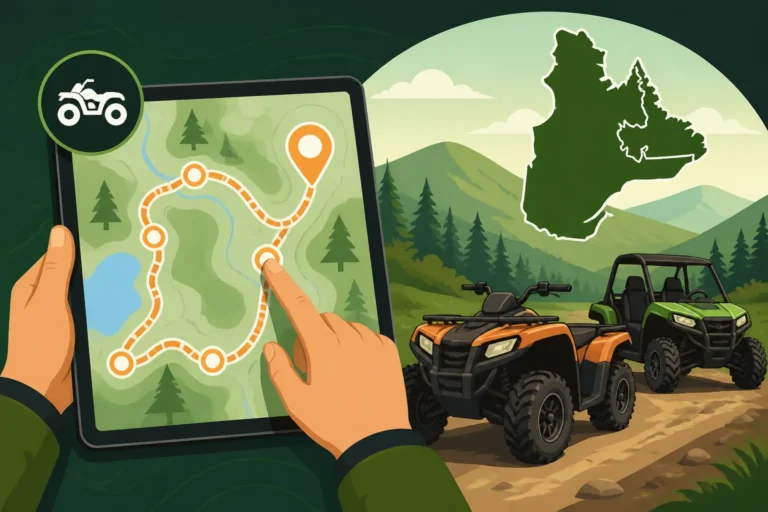
Offline navigation is important because cell coverage can be inconsistent away from towns and main roads. Download the maps and route information you will need before leaving, and carry a paper backup or written directions for key turns. Some riders use the iQuad App alongside another navigation tool such as onX Offroad, but whichever option you choose, learn how it works before you are standing on a trail with a low battery and no signal.
Check what your overnight stops provide
A lodge, campground, outfitter, or motel may change what you need to carry. Some places have secure parking, a place to dry wet gear, or access to basic supplies; others may offer little beyond a room and a place to leave your machine. Confirm what is available before you pack so you do not bring bulky items unnecessarily—or arrive without something you were counting on.
Browse Quebec Trails With Lodging Along the Way when you are planning overnight stops. If you are staying in a village such as Saint-Hippolyte or Baie-Saint-Paul, check how far your accommodation is from the trail and whether you have a safe way to reach it with your machine. For a remote stay, plan as if you may not be able to replace a forgotten item that evening.
A simple rule helps: carry essentials for safety and repairs on the machine, and put comfort items in a support vehicle or at your lodging when possible. Keep identification, registration and insurance paperwork, medication, and a small amount of emergency food accessible rather than buried beneath luggage. If you ride with a group, agree ahead of time who is carrying shared equipment such as a larger first-aid kit or recovery gear.
Pack clothing and personal essentials for Quebec conditions
Prepare for changing weather
Quebec weather can shift during a ride, especially when you are moving between valleys, forest corridors, and open stretches. Rain can make a mild day feel cold, while a warm start does not guarantee a comfortable return after sunset. Pack layers that you can add or remove without unpacking the whole machine.
A practical clothing setup usually includes a moisture-managing base layer, a warm mid-layer, and an outer layer that blocks wind and rain. Bring spare gloves and socks in a waterproof bag. Wet hands and feet can make a long day miserable, and a dry replacement may matter more than an extra shirt. Choose clothing that works with your helmet, goggles or visor, and any protective equipment you normally wear.
Pack for the forecast, but give yourself a margin for a change in conditions. A compact rain layer, neck covering, and an extra insulating layer take less space than a full change of clothes but can make a significant difference if the ride runs long. Store dry clothing in sealed bags inside your luggage rather than trusting an outer pack to stay dry all day.
Keep personal necessities easy to reach
Separate frequently used items from overnight belongings. Keep water, snacks, sunscreen, insect protection, tissues, and a small personal first-aid supply where you can reach them during a stop. Store prescriptions and essential medical items in a secure, waterproof pouch, and tell someone in your group where they are.
For remote sections, do not rely on finding food or water at the next stop. Carry enough for the route and allow extra for delays, a wrong turn, or a machine issue. A water bottle or hydration system should be secured so it cannot fall off over rough terrain. If you are using a hydration bladder, check its hose and bite valve before departure; a full reservoir is not much help if you cannot drink from it.
Keep a headlamp or compact flashlight with your personal kit even if you expect to finish before dark. A delayed repair or slower-than-planned section can push a group into low light. Add a small power bank and charging cable for your phone, but treat them as backup rather than a substitute for conserving battery and carrying offline navigation.
Prepare your machine and trail kit
Carry tools and spares suited to your ATV or UTV
A sensible repair kit is specific to the machine you are riding. Check the owner’s manual and think about what could realistically be repaired trailside. Common choices include the tools needed to remove a wheel, a tire repair kit suitable for your tires, a compact air source, electrical tape, zip ties, and a small selection of fasteners. Make sure you know how to use each item before you need it.
For some machines and routes, a spare drive belt is worth carrying. A belt takes up room, so consider your machine, trip length, terrain, and access to help when deciding. If you bring one, keep it protected from dirt and moisture, and know how to replace it. See Carrying a Spare Belt on a Long Circuit for more planning context. Likewise, Carrying Extra Fuel on a Remote Leg can help you think through fuel needs where stops are widely spaced.
| Packing item | Why it matters | Where to keep it |
|---|---|---|
| Machine-specific basic tools | Helps with minor adjustments and repairs | Secure tool roll on the machine |
| Tire repair kit and compact air source | Supports a response to some punctures | Waterproof, easy-to-reach storage |
| Spare belt, if appropriate | Can help address a belt failure on a suitable machine | Protected compartment or secure bag |
| Tow strap and recovery gloves | Useful when a machine needs help on a difficult section | Accessible, but secured against snagging |
| Offline maps and backup directions | Helps with navigation when service is unavailable | Phone plus a separate backup |
| First-aid supplies | Supports basic care while help is arranged | Marked pouch, accessible to the group |
| Water and high-energy snacks | Useful during delays and long stretches between stops | Within easy reach |
Avoid packing loose tools or heavy items where they can shift, interfere with controls, or affect the machine’s handling. Distribute weight carefully and follow the manufacturer’s guidance for storage and load limits. Before the trip, do a short test ride with the luggage attached; a setup that feels balanced in the driveway may behave differently on a steep or uneven trail.
Include recovery and emergency equipment
A tow strap, gloves, and a suitable recovery point can be useful if a machine gets stuck, but recovery should be done carefully. Do not attach a strap to a part of the vehicle that is not designed to handle the load, and keep people clear of a loaded or tensioned strap. If nobody in the group is confident about a recovery, it is safer to stop and get appropriate help than to improvise.
Build a first-aid kit around the length and remoteness of the trip, and check that its contents are in good condition. Include personal essentials such as blister care, bandages, cleaning supplies, and any medication that a rider may need. For more planning detail, see First Aid on a Remote Circuit. Make sure at least one person in the group knows where the kit is and how to contact emergency services if necessary.
Communication planning matters as much as equipment. Share your route and expected return time with someone who is not riding, and agree on what they should do if the group is overdue. Keep phones charged, but do not assume they will work everywhere. A dedicated emergency communication device may be worth considering for particularly remote routes, depending on your needs and where you ride.
Organize documents, fuel, and luggage for the ride
Keep documents and navigation protected
Before leaving, check that your registration and insurance documents are with you and protected from rain, mud, and damage. If you ride on a federated trail, confirm what proof and trail-pass requirements apply to your trip. Quebec Trail Pass Proof on the Trail is a useful companion topic, and Quebec’s Liability Insurance Rule explains why insurance paperwork belongs in your pre-ride check.
Keep paper documents in a sealed pouch, and consider storing a digital copy as a backup. Do not assume that a phone photo will be accepted wherever you ride; know what documents you are expected to carry. A simple document check before departure can prevent an avoidable stop from becoming a frustrating problem.
For navigation, download maps for the entire route and test them in airplane mode before you leave home. If you use onX Offroad, save the areas you expect to ride in advance and confirm that your route is visible offline. Keep your phone protected from vibration and weather, and use a charging setup that does not leave cables exposed to snagging or moisture. A paper map, written turn notes, or another device can provide a useful backup if your primary screen fails.
Estimate fuel, food, and storage needs
Work out fuel needs using your machine’s real-world consumption on the kind of terrain you expect, rather than relying only on a best-case estimate. Mud, hills, heavy loads, slow travel, and detours can all affect range. Check Quebec Fuel Range Between Villages and identify fuel stops before departure. If a remote stretch leaves little room for error, plan conservatively and consider whether extra fuel is appropriate for your machine and route.
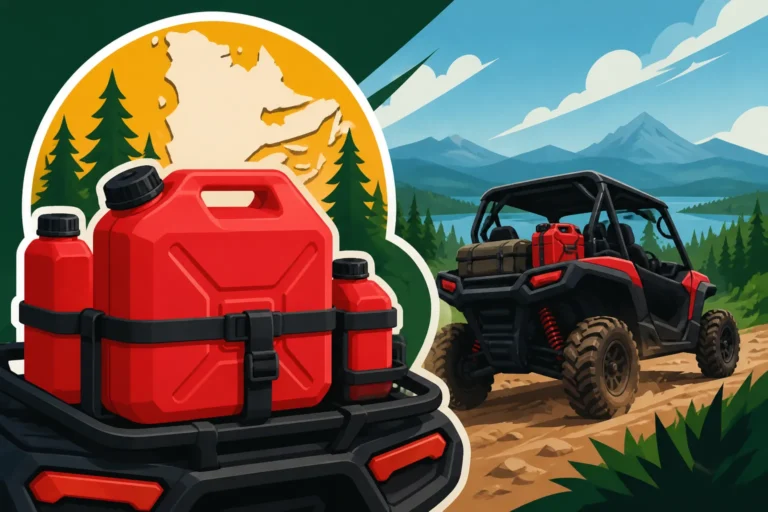
Do not carry fuel casually. Use an approved container, secure it upright and away from heat or moving parts, and follow the container and machine manufacturer’s instructions. If you are unsure how to carry it safely, ask a qualified dealer or mechanic before the trip. An improvised fuel container can create more risk than the extra range is worth.
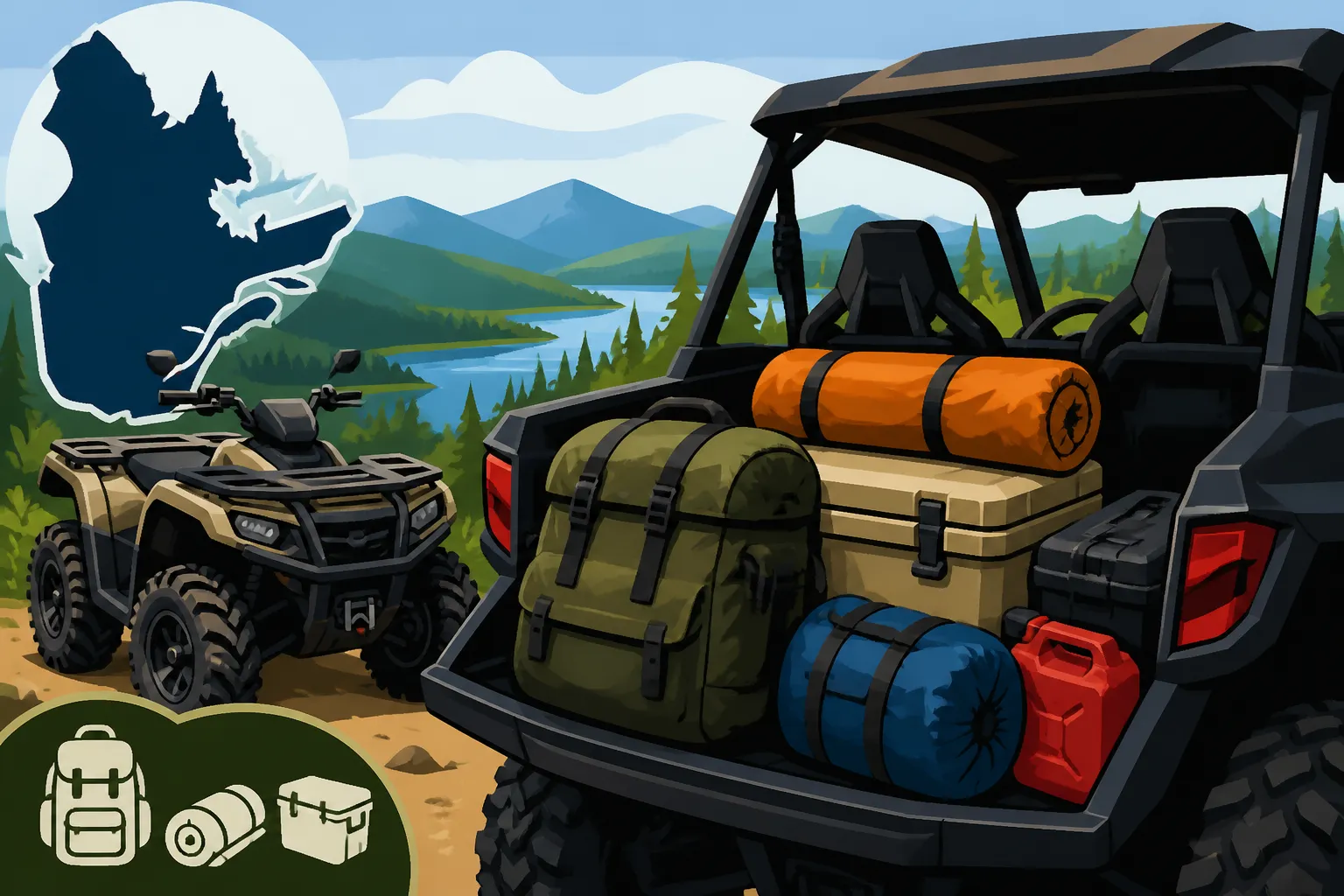
For luggage, aim for waterproof, secure, and balanced rather than oversized. Put heavier items low and close to the centre of the machine, and keep frequently needed items near the top or in a small accessible bag. Use a final walk-around to check that straps are tight, nothing can contact a hot surface, and no bag blocks lights, visibility, or access to controls.
A last packing check can be quick but deliberate:
- Confirm the route, trail conditions, overnight stops, and fuel options.
- Check registration, insurance, trail-pass requirements, and identification.
- Load water, food, clothing layers, navigation, and emergency supplies.
- Secure tools, recovery gear, and any machine-specific spares.
- Test luggage balance and make sure every rider knows the group plan.
- Tell someone outside the group when you expect to return.
If your route includes shared corridors, review Sharing a Federated Corridor With Snowmobiles so everyone in the group understands how to ride considerately. Pack for the possibility of a delay, respect posted closures, and leave enough flexibility to turn back if weather or trail conditions change. A well-packed machine should support a safer, more comfortable ride—not pressure you to continue when the sensible choice is to stop.
Disclaimer
This article is for general informational purposes only and does not constitute professional advice. Laws, prices and regulations vary by location and change over time. Consult a qualified professional for guidance on your specific situation.