Goggles Instead of a Visor
It’s a common question among ATV and side-by-side riders hitting the trails of Quebec: Do I really need a helmet visor, or can I just wear goggles? Many of us prefer the feel and function of goggles, especially with certain helmets, but we also want to make sure we’re staying on the right side of the law. This guide will cut through the confusion, explaining Quebec's specific regulations regarding eye protection for off-highway vehicles and offering practical advice on making goggles work for you.
Quebec's Helmet and Visor Rules for ATV Riders
Riding an ATV or side-by-side in Quebec means adhering to the rules set out in the Off-Highway Vehicle Act, also known as the LVHR. These regulations are designed with rider safety in mind, and eye protection is a non-negotiable part of that. No one wants an unexpected branch or flying rock to end a good ride, or worse, cause a serious injury.
Understanding the Legal Requirement for Eye Protection
The law in Quebec is quite clear when it comes to protective gear. While a helmet is absolutely mandatory for most riders, the specific requirement for eye protection allows for a bit of flexibility. The intent behind the law is to protect your eyes from the countless hazards you might encounter on the trail—anything from dust clouds kicked up by the rider in front of you, to low-hanging branches, insects, or even gravel flicking up from your own tires. Without adequate eye protection, your reaction time can be compromised, leading to dangerous situations. Imagine hitting a patch of mud and having it splash directly into your eyes; you'd be momentarily blind, which is terrifying when you're navigating uneven terrain. This is why patrols conducting [Quebec Equipment Checks by Patrols] will always look for appropriate eye protection.
The Act specifies that a rider must wear a helmet that meets certain safety standards (like DOT or Snell) and, importantly, that "protective glasses or goggles" must be worn if the helmet doesn't have a visor. This means that simply having a helmet isn't enough; your eyes must be shielded. Ignoring this fundamental safety rule isn't just risky, it's a direct violation that can result in fines and ruin your day. The authorities are serious about rider safety, and this includes ensuring your vision is consistently clear and protected.
When Goggles Are a Permitted Alternative to a Visor
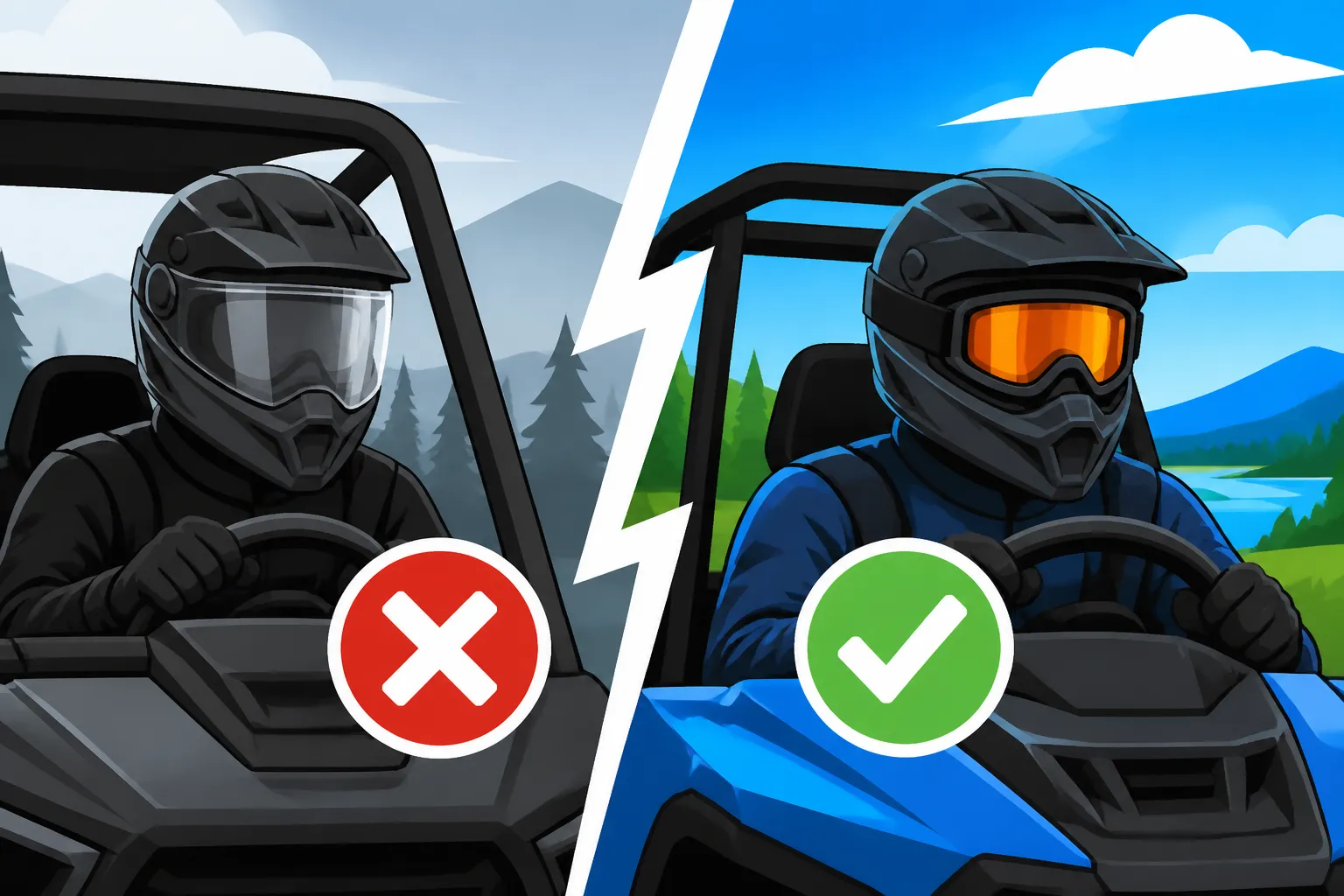
Here's the good news for goggle enthusiasts: Quebec's Off-Highway Vehicle Act explicitly allows for "protective glasses or goggles" as an alternative to a helmet visor. This is a crucial detail for many riders who prefer the specific advantages that goggles offer, especially when paired with an open-face or motocross-style helmet that doesn't come with an integrated visor. The law recognizes that effective eye protection can come in different forms, as long as it does the job of keeping your eyes safe and your vision clear.
This provision offers riders a lot of freedom to choose gear that best suits their riding style, the type of helmet they wear, and the specific conditions they're often riding in. For instance, a motocross helmet, which often provides superior ventilation, needs goggles to complete the protective ensemble. The key takeaway is that you are not limited to a helmet with a built-in visor. You absolutely can ride legally with goggles, provided they are indeed "protective" and effectively shield your eyes. Just remember that this flexibility doesn't extend to trappers riding at low speeds; while they have a helmet exception, appropriate eye protection remains a smart choice for everyone. You can find more details on general requirements in [Quebec Helmet and Visor Rules].
Practical Considerations for Choosing Goggles Over a Visor
While the legal aspect confirms goggles are a go, there are many practical reasons why riders choose them, alongside a few challenges to be aware of. It's all about understanding how they perform in real-world conditions on Quebec's diverse trails.
Benefits of Goggles for Off-Road Riding
Opting for goggles instead of a visor often comes down to performance and comfort, especially in the demanding environment of off-road riding. One of the biggest advantages is superior airflow, which is a godsend on warmer days or during strenuous riding. Goggles, particularly when paired with a non-full-face helmet, allow significantly more air circulation than most visors, drastically reducing the dreaded fogging issue that can plague riders, especially when stopping frequently or in humid conditions. This constant clear vision is invaluable for safety and enjoyment.
Another key benefit is enhanced dust and debris protection. Goggles are designed to seal tightly against your face, creating a barrier that is far more effective at preventing dust, fine silt, mud splatter, and small debris from sneaking into your eyes compared to a visor, which can have gaps at the bottom or sides. This tight seal can be a game-changer when you're following another rider on a dry, dusty trail or splashing through puddles. Furthermore, many riders feel goggles offer a more unobstructed and expansive peripheral vision, without the frame of a visor potentially cutting into their field of view. This can lead to a more immersive and aware riding experience, allowing you to react quickly to obstacles outside your immediate focus.
Goggles also excel in adaptability to changing light conditions. It's incredibly easy to swap out goggle lenses for different tints (clear for night riding, amber for low light, dark for bright sun). This flexibility often surpasses what's available or practical with integrated helmet visors. For Quebec's varied terrain and weather, from bright open fields to deep, shadowed forest trails, having the right lens for the conditions makes a huge difference. High-quality off-road specific brands understand these needs. For example, companies like SuperATV offer a wide range of accessories, including durable goggles designed for aggressive off-road conditions, which is exactly what many Quebec riders face on our diverse trails. Their products focus on impact resistance and clarity, ensuring you're protected whether you're navigating a rocky ascent or a muddy descent.
Potential Drawbacks and How to Mitigate Them
Despite their many benefits, goggles do come with their own set of considerations that riders should be aware of. One of the primary concerns is compatibility issues with certain helmets. Not all goggles are designed to fit seamlessly with every helmet shell, and a poor fit can lead to uncomfortable pressure points, gaps that let in dust, or an unstable feeling. Always, always try on your goggles with your helmet before purchasing to ensure a snug, comfortable, and secure fit. This small step can save you a lot of frustration on the trail.
Another drawback is storage when not worn. Unlike a visor that simply flips up, goggles need to be fully removed and stored safely when you're not wearing them, say, during a stop for lunch or a break. If you just hang them off your handlebars or toss them into a cargo box, they're prone to getting scratched, dirty, or even lost. A protective goggle bag or case is a wise investment to keep them in top condition. When it comes to rain and heavy mud splatter, goggles can sometimes obscure vision more quickly than a visor that can be wiped clean with a gloved hand. While many goggles come with anti-fog coatings, heavy rain can still bead up. Carrying a small microfiber cloth specifically for cleaning lenses, or using tear-offs (disposable clear films that attach to the goggle lens), can help mitigate this.
Finally, cold weather presents its own unique challenge. While the excellent airflow of goggles reduces fogging, it can also mean a colder face in the dead of [Quebec Riding in Winter]. Many high-end goggles feature advanced anti-fog technologies and even double-pane lenses to create an insulating barrier, but finding the right balance of warmth and ventilation is key. Always look for anti-fog features and consider a balaclava or neck gaiter to cover exposed skin when the temperatures drop. Investing in quality goggles can represent a higher upfront cost, especially if you want interchangeable lenses, but it's an investment in your safety and enjoyment, and one that pays dividends in comfort and clear vision.
Ensuring Your Goggles Meet Quebec's Standards
Just because goggles are allowed doesn't mean any pair will do. To meet the spirit and letter of Quebec's law, your chosen goggles need to offer genuine protection and functionality. This isn't just about avoiding a fine; it's about protecting your eyesight, which is priceless.
Essential Features for Compliant Goggles
When you're choosing goggles to comply with Quebec's off-highway vehicle regulations, think about protection first. The lenses must be impact-resistant to shield your eyes from flying debris, branches, or anything else the trail might throw at you. Polycarbonate lenses are a standard choice for their strength and durability. They can take a hit that would shatter regular plastic, keeping your eyes safe behind them. Many riders might overlook UV protection, but it’s absolutely critical for long days under the Quebec sun, even on overcast days. Prolonged exposure to UV rays can damage your eyes over time, so look for lenses that block 100% of UVA and UVB radiation.
A secure fit is paramount. Your goggles aren't much good if they're constantly slipping down your face or bouncing around over rough terrain. An adjustable, silicone-backed strap will help them stay firmly in place on your helmet. Pay attention to how the frame contours to your face, ensuring there are no significant gaps. Crucially, your goggles need to offer anti-fog coating or excellent ventilation. Nothing is more dangerous than losing your vision to fog, especially when navigating tight corners or technical sections. Look for features like dual-pane lenses, anti-fog treatments, or ample vents that promote airflow. Poor ventilation leads to condensation, which is a major safety hazard. Finally, optical clarity is non-negotiable. The lenses should provide clear, distortion-free vision across your entire field of view. Distorted vision can lead to misjudging distances or obstacles, which you definitely don't want when riding.
While the law doesn't specify a particular certification mark for goggles themselves (unlike DOT for helmets), the term "protective" implies they must offer genuine, reliable safeguarding. Brands like SuperATV understand these needs, providing options that stand up to the rigors of Quebec trail riding, from their clear vision lenses to their robust frames. Their designs often incorporate advanced features like enhanced venting and durable lens materials specifically engineered for the challenges of off-road environments, making them a solid choice for riders looking for reliable gear.
Fitting and Maintenance for Optimal Safety and Comfort
Getting the right pair of goggles is only half the battle; proper fit and consistent maintenance are what truly ensure your safety and comfort on the trail. The most important tip for fitting is always to try goggles on with your helmet. Helmets vary widely in shape and size, and what fits one might not fit another. You're looking for a snug fit around your face, without creating uncomfortable pressure points. There shouldn't be any significant gaps between the goggle frame and your helmet's eye port, which could let in dust or debris. This is sometimes called the "goggle gap" and you want to minimize it.
Once you have a good fit, strap adjustment is key. The goggle strap should be tight enough to hold the goggles securely in place, even when bouncing over bumps, but not so tight that it's uncomfortable or pulls your helmet oddly. Most straps are adjustable and have silicone strips on the inside to help grip the helmet surface, preventing slippage. Proper cleaning is also vital for longevity and clear vision. Mud, dust, and sweat are the enemies of goggle lenses. Always use a dedicated goggle cleaner and a soft microfiber cloth. Never wipe your lenses with a dirty glove or a rough cloth, as this can scratch the anti-fog coating and permanently impair your vision.
Finally, storage and regular inspection will extend the life of your goggles and ensure they're always ready to perform. When not in use, store your goggles in a protective bag or case to prevent scratches and damage. Before each ride, give them a quick once-over. Check for any cracks or deep scratches on the lenses, as compromised lenses offer less protection. Inspect the foam around the frame; if it's degraded or torn, it won't seal properly against your face, letting in dust and reducing comfort. A damaged lens isn't just an inconvenience; it's a dangerous compromise to your safety on the trail, so replace them when necessary.
Here's a quick comparison to help visualize the differences between an integrated helmet visor and dedicated goggles:
| Feature | Helmet Visor | Goggles (with open-face/motocross helmet) |
|---|---|---|
| Eye Protection | Good, integrated, often flip-up | Excellent, seals to face, impact resistant |
| Airflow/Fogging | Can be limited, some vent systems assist | Generally superior, more venting, less fogging |
| Debris Seal | May have small gaps at bottom or sides | Excellent, forms a tight seal around eyes |
| Vision Clarity | Good, but can get scratched, harder to swap | Excellent, easy to swap lenses for conditions |
| Convenience | Flip up/down easily | Must be removed/stored when not in use |
| Rain/Mud | Easier to wipe clean | Can obscure vision more, may benefit from tear-offs |
| Compatibility | Integrated with helmet | Must be chosen to fit specific helmet |
| Cost | Included with helmet, replacements vary | Separate purchase, lenses add cost |
No matter whether you choose an integrated visor or quality goggles, the most important thing is that your eyes are protected when you hit Quebec's trails. Understanding the law and choosing gear that performs well for your specific needs will ensure you have a safe and enjoyable ride every time. Remember to always carry your [Quebec Insurance Proof on the Machine] and [Carrying Papers on a Long Ride] to be fully prepared for any adventure.
Disclaimer
This article is for general informational purposes only and does not constitute professional advice. Laws, prices and regulations vary by location and change over time. Consult a qualified professional for guidance on your specific situation.