Getting Caught on the Trail After Midnight
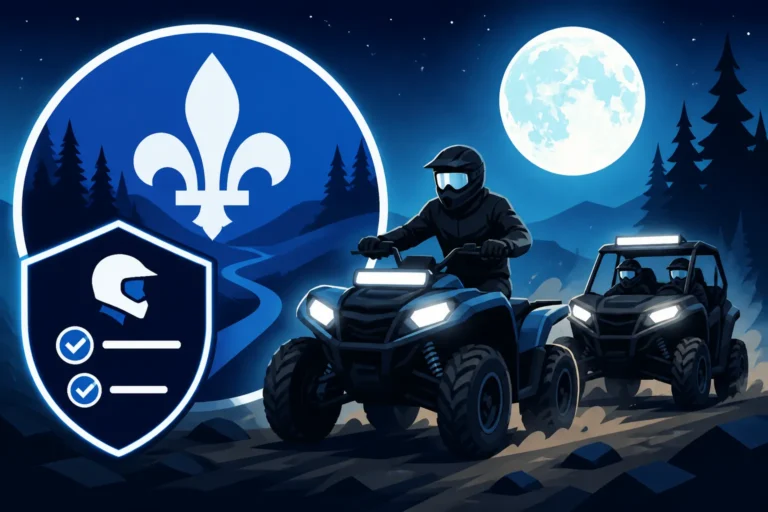
It’s happened to the best of us: you're out on the magnificent Quebec trails, the scenery is breathtaking, the company is great, and you completely lose track of time. Suddenly, that golden hour ride turns into navigating by moonlight, and then it hits you – it's past midnight. The anxiety sets in fast, wondering what might happen if a patrol spots you. This comprehensive guide will walk you through Quebec's rules for night riding, the potential consequences of being caught after hours, and practical steps you can take to prevent such a scenario.
The Clock Strikes Midnight: Understanding Quebec's ATV Riding Hours
Quebec's off-highway vehicle regulations are pretty clear when it comes to when you can and can't ride. It’s not just a suggestion; these are rules designed for safety and to minimize disturbances in rural areas. Knowing these specific timings is the first step to avoiding an unwelcome encounter with a trail patrol.
The Letter of the Law: 6 AM to Midnight
Under Quebec's Off-Highway Vehicle Act (LVHR), the general rule for riding ATVs and side-by-sides on federated trails and authorized routes is strictly defined: operations are permitted between 6 a.m. and midnight. This means that as soon as the clock ticks past 12:00 a.m. (midnight), you are officially riding outside legal hours. It might feel like just a few minutes past, especially if you're trying to make it back to camp, but to a patrol officer, that clock has already passed the deadline.
This clear cutoff is in place across the vast [Quebec ATV Trails: The FQCQ Network] that spans the province. It simplifies enforcement and ensures consistency for all riders, whether they're seasoned locals or visitors enjoying the scenery. There's no grace period built into the law, so even a few minutes can potentially put you in a tough spot. It’s one of the [Quebec Rules That Changed in 2021] that quad owners need to be acutely aware of every time they hit the trails.
Why the Midnight Rule Exists
You might wonder why such a strict cutoff exists. It's not just to spoil your fun. The midnight rule serves multiple important purposes, primarily focusing on public safety, noise reduction, and environmental protection. Riding in complete darkness, even with excellent headlights, significantly increases accident risk due to reduced visibility of obstacles, wildlife, and other trail users. Accidents are inherently more dangerous at night, and emergency services are harder to dispatch to remote locations.
Beyond safety, there's the critical issue of noise. ATVs and UTVs, while thrilling, can be quite loud, and late-night engine noise can be a significant disturbance for residents living near trails, cottages, or remote communities. The law aims to mitigate these disturbances, ensuring that trail access coexists peacefully with the rights of property owners and residents. Furthermore, reduced visibility at night can also lead to unintended off-trail excursions, causing damage to sensitive ecosystems, agricultural land, or private property, which the regulations aim to prevent.
Exceptions and Local Variations
While the provincial rule of 6 a.m. to midnight is generally ironclad, there are very limited exceptions or specific situations that might alter it. For instance, certain municipalities, through specific by-laws, might allow for extended hours on very short, designated segments of municipal roads explicitly open to off-highway vehicles, often for direct access to services like a gas station or lodging. However, these are rare and incredibly specific. It's crucial not to assume such exceptions exist; you must verify with the local municipality or the [Quebec Quad Clubs Worth Joining] responsible for the trails in that area.
Another scenario relates to emergency situations, though even then, legal implications can still arise. If you break down far from camp and are forced to ride past midnight to seek help or return to safety, the circumstances might be taken into consideration, but it doesn't automatically grant immunity from a ticket. These specific local allowances or urgent situations are not a free pass for general late-night riding. Always check for specific [Quebec Municipalities That Change Riding Hours] if you think an exception might apply, but generally, stick to the provincial standard.
The Sting of the Ticket: Fines and Penalties
So, you're caught riding after midnight. What actually happens? It’s not just a slap on the wrist; Quebec's off-highway vehicle laws carry financial penalties and, in some cases, other repercussions that can really put a damper on your riding season. Understanding these consequences helps underscore the importance of adhering to the rules.
Financial Consequences: What to Expect
The most immediate and common consequence of being caught riding an ATV or UTV on a federated trail after midnight is a fine. These aren't minor parking tickets; they can be substantial. While I can't give you exact figures (those can change), you should expect a base fine that reflects a serious violation of the Off-Highway Vehicle Act. This base fine is usually in the hundreds of dollars, and often carries additional administrative fees and contributions that increase the total amount payable.
For context, basic fines for various trail violations in Quebec can range significantly, but a night riding infraction is taken seriously due to the safety and disturbance factors. The amount can be similar to or even higher than some [Quebec Night Riding Fines From $250] previously reported, and these amounts are subject to change over time. It's definitely an expense no one wants to add to their riding budget, and it significantly outweighs the convenience of squeezing in a few extra minutes on the trail.
Beyond the Fine: Other Potential Repercussions
While a monetary fine is the most common penalty, being caught riding after hours can sometimes lead to other less direct, but equally inconvenient, repercussions. For instance, a trail patrol officer might issue other related infractions if they find additional issues with your machine or conduct. This could include tickets for improper equipment, such as inadequate lighting or mirrors, if your machine doesn't meet the standards for night operation or general trail use. [Quebec Equipment Checks by Patrols] are standard, and being stopped for one reason often leads to a full inspection.
Furthermore, repeated offenses could lead to more severe penalties, though these are less common for a first-time late-night infraction. More importantly, being caught might lead to your details being recorded, which could affect how future infractions are handled. It's also worth remembering that if you were riding with a group, everyone found riding after hours could face their own individual fines, meaning a simple oversight could become a very costly group experience.
Who's Patrolling the Trails After Dark?
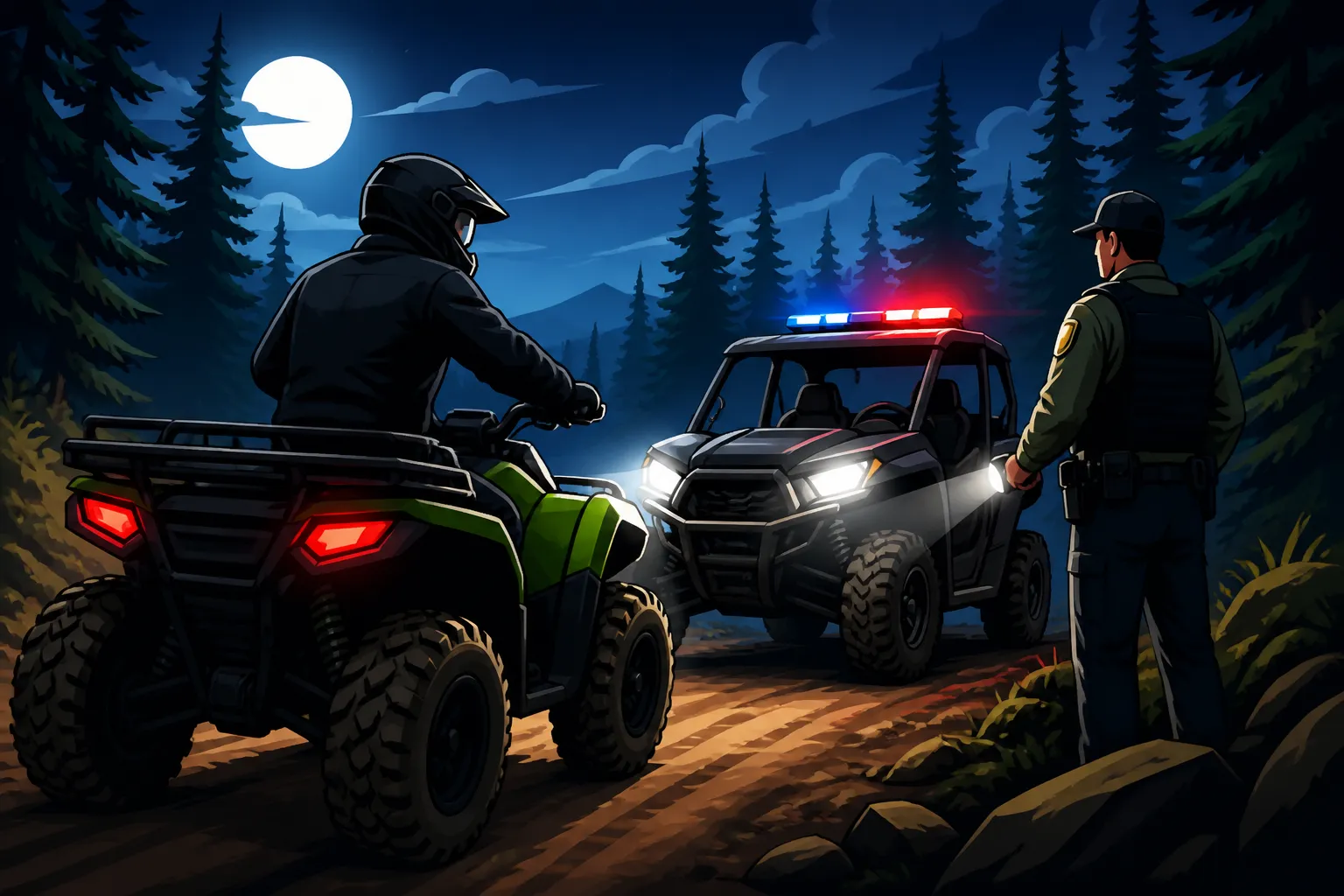
It’s easy to think that once the sun sets, the trails are deserted by patrols, but that's a dangerous assumption. Quebec's vast network of trails is patrolled by various authorities, and their presence isn't limited to daylight hours. You might encounter provincial police (Sûreté du Québec), municipal police in certain areas, or dedicated off-highway vehicle enforcement officers employed by the [Quebec Quad Clubs Worth Joining] and the FQCQ (Fédération québécoise des clubs de quads). These club patrols are often volunteers, but they have the authority to stop you, verify your documents, and issue tickets.
These patrols often operate during peak riding times, which can extend into the evening, especially on weekends or during popular events. They know the trails and popular access points, and they are specifically looking for violations that compromise safety or disturb local communities. So, while it might feel like the deep woods offer anonymity, these patrols are often out there, ensuring compliance with the rules. Being able to show your valid [Quebec Trail Pass Proof on the Trail], [Carrying Papers on a Long Ride] including your driver's licence, and having all your machine's documentation in order is always crucial, regardless of the time of day.
When the Sun Goes Down Unexpectedly: Factors Influencing Your Encounter
Finding yourself on the trail after midnight can happen for a variety of reasons, from simple miscalculation to unexpected mechanical issues. How a patrol officer handles the situation can sometimes depend on several factors, including your level of preparation, your conduct, and even the specific location where you're encountered.
Your Preparation and Equipment
When a patrol officer stops you after hours, they'll be looking at the overall picture. Your machine's condition, especially its lighting, plays a significant role. If your ATV or UTV is equipped with proper, functioning headlights, tail lights, and any required reflective gear, it demonstrates a basic level of responsibility. Machines that appear poorly maintained, lack adequate lighting, or have modifications that make them excessively noisy could potentially lead to additional scrutiny or tickets beyond just the time infraction.
For instance, ensuring your machine is equipped with reliable, bright headlights, perhaps even aftermarket upgrades from a brand like SuperATV, can definitely help with visibility if you do get caught out late, though it won't prevent a ticket for riding after hours. It does, however, show that you've made an effort for safety. Conversely, if your lights are dim, broken, or you're relying solely on a small headlamp, it could worsen the perception of your preparedness and potentially influence the officer's approach. Having robust protection like skid plates and strong bumpers, often available from manufacturers like SuperATV, also suggests you're ready for rugged conditions, implying a proactive approach to safe riding, which might be a small positive in the interaction.
The Patrol Officer's Discretion
While the law is clear about riding hours, individual patrol officers do have a degree of discretion, especially when it comes to minor infractions or extenuating circumstances. This isn't a guarantee that you'll be let off, but your attitude and honesty can make a difference. If you are respectful, cooperative, and candid about why you're out late (e.g., you got lost, had a minor breakdown, or genuinely misjudged the time), an officer might be more understanding.
However, discretion is rarely applied if you are perceived as being intentionally defiant, impaired, or causing a disturbance. Arguments, aggression, or attempting to evade a stop will almost certainly result in a ticket, potentially with additional charges. The best approach is always to be polite, follow instructions, and calmly explain your situation. Remember, the officer is doing their job to enforce rules designed for safety and community harmony.
Location, Location, Location: Federated vs. Other Lands
The legal implications of riding after midnight can also vary slightly depending on where you are caught. The strictest enforcement and clearest rules apply to Quebec's federated trail network. These trails are explicitly governed by the Off-Highway Vehicle Act, and patrols have full authority to issue tickets. If you're on a designated [Quebec ATV Trail Maps and the iQuad App] route, you're bound by the 6 a.m. to midnight rule.
What about private land? If you are riding solely on your own private property, or on private land with explicit permission from the landowner, the provincial trail hours may not directly apply. However, even on private land, if your activities cause a noise disturbance to neighbours or violate local municipal by-laws, you could still face issues. Furthermore, if you are simply crossing a short section of private land to access a federated trail, or using an unauthorized shortcut, you are still subject to the public trail rules once you are on or near the regulated network. It's a complex area, and it's always safer to assume the rules apply unless you are absolutely certain of an exception.
Riding Smart: How to Avoid Being Caught Out After Midnight
The easiest way to avoid the stress and expense of a late-night ticket is to plan carefully and ride responsibly. With a little foresight, you can ensure your Quebec adventures stay within legal hours and are always enjoyable.
Master Your Route and Time Management
The most effective strategy against late-night riding is meticulous planning. Before you even set out, familiarize yourself with your chosen route. Use detailed [Quebec ATV Trail Maps and the iQuad App] to gauge distances and estimate riding times. Factor in breaks for lunch, sightseeing, and any unexpected stops. A good rule of thumb is to calculate your return trip with ample buffer time, especially as days get shorter in the fall and winter. Aim to be off the main trails well before sundown, giving yourself a significant margin before the midnight cutoff.
Always be aware of the actual sunset time for your location. What feels like an hour of daylight can quickly turn into deep twilight in the forest. If you're riding with a group, designate a timekeeper or agree on a firm turnaround time to ensure everyone adheres to the schedule. [Planning a Route on the Interactive Map] and sharing it with your group can prevent miscommunications and ensure everyone knows the expected duration of the ride.
Equip Your Machine for Any Eventuality
Even with the best planning, unforeseen circumstances can arise. A mechanical issue, a wrong turn, or even adverse weather can delay your return. That's why being prepared is critical. Ensure your ATV or UTV is always in excellent working order, with a full tank of fuel. Carry a basic toolkit, a tire repair kit, and a small air pump. A reliable winch, especially if you venture into challenging terrain, can save you hours if you get stuck.
Critically, make sure your lighting system is robust and fully functional. Consider upgrading to brighter LED headlights if your stock lights are dim. Bringing extra flashlights or headlamps can also be a lifesaver if your machine's electrical system fails. A GPS device or a smartphone with downloaded offline maps is also essential, as cell service can be spotty in remote Quebec regions. Brands like SuperATV offer a wide range of durable accessories and lighting upgrades that can enhance your machine's reliability and safety for long excursions, helping you avoid being caught in the dark unexpectedly.
Communication and Group Riding Etiquette
Riding in a group offers a built-in safety net, but only if you communicate effectively. Before starting any ride, especially a longer one, establish clear communication protocols. Decide how you'll signal stops, turns, or hazards. Ensure everyone knows the route and has a way to contact others if separated. Two-way radios are invaluable for staying connected beyond cell service range.
If someone in your group starts falling behind or experiences a minor issue, don't leave them. Slow down, check in, and address the problem together. A group only moves as fast as its slowest member, and rushing could lead to errors, accidents, or getting lost, all of which could contribute to being out after midnight. Practicing good [Quebec Trail Etiquette Locals Expect] not only makes the ride more pleasant but also safer for everyone involved, ensuring that the adventure ends safely and on time.
Disclaimer
This article is for general informational purposes only and does not constitute professional advice. Laws, prices and regulations vary by location and change over time. Consult a qualified professional for guidance on your specific situation.