Choosing a Helmet That Comes With a Visor
Riding an ATV or UTV in Quebec offers an incredible sense of freedom, but it also comes with a host of responsibilities, not least among them ensuring your personal safety. One of the most common headaches riders face is picking the right helmet, especially when you factor in our unique provincial rules and the unpredictable Quebec weather. This guide is here to untangle the complexities, helping you choose a helmet with an integrated visor that keeps you safe, comfortable, and fully compliant with local regulations.
Why a Visor Isn't Just a Preference in Quebec
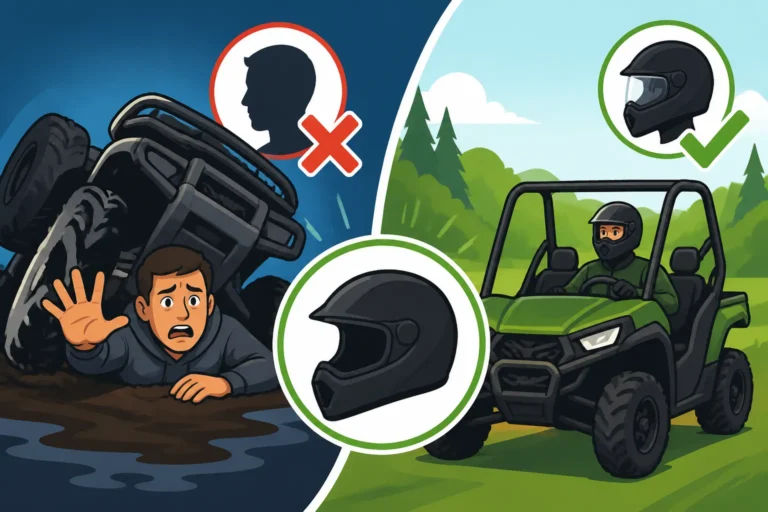
It's easy to think of a visor as just another convenience, something nice to have when the bugs are out. But in Quebec, for off-road riders, eye protection isn't optional—it's the law. This means your choice of helmet, and specifically its visor, plays a much bigger role than just comfort; it's a matter of legal compliance and core safety.
Quebec's Helmet and Visor Rules
Let's get straight to it: Quebec's Off-Highway Vehicle Act (LVHR) is quite clear. Every rider and passenger on an off-highway vehicle must wear a helmet that meets recognized safety standards. Crucially, it also states that adequate eye protection must be worn. While some might opt for separate goggles with an open-face helmet, an integrated visor fulfills this requirement seamlessly and often with greater practical advantages.
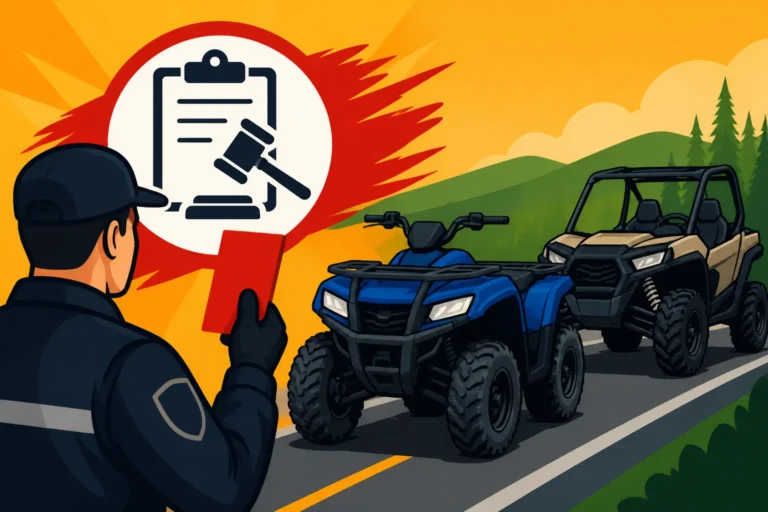
Imagine you're out on the trails near Mont-Tremblant, enjoying the scenery, and a trail patrol officer stops you for a routine check. They'll be looking for your valid [Quebec Requires a Driver's Licence Since 2021], your trail pass, and of course, proper safety gear. Having a helmet with a built-in visor means you're already compliant on the eye protection front, without needing to worry if your goggles are fogged up or have fallen off. It removes one more thing to stress about, allowing you to focus on the ride itself. This compliance isn't just about avoiding a ticket; it's about protecting your vision from the hazards of the trail.
Beyond the Law: Practical Benefits of an Integrated Visor
Beyond merely meeting legal requirements, an integrated visor offers a world of practical benefits that enhance your riding experience, especially on Quebec's diverse trails. Think about the conditions you encounter: dusty logging roads in summer, biting winds in late fall, or unexpected rain showers. A visor acts as a shield against all of these.
It protects your eyes from kicked-up dust and gravel, which is almost guaranteed when riding in a group or on dry trails. It keeps insects and airborne debris from striking your face, which can be a real distraction and danger at speed. When the weather turns, a visor keeps rain, sleet, or snow out of your eyes, maintaining clear visibility. This is a massive improvement over relying on goggles that might leak or become dislodged. Many riders also appreciate the protection from direct sun glare, especially on those long stretches where the sun is right in your eyes. This consistent protection often translates to less fatigue and a more enjoyable ride, whether you're cruising through the Eastern Townships or exploring the vast territories further north. Plus, the convenience of simply flipping a visor up or down to adapt to changing light or to chat briefly with your riding buddies cannot be overstated.
Types of Helmets with Integrated Visors for Off-Road Riding
The world of helmets with visors has expanded far beyond traditional street-bike designs. For Quebec ATV and UTV enthusiasts, there are several excellent options, each with its own set of advantages depending on your riding style, the conditions you face, and your personal comfort priorities.
Full-Face Helmets Street-Style ATV Helmets
When most people think of a full-face helmet, they picture a motorcycle rider on the highway. However, these helmets are becoming increasingly popular for ATV and UTV riders, especially those who spend time on gravel roads, forest trails, or even brief stretches of designated public roads. These helmets fully enclose your head, including your chin, and feature a clear, fixed visor that covers the entire face opening.
The primary advantage of a full-face helmet is the maximum protection it offers. The seamless, strong shell provides excellent impact resistance around your entire head. When it comes to weather sealing, they're hard to beat. The visor creates a tight seal against the elements, keeping out wind, rain, and dust far more effectively than an open-face helmet with separate goggles. This also contributes to a quieter ride, reducing wind noise which can be fatiguing on longer excursions. Many modern full-face visors come with anti-fog coatings or Pinlock inserts, which are lifesavers in Quebec's humid or cooler conditions. On the flip side, some riders find them hotter in the summer due to less airflow, and their heavier weight compared to traditional dirt helmets can be a factor for some. But for those looking for ultimate protection and comfort in diverse conditions, a full-face helmet is a strong contender, particularly if you're abiding by [Quebec ATV Road Rules Under the LVHR] for any road access.
Modular Flip-Up Helmets
Modular helmets are the chameleons of the helmet world, offering a unique blend of convenience and protection. They resemble a full-face helmet, but with a crucial difference: the entire chin bar and visor assembly can pivot upwards, transforming the helmet into an open-face style. This versatility makes them appealing to many quad and side-by-side drivers.
The convenience factor here is huge. Imagine pulling up to a scenic lookout, wanting to grab a quick drink, or simply chat with your passenger or fellow riders. With a modular helmet, you don't have to take the entire helmet off. Just flip up the front, and you have instant access to your face. This can be a real blessing on multi-stop rides or when you're frequently interacting with others. When closed, they provide much of the protection and weather sealing of a full-face helmet, often featuring anti-fog visors. However, this added mechanism means modular helmets tend to be a bit heavier than their fixed full-face counterparts. The moving parts also introduce potential points of failure, and in some impact tests, they may not offer the exact same level of ultimate chin bar protection as a dedicated full-face. But for riders who prioritize convenience and adaptability without sacrificing significant protection, a modular helmet is an excellent choice.
Dual-Sport Helmets ADV Helmets
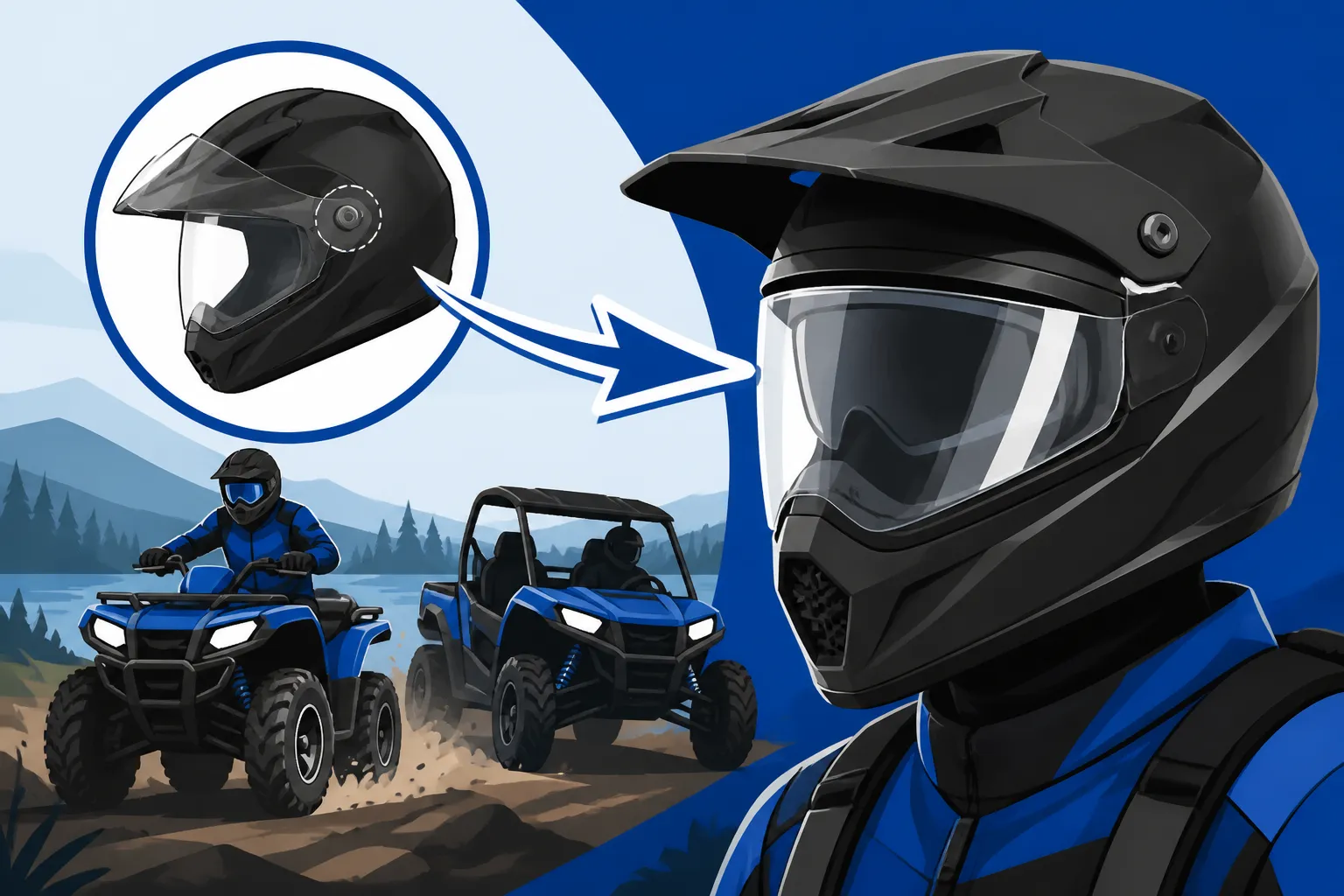
The dual-sport helmet is arguably the most popular choice for serious ATV and UTV riders in Quebec who want the best of both worlds. These helmets are purpose-built for adventure riding, combining elements from both dirt bike helmets and street full-face helmets. They feature a distinct peak (like a dirt helmet) to block sun and roost, but also an integrated, clear visor (like a street helmet) for eye protection.
This hybrid design is incredibly practical for off-road use. The peak is fantastic for cutting glare on sunny days and protecting your face from mud or debris kicked up by other machines. Meanwhile, the integrated visor ensures consistent eye protection from dust, wind, and rain, keeping you compliant with Quebec law. Many dual-sport helmets are designed with generous ventilation to keep you cool during strenuous riding, which is a big plus in the heat of summer. Often, the visor can be removed entirely, allowing you to wear goggles underneath if you prefer, or if you're tackling extremely dusty conditions where goggles might offer a better seal. The main drawbacks might be that the peak can catch wind at higher speeds, leading to some neck strain, and they can sometimes feel a bit bulkier than a pure off-road helmet. Nevertheless, for the diverse demands of Quebec's quad trails, a dual-sport helmet often hits that sweet spot of protection, versatility, and comfort. If you're looking for accessories to customize your machine for these diverse trails, companies like SuperATV offer a wide range of parts that complement this adventurous riding style.
Key Features to Look for in a Visored Helmet
Once you've narrowed down the type of visored helmet that suits your riding, it's time to dive into the nitty-gritty details. Not all visors are created equal, and the overall quality and features of the helmet itself will significantly impact your safety, comfort, and enjoyment on the trail.
Visor Quality and Functionality
The visor is your window to the world, so its quality and functionality are paramount. One of the biggest frustrations for any rider is a fogged-up visor, especially in the cooler mornings or during periods of exertion. Look for visors with anti-fog treatments or, even better, those that are compatible with Pinlock inserts. Pinlocks create a dual-pane system that is incredibly effective at preventing fogging, keeping your vision clear regardless of the temperature or your breathing. This is absolutely essential for comfortable riding in Quebec, where humidity and temperature swings are common.
Scratch resistance is another critical feature. Off-road riding means encountering branches, dust, and flying debris, all of which can quickly degrade a cheap visor. A good quality, scratch-resistant visor will last longer and maintain clear optics. UV protection is also a must, shielding your eyes from harmful rays on long, sunny rides. Consider the ease of cleaning and replacement, too. Mud, bugs, and dust will inevitably accumulate, so a visor that's easy to remove and clean thoroughly, or to replace if it gets too scratched, is a huge convenience. Finally, don't overlook tint options. Many helmets come with a clear visor, but having the option to swap it for a smoked or iridium tint for bright, sunny days can drastically improve comfort and reduce eye strain. Remember to always carry a clear visor for riding after [Quebec Riding Hours From 6 a.m. to Midnight] to ensure proper visibility.
Fit, Comfort, and Ventilation
A helmet is only as good as its fit. An improperly fitting helmet is not only uncomfortable but also significantly less safe in the event of an impact. It should feel snug all around your head, with no pressure points, and it shouldn't shift excessively when you shake your head. Your cheeks should feel a gentle, firm pressure, and your forehead should be in contact with the top of the liner. Always try on helmets before buying and consult sizing guides.
Ventilation systems are crucial for comfort, especially during Quebec's hot summers. Look for helmets with adjustable intake vents on the chin and forehead, and exhaust vents at the back. Good airflow helps to keep your head cool, reduces sweating, and further aids in preventing visor fogging. Beyond cooling, proper ventilation can also help to dry sweat, making for a more hygienic experience. Speaking of hygiene, removable, washable liners are non-negotiable for ATV/UTV riders. After a long day on dusty or muddy trails, being able to pull out the liner and throw it in the wash makes a huge difference in keeping your helmet fresh and odour-free. Finally, consider the weight distribution of the helmet. A well-balanced helmet will feel lighter and reduce neck fatigue on extended rides, a real plus when you're covering vast distances on the FQCQ network.
Safety Standards and Materials
At the core of any helmet choice is safety. Understanding the various certifications and materials will help you make an informed decision about the level of protection you're getting. Reputable helmets will always have one or more safety certifications. The most common ones you'll encounter are DOT (Department of Transportation), which is a minimum standard for road use in North America; ECE (Economic Commission for Europe), a widely recognized international standard often considered more stringent than DOT; and Snell Memorial Foundation certification, a voluntary, independent testing standard known for its rigorous requirements. While not strictly mandatory for off-road machines, choosing a helmet with these certifications provides assurance that it has passed strict impact and penetration tests. [Quebec Equipment Checks by Patrols] might not delve into certification specifics, but knowing your helmet is certified provides peace of mind.
The shell materials also play a significant role in a helmet's protective capabilities and weight. Common materials include:
- Polycarbonate: Often found in more affordable helmets, it's durable and effective, though typically heavier.
- Fiberglass composite: A step up, offering a better strength-to-weight ratio, making helmets lighter and often more impact-absorbent.
- Carbon fiber: The lightest and often most expensive option, providing excellent strength and impact absorption.
Each material offers a different balance of weight, cost, and protective qualities. Inside the shell, you'll find an EPS (Expanded Polystyrene) foam liner, which is designed to absorb impact energy by crushing. The thickness and multi-density layering of this EPS are critical for dissipating forces. For specialized machines and unique riding needs, you can find a lot of protective gear, including helmets designed for various activities, from companies like SuperATV, which understands the importance of robust materials for demanding environments.
| Helmet Type | Visor Features | Pros for Quebec ATV/UTV Riding | Cons for Quebec ATV/UTV Riding |
|---|---|---|---|
| Full-Face | Integrated, sealed, often anti-fog ready | Max protection, excellent weather seal, quiet, good for road access | Can be hot, heavier, less airflow for aggressive off-road |
| Modular | Integrated, flip-up, anti-fog options | Convenience (talking, drinking), good protection when closed | Heavier, more complex, potentially bulkier, may offer less impact protection than a dedicated full-face |
| Dual-Sport | Integrated, peak for sun/roost, anti-fog | Best of both worlds, versatile, good airflow, can use goggles | Peak can catch wind at speed, potentially slightly heavier than pure dirt helmets |
Maintenance and Care for Your Visored Helmet
A helmet is an investment in your safety and comfort. Just like your ATV or UTV, it requires proper care and maintenance to ensure it performs optimally and lasts as long as it should. Neglecting your helmet can degrade its protective qualities and lead to a less enjoyable riding experience.
Cleaning Your Visor and Shell
After every ride, especially on Quebec's dusty or muddy trails, your helmet is likely to be caked with grime. The visor, being your primary view, needs careful attention. Always use a soft, clean microfiber cloth and lukewarm water with a very mild, non-abrasive soap. Avoid harsh chemicals, window cleaners, or paper towels, as these can scratch anti-fog coatings and the visor material itself. For dried-on bugs or mud, soak a wet cloth and lay it over the affected area for a few minutes to soften the residue before gently wiping it away. Aggressive scrubbing can cause permanent damage.
For the outer shell, a similar approach works well. Mild soap and water, applied with a soft sponge or cloth, will remove most dirt and grime. Pay attention to vents and seams where mud or dust can accumulate. If your helmet has removable liners, take them out and hand wash them with a gentle detergent, then allow them to air dry completely. This keeps the interior fresh and prevents mould or mildew from forming, which can lead to unpleasant odours and material degradation over time. Proper cleaning not only keeps your helmet looking good but also ensures maximum visibility through a clear visor and prevents materials from breaking down prematurely. For keeping your machine clean and running smoothly, just as you maintain your helmet, [Quebec ATV Registration Renewal Each Year] is a reminder of yearly upkeep.
Storing Your Helmet Properly
How you store your helmet between rides is almost as important as how you clean it. Improper storage can damage the shell, liner, and visor, compromising its safety and lifespan. Always store your helmet in a cool, dry place away from direct sunlight and extreme temperatures. Heat and UV rays can cause the EPS liner to degrade and the shell materials to weaken over time.
Ideally, keep your helmet in a dedicated helmet bag. These bags are often lined with soft material to prevent scratches to the shell and visor, and they protect against dust accumulation. Avoid hanging your helmet by the chin strap or leaving it balanced precariously where it could fall. A fall, even a seemingly minor one onto a hard surface, can compromise the helmet's integrity, even if no visible damage occurs. Always allow your helmet to air dry completely after a wet or sweaty ride before storing it to prevent mildew and odours. Laying it upside down or placing it on a helmet stand can help promote airflow. Taking these simple storage steps ensures your helmet is always ready and safe for your next adventure on the trails.
When to Replace Your Helmet
Helmets are designed to protect your head by absorbing and dissipating impact energy. However, they don't last forever, and knowing when to replace yours is a critical aspect of rider safety. The most important rule is this: replace your helmet after any significant impact, even if there's no visible damage. The EPS liner, which is the primary energy-absorbing component, is designed to crush on impact. Once crushed, it loses its ability to protect effectively in a subsequent impact. This applies even if you just dropped it hard on concrete from a significant height.
Beyond impacts, manufacturers generally recommend replacing helmets every five years from the date of manufacture (often stamped inside the helmet) or three years from the date of first use. Over time, materials like resins, adhesives, and liner foams can degrade due to exposure to UV light, sweat, chemicals (like fuel or cleaning agents), and general wear and tear. You should also look for visible signs of wear: a loose or deteriorated liner, a frayed or damaged chin strap, visible cracks in the shell (even hairline ones), or a visor mechanism that no longer functions properly. If you notice any of these issues, it's time for a new helmet. While maintaining your machine is a continuous process as covered in [Carrying an Insurance Certificate on Every Ride], your helmet has a definite lifespan. Don't risk your head with a compromised helmet; a new one is a small price to pay for vital protection.
Disclaimer
This article is for general informational purposes only and does not constitute professional advice. Laws, prices and regulations vary by location and change over time. Consult a qualified professional for guidance on your specific situation.