Quebec Muffler and Noise Rules
There's nothing quite like hitting the trails in Quebec, feeling the power of your machine, and breathing in that crisp, clean air. But let's be honest, sometimes that experience is marred by the roar of an overly loud exhaust, not just for you, but for everyone else in the vicinity. It's a common frustration, both for riders who get ticketed and for residents living near trails who just want some peace and quiet. This guide will walk you through Quebec's specific muffler and noise rules for ATVs and UTVs, helping you avoid fines and keep the peace on our beautiful trails.
The Core of Quebec's Noise Regulations for Off-Road Vehicles
The sound your off-road machine makes isn't just a matter of personal preference; in Quebec, it's a matter of law. The province has put specific regulations in place to manage noise, aiming to strike a balance between allowing enthusiasts to enjoy their sport and protecting the quality of life for communities and the tranquility of our natural spaces.
Understanding the Legal Framework and Decibel Limits
At the heart of Quebec's regulations is the Act respecting off-highway vehicles, often referred to by its French acronym, LVHR (Loi sur les véhicules hors route). This legislation doesn't mince words when it comes to noise pollution. It clearly stipulates that off-highway vehicles, including your ATV or UTV, must be equipped with an exhaust system that effectively muffles the engine's noise. The intent is to prevent excessive or unnecessary noise that could disturb others or negatively impact the environment.
While specific decibel limits can sometimes vary or be subject to interpretation during enforcement, the overarching principle is that your machine should not produce more noise than its original factory configuration, or certainly not exceed the strict limits outlined in the law. These limits apply not just when you're roaring down a federated trail, but also when you're idling at a trailhead, passing through a village, or even operating on private land that neighbors residential areas. The SAAQ (Société de l'assurance automobile du Québec), which governs these rules, takes these regulations seriously, and so should every rider. For a deeper dive into the foundational rules, check out [Quebec's Off-Highway Vehicle Act and Your Papers].
Why Loud Exhaust Systems Are a Problem in Quebec
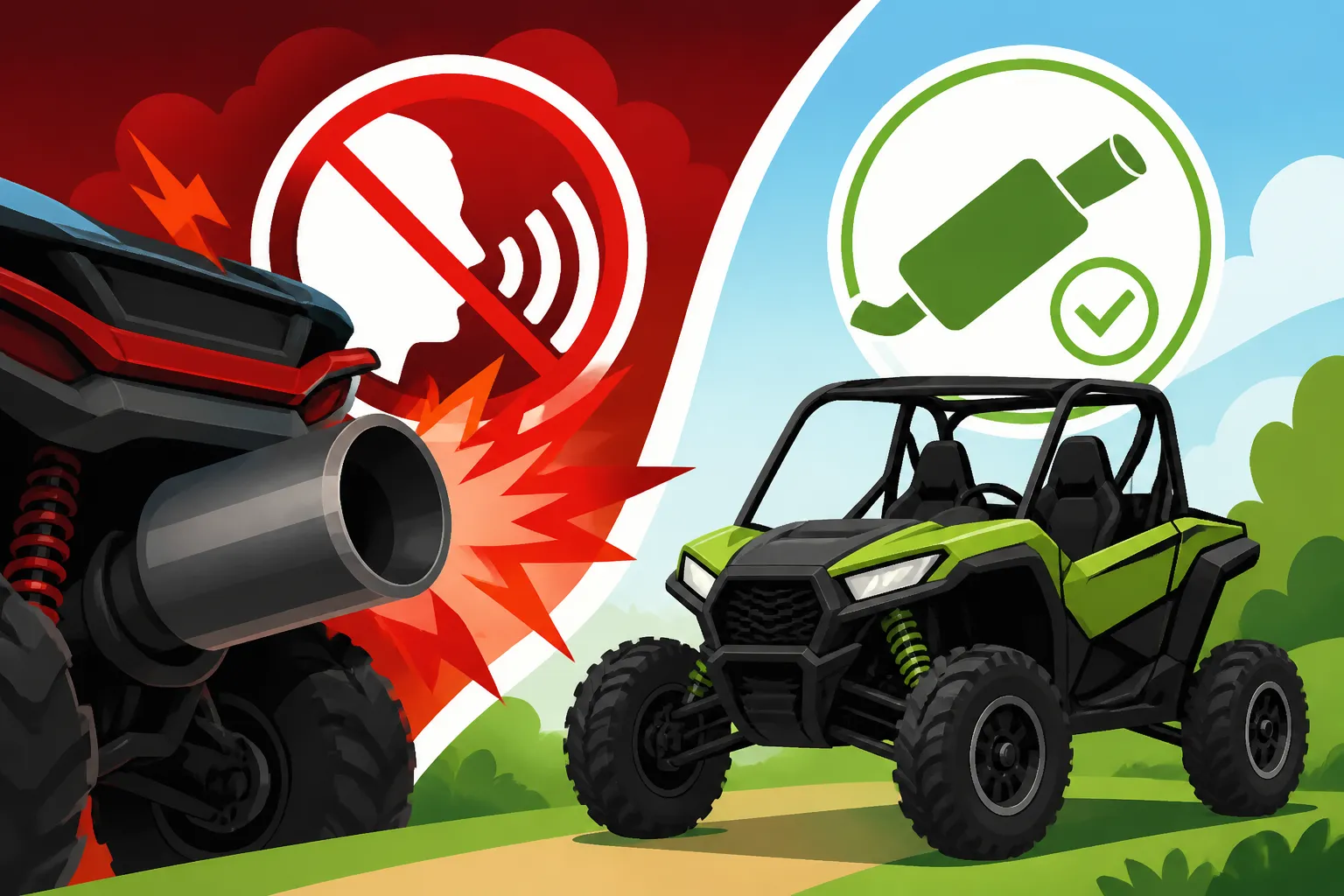
You might love the aggressive rumble of a performance exhaust, but for many, it's a real nuisance. The loud, unbaffled roar from some ATVs and UTVs creates significant problems, fostering negative perceptions of our sport among the general public and within communities. Imagine living near a trail and having a constant barrage of ear-splitting noise interrupting your peace and quiet – it's understandably irritating, and it leads directly to complaints to local authorities and calls for stricter enforcement, or even trail closures.
Beyond human disturbance, excessive noise can also stress local wildlife, disrupt their natural behaviors, and impact delicate ecosystems. Quebec is rich in natural beauty and biodiversity, and as responsible riders, we share a duty to protect it. Overly loud machines contribute to the kind of negative image that can ultimately limit our access to the very trails we cherish. Addressing [Quebec Noise Complaints About Quads] is crucial for the long-term health of our riding community.
Common Violations and What the Law Targets
When it comes to noise, the law isn't looking to penalize every little exhaust pop. Instead, it targets specific modifications and deficiencies that lead to truly excessive sound levels. Understanding these common violations can help you ensure your machine is compliant.
Aftermarket Exhausts and Modified Mufflers
This is probably the most common culprit when it comes to noise violations. Many riders, eager for a performance boost or a "meaner" sound, install aftermarket exhaust systems. While some aftermarket options are designed to be compliant with noise regulations, many others are not. A modified muffler, in the eyes of the law, can mean anything from removing internal baffles (those sound-dampening plates inside your muffler) to straight-piping your machine (completely removing the muffler). Even subtle alterations that increase the exhaust flow and, consequently, the noise, can fall under this category.
It’s not just about the volume; it's about the type of noise. A sharp, unrestricted bark is far more likely to draw attention and a ticket than a deeper, but still compliant, rumble. While brands like SuperATV offer a wide range of aftermarket parts that can enhance your machine's performance and aesthetics, it's absolutely critical to verify that any exhaust component you install specifically adheres to Quebec's noise and emission standards. Don't assume that because it's available for sale, it's automatically legal for use on Quebec trails. Always check product specifications and consult with a reputable dealer or the SAAQ guidelines.
The "Silent" Killer: Missing or Defective Spark Arrestors
Often overlooked, the spark arrestor is a critical component of your exhaust system, and its absence or poor condition can lead to both noise violations and significant safety hazards. A spark arrestor is a screen or series of baffles within your muffler designed to prevent hot carbon particles from exiting the exhaust and potentially starting a fire, especially in dry forest conditions.
Legally, your ATV or UTV must be equipped with a functional spark arrestor. When a spark arrestor is clogged, damaged, or removed, it not only compromises fire safety but can also alter the exhaust flow, often leading to an increase in engine noise. Trail patrols are trained to look for these components, and a missing or defective one is an easy way to get a ticket. Ensuring your spark arrestor is clean and intact is a simple yet crucial maintenance step for both compliance and safety.
Consequences: Fines, Impoundment, and Public Image
Ignoring Quebec's noise rules can come with a hefty price tag, far beyond the initial cost of a "performance" exhaust. If you're caught with a non-compliant muffler or an excessively loud machine, you can expect significant fines. These aren't just minor slaps on the wrist; they can easily run into the hundreds of dollars, and they tend to increase for repeat offenses. These fines are often accompanied by administrative fees and other penalties that add up quickly.
In more egregious cases, or for repeat offenders, your machine could even be impounded. Imagine having your ATV or UTV towed away from the trail, leaving you stranded, and then facing additional costs for impoundment and storage before you can even get your machine back. This is a very real possibility. Beyond the immediate financial and logistical headaches, continuous violations by some riders contribute to a deteriorating public image for the entire off-road community. This negative perception makes it harder to maintain existing trail networks and gain support for new ones. Understanding [Quebec Ticket Costs for Trail Violations] is essential for every rider.
| Violation Type | Description | Potential Consequences |
|---|---|---|
| Aftermarket Exhaust | Replacing the factory muffler with one that exceeds legal decibel limits. | Significant fines, potential machine impoundment. |
| Modified Muffler | Altering the factory muffler (e.g., removing baffles, drilling holes). | Significant fines, potential machine impoundment. |
| Missing Spark Arrestor | Operating without a legally required, functional spark arrestor. | Fines, fire hazard risk, potential machine impoundment. |
| Defective Muffler | A damaged muffler (e.g., rust holes, cracks) causing excessive noise. | Fines, requirement to repair before further use. |
| Excessive Engine Noise | Any operational noise exceeding prescribed decibel limits, regardless of modification. | Fines, requirement to address noise issue. |
Ensuring Your Machine Complies: Practical Steps
Nobody wants to get a ticket or contribute to negative perceptions of our sport. The good news is that ensuring your ATV or UTV complies with Quebec's muffler and noise rules is quite straightforward with a bit of proactive effort.
Regular Inspections and Maintenance
Just like checking your oil or tire pressure, making a regular inspection of your exhaust system should be part of your routine maintenance. Take a few minutes before or after a ride to visually inspect your muffler and exhaust pipe. Look for signs of damage like cracks, holes, loose connections, or excessive rust that could lead to leaks and increased noise. Listen for any unusual sounds – hissing, rattling, or a sudden increase in volume can all indicate a problem.
A loose clamp, a worn-out gasket, or even a build-up of carbon can impact how your exhaust system performs and sounds. Regular cleaning and ensuring all components are secure can prevent many common noise-related issues. If you notice any damage, address it promptly. Proactive maintenance is always cheaper and less stressful than a fine and forced repairs on the side of the trail. Keeping up with [Quebec Equipment Checks by Patrols] will help you pass any inspection with flying colours.
Choosing Compliant Aftermarket Parts
If you're considering an aftermarket exhaust or muffler, the key is to choose wisely. Don't just go for the loudest option or whatever looks "cool." Instead, actively seek out parts that are specifically advertised as compliant with local noise regulations, or better yet, those that carry certifications from recognized bodies. Many reputable manufacturers understand these regulations and design products accordingly.
When browsing options, perhaps from a brand like SuperATV or others, make sure to read the product descriptions carefully. Look for mentions of "trail legal" or "SAAQ compliant" (though you'll likely see more general "sound compliant" descriptions). The best approach is to speak with a knowledgeable dealer in Quebec who understands the specifics of the LVHR and can guide you towards compliant choices for your particular make and model. Investing in a compliant exhaust system upfront will save you headaches and money in the long run.
Riding Responsibly and Respecting Communities
Beyond the technical aspects of your machine, your riding behaviour plays a huge role in noise management and community relations. Even with a perfectly compliant muffler, aggressive throttle application, especially near residential areas, campgrounds, or wildlife habitats, can generate unnecessary and irritating noise. This isn't just about avoiding a ticket; it's about being a good neighbour and ambassador for the sport.
When you're passing through a village, crossing a public road, or even just leaving a staging area, ease off the throttle, maintain a moderate speed, and be mindful of your surroundings. Remember, the trails often pass through or near private land, and the continued goodwill of landowners is vital for maintaining our access. Showing respect by minimizing noise, especially during early morning or late evening hours, helps cultivate positive relationships and ensures the longevity of our beloved trail network. Adhering to [Quebec Trail Etiquette Locals Expect] is a simple but powerful way to make a difference.
What to Expect During a Trailside Inspection
Even if you're meticulous about your machine's compliance, there's always a chance you'll encounter a trail patrol or police officer. Knowing what to expect during a stop can make the experience smoother and less stressful for everyone involved.
How Patrol Officers Check for Noise Violations
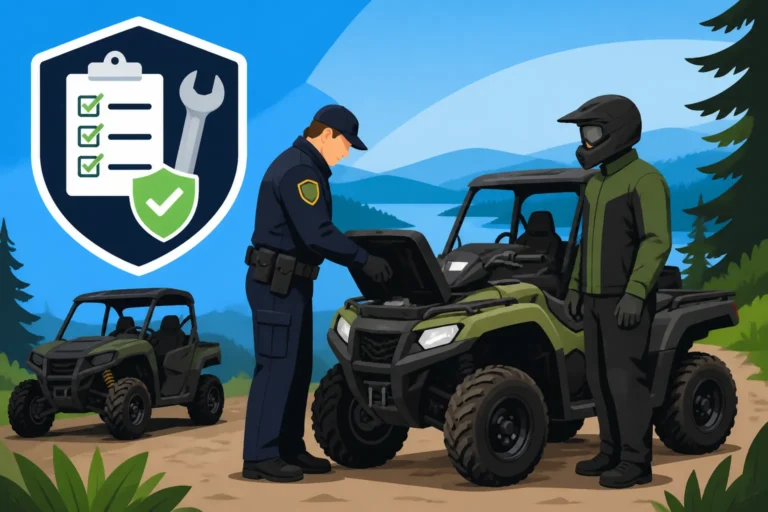
When a patrol officer suspects a noise violation, their first step is usually a visual inspection of your exhaust system. They'll be looking for obvious signs of modification: a missing muffler, a straight pipe, or an aftermarket exhaust that clearly lacks sound-dampening components. They might also check for a visible, functional spark arrestor. They have a trained ear and will often ask you to rev your engine or idle it to assess the sound level.
While some specialized units might use sound meters for precise decibel readings, many initial assessments are based on audible observation and visual confirmation of non-compliant equipment. They know what a factory muffler sounds and looks like, and they're quick to spot anything that deviates significantly. The purpose of these checks, after all, is to ensure compliance with the law and address [What a Patrol Can Ask to See].
Preparing for a Stop and What to Provide
The best preparation for any trailside stop is to carry all your required documentation and to always be courteous and cooperative. When an officer signals you to stop, do so safely and promptly. Keep your hands visible and follow any instructions they give you. You'll typically be asked for your driver's licence, your ATV or UTV registration papers (or VHR plate documentation), and your valid FQCQ trail pass. Having these readily accessible will make the process much faster.
If the officer suspects a noise violation, they might ask you specific questions about your exhaust system or request to inspect it more closely. Be honest and cooperative. Getting defensive or argumentative will not help your situation and could potentially lead to further complications. For a smooth interaction, know how to handle [Being Stopped on a Trail] and efficiently provide [Showing Your Licence and Pass].
Understanding Your Rights and Obligations
As a rider, you have rights, but also clear obligations under the law. You are obligated to stop for a trail patrol or police officer and provide your requested documentation. You are also obligated to have a machine that complies with Quebec's regulations, including noise limits. If an officer issues you a ticket for a noise violation, they must inform you of the specific offense.
If you believe the ticket was issued in error, you have the right to contest it. The process usually involves a court appearance where you can present your case. This might require demonstrating that your muffler is indeed factory standard, or that an aftermarket component is compliant. Keeping records of purchase and installation, especially for compliant aftermarket parts, can be helpful if you ever need to challenge a ticket. For guidance on this process, consider [Contesting a Trail Ticket].
Disclaimer
This article is for general informational purposes only and does not constitute professional advice. Laws, prices and regulations vary by location and change over time. Consult a qualified professional for guidance on your specific situation.