Quebec Equipment Checks by Patrols
You're out enjoying a fantastic ride on Quebec's beautiful trails, the engine humming, the scenery a blur of green or white, and suddenly, there are flashing lights ahead. Your heart might do a little skip-beat, wondering, "Did I do something wrong? What are they even looking for?" It's a common moment of anxiety for any ATV or UTV rider. This comprehensive guide is here to strip away that uncertainty, walking you through exactly what Quebec's trail patrols and authorities are checking for when they stop you on the trail or road.
Understanding Why Patrols Conduct Equipment Checks
Getting stopped by a patrol, whether it's the Sûreté du Québec, a municipal police force, or a federated club patroller, can feel a bit like an interrogation if you're not sure what they're looking for. But it's important to remember that these checks are in place for everyone's safety, to maintain the integrity of our incredible trail system, and to ensure responsible off-roading. They're not just trying to catch you out; they're upholding the rules that keep the trails open and enjoyable for all. It's about preserving the privilege of riding in this province.
The Legal Framework Behind Inspections
The backbone of all off-highway vehicle operations in Quebec is the Off-Highway Vehicle Act, or as it's known in French, the Loi sur les véhicules hors route (LVHR). This legislation is incredibly comprehensive, laying out everything from registration requirements to helmet rules, speed limits, and even the kind of equipment your machine must have. It's designed to ensure that these powerful machines are operated safely and respectfully within our natural environment and community spaces. Patrols, including the Sûreté du Québec, local police, and even the dedicated volunteers from federated clubs, are empowered to enforce these rules.
Their role isn't just about handing out tickets; it's also about education and ensuring that all riders understand their responsibilities. For instance, the SAAQ acts as both registrar and insurer for off-highway vehicles, so demonstrating current registration also means proving you have the mandatory liability insurance. This dual role helps simplify compliance but also places a significant responsibility on the rider. When a patrol asks for your documents, they're not just asking for a piece of paper; they're confirming that you meet these fundamental legal obligations to ride. If you're ever curious about the specifics, having a basic understanding of [Quebec's Off-Highway Vehicle Act and Your Papers] is incredibly helpful.
Common Concerns Driving Patrol Activity
There are several key reasons why patrols are out there actively checking machines and riders. Foremost among them is rider safety. They want to ensure that your machine is in good working order and that you, as the operator, are properly equipped and licensed. This includes checking things like working brakes, proper lighting for visibility, and that you're wearing an approved helmet. Beyond individual safety, they're also looking out for the broader community and the environment.
Noise violations are a frequent concern, especially near residential areas or sensitive wildlife habitats. Modified exhausts that exceed legal sound limits can lead to complaints and even trail closures, so patrols are vigilant about this. Similarly, they check for any unsafe modifications or equipment that could damage trails or pose a risk to others. Ensuring everyone has a valid trail pass is another critical aspect, as these passes fund the maintenance and development of the very trails we all enjoy. Lastly, patrols play a crucial role in maintaining positive relationships with landowners. A significant portion of Quebec's trail network crosses private property, and patrols help ensure riders respect these agreements, preventing trespass and ensuring landowners continue to grant access.
Essential Equipment Patrols Look For on Your ATV/UTV
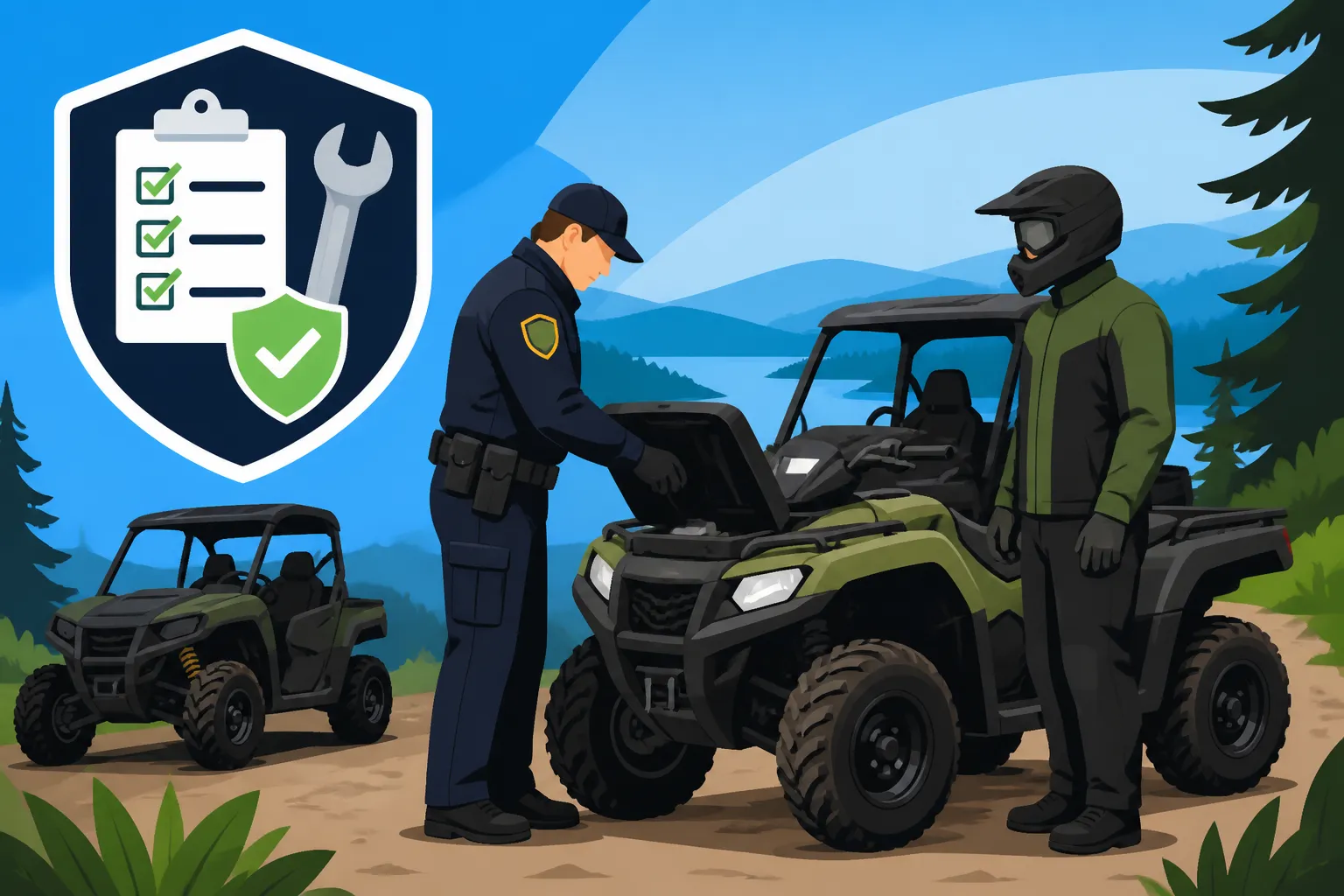
When a patrol flags you down, one of the first things they'll likely assess is the condition and legal compliance of your machine itself. This isn't just about how shiny your quad is; it's about whether it meets the minimum safety and environmental standards set by Quebec law. Think of it as a quick, roadside safety inspection, ensuring your ride isn't a hazard to you, other riders, or the environment.
Mandatory Safety Gear for the Machine Itself
Let's break down the physical components of your machine that patrols are specifically trained to look for. Your headlights, taillights, and brake lights must all be fully functional. This is critical for visibility, especially during dawn, dusk, or in wooded areas. A non-functioning light can easily lead to a ticket, and more importantly, it makes your machine far less visible to others. Similarly, your exhaust system and muffler are under scrutiny. Quebec has strict [Quebec Muffler and Noise Rules] to prevent excessive noise pollution. Modifications designed to make your machine louder, or a damaged muffler, will definitely draw attention and likely result in a fine. Ensure your machine's exhaust is stock or a compliant aftermarket option.
Mirrors are also a must. You need at least one rearview mirror on the left side of your machine, or a central one. This helps you monitor what's happening behind you, which is crucial on shared trails or when navigating road crossings. The condition of your tires is another key check; patrols will look for adequate tread depth and ensure they're not bald or damaged, which could compromise traction and safety. And, of course, your brakes must be in proper working order. They’ll likely check for responsiveness and ensure both front and rear brakes (if applicable) are functional. Any modifications, like a lift kit from SuperATV, are generally fine as long as they don't compromise the safe operation of the vehicle or obscure lights, but ensure your core safety components remain compliant. Don't forget the spark arrestor on your exhaust; it's a small but vital component designed to prevent wildfires, and its absence or damage can be a safety concern.
Personal Protective Equipment (PPE) Requirements
Beyond your machine, patrols are also very focused on what you, the rider, are wearing. Personal protective equipment (PPE) isn't just a suggestion in Quebec; much of it is mandatory under the LVHR, particularly your helmet. Your helmet must be approved by recognized standards like DOT or Snell, and it needs to be properly secured and fit correctly. This isn't just about avoiding a fine; it's about protecting your most vital asset in the event of an accident. A helmet that's too loose or uncertified offers little real protection.
In addition to the helmet, you're required to have a clear visor or goggles to protect your eyes. Mud, dust, branches, and even insects can become serious hazards at speed, obstructing your vision and potentially causing an accident. Make sure your visor or goggles are clean, free of cracks, and provide an unobstructed field of view. While closed-toe footwear that covers your ankles is technically the minimum, most experienced riders also opt for gloves to improve grip and protect their hands from abrasions and impacts. While not strictly mandated, it's a smart addition to your gear list. When selecting accessories, ensure anything you add, even comfort items from a brand like SuperATV, doesn't interfere with the proper fit or function of your mandatory PPE. Prioritizing the right gear is fundamental for safety on the trail, which is why [Quebec Helmet and Visor Rules] are taken very seriously.
Paperwork and Administrative Checks
You might have the most meticulously maintained ATV or UTV in Quebec, adorned with all the latest and greatest SuperATV upgrades, and be kitted out in top-tier protective gear. But if your paperwork isn't in order, you're still in for a bad day with a patrol. Beyond the physical aspects of your machine and your person, authorities are very keen on ensuring all your legal and administrative documents are current and accessible.
Your Identification and Machine Registration
First and foremost, you absolutely need to carry a valid driver's license. Since 2021, Quebec law mandates that all ATV and UTV operators hold a valid driver's license (any class is generally acceptable for ATV, but a specific minimum age applies to side-by-sides). This is a foundational requirement, confirming you have the legal right and basic driving competency to operate a motorized vehicle. If you're riding without one, you're looking at a significant fine. [Quebec Requires a Driver's Licence Since 2021] is a crucial piece of legislation that changed how many riders accessed the trails.
Next up is your SAAQ registration certificate for the machine itself. This piece of paper proves that your ATV or UTV is properly registered with the Société de l'assurance automobile du Québec and, crucially, that you have the mandatory minimum liability insurance. The SAAQ issues this registration and handles the basic liability insurance for off-highway vehicles, making it a one-stop shop for this essential compliance. Without current registration and proof of insurance, you simply cannot legally ride on federated trails or public lands. Patrollers will ask to see this document, so ensure it's easily accessible and not expired. For visitors, remember that [Quebec Insurance Proof on the Machine] is a mandatory requirement for everyone, regardless of where your machine is plated.
And, of course, if you're riding on the extensive federated trail network, you'll need a valid FQCQ trail pass. Whether it's an annual pass, a summer pass, or a daily pass, this sticker affixed to your machine (and often a corresponding paper document or digital proof) is your ticket to ride. These passes fund the maintenance, grooming, and signage of thousands of kilometres of trails, so buying one is not just about compliance, but also about contributing to the network you enjoy. Patrols are authorized to check for these passes, and [Quebec Fines for Riding Without a Trail Pass] can be substantial. Ensure your pass is visible, current, and matched to your machine.
Special Conditions and Exemptions
Quebec's off-highway vehicle laws are comprehensive, but they do include some specific conditions and exemptions, particularly concerning younger riders or those using machines for specific purposes. For riders aged 16 and 17, there are special requirements, including the need to hold an FQCQ training certificate. This certificate demonstrates that they've undergone specific safety training. Patrols will definitely ask for this if you fall into that age bracket. For those under 16, riding is generally restricted to private land with parental authorization, and even then, specific rules apply. Understanding these nuances is key for families who enjoy riding together. For more details on what's required, check out [Quebec Training Certificates for Teen Riders].
Furthermore, there are sometimes specific rules for machines used for farming or trapping. While they still need to meet basic safety requirements, their registration or operational rules might differ slightly, especially if they are used almost exclusively on private land or for specific work-related tasks. However, the general rule of thumb is that if a machine ever touches a federated trail or a public road (even for a legal crossing), it needs to be fully compliant with registration, insurance, and equipment rules. Never assume an exemption applies without confirming it. It's always best to be over-prepared than under-prepared when it comes to legal compliance on the trails, even if you just use your machine on a [Quebec Machines Used Only on Private Land].
Avoiding Fines and Ensuring a Smooth Ride
Nobody wants their exhilarating day on the trails to end with a ticket or a confrontation with a patrol. The good news is, most of these situations are entirely avoidable with a little bit of preparation and common sense. By taking a few proactive steps before you even leave your driveway, you can significantly reduce your chances of encountering problems and ensure a smooth, enjoyable ride every time.
Pre-Ride Checklist for Compliance
Before every ride, make it a habit to run through a quick but thorough checklist. This isn't just about avoiding a ticket; it's about ensuring your own safety and the longevity of your machine. Start with the basics: check your lights. Are the headlights, taillights, and brake lights all working? A quick walk around the machine, engaging the brakes, will confirm this. Next, check your tires for proper inflation and any signs of damage or excessive wear. Good tires are crucial for safe handling.
Test your brakes. Do they feel firm and responsive? Can you stop effectively? Then, inspect your exhaust system. Is the muffler securely attached? Are there any visible cracks or modifications that might make it excessively loud? Ensure your spark arrestor is in place and clear. Finally, gather all your essential documents: your driver's license, your SAAQ registration, and your FQCQ trail pass. Make sure they are current and stored in a waterproof bag or container that's easily accessible. Considering some sturdy storage options, perhaps even from SuperATV, could be a smart investment for keeping your documents safe and dry on the trail. A quick, proactive check can save you a lot of hassle and potential fines later on, and ensures you know what [What a Patrol Can Ask to See] when they stop you.
| Item Type | Mandatory Equipment (Patrol Checks) | Recommended (Good Practice) |
|---|---|---|
| Machine | Headlights, Taillights, Brake Lights | Winch, GPS, Spare Tire, Repair Kit |
| Functional Brakes | First-Aid Kit, Tow Strap, Fire Extinguisher | |
| Muffler with Spark Arrestor | Water, Snacks | |
| One Left/Central Rearview Mirror | ||
| Good Condition Tires | ||
| Rider PPE | Certified Helmet (DOT/Snell) | Gloves, Body Armour |
| Clear Visor or Goggles | Appropriate Riding Jacket/Pants | |
| Closed-Toe Footwear (Ankle Coverage) | ||
| Documents | Valid Driver's Licence | Emergency Contacts, Trail Map |
| SAAQ Registration Certificate | ||
| Valid FQCQ Trail Pass | ||
| Youth Training Certificate (if applicable) | Parental Authorization (if applicable) |
What to Do When Stopped by a Patrol
It happens to the best of us: you're riding along, and you see the lights. When a patrol officer or federated patroller signals you to stop, the most important thing is to remain calm and cooperate. Safely bring your machine to a stop on the side of the trail or road, turn off your engine, and keep your hands visible. This immediately signals that you are compliant and have nothing to hide, helping to de-escalate any potential tension.
When asked, politely provide your driver's license, your SAAQ registration, and your trail pass. Have them ready so you're not fumbling around, which can sometimes be misinterpreted. Answer any questions clearly and truthfully. If you're unsure about a question, it's okay to say so, rather than guessing. Remember that these patrols are there to enforce the law and ensure safety on the trails. Being respectful and cooperative will always lead to a more positive interaction, even if you do happen to have a minor issue. Understanding the rules, having your gear in order (perhaps even some robust protection from SuperATV on your machine), and your paperwork easily accessible will make these encounters quick and stress-free. Should you receive a ticket, remember to understand the [Quebec Ticket Costs for Trail Violations] and your options for contesting it if you believe there's been an error.
Disclaimer
This article is for general informational purposes only and does not constitute professional advice. Laws, prices and regulations vary by location and change over time. Consult a qualified professional for guidance on your specific situation.