Seat Belts and Factory Capacity
It can be incredibly frustrating when you're planning a fantastic day out on the trails or just need to cross a short stretch of road, only to be left wondering if your off-road machine can safely and legally carry a passenger, or even two! Many quad and side-by-side owners in Quebec struggle to understand the nuances of seat belt requirements, factory capacity limits, and how these rules apply both on and off the federated trail system. This guide is here to untangle those complexities, helping you understand your machine's limitations and Quebec's regulations so you can ride safely and avoid unexpected fines.
Understanding Quebec's Regulations on Passengers and Capacity
Navigating the rules around carrying passengers on your ATV (VTT, as they say in Quebec) or side-by-side can feel like a minefield. The law is quite clear, but it's often misunderstood, leading to confusion and, unfortunately, tickets. The fundamental principle is rooted in safety and the manufacturer's original design intent for your specific machine.
The Core Rule: Factory-Installed Seating
In Quebec, the overriding rule for carrying passengers on an off-highway vehicle (OHV) boils down to whether your machine was designed by the manufacturer to carry that number of people, and if it has the corresponding factory-installed seating and seat belts. This isn't just a suggestion; it's a legal requirement under the [Quebec Off-Highway Vehicle Act and Your Papers]. For a traditional ATV, this often means it's designed for one rider. If it's specifically a two-up ATV, it will have a longer, purpose-built seat, proper footrests for the passenger, and often handholds. A side-by-side (SxS or UTV) is different; these machines are typically designed with bucket seats or bench seats, each equipped with its own seat belt, clearly indicating their multi-passenger capacity.
This rule is in place for a very good reason: safety. Manufacturers invest significant engineering resources to ensure their machines are balanced, stable, and capable of safely handling the weight distribution of the specified number of occupants. When you try to squeeze an extra person onto a seat designed for one, or add an aftermarket "seat" that isn't integrated into the machine's original safety structure, you're compromising that engineering. It affects handling, braking, and overall stability, dramatically increasing the risk of an accident, especially on uneven terrain or during sudden maneuvers.
Minimum Age Requirements for Passengers
Beyond just the physical capacity of your machine, Quebec also has specific age requirements for passengers, particularly when it comes to children. Generally, children under a certain age are not permitted as passengers on off-highway vehicles, or they must meet specific conditions. For example, the law specifies [Quebec Rules for a Child Passenger]. This isn't just about their physical size, but also their ability to understand and react to the dynamics of riding an off-road vehicle. A child needs to be able to safely reach the footrests and hold on securely without interfering with the driver's operation of the machine.
For side-by-sides, where passengers are typically secured with a seat belt in a more enclosed cabin, the age rules might differ slightly, but the core principle remains: the machine must be designed for their transport, and they must be safely secured. Always double-check the latest regulations on [Quebec Rules for Passengers on a Quad] or side-by-side, as these rules are subject to change and interpretation. It's crucial to prioritize the safety of younger riders and ensure they meet all legal criteria before you take them on any trail, even on private land.
Penalties for Overloading or Unsafe Passenger Transport
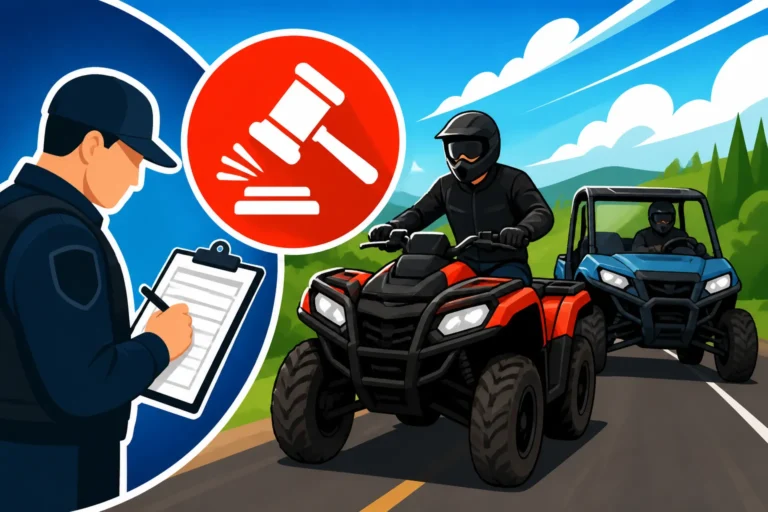
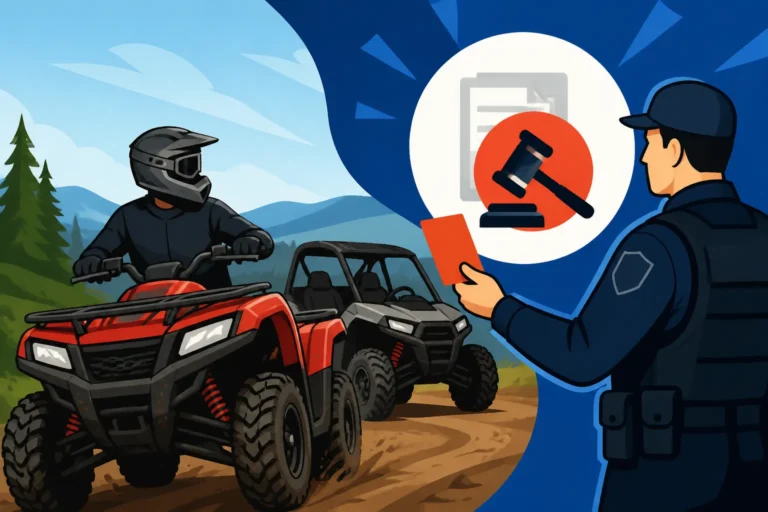
Ignoring the factory capacity limits and passenger rules in Quebec can lead to some significant consequences, beyond the obvious safety risks. If a trail patrol officer or a Sûreté du Québec (SQ) officer stops you and finds you're carrying more passengers than your machine is designed for, or that they aren't properly secured with factory-installed seat belts, you'll be facing a fine. These aren't just minor slaps on the wrist; [Quebec Penalties for Riding Unregistered] or violating passenger rules can be substantial and can quickly sour an otherwise enjoyable ride.
The fines are often tiered, meaning the more severe the violation (e.g., carrying multiple extra passengers, or passengers completely unsafely), the higher the penalty. Furthermore, in the event of an accident, if you were found to be operating outside of the manufacturer's capacity or legal passenger limits, your insurance coverage could be jeopardized. This could leave you personally liable for damages, medical expenses, and other costs, which can be astronomically high. It's a risk simply not worth taking, especially when the rules are designed to protect everyone on board.
The Importance of Factory-Designed Seating and Seat Belts
When it comes to safety on off-road machines, the manufacturer's original design is paramount. It’s not just about what looks like it could hold an extra person; it’s about what has been rigorously tested and engineered for that purpose.
Engineering for Safety: Why OEM Matters
Every ATV and side-by-side model undergoes extensive design and testing to ensure its stability, handling characteristics, and structural integrity. This engineering process dictates the machine's maximum weight capacity, its center of gravity, and the number of occupants it can safely transport. Original Equipment Manufacturer (OEM) seating and seat belt systems are an integral part of this safety architecture. They are designed to withstand specific forces, to protect occupants in a rollover or collision, and to distribute weight appropriately to maintain the machine’s balance.
Consider a sport ATV, for instance. These machines are often built for aggressive riding, with a narrow, long seat designed for the driver to shift their weight dynamically. Adding a second person to such a machine, even if they can technically "fit," fundamentally alters its balance and makes it inherently unstable. The suspension, braking system, and frame were not engineered for that additional, high-up weight. On the other hand, a dedicated two-up touring ATV is built with a longer wheelbase, a stronger suspension, and a passenger seating area that includes proper backrests and grab handles, all specifically engineered to accommodate two riders safely. Disregarding these factory specifications is essentially gambling with physics and safety.
The Role of Seat Belts in Accident Prevention
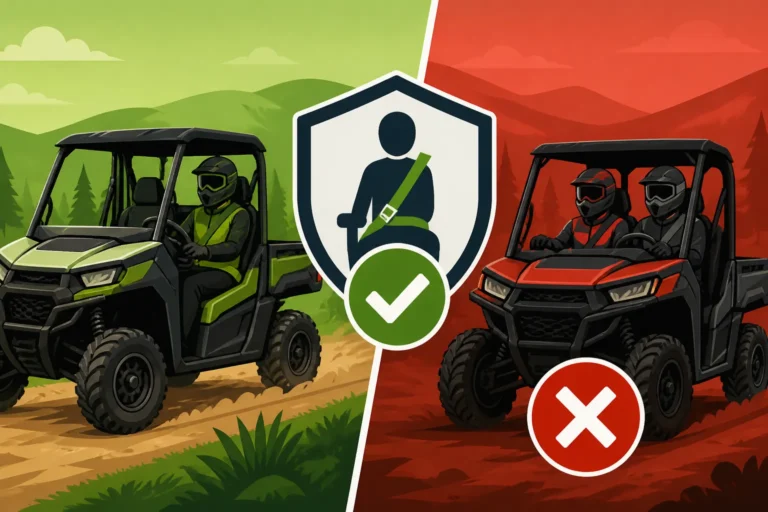
For any off-highway vehicle designed to carry multiple occupants, particularly side-by-sides, seat belts are a non-negotiable safety feature. In Quebec, if your machine has factory-installed seat belts, you and your passengers must use them. These aren't just for show; they are designed to keep occupants contained within the safety cell of the vehicle during sudden stops, rough terrain, or, most critically, during a rollover or collision. A side-by-side, with its roll cage, offers a level of protection, but that protection is only effective if occupants remain inside the cage, securely belted.
Without a properly fastened seat belt, occupants can be ejected from the vehicle, significantly increasing the risk of severe injury or fatality. Even a seemingly minor tip-over can become catastrophic if someone is thrown clear of the machine and then run over, or strikes an object. The type of seat belt matters too; many side-by-sides come with three-point automotive-style belts, and some enthusiasts upgrade to four- or five-point harnesses for enhanced security, especially in more aggressive riding. However, any aftermarket harness should meet safety standards and be installed correctly, ensuring it integrates with the machine's frame rather than just the seat itself.
Side-by-Sides: Designed for Multiple Occupants
Side-by-sides, or UTVs, are specifically engineered to carry multiple people, which is why they have become so popular for family outings and group adventures. These machines come from the factory with two, three, or even four seats, each equipped with its own seat belt. This design intent is crucial: the chassis, suspension, and engine power are all calibrated to handle the weight and dynamics of multiple passengers. When you see a four-seater side-by-side, you can be confident it was designed from the ground up to transport four people safely, provided they are all properly belted in.
This distinction between ATVs and side-by-sides is vital in Quebec. While ATVs often have strict limits on passengers (usually one, or two if designed specifically for it), side-by-sides are built for the very purpose of sharing the ride. This means that [Quebec Rules for a Side-by-Side Driver] and their passengers revolve around using the existing factory capacity and safety features. You won't find yourself in trouble for having four people in a four-seater side-by-side, as long as everyone meets the age requirements and is securely buckled up in a designated seat belt.
Decoding Your Machine's Manufacturer Specifications
Understanding your specific machine's capabilities is your first line of defense against both accidents and fines. The manufacturer provides all the critical information you need to operate your ATV or side-by-side safely and legally.
Locating Your Owner's Manual and Capacity Labels
The very best source of information about your machine's passenger capacity and seat belt requirements is its owner's manual. This often-overlooked booklet contains a treasure trove of details about your specific model, including maximum weight limits, seating positions, and recommended passenger configurations. If you bought your machine used and don't have the manual, most manufacturers provide digital versions online for free. This is definitely worth the small effort to track down, as it will answer almost every question you have about your machine's design intent.
Beyond the manual, look for physical labels directly on your ATV or side-by-side. These often include warning stickers and capacity labels, usually found near the driver's seat, on the frame, or under the hood. These labels clearly state the maximum number of occupants and the gross vehicle weight rating (GVWR), which indicates the total permissible weight of the machine, including fuel, cargo, and all occupants. Paying close attention to these labels can save you a lot of guesswork and ensure you're always within safe operating limits. Think of them as the machine's direct communication to you about its boundaries.
Understanding Gross Vehicle Weight Rating (GVWR)
The Gross Vehicle Weight Rating (GVWR) is a critical number that every off-road machine owner should understand. It represents the maximum allowable total weight of a fully loaded vehicle, including the vehicle itself, all fluids, cargo, and, crucially, all occupants. Exceeding the GVWR isn't just a matter of performance; it's a major safety concern. Overloading your machine puts undue stress on its frame, suspension, tires, and braking system. This can lead to decreased handling, longer stopping distances, and an increased risk of component failure or rollovers, especially on challenging terrain.
While the number of seats dictates how many people can legally ride, the GVWR dictates the combined weight of those people and any gear. For example, if your two-seater side-by-side has a high GVWR, it can likely accommodate two average-sized adults and some gear. However, if you're two very large adults with a cooler full of ice, extra fuel, and recovery gear, you might quickly approach or even exceed that limit. It’s not just about fitting; it’s about weighing. Always keep the GVWR in mind when loading up for a ride, and remember that even small additions can add up quickly.
Identifying Seating Positions and Belt Points
When evaluating your machine's capacity, you need to clearly identify the factory-designated seating positions and, for side-by-sides, the corresponding seat belt attachment points. For ATVs, if it's a one-up machine, it will have one seat designed for a single rider. If it's a two-up, you'll see a visibly longer seat, often contoured for a passenger, with dedicated passenger footrests. There will be no extra seat belt, as ATVs rely on the rider's active body movement for stability.
For side-by-sides, each factory-installed seating position will have a complete seat belt system – whether it's a three-point lap and shoulder belt or a specialized four-point harness. These belt points are integrated into the machine's frame, not just bolted to the seat itself, providing structural integrity in a crash. If you have a bench seat, the manufacturer will typically indicate how many occupants it's designed for by the number of individual belt systems present. Never assume a bench seat can hold "one more" person just because there's a gap; if there's no dedicated seat belt, that spot is not a legal or safe seating position.
Implications of Modifying Your ATV or UTV's Seating
The allure of customization is strong for off-road enthusiasts, but when it comes to seating and capacity, modifications can have serious legal and safety repercussions in Quebec. It's crucial to understand that not all aftermarket additions are compliant or safe.
Aftermarket Seats and Their Legal Standing
Many owners consider aftermarket seats for increased comfort or to change the aesthetics of their machine. For a traditional one-up ATV, a new seat that replaces the original with another single-rider seat is generally not an issue, as long as it doesn't fundamentally alter the machine's design or safety features. However, where things get complicated is when owners try to add "passenger seats" to machines not originally designed for them. This might include bolt-on rear seats for a single-rider ATV or attempting to add an extra seat to a two-seater side-by-side.
In Quebec, if a machine was manufactured as a one-up ATV, adding an aftermarket passenger seat does not magically make it a legal two-up machine. The law looks at the original factory design. These aftermarket additions, while perhaps comfortable, do not provide the structural integrity, balance, or safety features that a factory-designed two-up ATV would offer. This means you could still be ticketed for carrying an illegal passenger, regardless of how robust your aftermarket seat appears. It's a common misconception, and a source of frustration, but the letter of the law in Quebec prioritizes original manufacturer intent.
Adding More Seating Than Designed
Attempting to add more seating than your machine was designed for, whether it's an extra seat on a two-up ATV or squeezing a third person onto a two-person side-by-side bench, is a direct violation of Quebec's regulations. It also carries immense safety risks. When you exceed the manufacturer's specified seating capacity, you disrupt the machine's engineered weight distribution, increase the risk of rollovers, and place undue stress on critical components.
Even if you manage to physically fit an extra person, without a factory-installed seat belt system for that position, they are not safely secured. This is particularly dangerous in a side-by-side, where the expectation of a safety cage can give a false sense of security; if an unbelted passenger is jostled around inside or even ejected, the consequences can be severe. It's a tempting thought to bring another friend along, but the potential legal and safety ramifications far outweigh the temporary convenience. Remember, the machine's design is its limit.
Insurance Ramifications of Modifications
This is a point many off-roaders overlook until it's too late: modifications that alter your machine's factory capacity or safety systems can have serious implications for your insurance coverage. If you've added an aftermarket seat to carry an extra passenger on a machine designed for one, and you're involved in an accident while carrying that passenger, your insurance provider might deny coverage for claims related to that additional person. This could leave you financially responsible for medical bills, property damage, and legal fees.
Insurance policies are based on the assumption that you're operating your vehicle within its intended design and legal parameters. Material modifications, especially those related to occupant capacity and safety, can be seen as a breach of your policy's terms. Before making any significant modifications to your machine's seating or structural components, it's always wise to contact your insurance provider and discuss how these changes might affect your coverage. It's a crucial step to protect yourself financially, should the unthinkable happen. [Quebec Insurance Minimum for an Owner] still expects owners to adhere to regulations.
Real-World Scenarios and Enforcement on Quebec Trails and Roads
Knowing the rules is one thing, but understanding how they play out in real-world situations, especially when you encounter enforcement, is vital for every rider in Quebec.
What a Trail Patrol Looks For
When you're out on the vast [Quebec ATV Trails: The FQCQ Network], you'll eventually encounter trail patrols. These individuals, often volunteers from local clubs or certified peace officers, are there to ensure everyone is riding safely and legally. One of the first things they'll look for is compliance with passenger rules. They're trained to quickly identify if an ATV is carrying more than its factory-designated number of riders or if a side-by-side has unbelted passengers or more people than there are factory seat belts.
A patrol officer isn't just checking your trail pass; they're observing your overall operation. If they see a child precariously perched on the tank of an ATV, or two adults crammed onto a single-rider seat, they will likely stop you. Their primary concern is safety, and illegal passenger configurations are a major red flag. Expect them to ask for your [Quebec Insurance Proof on the Machine] and your driver's license, and be prepared to explain your passenger setup. Education is often part of their role, but fines can and will be issued for clear violations.
Road Crossings and Municipal Access Rules
While the majority of your riding in Quebec will be on dedicated trails, there are times you'll need to use public roads, whether for a quick [Quebec Crossing a Quebec Road at a Right Angle] or utilizing [Quebec Municipal Road Access Up to 1 Kilometre] to connect trail sections or reach services. These road segments are where scrutiny can be even higher, as you're interacting with public traffic and the jurisdiction of regular police forces. The rules regarding seat belts and passenger capacity apply just as strictly, if not more so, on these public roads.
If you're stopped by a Sûreté du Québec officer while crossing a road or using an authorized municipal segment, they will apply the same rigorous standards as if you were in a car. This means everyone must be in a factory-designated seat, and if your machine has seat belts, every occupant must be buckled up. The tolerance for violations on public roads tends to be lower, given the increased risk of interaction with other vehicles. Always assume you're under the watchful eye of the law when your wheels touch asphalt or gravel outside the dedicated trail system.
Common Mistakes and How to Avoid Them
One of the most common mistakes riders make is assuming that "if they fit, they sit." This couldn't be further from the truth in Quebec. Another frequent error is relying on an aftermarket solution to legitimize extra passengers, believing that a bolt-on seat changes the machine's legal capacity. Both are incorrect. To avoid these pitfalls, always consult your owner's manual for definitive guidance on your machine's passenger capacity.
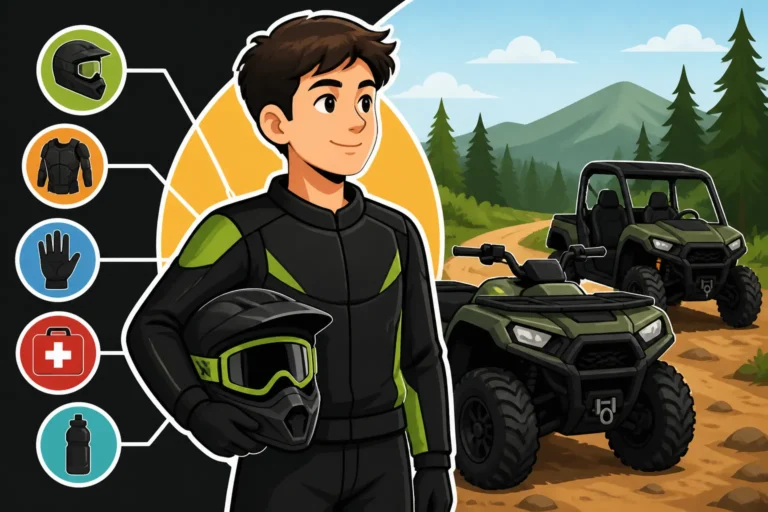
A simple solution for groups with more people than machines is to rotate drivers or split into smaller riding parties. If you need to transport multiple people regularly, consider upgrading to a larger side-by-side specifically designed for four or more occupants, rather than trying to modify a smaller machine. Finally, never forget the [Quebec ATV Helmet Rules] apply to all occupants, not just the driver. By prioritizing safety and adherence to the law, you ensure a stress-free and enjoyable experience for everyone.
| Machine Type | Typical Seating Capacity (Factory) | Seat Belt Requirement | Passenger Age Considerations |
|---|---|---|---|
| Single-Rider ATV (VTT) | 1 (Driver only) | Not applicable (Driver uses active body movement) | Generally no passengers allowed. If a machine has a factory-designed passenger seat, specific age/size rules apply. |
| Two-Up ATV (VTT) | 2 (Driver + 1 Passenger) | Not applicable (Driver & passenger use active body movement) | Passenger must be able to reach footrests, hold on, and not obstruct driver. Specific minimum age rules apply, often around 12 years old, but confirm current [Quebec Rules for a Child Passenger]. |
| 2-Seat Side-by-Side (SxS/UTV) | 2 (Driver + 1 Passenger) | Mandatory for both occupants | All occupants must be able to properly use a seat belt. Minimum age for a driver is 18 in Quebec. Specific passenger age rules apply. |
| 4-Seat Side-by-Side (SxS/UTV) | 4 (Driver + 3 Passengers) | Mandatory for all four occupants | All occupants must be able to properly use a seat belt. Minimum age for a driver is 18 in Quebec. Specific passenger age rules apply. |
Choosing Accessories Wisely: Safety vs. Compliance
The aftermarket industry for ATVs and UTVs is vast, offering countless ways to customize your ride. However, when it comes to accessories that impact safety and passenger capacity, careful consideration is crucial to ensure both compliance and true safety.
SuperATV and Aftermarket Components
Brands like SuperATV offer a wide range of high-quality aftermarket components, from lift kits and bumpers to winches and tires. Many of these products are designed to enhance your machine's performance, durability, or utility. When considering accessories that could potentially relate to seating or safety, such as upgraded harnesses or cargo boxes that might be mistaken for seats, it's vital to remember that adding a component from a reputable brand, even one as well-known as SuperATV, doesn't automatically confer legality or change your machine's certified capacity in the eyes of Quebec law.
For example, if SuperATV offers a heavy-duty storage box that fits perfectly on the rear rack of your ATV, that's fantastic for carrying gear. But it's not a legal passenger seat, and placing a person on it would be a violation. Similarly, while SuperATV might offer a universal four-point harness, installing it on a machine that originally came with a three-point belt, or in a location not designed for an occupant, doesn't override the factory specifications or the legal requirements for passenger capacity. Always evaluate aftermarket components based on their intended purpose and how they align with your machine's original design and Quebec's regulations.
Evaluating Third-Party Seat Belt Harnesses
Upgrading to a higher-quality seat belt harness, like a four-point or five-point system, is a common modification for side-by-side owners, especially those who engage in more aggressive riding. These harnesses, often from third-party manufacturers, can offer increased security and better containment during extreme maneuvers or in the event of a rollover, holding the occupant more firmly in their seat than a standard three-point belt. This can be a worthwhile safety enhancement, but there are important considerations.
First, ensure the harness is designed for off-road vehicle use and meets recognized safety standards. Second, proper installation is paramount. The harness must be anchored securely to the vehicle's frame at all attachment points, not just to the seat itself. Improperly installed harnesses can be less effective or even dangerous in a crash. Finally, confirm that adding such a harness doesn't interfere with the functionality of your machine's roll cage or other safety features. A good harness should complement the existing safety architecture, not compromise it.
Ensuring Modifications Align with Quebec Law
The golden rule for any modification to your ATV or UTV, especially those related to seating and safety, is to ensure it aligns with Quebec's Off-Highway Vehicle Act. While many modifications are perfectly legal and beneficial, altering the number of passengers your machine can legally carry is generally not permitted if it deviates from the factory design. This means that if your ATV was sold as a single-rider machine, no amount of aftermarket seating will make it a legal two-up.
When in doubt, always err on the side of caution. Consult the [Quebec Off-Highway Vehicle Act and Your Papers] or contact the Société de l'assurance automobile du Québec (SAAQ) directly for clarification on specific modifications. While improving your machine's capabilities and comfort is great, it should never come at the expense of safety or legal compliance. Prioritizing adherence to the law ensures that your adventures remain fun, safe, and free from unexpected fines or, worse, serious accidents.
Disclaimer
This article is for general informational purposes only and does not constitute professional advice. Laws, prices and regulations vary by location and change over time. Consult a qualified professional for guidance on your specific situation.