Trapping Under 30 km/h Without a Helmet
There's a specific question that often comes up among our community of quad and side-by-side owners, especially those who rely on their machines for work in the vast, wild landscapes of Quebec: "Can I actually ride my ATV or UTV on the trapline without a helmet if I'm going slowly?" It's a common point of confusion, and frankly, a source of frustration for many who feel the general rules don't quite fit the unique demands of their livelihood. This guide is here to clarify that very specific exception under Quebec law, helping you understand when and how you can operate your machine helmet-free while actively trapping, and, just as importantly, when you absolutely cannot.
Understanding the Legal Landscape: Off-Highway Vehicles in Quebec
Let's be honest, navigating the rules and regulations for ATVs and UTVs in Quebec can feel a bit like trying to find your way through a dense forest without a compass. The laws are there for good reasons, primarily safety, but they don't always seem to account for every real-world scenario. For most of us, hopping on a quad means helmet on, no questions asked. But for trappers, the machine is often an essential tool, not just a recreational vehicle, and that distinction can make all the difference.
The Off-Highway Vehicle Act: A Quick Overview
Quebec's framework for off-highway vehicles, often referred to as the LVHR (Loi sur les véhicules hors route) or the Off-Highway Vehicle Act, sets the stage for how we all operate our machines. This legislation covers everything from registration requirements with the SAAQ to trail etiquette, speed limits, and, yes, mandatory safety equipment. Its primary goal is to ensure the safety of riders, passengers, and other trail users, while also protecting the environment. For the most part, it's pretty clear: if you're on a federated trail or even crossing a public road, you need to follow a strict set of rules. This includes carrying all your necessary [Quebec's Off-Highway Vehicle Act and Your Papers]. Generally, a helmet is non-negotiable for anyone operating or riding as a passenger on an ATV.
The Act was updated fairly recently, bringing in some significant changes that clarified many grey areas, but also introduced new ones. These changes aimed to modernize the rules, address evolving machine capabilities, and respond to increasing trail usage. It's crucial to remember that these laws apply whether you're out for a leisurely Sunday ride or using your machine for commercial purposes. However, like many comprehensive legal texts, there are specific exceptions carved out for particular circumstances, and trapping falls into one of those very narrow categories.
General Helmet Rules for ATV Riders
For the vast majority of ATV and UTV riders in Quebec, wearing an approved helmet is not just a recommendation; it's a legal requirement. This rule applies to drivers and passengers alike, regardless of age or experience level, whenever the machine is in operation. The helmet must be properly fastened and meet specific safety standards, which are typically indicated by certifications like DOT, ECE, or Snell. This is a fundamental aspect of [Quebec ATV Helmet Rules]. The idea is simple: in the event of an accident, a helmet is your first line of defense against serious head injuries.
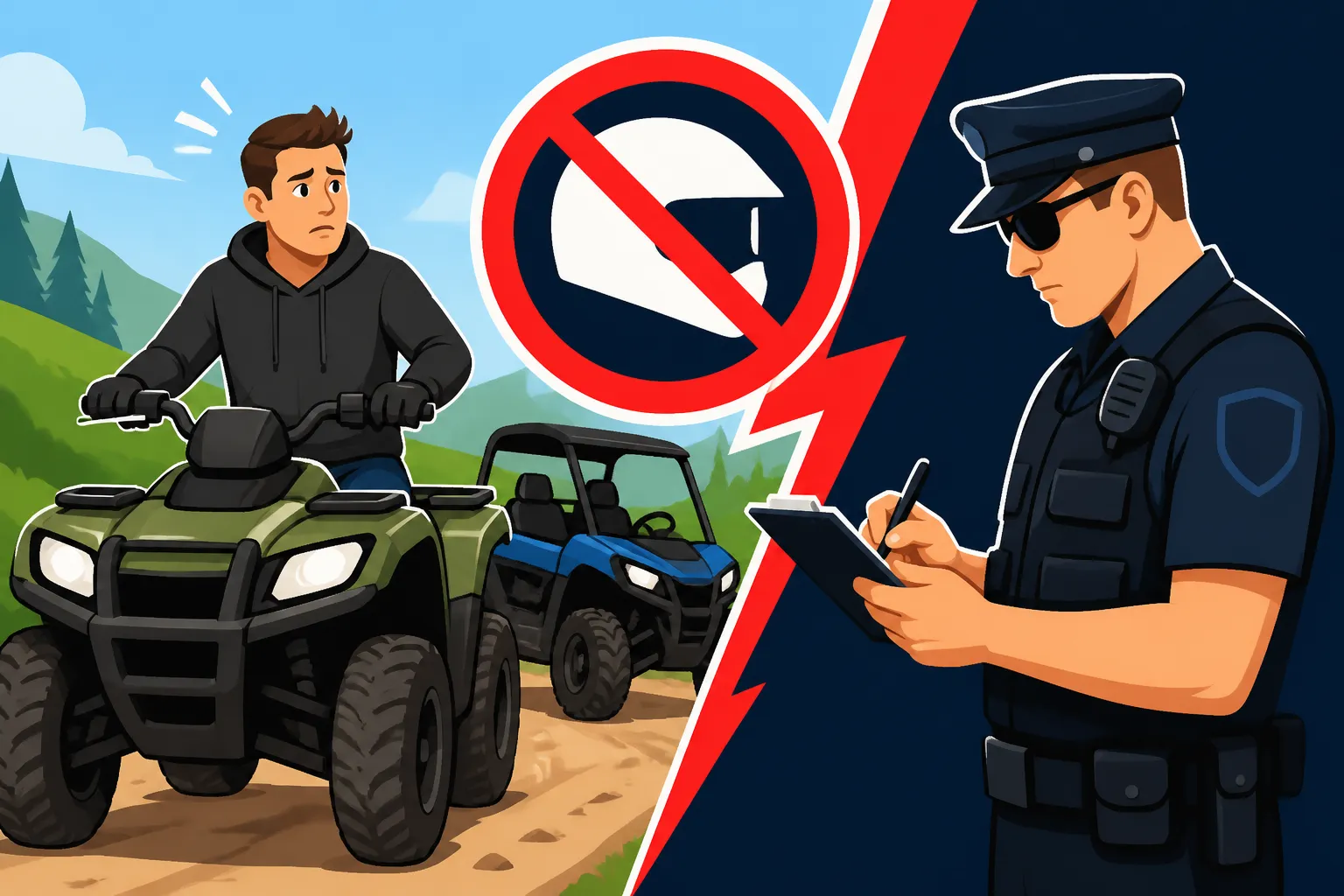
Imagine a typical family ride through the Laurentians. Everyone, from the driver to the youngest passenger, is expected to be wearing a helmet. This is the baseline, the default rule that governs almost all off-highway vehicle use in the province. The fines for riding without a helmet can be substantial, and safety patrols on federated trails are well within their rights to stop you and issue a citation. This strict adherence to helmet use underscores the perceived risks of off-road riding, which is why the trapper's exception stands out so much and requires careful understanding.
The Evolution of Quebec's ATV Laws
Quebec's off-highway vehicle laws haven't always been as comprehensive as they are today. Over the years, as ATVs and UTVs grew in popularity and capability, the legislation evolved to keep pace. The current Act is a result of numerous amendments and revisions, with significant changes introduced to enhance safety and better define operating conditions. [What the LVHR Replaced] was often a patchwork of older regulations that didn't fully address modern machines or the complexities of trail networks.
The shift towards more stringent rules, including mandatory helmet use for most situations, came from a desire to reduce accidents and injuries. However, lawmakers also recognized that certain occupational uses of ATVs, like farming and trapping, presented unique challenges that a blanket helmet rule might not adequately address. This led to the inclusion of specific exceptions, meticulously defined to balance safety with practicality for those who depend on their machines for work. Understanding this historical context helps explain why such a specific exception for trappers exists, as it wasn't an oversight but a deliberate carve-out for a legitimate use case.
The Trapper's Exception: What Does It Really Mean?
Now, let's get to the heart of the matter. The Off-Highway Vehicle Act in Quebec does indeed provide a specific exemption from mandatory helmet use for individuals engaged in trapping activities. But this isn't a free pass to ditch your helmet anytime you're near a trapline. There are very strict conditions that must be met for this exception to apply, and failing to meet even one of them can land you in trouble.
Defining "Trapping Activities"
The key to understanding this exception lies in precisely what constitutes "trapping activities" in the eyes of the law. This isn't just a casual ride in the general vicinity of where you might set a trap. The exemption is intended for periods when you are actively involved in the work of trapping. This includes:
- Setting traps: Transporting traps to specific locations and deploying them.
- Checking traps: Traveling slowly along your trapline to inspect traps.
- Retrieving traps: Collecting traps at the end of the season.
- Transporting fur or carcasses: Moving harvested animals or pelts from the trapline.
Crucially, "trapping activities" implies a direct, active involvement in the management of your trapline. If you're simply using your ATV to get to your hunting cabin, or to run errands in the nearest village, even if that village is near your trapline, the exception does not apply. It's about the purpose of the ride at that exact moment. You're expected to be identifiable as being engaged in trapping, perhaps with gear visibly stowed or while performing a specific task directly related to the trapline. A robust rack system, perhaps from SuperATV, designed for carrying traps or game, could certainly help convey this purpose.
The "Under 30 km/h" Condition
This is perhaps the most critical and often misunderstood condition of the trapper's helmet exemption. The law explicitly states that the exemption only applies if the ATV or UTV is being operated at a speed of 30 km/h or less. This isn't a suggestion; it's a hard limit. Exceeding this speed, even slightly, immediately voids the helmet exception, and you would then be considered in violation of the general helmet rule.
Think about it: 30 km/h is a very slow speed, particularly on an open trail. It's a pace that allows for careful navigation through challenging terrain, frequent stops to inspect ground signs, or to dismount and attend to traps. It's not a speed for covering long distances quickly or for enjoying the thrill of the ride. When you're driving your machine at this pace, you're essentially using it as a slow-moving utility vehicle. This specific speed limit acknowledges that the risk profile at 30 km/h is considerably different from, say, the [Quebec's 50 km/h Speed Limit for ATVs] typically allowed on federated trails. If you're on your way back from the trapline and decide to pick up the pace, that helmet needs to be on your head.
When the Exception Doesn't Apply
It's just as important to understand when this trapper's exception does not apply. Misinterpreting these conditions can lead to fines and, more importantly, put your safety at risk. Here are common scenarios where you still need a helmet:
- Traveling to or from the trapline: Unless you are actively performing a trapping task during that transit, you are subject to the general helmet rule. This means driving your ATV from your home or camp to the start of your trapline, or from the end of it back, generally requires a helmet.
- Recreational use: If you take a detour from your trapline to simply enjoy the scenery or meet up with friends, that's recreational use, and the helmet rule applies.
- Exceeding 30 km/h: As mentioned, if your speed creeps above 30 km/h for any reason, the exception is instantly lost.
- Carrying a passenger not involved in trapping: While the law specifies "a person engaging in trapping activities," it doesn't extend to passengers not directly involved in the trapping work. If you have a friend or family member riding along who isn't assisting with the trapline, they would likely still need a helmet, and depending on the interpretation, you might too.
- Other vehicle types: This exception is generally for ATVs and UTVs (VTTs and VHRs in Quebec parlance). Other vehicles, even if used for trapping, may have different rules. For instance, [Quebec Rules for a Trapper on a Quad] specifically addresses this situation.
The intent of the law is to provide a very specific allowance for active, slow-speed, work-related tasks on a trapline. Any deviation from these conditions means you revert to the standard safety regulations.
Safety Beyond the Helmet: Other Considerations for Trappers
While the helmet exception for trappers operating under 30 km/h acknowledges a unique work environment, it absolutely does not mean safety takes a backseat. In fact, operating in remote areas, often alone, and performing physically demanding tasks, requires an even greater focus on overall safety. The absence of a helmet in very specific conditions highlights the need to be extra vigilant in other areas.
Low Speed Doesn't Mean No Risk
It's a dangerous misconception to think that because you're moving slowly, the risks of an accident are negligible. While a high-speed collision is certainly more severe, even low-speed incidents can lead to serious injuries, especially in rugged terrain. A roll-over at 20 km/h can still pin you under the machine, leading to fractures, crush injuries, or hypothermia if you're alone in a remote area. Think about uneven ground, hidden obstacles, slippery conditions, or even just losing your balance when dismounting.
Moreover, the nature of trapping often takes you far from main trails and into dense bush, across swamps, or up steep inclines – places where rescue might be hours away. A minor injury that would be an inconvenience closer to civilization can become life-threatening in the wilderness. This is why thorough preparation, awareness of your surroundings, and never taking unnecessary risks are paramount. The helmet exception is a legal allowance, not an invitation to ignore fundamental safety principles.
Machine Maintenance for Traplines
Your ATV or UTV isn't just a vehicle on the trapline; it's a critical piece of equipment. Just like your traps, snowshoes, or firearms, it needs to be in top working order to ensure your safety and reliability in the bush. A breakdown far from help can quickly turn a challenging day into a dangerous survival situation.
Regular and meticulous maintenance is non-negotiable. This includes:
- Tires: Check tire pressure regularly and inspect for cuts, punctures, or excessive wear. Quality, aggressive tires are often essential for navigating varied terrain.
- Brakes: Ensure your brakes are fully functional and responsive. You'll often be stopping quickly, or holding your position on a slope.
- Fluids: Keep an eye on oil levels, coolant, and brake fluid. Top them up as needed and follow manufacturer's recommendations for changes.
- Suspension and Steering: Inspect for loose components, worn bushings, or damaged shocks. Poor handling can be deadly in challenging conditions.
- Lighting: Ensure all lights are working, especially if you might be out at dusk or dawn.
- Winch: If you have a winch, test it regularly and inspect the cable for fraying or damage. A working winch can be a lifesaver for self-recovery.
- Battery: A dead battery in the middle of nowhere is a nightmare. Check terminals and ensure it holds a charge.
Many trappers modify their machines for better utility and durability. Products from SuperATV, for instance, are popular for their heavy-duty parts, lift kits, and cargo solutions that can withstand the rigors of trapline work. Investing in quality, reliable components is an investment in your safety and efficiency.
Personal Protective Equipment Other Than Helmet
Even without a helmet, there's a whole array of personal protective equipment (PPE) that trappers should consider essential. Your body is exposed to numerous hazards on the trapline, from sharp branches to extreme weather.
Consider the following:
- Eye Protection: Goggles or safety glasses are crucial to protect against flying debris, branches, dust, and insects. Even at low speeds, a branch whip or a stone kicked up by a tire can cause permanent eye damage.
- Gloves: Protect your hands from abrasions, cuts, and the elements. Trapping work involves handling tools, traps, and potentially sharp objects.
- Sturdy Footwear: Boots with good ankle support and grip are vital for navigating uneven terrain when you're off the machine. They also protect your feet from impacts and cold.
- Durable Clothing: Layered clothing suitable for the weather, resistant to tears, and providing warmth and protection from moisture is essential. Think about the specific needs of your trapline, like waterproof outer layers for crossing wet areas.
- Hearing Protection: While not always considered for ATVs, prolonged exposure to engine noise, even at lower speeds, can contribute to hearing loss over time. This might be more relevant during longer transits to the trapline, but it's worth considering.
The goal is to protect your body from the unique hazards of your work environment. While the helmet is off, the rest of your protective gear should be meticulously chosen and used.
Practicalities for Trappers: Carrying Gear and Machine Set-Up
Beyond just knowing the rules, putting them into practice effectively on the trapline means thinking strategically about how you use and equip your machine. Trapping isn't a leisure activity; it's a demanding profession that requires careful planning and the right tools for the job.
Carrying Gear Safely and Legally
Trappers often carry a significant amount of gear: traps, tools, lures, bait, firearms, first-aid kits, survival gear, and sometimes harvested animals. How you transport this gear is critical for both safety and legal compliance. Overloading your machine or improperly securing items can drastically affect handling, increase the risk of a rollover, and lead to lost equipment.
- Weight Distribution: Always distribute weight evenly, keeping heavier items low and centered on the machine. Avoid stacking too much weight on one side or too high.
- Secure Fastenings: Use robust straps, bungee cords, or cargo nets to ensure everything is securely fastened. Loose items can fall off, create hazards, or get tangled in moving parts. Consider hard-sided cargo boxes for sensitive items or to prevent loss.
- Front and Rear Racks: Utilize both front and rear racks to spread the load. Many trappers invest in aftermarket racks or cargo baskets to expand their machine's carrying capacity safely. SuperATV offers various rack extensions and cargo solutions that can be incredibly useful for trappers needing to haul extra equipment.
- Firearm Transport: If you're carrying a firearm, ensure it's transported legally and safely, typically unloaded and secured in a scabbard or case specifically designed for ATV use. Know the specific regulations regarding firearms in your trapping area.
- Visibility: Ensure that your cargo doesn't obstruct your view or block your machine's lights.
Remember that any items you carry, especially harvested animals, should not impede your ability to operate the machine safely or cause it to become unstable, particularly when you're navigating rough terrain at low speeds.
Machine Set-Up for the Trapline
Customizing your ATV or UTV for trapline work can significantly enhance its utility, safety, and durability. This isn't about cosmetic upgrades; it's about making your machine a more effective tool.
- Tires: As mentioned, aggressive tires with good traction are often paramount for mud, snow, and rocky terrain.
- Skid Plates: Heavy-duty skid plates protect the underside of your machine from rocks, stumps, and ice, preventing costly damage to critical components.
- Winch: A reliable winch is almost a necessity for self-recovery or moving obstacles. Make sure it's properly installed and maintained.
- Lighting: Beyond standard headlights, auxiliary LED light bars can greatly improve visibility in low-light conditions, especially useful during early mornings or late evenings on the trapline.
- Storage Solutions: Specialized storage boxes, dry bags, and integrated toolboxes can help organize and protect your gear from the elements. Look for waterproof options.
- Handguards: These protect your hands from branches, cold, and impacts, and can also house hand warmers for comfort in winter.
- Tracks: For deep snow conditions, track systems can transform your ATV into a highly capable winter machine, allowing access to areas otherwise impassable.
When considering modifications, always prioritize quality and functionality. Brands like SuperATV offer a wide range of accessories, from heavy-duty axles to specialized plows, that can be invaluable for trappers. However, ensure any modifications comply with local regulations and don't compromise the machine's safety features.
Navigating Remote Terrain Responsibly
Operating on a trapline often means venturing far from marked trails, into uncharted or minimally maintained areas. This requires a high degree of navigational skill and responsible decision-making.
- Maps and GPS: Always carry detailed maps of your trapline and surrounding areas, along with a reliable GPS device. Don't solely rely on your phone, as cell service can be non-existent. [Quebec ATV Trail Map Downloads] are great for official routes, but trappers need more detailed topographical maps for off-trail navigation.
- Tell Someone Your Plans: Before heading out, inform someone trustworthy of your route, estimated return time, and contingency plans.
- Weather Awareness: Monitor weather forecasts closely. Sudden changes in weather can make terrain impassable or create dangerous conditions.
- Environmental Awareness: Be mindful of the environment. Stick to established routes where possible, avoid sensitive habitats, and pack out everything you pack in.
- Emergency Kit: Always carry a comprehensive emergency kit, including a first-aid kit, fire starter, knife, extra food and water, shelter, and communication devices (satellite messenger or two-way radio if out of cell range).
- Survival Skills: Familiarize yourself with basic survival skills: fire-starting, shelter building, navigation, and first aid.
These measures are especially important when you consider that the helmet exception means you're operating with one less layer of protection. Your knowledge, preparation, and judgment become even more critical.
Enforcement and Misconceptions: What Patrols Look For
Even with the specific exception for trappers, misunderstandings or misinterpretations of the law can lead to unwelcome encounters with enforcement officers. Trail patrols, conservation officers, and police are tasked with upholding the Off-Highway Vehicle Act, and they might not immediately know every individual's specific intent. Knowing what they're looking for can help ensure a smooth interaction.
What a Trail Patrol Looks For
When a trail patrol or a conservation officer encounters an individual riding an ATV without a helmet, it's a red flag that they are trained to investigate. They'll need to quickly assess if the trapper's exception legitimately applies. Here's what they'll likely be looking for or asking:
- Proof of Trapping License: The most direct evidence of engaging in trapping activities is a valid trapping license. You should have this with you and readily available for inspection.
- Visible Trapping Gear: Are there traps, furs, or other tools clearly indicating you're on a trapline? This visual evidence supports your claim.
- Machine Speed: Officers are trained to observe speed. If you're clearly exceeding 30 km/h, the exception is null and void, regardless of your other intentions.
- Location: Are you in an area known for trapping, or are you on a main federated trail far from any apparent trapline?
- Destination/Purpose: They may ask about your immediate destination and purpose. Be clear and concise about being engaged in active trapping.
- Other Documentation: Beyond your trapping license, you should also have your ATV's registration papers and proof of insurance. [What a Patrol Can Ask to See] includes these standard documents.
Being polite, cooperative, and having your documents in order will always make the interaction go smoother. An officer's job is to enforce the law, and if you can quickly demonstrate that you meet the criteria for the exception, you're less likely to face a citation.
Common Mistakes Trappers Make
Even experienced trappers can sometimes inadvertently fall afoul of the rules, particularly concerning this specific helmet exception. Being aware of common pitfalls can help you avoid them:
- Speed Creep: It's easy for your speed to gradually increase above 30 km/h, especially on a smoother section of trail or when you're eager to get to the next set of traps. Constantly monitor your speedometer.
- "Just Going To…": Using the helmet exception as a reason to ride helmet-free for non-trapping errands, even if they're "just" a short distance down the road to pick up supplies or visit a friend. The exception is for trapping activities, not general travel.
- Lack of Documentation: Not having your trapping license or other required ATV documents readily available. An officer can't take your word for it.
- Misinterpreting "Active" Trapping: Assuming the exception applies anytime you're on your trapline, even if you're taking a break, heading to a camp for lunch, or engaging in a purely recreational activity in the middle of your work day.
- Passengers: Allowing a passenger who isn't actively assisting in trapping activities to ride helmet-free under the assumption that the exception covers everyone on the machine. The law is quite specific.
The Importance of Documentation
Beyond your trapping license, ensuring your ATV itself is properly documented and legal is paramount. This includes having your [Quebec ATV Registration With the SAAQ] and proof of [Quebec's Liability Insurance Rule]. These are standard requirements for all off-highway vehicle operators in Quebec. Even if you qualify for the helmet exception, you still need to be fully compliant with all other aspects of the Off-Highway Vehicle Act.
Think of your documentation as your professional kit. Just like you wouldn't go out on the trapline without your essential tools, you shouldn't operate your machine without your essential papers. These aren't just bureaucratic hurdles; they ensure that you're operating responsibly and that you're covered in case of an incident. [Carrying Papers on a Long Ride] is a simple yet crucial habit that can save you a lot of grief.
Here's a quick comparison of the general helmet rule versus the trapper's exception:
| Feature | General ATV/UTV Riding in Quebec | Trapper's Exception (Specific Conditions) |
|---|---|---|
| Helmet Required? | Yes, always | No, if conditions met |
| Speed Limit | Up to 50 km/h (on trails) | 30 km/h or less |
| Activity Type | Recreational, transit, general | Active trapping duties only |
| Required Documents | Registration, insurance, license | Registration, insurance, license, trapping license |
| Passenger Rule | Helmet required for passengers | Passenger must also be engaged in trapping activities and conditions met |
| Location | All public trails, roads, private land (unless specified) | Primarily on or directly adjacent to your established trapline |
| Enforcement Focus | General safety & compliance | Verification of trapping activity & adherence to speed/purpose |
This specific exception for trappers highlights a delicate balance between public safety and the practical realities of a particular livelihood. Understanding it fully, adhering to its strict conditions, and prioritizing overall safety will ensure you can continue your essential work on the trapline without unnecessary legal complications.
Disclaimer
This article is for general informational purposes only and does not constitute professional advice. Laws, prices and regulations vary by location and change over time. Consult a qualified professional for guidance on your specific situation.