Can You Ride an ATV on the Road in Quebec?
It's a common dilemma for quad owners here in Quebec: you're out on the trails, and suddenly you hit a section where the trail ends, or you need to get from one section of trail to another, or maybe just cross a road to reach a gas station. The big question looms – can you actually ride your ATV on the road in Quebec? It’s a frustrating grey area for many, especially with our province’s unique laws. This guide is going to cut through the confusion and explain exactly when, where, and how you can legally operate your ATV or side-by-side on our beautiful Quebec roads, and what rules you absolutely need to follow to avoid hefty fines.
Understanding Quebec's Off-Highway Vehicle Act (LVHR)
Quebec has a specific set of rules governing off-highway vehicles, formally known as the Loi sur les véhicules hors route (LVHR). It’s not always the easiest legislation to understand, but knowing the basics is crucial for any quad or side-by-side owner.
The General Rule: Off-Road by Default
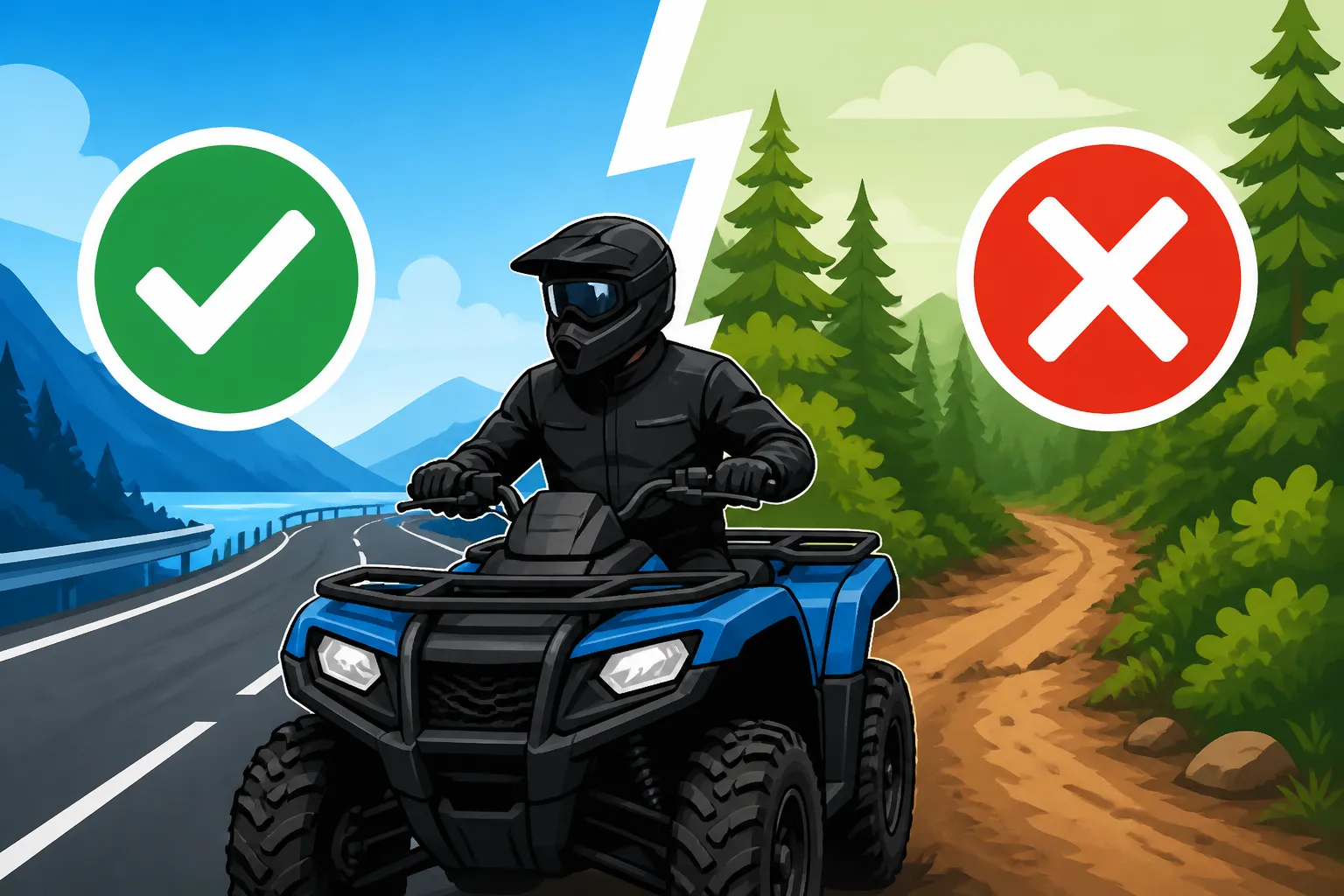
Let's be clear right from the start: in Quebec, ATVs and side-by-sides are considered off-highway vehicles, and the default rule is that they belong off the paved roads. This might seem obvious to some, but it's a foundational principle that informs all other regulations. Your machine is built for dirt, mud, and challenging terrain, not for cruising down Autoroute 20. The LVHR was designed to regulate the safe operation of these machines in environments suitable for them, and that largely means our extensive trail network.
This general prohibition on road use isn't just about safety; it's also about infrastructure. Our roads and highways are primarily built for cars, trucks, and other on-road vehicles. Mixing larger, often slower, and differently handling off-highway vehicles into that traffic flow can create hazards. While it's tempting to take the shortest route to your favourite fishing spot by cutting across a few kilometres of paved road, the law generally says "non." The significant changes introduced in [Quebec's 2021 Law and What Changed] really reinforced this distinction, aiming to enhance safety for everyone, both on and off the trails.
Limited Road Access: The Exceptions
Now, here's where it gets interesting, and frankly, a bit complex. While the general rule is "no roads," there are specific, limited exceptions. These exceptions are designed to allow practical movement, not recreational touring on asphalt. They generally fall into categories like crossing a public road, accessing a trail, or reaching a service like a gas station or a residence.
The most commonly cited exception is the "1-kilometre rule." This allows you to ride your off-highway vehicle on a public road, or its shoulder, for a maximum distance of one kilometre. This isn't a free pass to ride a kilometre just because you feel like it. It's specifically for access purposes, such as getting to an authorized trail section, reaching private property, or accessing essential services. If you need to cover more than a kilometre, you're usually out of luck unless a specific municipal by-law or ministerial authorization is in place. It's a precise distance, and exceeding it can lead to penalties. This is why knowing [Quebec Municipal Road Access Up to 1 Kilometre] is so vital for local riders.
Another critical point is that these exceptions are often contingent on the road being authorized for such use and clearly marked with appropriate signage. You can't just assume any stretch of road falls under an exception. This is particularly true in urban or semi-urban areas where off-highway vehicle traffic might be seen as a nuisance or safety risk.
Navigating the 1-Kilometre Rule and Its Nuances
The 1-kilometre rule often sparks the most questions and confusion among quad enthusiasts. It sounds simple, but its application has several layers of detail that can easily trip up an uninformed rider.
Crossing Roads and Shoulders
When it comes to road crossings, Quebec law is very specific. You are generally allowed to cross a public road perpendicularly, meaning at a right angle. You don't get to meander or travel down the road for any significant distance; it's a direct route across from one side to the other. This minimizes the time your off-highway vehicle is interacting with regular road traffic, reducing potential hazards.
Furthermore, there are crucial sightline requirements that riders often overlook. When crossing a road, you must ensure that visibility in both directions is clear for a certain distance. For example, if you're crossing at a speed of 30 km/h, you need 50 metres of clear sightline in both directions. At 50 km/h, that jumps to 100 metres, and if for some reason you were approaching at 90 km/h, you'd need 200 metres. These rules are in place to give both you and oncoming traffic ample time to react. If you can't see far enough, you shouldn't be crossing. These guidelines are strictly enforced by patrols, as they directly impact safety. [Quebec Rules for Crossing a Highway] delves deeper into these specific sightline distances.
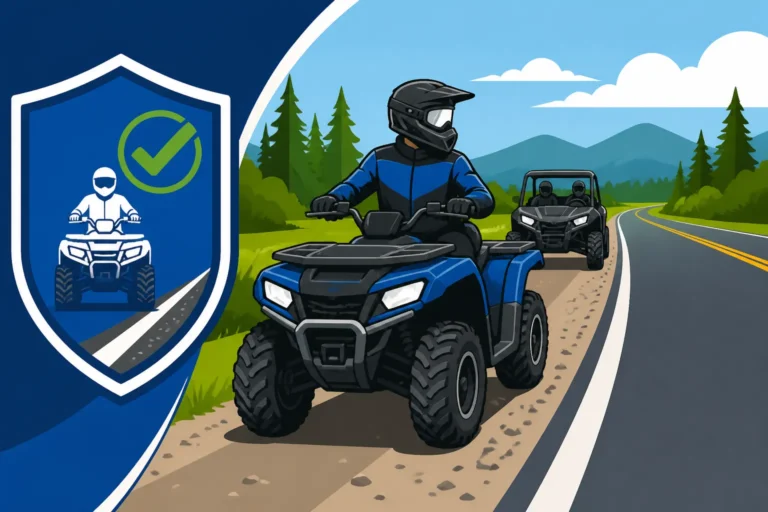
Riding on the shoulder of a road is also permitted under specific circumstances, usually as part of the 1-kilometre access rule. Again, this is for transit, not for recreational riding. If you're on the shoulder, you're still expected to adhere to all relevant road rules for that section, even if you're on a separate surface. You're effectively sharing space with cyclists, pedestrians, and potentially stopped vehicles, so caution is paramount.
Signage and Municipal Approval
This is perhaps the most critical nuance: for any road section to be legally accessible to off-highway vehicles for more than a simple, perpendicular crossing, it must be specifically authorized and clearly marked with signage. You cannot just decide a road is part of your 1-kilometre access route without these clear indicators.
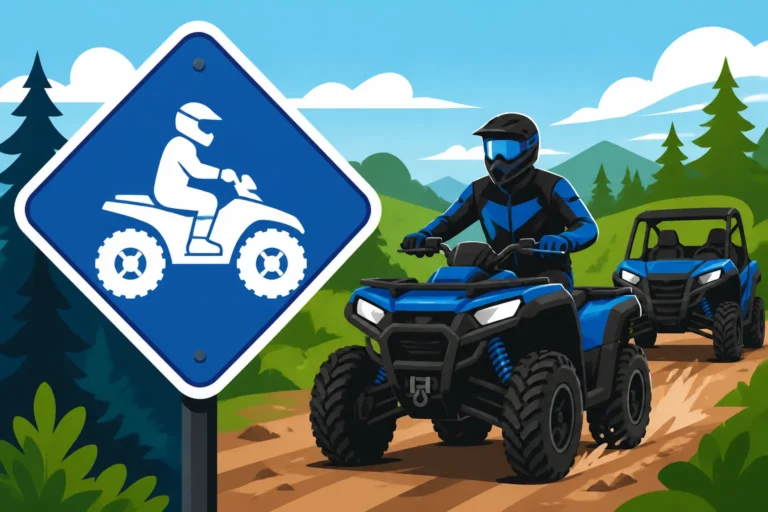
Municipalities have the power to open certain stretches of their roads to off-highway vehicle traffic, but it's not a casual decision. They have to follow a specific process, which includes giving [Quebec's 15-Day Notice to the Ministry] of Transport about their intention to open a road. Once approved, the municipality is responsible for installing proper [Quebec Signage for an Authorized Road Stretch] that clearly indicates the beginning and end of the authorized section, as well as any specific conditions or hours of operation. Without this official signage, you're generally considered to be riding illegally on the road, even if it's within what you perceive to be a short distance.
It's a common misconception that all rural roads are fair game, especially outside of built-up areas. This simply isn't true. Unless there are clear signs indicating otherwise, assume that road access is prohibited beyond the most basic perpendicular crossing. Always check local municipal by-laws or consult with your local ATV club if you're unsure about specific road segments in an area.
| Scenario | Road Access Rule in Quebec | Key Conditions |
|---|---|---|
| Perpendicular Crossing | Generally permitted for all off-highway vehicles. | Must cross at a right angle, shortest possible distance. Clear sightlines required (50m @ 30km/h, 100m @ 50km/h, etc.). Stop before crossing. |
| 1-Kilometre Access | Allowed on public roads or shoulders for a maximum of 1 kilometre. | Must be for specific access (trail, residence, service). Road must be authorized and clearly signed by the municipality. Maintain a safe speed (max 50 km/h on shoulders/roads). |
| Extended Road Sections | Only permitted if a specific municipal by-law or ministerial order authorizes it. | Road must be clearly marked with specific signage. Municipality must have given 15-day notice to the Ministry of Transport. May have specific hours or speed limits. |
| Provincial Highways/Autoroutes | Strictly prohibited under all circumstances. | Never permitted. These are high-speed, controlled-access roads. |
| Roads on Private Land | Depends on the landowner's permission and any private agreements. | Not covered by public road laws, but owner's consent is crucial. May still fall under some general LVHR safety rules (e.g., helmet). |
Important Conditions for Road Riding (Even When Permitted)
Even when you find those precious, authorized stretches of road, riding an off-highway vehicle on them isn't like driving a car. There are still very stringent conditions you must meet to stay legal and, more importantly, safe.
Driver's Licence, Age, and Equipment
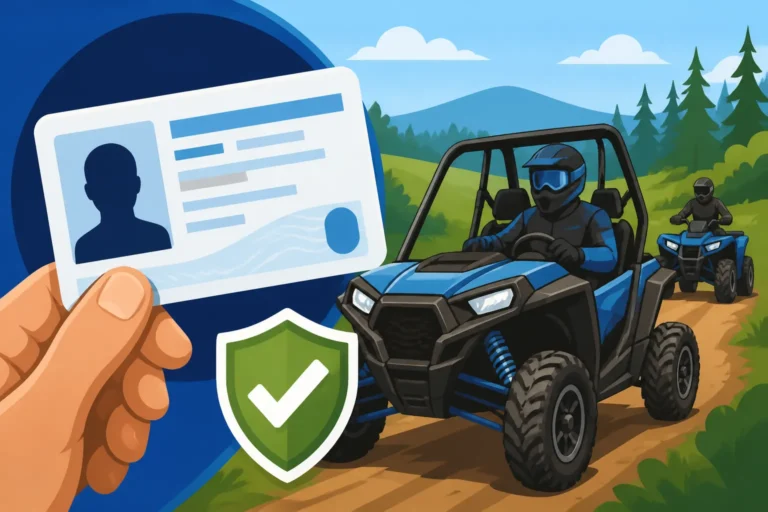
First and foremost, you absolutely need a valid driver's licence. Since 2021, [Quebec Requires a Driver's Licence Since 2021] for anyone operating an off-highway vehicle on trails or authorized road sections. This isn't just a suggestion; it's the law. This means your regular car driver's licence (Class 5 in Quebec, or equivalent from another jurisdiction) is required.
Age requirements are also strict. For ATVs (VTTs), you must be at least [Quebec's Minimum Age of 16 for ATV Riders]. For side-by-sides (VHRs with multiple seats), the minimum age for a driver is 18. There are no exceptions for younger riders on public roads or federated trails, even if they have parental authorization.
Your machine itself must also meet certain equipment standards to be legally ridden on any public road, even for a short, authorized stretch. This includes:
- Headlights and Taillights: These must be functional and on, even in daylight, when riding on a road.
- Mirrors: You need at least one rear-view mirror, typically on the left side, to see traffic behind you. Some owners opt for aftermarket accessories, like those found from a brand like SuperATV, to ensure their machines are highly visible and meet specific mirror requirements.
- Brakes: Fully functional braking system on both axles.
- Muffler: The exhaust system must be in good working order and not exceed noise limits. Modified, excessively loud exhausts are a quick way to attract attention from patrols.
- Helmet and Visor: A proper, approved helmet is mandatory for all riders and passengers. Furthermore, if your helmet doesn't have a visor, you must wear [Quebec Helmet and Visor Rules] like goggles. This is for your safety and visibility, especially with road dust or debris.
[Quebec Equipment Checks by Patrols] are not uncommon, and they will meticulously inspect your machine for compliance with these rules.
Speed Limits and Operating Hours
When riding your ATV or side-by-side on any road section in Quebec, authorized or not (for crossing), you must adhere to a strict speed limit of 50 km/h. This is the maximum for off-highway vehicles, regardless of the posted speed limit for cars on that road. This is highlighted in [Quebec's 50 km/h Speed Limit for ATVs] and is non-negotiable. Trying to keep up with highway traffic is not only illegal but incredibly dangerous.
Operating hours are also regulated. Generally, you can ride your off-highway vehicle between 6 a.m. and midnight. However, municipalities can extend these hours for specifically authorized road segments within their territory. Again, if you're riding outside these hours, ensure there's clear municipal signage explicitly allowing it. Otherwise, you're at risk of a fine.
Penalties for Non-Compliance
Let's not sugarcoat it: violating these rules can be costly. Riding an ATV illegally on a public road in Quebec can lead to significant fines. We're talking hundreds of dollars, potentially escalating with repeat offences. These fines can apply for various infractions, such as:
- Riding on an unauthorized road segment.
- Exceeding the 1-kilometre limit.
- Riding without a valid driver's licence.
- Failing to wear a helmet or proper eye protection.
- Operating a machine that doesn't meet equipment standards (e.g., no mirror, loud muffler).
- Exceeding the 50 km/h speed limit.
- Riding outside of authorized hours.
Beyond the fines, repeated infractions could impact your driving record or even lead to your machine being impounded. It's simply not worth the risk. Understanding [Quebec Fines for Riding Unregistered] (which can include not having proper road authorization) and other penalties is a sobering but necessary part of responsible ownership.
Practical Scenarios and What to Consider
Now that we've covered the legal framework, let's look at some real-world situations you might encounter and how the rules apply.
Accessing Services and Homes
One of the primary reasons for the 1-kilometre road access rule is to allow riders to access essential services or reach their homes. Imagine you're on a long trail ride and your fuel light comes on. If the nearest gas station is just off the trail and requires you to use a short, authorized stretch of road for less than a kilometre, you might be in luck. The same applies if your cabin or camp is a short distance from the trail network and requires a brief road transit.
However, it's crucial to understand the distinction between "access" and "recreational touring." The law does not permit you to use public roads as part of your scenic ride simply because they're convenient or offer a nice view. The intent of your road travel must be genuinely for access to a service, trail, or residence. For instance, you can use a short road section to reach a restaurant that caters to quad riders, but you can't then take the long way back on public roads just for fun.
Always carry your registration papers and proof of insurance, as well as your driver's licence, even for these short road excursions. Patrols are vigilant, and you'll need to demonstrate compliance on the spot.
Avoiding Common Mistakes
It's easy to make assumptions, especially if you're new to Quebec's off-highway vehicle scene or coming from another province with different rules. Here are some common mistakes to avoid:
- Assuming All Rural Roads are Fair Game: Just because a road is gravel or quiet doesn't mean it's open to ATVs. The same rules apply as to paved roads: it needs specific municipal authorization and signage for extended access. Don't rely on local "tradition" or what "everyone else does."
- Confusing a Trail Pass with Road Access: Your FQCQ trail pass grants you access to the federated trail network. It does not grant you any special privileges to ride on public roads. These are two separate legal frameworks.
- Ignoring Municipal By-laws: While the LVHR sets provincial minimums, municipalities can enact stricter by-laws or open specific roads. Always check the local regulations for the area you plan to ride. What's legal in one MRC (regional county municipality) might be prohibited just across the border.
- Thinking Aftermarket Parts Grant Road Legality: While additions like brighter lights, turn signals, or even a full windshield from a company like SuperATV can enhance your machine's visibility and safety, they do not, by themselves, make your off-highway vehicle street legal or override the foundational restrictions on road use in Quebec. These accessories help you comply where road use is already permitted, but they don't change what's permitted.
- Lack of Proper Paperwork: Always have your driver's licence, vehicle registration, and proof of liability insurance with you. If you're stopped, these are the first things a patrol officer will ask to see. Not having them can lead to additional fines. [Quebec Registration Paperwork Checklist] is a great resource to ensure you have everything in order.
In summary, while Quebec is an incredible province for off-highway vehicle enthusiasts, road access is highly restricted. It's not about prohibiting fun; it's about ensuring safety and respecting the legal framework. Always prioritize safety, stay informed, and enjoy our trails responsibly!
Disclaimer
This article is for general informational purposes only and does not constitute professional advice. Laws, prices and regulations vary by location and change over time. Consult a qualified professional for guidance on your specific situation.