70 km/h for a Snowmobile
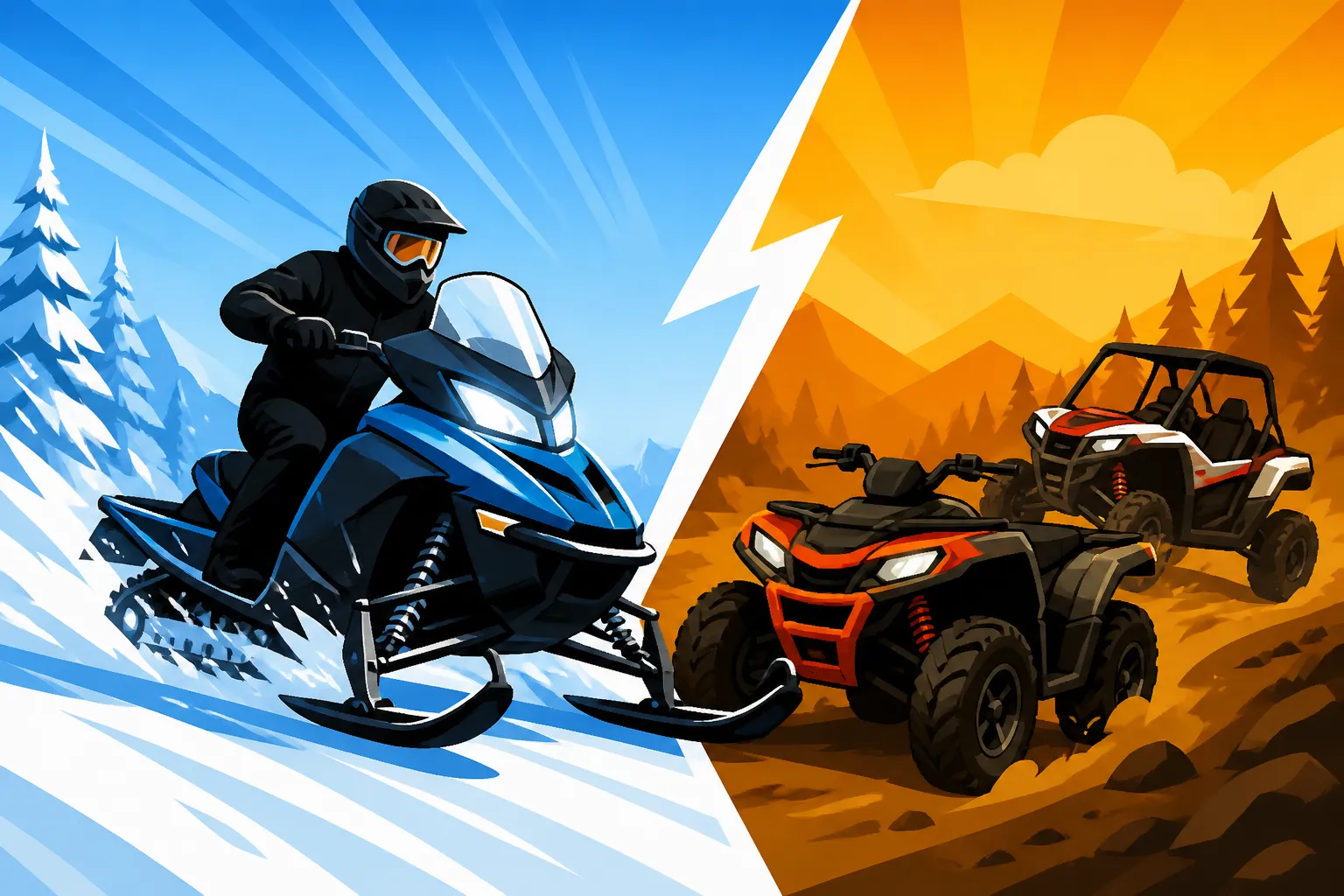
It’s a common sight on Quebec’s vast trail network: a snowmobile glides by, often moving at a brisk 70 km/h, leaving many ATV and side-by-side owners wondering if they can legally match that pace, especially when sharing trails or navigating road sections. This can lead to serious confusion about what’s permissible for your quad or UTV. This guide will unravel the specific speed regulations for off-highway vehicles in Quebec, focusing on what this means for ATV and side-by-side riders on both trails and authorized road segments.
Understanding Speed Limits on Quebec Trails and Roads
Quebec's off-highway vehicle (OHV) regulations are quite specific about speed, and it's a common point of misunderstanding among riders, particularly when comparing snowmobiles and ATVs. The speeds permitted for one type of machine do not automatically apply to another, even if they share the same trail.
Why Snowmobiles Can Go 70 km/h
Snowmobiles are designed for speed and stability on snow-covered terrain. Their long tracks distribute weight, and their suspension systems are built to absorb impacts at higher velocities across varying snow conditions. The flat, wide trails often groomed specifically for snowmobiling also lend themselves to these higher speeds. Because snowmobiles operate exclusively on snow and ice, often during specific seasons, their design and operating environment permit a higher maximum speed of 70 km/h on federated trails. This limit reflects their engineering, their intended use, and the conditions in which they typically operate.
The 50 km/h Rule for ATVs VTTs
In stark contrast to snowmobiles, ATVs (or VTTs, Véhicules Tout-Terrain, as they are often called in Quebec) and side-by-sides have a different, lower speed limit on designated trails: 50 km/h. This limit isn't arbitrary; it's rooted in the design characteristics of these machines and the diverse terrain they traverse. ATVs and side-by-sides are built for versatility across various surfaces—mud, rock, dirt, gravel—which can present more unpredictable traction and obstacles than a groomed snow trail. Their higher center of gravity, shorter wheelbase (for quads), and different steering dynamics mean that excessive speed can quickly lead to loss of control, especially on uneven ground or around corners.
The [Quebec ATV Road Rules Under the LVHR] emphasize this 50 km/h limit not just on trails, but also when ATVs are permitted to use public roads for short distances. This consistency underscores a deliberate safety measure. The legislation acknowledges the different risk profiles of ATVs compared to snowmobiles, aiming to reduce accidents and ensure public safety. For a deeper dive into why these specific limits were set, you might want to read [Why Quebec Caps Quads at 50 km/h].
Shared Trails and Mixed Traffic
The existence of shared trails, where both ATVs and snowmobiles might operate during different seasons or even sometimes overlap, can further blur the lines for riders. It’s critical to remember that even if you're on a trail that saw snowmobile traffic last winter, the 70 km/h limit does not carry over for your ATV. You are always bound by the rules for your specific machine type.
This distinction is crucial for harmonious trail use and safety. Imagine an ATV rider, mistakenly thinking they can match a snowmobile's speed, encountering an unexpected turn or obstacle at 70 km/h on a dirt trail. The consequences could be severe. Similarly, if snowmobilers and ATV riders were to share a trail simultaneously, different speed limits would necessitate extreme caution and clear understanding from all parties to prevent collisions. Always pay attention to signage, which typically indicates the permitted vehicle types and their respective speed limits.
Implications for ATV and Side-by-Side Riders on Quebec Roads and Trails
Understanding the 50 km/h speed limit for ATVs and side-by-sides is not just about avoiding a ticket; it's fundamental to safe and legal riding in Quebec. This regulation profoundly impacts how you plan your routes, operate your machine, and interact with the legal framework governing off-highway vehicles.
Navigating Road Access for ATVs
Quebec's Off-Highway Vehicle Act, the LVHR, permits ATVs and side-by-sides to use public roads under very specific conditions, typically for short distances (up to 1 kilometre) to link trail sections, access services, or cross specific zones. When you're on these authorized road sections, the 50 km/h speed limit for ATVs is absolutely non-negotiable. This is significantly different from how snowmobiles operate, as they typically don't share paved public roads with other traffic in the same manner.
Drivers of ATVs must adapt their riding style immediately upon entering a road segment. The transition from a rugged trail to a paved or gravel road requires a different approach to braking, steering, and acceleration. Even if the road seems clear and you feel you could go faster, exceeding 50 km/h on an ATV is illegal and dangerous. It significantly increases the risk of collision with other vehicles, pedestrians, or unexpected obstacles, especially given the different handling characteristics of an ATV on hard surfaces compared to dirt.
Staying Safe and Legal with Speed
Adhering to the [Quebec ATV Speed Limit on Trails] of 50 km/h is paramount for your safety and the safety of others. Patrol officers on federated trails and local law enforcement on road sections are vigilant about enforcing these limits. Getting caught speeding can result in substantial penalties. [Quebec Speeding Fines From $90] are just the beginning; serious infractions can lead to much higher fines, impoundment of your machine, and even loss of your driver's licence. These aren't just minor inconveniences; they can significantly impact your riding privileges and finances.
It’s also crucial to remember that speed limits are maximums, not recommendations. Riding at 50 km/h might be permissible on a straight, clear trail, but it could be reckless on a winding path, through dense forest, or in poor visibility. Always adjust your speed to the prevailing conditions, your skill level, and the specific terrain. Safety should always be your top priority, even before the legal limit.
The Role of Machine Type in Speed Limits
While snowmobiles and ATVs have different speed limits, within the ATV and side-by-side category, the 50 km/h rule generally applies across the board, regardless of whether you’re riding a smaller single-seat quad or a powerful, multi-passenger side-by-side. The inherent capabilities of these machines can vary wildly—a modern performance side-by-side can easily exceed 50 km/h. However, Quebec law stipulates that even if your machine can go faster, you must not on federated trails or authorized road sections.
Some riders might look into enhancing their machine’s performance with aftermarket parts. For instance, companies like SuperATV offer a vast range of components from suspension upgrades to drivetrain improvements. While these parts can undeniably boost a machine's capabilities, it's vital to remember that these enhancements do not grant you permission to exceed legal speed limits. Any modifications should always be made with safety and legal compliance in mind, ensuring that your machine still meets all provincial requirements for off-highway vehicles. Enhancements should focus on durability, ride comfort, or specific utility, not simply to push past legal speed boundaries.
Common Misconceptions and Safety Considerations
Navigating the rules for off-highway vehicles in Quebec can feel like a minefield of "do's and don'ts." Many common pitfalls stem from riders not fully grasping the nuances, especially when it comes to speed and machine type. Let’s clear up some of those persistent myths.
Don't Confuse Machine Types
One of the biggest mistakes riders make is assuming a blanket set of rules for all off-highway vehicles. Just because a snowmobile can go 70 km/h does not mean your quad or side-by-side can. These are distinct vehicle categories with different designs, operating environments, and, critically, different legal speed limits.
Think of it this way: a compact car and a large pickup truck both operate on public roads, but they have different weight limits, towing capacities, and sometimes even different speed considerations (like for large trucks on certain highways). The same logic applies to OHVs. The [What the LVHR Replaced] act in 2021 brought in significant updates, and distinguishing between vehicle types and their specific rules was a key part of that overhaul. Always verify the rules for the specific machine you are operating. If you're on an ATV, the 50 km/h rule is your guide.
When Speed Limits Flex (or Don't)
While the general rule for ATVs is 50 km/h on trails and authorized road sections, there are specific situations where even this limit must be further reduced, and other scenarios where certain exemptions apply (though rarely for speed increases). For example, when crossing a public road, approaching an intersection, or passing through a populated area, you should always reduce your speed significantly, well below 50 km/h, to ensure maximum control and reaction time.
However, the core 50 km/h maximum for ATVs remains steadfast. There are no general circumstances where an ATV is legally permitted to exceed this on federated trails or public roads. Even for workers using ATVs for specific tasks, while they might have exemptions for certain road access rules, their speed on those roads or trails generally remains constrained by the 50 km/h limit. It's not about "flexing" the maximum speed, but about recognizing when conditions demand even slower, more cautious operation.
Enhancing Your Machine Safely Within Limits
Many ATV and side-by-side enthusiasts enjoy customizing and enhancing their machines. From upgrading tires for better traction to installing lift kits for increased ground clearance or even performance engine components, the aftermarket is rich with options. Brands like SuperATV are well-known for providing robust parts that can significantly improve a machine's capabilities, durability, and comfort.
However, it's crucial that any enhancements are undertaken with a strict adherence to safety and legal requirements. Installing a more powerful engine or a turbocharger, for instance, might make your machine capable of much higher speeds, but it does not change the legal speed limit in Quebec. In fact, modifications that significantly alter a machine's original specifications could potentially impact its legality if not done correctly or if they compromise safety standards. Always ensure that any part, whether it's for performance or utility, such as a sturdy bumper or improved lighting from SuperATV, is installed professionally and doesn't encourage illegal riding behavior. The goal is to make your ride better and safer, not faster than the law allows.
Ensuring You're Up to Date and Prepared
Staying informed and adequately prepared is an essential part of responsible ATV and side-by-side ownership in Quebec. Regulations, while generally stable, can undergo changes, and personal preparedness can make all the difference between a great ride and a difficult one.
Where to Find Current Regulations
The best source for current and accurate information regarding Quebec's off-highway vehicle regulations is the Société de l'assurance automobile du Québec (SAAQ) and the Fédération Québécoise des Clubs Quad (FQCQ). The SAAQ is the provincial body responsible for registration and insurance of OHVs, while the FQCQ oversees the vast network of federated trails and publishes essential rider information. Regularly checking their official websites or contacting them directly ensures you have the most up-to-date information. Club representatives are also excellent resources, as they are often directly involved in trail maintenance and local enforcement efforts. Remember, ignorance of the law is never an excuse for non-compliance.
The Importance of a Trail Pass and Registration
Beyond speed limits, there are other fundamental legal requirements for riding your ATV or side-by-side in Quebec. Every machine ridden on federated trails must be properly registered with the SAAQ. This means getting your [Quebec ATV Registration With the SAAQ] and ensuring your registration is current. Your machine needs to have a valid registration plate, and you must carry proof of registration and liability insurance whenever you ride.
Furthermore, to access the FQCQ's extensive trail network, you need a valid [Quebec's Annual FQCQ Trail Pass]. This pass contributes to the maintenance and development of the trails you enjoy. Without both valid registration and a trail pass, you risk significant fines and may be denied access to trails. This means that even if you're riding well within the 50 km/h speed limit, a lack of proper paperwork can land you in just as much trouble. To avoid penalties, understanding regulations like [Quebec Fines for Riding Without a Trail Pass] is important.
Equipment Checks and Preparedness
Safe riding, regardless of speed, begins with a well-maintained machine. Before every ride, conduct a thorough check of your ATV or side-by-side. This includes inspecting tires for proper inflation and damage, checking fluid levels (oil, coolant, brake fluid), testing brakes, ensuring all lights are working (especially if you might be out after dusk – consider [Quebec Lighting Requirements at Night]), and verifying that your steering and suspension are in good order. Quality parts, whether original equipment or trusted aftermarket components from brands like SuperATV, contribute significantly to your machine's reliability and safety.
Beyond your machine, personal preparedness is key. Always carry a basic tool kit, a first-aid kit, enough water and snacks, and a way to communicate (like a fully charged cell phone). Be aware of the weather conditions and dress appropriately. Know your route, inform someone of your plans, and understand how to react to unexpected situations like a breakdown or encountering wildlife. Being prepared allows you to enjoy the trails safely and responsibly, ensuring that your focus remains on the joy of riding, rather than potential issues stemming from misunderstanding rules or lack of preparation.
To quickly summarize the speed limits for common OHVs on Quebec's federated trails:
| Vehicle Type | Max Speed on Federated Trails | Notes |
|---|---|---|
| Snowmobile | 70 km/h | Designed for snow, specific season operation. |
| ATV (VTT) | 50 km/h | Applies to quads, various terrain. |
| Side-by-Side (UTV) | 50 km/h | Applies to all UTVs, various terrain. |
Remember, these are maximum limits. Always ride at a speed appropriate for the conditions, your skill level, and the specific terrain.
Disclaimer
This article is for general informational purposes only and does not constitute professional advice. Laws, prices and regulations vary by location and change over time. Consult a qualified professional for guidance on your specific situation.