What Happens After a Quebec Trail Speeding Ticket
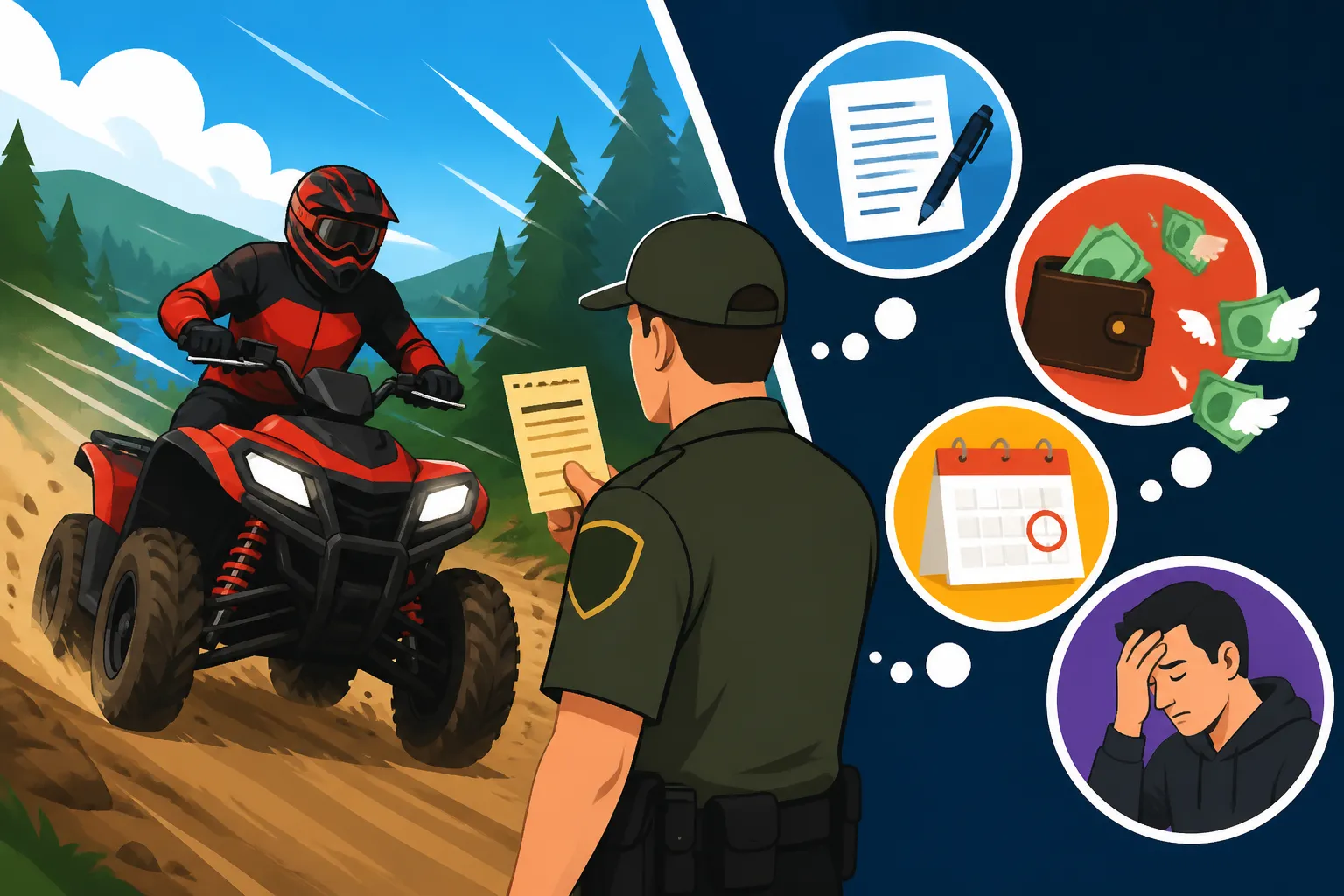
Ah, the sound of your quad humming on a beautiful Quebec trail, wind in your hair, enjoying the scenery… then, suddenly, flashing lights in your rearview. A trail patrol officer waves you over, and your heart sinks. You know what's coming: a speeding ticket. It's a frustrating, deflating experience that can leave you wondering what just happened and what comes next. This guide is here to walk you through exactly what happens after you receive a Quebec trail speeding ticket, from understanding the fine print to navigating the process of contesting it, and ultimately, how to avoid this unwelcome surprise in the future.
The Immediate Aftermath: Facing a Quebec Trail Speeding Ticket
That moment you're pulled over on a trail can be jarring. One minute you're enjoying your ride, and the next, you're dealing with official business. It's natural to feel a mix of annoyance, confusion, and maybe even a little bit of embarrassment. But knowing who can stop you and what information you'll need to provide can help you manage the situation calmly.
Who Can Issue a Ticket on Quebec's Trails?
It's a common misconception that only the Sûreté du Québec or municipal police can issue tickets on trails. While they certainly have the authority, you might be surprised to learn that dedicated trail patrols are often the ones enforcing the rules. In Quebec, the Fédération Québécoise des Clubs Quads (FQCQ) works closely with its member clubs to organize and train volunteer patrollers. These individuals, often passionate riders themselves, are authorized to ensure compliance with the [Quebec's Off-Highway Vehicle Act and Your Papers]. This means you could be stopped by:
- FQCQ Trail Patrollers: These are the most common enforcers on federated trails. They're usually volunteers from local clubs, identifiable by their uniforms and marked machines. Their primary role is to ensure riders have valid trail passes, proper registration, and are adhering to safety rules like speed limits. They have the power to issue infraction notices.
- Sûreté du Québec (SQ): Quebec's provincial police force has full jurisdiction over all roads and trails. They might be patrolling trails, especially in more remote areas or if there have been complaints about reckless riding. Their enforcement often comes with more severe consequences, including potential criminal charges for impaired driving.
- Municipal Police Forces: In areas closer to towns and villages, local police might also patrol trails that fall within their jurisdiction, particularly if there are local by-laws in place concerning off-road vehicles.
No matter who stops you, it's crucial to remain polite and cooperative. Arguing at the scene rarely changes the outcome and can sometimes escalate the situation.
The Information Exchange at the Scene
When a patrol officer or police officer stops you, they'll ask for specific documentation. Having these papers readily accessible is key to a smooth interaction, even if it's not the interaction you wanted. They will typically request:
- Your Driver's Licence: Since [Quebec Requires a Driver's Licence Since 2021], this is mandatory for operating an ATV or side-by-side on trails.
- Your ATV's Registration Certificate: This proves your machine is legally registered with the SAAQ. For more on this, you can look into [Quebec ATV Registration With the SAAQ].
- Proof of Liability Insurance: Quebec mandates a minimum liability coverage for all off-road vehicles. Make sure you have this document on hand, ideally with your other papers, as outlined in [Quebec Insurance Proof on the Machine].
- Your FQCQ Trail Pass: If you're on a federated trail, a valid trail pass is essential. This contributes to the maintenance and insurance of the trail network. We have more details on [Quebec Trail Pass Proof on the Trail].
- Your Training Certificate (if applicable): For 16 and 17-year-old riders, a mandatory training certificate is required to ride on federated trails. Check [Quebec Training Certificate Requirements] for more info.
The officer will record your personal details, the machine's information, and the specifics of the alleged infraction, including the date, time, location, and the speed you were reportedly travelling. They might also take down witness information if applicable. You'll then be handed a physical copy of the ticket, which is your official notice of the violation and the fine.
Common Speeding Offences and Initial Penalties
The vast majority of speeding tickets on Quebec trails are issued for exceeding the general speed limit. [Quebec's 50 km/h Speed Limit for ATVs] is the golden rule on federated trails. While it might feel slow at times, this limit is in place for safety, to protect the environment, and to minimize noise disruption to nearby communities. Exceeding this limit, even by a small margin, can lead to a ticket.
The penalties for speeding on a Quebec trail aren't just a slap on the wrist. They typically include:
- A Base Fine: This is the core monetary penalty for the infraction. The amount will vary depending on how much you exceeded the speed limit.
- Administrative Fees: Additional fees are often added to cover the cost of processing the ticket.
- Victim Surcharge: A mandatory surcharge is levied on all fines in Quebec, which goes towards a fund for victims of crime.
- Demerit Points: This is perhaps the most significant immediate consequence beyond the fine itself. Speeding tickets on an ATV can result in demerit points being added to your provincial driver's licence, which can have ripple effects beyond your off-road adventures. We'll delve deeper into demerit points shortly.
It's important to understand that these fines can quickly add up, and multiple infractions or severe speeding can lead to much harsher penalties, including significant increases in [Quebec Ticket Costs for Trail Violations].
Deciphering Your Ticket: Fines, Demerits, and Deadlines
Once the initial interaction is over and you're holding that ticket, it's time to take a deep breath and read it carefully. It might look like a jumble of legal jargon, but understanding each section is crucial for deciding your next steps. Don't just stuff it in your pocket and forget about it. That's a recipe for bigger headaches down the line!
Understanding the Financial Burden: Fines and Surcharges
Quebec's ticketing system is pretty clear-cut, but the final amount due can be a bit more than just the base fine you might expect. Let's break down what you'll typically see:
- The Base Fine: This is the primary penalty for the speeding infraction itself. For example, going slightly over the 50 km/h limit will incur a certain base amount, but if you were caught doing, say, 70 km/h in a 50 km/h zone, that base fine will be significantly higher. These amounts are set by regulation and can be found on official government scales. You won't find specific amounts here because they change, but know that the faster you go, the more it hurts your wallet.
- Administrative Fees: These are non-negotiable costs tacked onto almost every ticket. They cover the processing, record-keeping, and general administration of the justice system. Think of it as the cost of doing business for the government to manage your infraction.
- Victim Surcharge (Contribution au fonds d'aide aux victimes): This is a mandatory charge in Quebec added to all fines. It's a percentage of the base fine and goes directly into a fund that supports programs and services for victims of crime. It's not optional, and it's something you'll see on almost any ticket in the province.
So, when you look at the total amount due, remember it's a combination of these three elements. Ignoring it will only lead to late fees and potentially more severe consequences, like suspension of your driver's licence or your ATV's registration.
The Impact of Demerit Points on Your Driver's Licence
This is often where the real sting of an ATV speeding ticket lies for many riders. Unlike some other provinces or regions, a speeding ticket received on an off-highway vehicle in Quebec can absolutely result in demerit points being added to your car driver's licence (or whatever class of driver's licence you hold). This is because the SAAQ (Société de l'assurance automobile du Québec) oversees all driver's licences in the province, regardless of the vehicle type you're operating when the infraction occurs.
Here's why this matters:
- Your Demerit Point Bank: Every driver in Quebec starts with a certain number of demerit points (usually 15 for most experienced drivers, fewer for new drivers). Each ticket comes with a specific number of points. Speeding tickets generally carry anywhere from 1 to 6 demerit points, depending on the severity of the infraction.
- Licence Suspension Risk: If you accumulate too many demerit points within a certain period, the SAAQ will issue a notice of licence suspension. This isn't just for your ATV privileges; it means you can't drive any vehicle, including your car, for a specified period. This can be devastating for work, family, and daily life.
- Insurance Premium Hikes: When demerit points are added to your record, your auto insurance provider sees you as a higher risk. This often translates directly into significantly increased premiums for your car insurance, and potentially even your ATV insurance, at renewal time. This financial hit can last for several years, long after you've paid the initial fine. We have more on [Quebec Insurance After a Claim] which touches on rising rates.
It's a strong incentive to respect the [Quebec ATV Speed Limit on Trails] and other rules.
Your Options for Payment and Deadlines
Once you've digested the details of your ticket, you have a few ways to proceed, and each comes with a deadline. Typically, you have 30 days from the date the ticket was issued to respond.
1. Pleading Guilty and Paying the Fine:
This is the simplest and most common option if you accept the infraction.
- Online: Many municipalities and the provincial government offer online payment portals. This is usually the fastest and easiest method.
- By Mail: You can mail a cheque or money order along with the payment stub provided on your ticket.
- In Person: You can pay at the courthouse or designated payment centres in some areas.
When you pay, you are essentially admitting guilt, and the demerit points (if any) will be applied to your driving record.
2. Pleading Not Guilty and Contesting the Ticket:
If you believe you were wrongly accused, or there are extenuating circumstances, you have the right to challenge the ticket in court. This option requires you to formally notify the court within the 30-day window that you wish to plead not guilty. We'll explore this process in detail in the next section.
What Happens If You Miss the Deadline?
Ignoring the ticket or missing the 30-day deadline has serious consequences:
- Automatic Conviction: The court will automatically register a conviction against you, as if you had pleaded guilty.
- Additional Fees: Late payment penalties and collection fees will be added to your original fine.
- Licence Suspension: The SAAQ can suspend your driver's licence and/or your ATV's registration until all fines and fees are paid. This can be a real nightmare to sort out.
So, whatever you decide to do, make sure you respond to the ticket within the allotted timeframe.
Your Right to Contest: Pleading Not Guilty in Quebec
Receiving a ticket is never fun, but you're not always without recourse. If you genuinely believe you weren't speeding, or if there were technical errors on the ticket, Quebec law gives you the right to contest it. However, it's not a decision to be taken lightly. There are pros and cons, and a process to follow.
Weighing Your Options: To Contest or Not to Contest?
Before you decide to fight your ticket, it's wise to consider a few factors. This isn't just about saving money on the fine; it's also about protecting your driving record and insurance rates.
Reasons you might consider contesting:
- You genuinely weren't speeding: Perhaps the radar gun was faulty, or the officer identified the wrong machine.
- Technical error on the ticket: Incorrect date, time, location, machine description, or even your name could be grounds for dismissal, though minor errors might be amended.
- Procedural issues: The officer may not have followed proper protocol during the stop or ticketing process.
- Demerit points are critical: If adding more demerit points will push you dangerously close to a licence suspension, contesting might be worth the effort to save your licence. This is a common concern, especially for younger drivers who start with fewer points.
- Insurance impact: Avoiding a conviction could save you significant money on insurance premiums over several years.
Reasons you might choose to pay the fine:
- Clear guilt: If you know you were speeding and there are no mitigating circumstances, contesting might be a waste of time and money.
- Time and effort: Contesting a ticket requires time off work, preparing your case, and possibly multiple court appearances. For a minor fine, the effort might outweigh the benefit.
- Stress: The court process can be stressful and intimidating for many people.
- No guarantee of success: There's always a risk that you'll still be found guilty, and you'll then have to pay the fine plus potential court costs.
Consider the potential costs of court fees, lost wages, and the emotional toll against the potential savings. Remember, a quick check of [Contesting a Trail Ticket] might also give you some more perspective.
The Process of Challenging a Trail Ticket
If you decide to plead not guilty, here's a general overview of the steps involved in Quebec:
- Notify the Court: On the back of your ticket, there will be instructions on how to formally plead not guilty. You must do this within the 30-day deadline. This usually involves checking a box and mailing it back or submitting it online.
- Request Disclosure: Once you've pleaded not guilty, you should request disclosure of the evidence against you. This includes the officer's notes, the radar calibration records, and any other relevant documents. This is crucial for preparing your defence and identifying potential weaknesses in the prosecution's case.
- Initial Court Date (First Appearance): You'll receive a notice for a court date. This first appearance might just be a procedural meeting where you confirm your plea and potentially discuss a settlement with the prosecutor. They might offer a reduced fine or fewer demerit points in exchange for a guilty plea. This is often where decisions are made about whether to proceed to a full trial.
- Trial Date: If no agreement is reached, a trial date will be set. This is where you'll present your case to a judge. You'll have the opportunity to:
- Cross-examine the officer: Ask questions about their observations, the equipment used, and their procedures.
- Present your evidence: This could include photos, witness statements, or even expert testimony if applicable (though rare for a speeding ticket).
- Testify yourself: You can explain your version of events to the judge.
- Seek Legal Advice: For more complex cases or if you're concerned about your driving record, consulting a paralegal or lawyer specializing in traffic law is highly recommended. They can guide you through the process, represent you in court, and significantly improve your chances of a favorable outcome. They understand the nuances of the law and court procedures, something a regular rider might not.
Possible Outcomes When You Contest
The outcome of contesting a ticket isn't guaranteed, and there are several possibilities:
- Acquittal: This is the best-case scenario. The judge finds you not guilty, the ticket is dismissed, and no fine or demerit points are applied. This might happen if the prosecution can't prove their case beyond a reasonable doubt, or if a significant technical or procedural error is found.
- Reduced Fine/Demerit Points: The prosecutor might offer a plea bargain before or during the first appearance, or the judge might reduce the penalty based on mitigating circumstances you present. You still get a conviction, but with a lighter penalty.
- Conviction (Original Penalty): The judge finds you guilty, and you're ordered to pay the original fine and incur the original demerit points. In some cases, court costs might also be added on top of the original fine.
- Withdrawal of Charges: Rarely, the prosecutor might withdraw the charges if they realize they have a weak case or for administrative reasons.
Remember, the goal of the court is to determine guilt based on the evidence presented. A strong, well-prepared defence is key to a positive outcome.
Beyond the Fine: Long-Term Consequences and Future Prevention
Getting a trail speeding ticket isn't just about the immediate sting of the fine. There can be lingering effects that impact your finances and your riding privileges for years to come. Understanding these long-term consequences can be a powerful motivator for preventing future infractions.
The Ripple Effect: How a Ticket Can Affect Your Insurance
We touched on this briefly, but it bears repeating: a speeding ticket on your ATV can have a significant and lasting impact on your insurance premiums, both for your off-road machine and your personal vehicle.
- Increased Risk Profile: Insurance companies use your driving record to assess your risk level. A speeding ticket, especially one that carries demerit points, flags you as a higher-risk driver. More risk means higher premiums.
- Auto Insurance Hike: Since demerit points from an ATV ticket transfer to your general driver's licence, your car insurance provider will see this infraction. This can lead to a substantial increase in your annual premiums for your car, truck, or SUV. These increases can last for three to five years, effectively making that initial fine much, much more expensive over time. It's not uncommon for premiums to jump by hundreds of dollars per year.
- ATV Insurance Adjustments: While [Quebec Insurance Minimum for an Owner] is mandatory, your specific policy's cost can also go up. If your ATV insurer becomes aware of the speeding ticket, they might also increase your rates upon renewal. Some insurers might even refuse to renew your policy if you accumulate too many infractions.
- Difficulty Finding Coverage: For drivers with multiple convictions or a history of demerit points, it can become challenging to find affordable insurance. You might be forced into high-risk insurance pools, which come with much steeper prices.
The long-term financial drain from increased insurance costs often far outweighs the initial fine itself. It's a stark reminder that responsible riding protects more than just your safety – it protects your wallet too.
Staying Informed: Knowing Quebec's Off-Road Rules
One of the best ways to avoid future tickets is simply to know the rules. Ignorance of the law is never an excuse in court. Quebec has specific regulations for off-highway vehicles, and these rules are subject to change. For instance, [What Quebec's Off-Highway Vehicle Act Changed for Owners] is a great resource to understand recent updates.
Here are some key areas to always be aware of:
- Speed Limits: As we've emphasized, [Quebec's 50 km/h Speed Limit for ATVs] is the maximum on most federated trails. Be mindful that certain sections, particularly near dwellings or populated areas, might have even lower limits. Always look for posted signage.
- Age and Licence Requirements: Remember [Quebec Requires a Driver's Licence Since 2021] and specific [Quebec ATV Age Requirements] for different types of machines and riders. [Quebec Rules for a Side-by-Side Driver], for example, are different than for a standard quad.
- Equipment: Ensure your machine meets all [Quebec Lighting Requirements at Night], [Quebec Mirror Requirements on a Quad], and [Quebec Muffler and Noise Rules].
- Trail Access and Hours: Be aware of [Quebec Riding Hours From 6 a.m. to Midnight] and local municipal by-laws that might further restrict access or times. Knowing [Quebec's 100 Metre Rule Near Homes] is also crucial for respectful riding.
- Trail Pass: Always have a valid [Quebec Annual FQCQ Trail Pass] when riding on federated trails. [Quebec Fines for Riding Without a Trail Pass] are substantial.
Regularly check the FQCQ website or your local club's resources for the most up-to-date information. They're often excellent sources of local trail conditions and specific regulations.
Practical Strategies for Safe and Legal Riding
Beyond just knowing the rules, actively adopting safe riding practices can make all the difference. This isn't just about avoiding tickets; it's about enjoying the trails responsibly and ensuring everyone's safety.
- Ride Within Your Limits and Your Machine's Limits: Just because your machine can go faster doesn't mean you should, especially on trails with varying terrain and blind corners. Always ride at a speed that allows you to react safely to unexpected obstacles or other riders. Consider upgrading your suspension with quality components from companies like SuperATV if you find yourself constantly battling rough terrain at legal speeds, as better handling can lead to a more confident and controlled ride.
- Stay Focused: Distractions, whether from your phone, passengers, or even just daydreaming, can lead to poor judgment and speeding.
- Use a GPS/Trail Map App: Apps like iQuad can not only help you navigate but can also often display speed limits for specific trail sections, reminding you to slow down.
- Be Mindful of Conditions: Muddy, wet, or icy trails demand much lower speeds than dry, clear ones. [Quebec Trail Closures After Heavy Rain] or [Quebec Riding in Winter] can significantly impact how fast you can safely go.
- Maintain Your Machine: A well-maintained ATV is safer and easier to control. Regularly check your brakes, tires (perhaps a robust set of SuperATV tires for superior grip!), and steering.
- Ride with Others: Riding in a group can encourage safer speeds and provides a safety net in case of an incident.
- Respect Patrols: If you see a trail patrol, slow down, signal, and be prepared to present your documents. They're there for everyone's safety.
- Consider Training: Even experienced riders can benefit from advanced rider training courses. These courses can sharpen your skills and reinforce safe habits.
By prioritizing safety and adherence to regulations, you ensure that your time on Quebec's beautiful trails remains a source of joy, not a cause for a ticket or a headache with your insurance company. Remember, upgrading certain parts like a durable SuperATV winch can be helpful for recovery situations, but ultimately, safe driving habits are your best defence against trouble.
| Action Taken After Ticket | Immediate Impact | Long-Term Impact | Risk of Licence Suspension | Insurance Impact |
|---|---|---|---|---|
| Pay Fine (Plead Guilty) | Fine & fees due, demerit points applied | Higher premiums for 3-5 years | Increases with accumulated points | Rates likely increase |
| Contest (Plead Not Guilty) | Time/effort for court, legal fees possible | Depends on outcome | Potential for reduction if successful | Potential to avoid increases if acquitted |
| Ignore Ticket | Automatic conviction, late fees, higher fine | Licence suspension, significantly higher premiums, potential legal action | Very high, almost certain | Rates will significantly increase |
Disclaimer
This article is for general informational purposes only and does not constitute professional advice. Laws, prices and regulations vary by location and change over time. Consult a qualified professional for guidance on your specific situation.