100 Metres of Sightline at 50 km/h
It's easy to feel a bit lost when it comes to navigating the specific rules for riding your ATV or side-by-side on Quebec's roads. With the incredible network of trails we have, it’s frustrating when you just need to cross a short section of pavement or access a local service, only to find yourself uncertain about the legal requirements. This guide will shine a light on one of the most crucial, yet often misunderstood, regulations: the 100-metre sightline rule when operating your machine at 50 km/h on an authorized road crossing or segment.
Understanding Quebec's Off-Highway Vehicle Act on Roads
Riding an off-highway vehicle (OHV) in Quebec is a fantastic way to explore our beautiful province, but it comes with a distinct set of rules, particularly when our machines venture anywhere near public roads. The province's Off-Highway Vehicle Act (LVHR) is designed to ensure safety for everyone, both OHV operators and other motorists. It's not about making things difficult; it's about managing the inherent differences between an ATV or side-by-side and a typical road vehicle.
Why Road Rules Are So Strict for ATVs and Side-by-Sides
The fundamental principle in Quebec is that ATVs and side-by-sides are generally not allowed on public roads. This might seem harsh, especially if you're used to more lenient rules elsewhere, but it's rooted in safety. Our machines, while incredibly capable off-road, handle very differently on pavement. They're often slower, less visible, and not designed for high-speed interactions with cars and trucks. The LVHR acknowledges this by creating very specific exceptions, such as crossing a road or using a short municipal segment to connect trail sections. These exceptions, however, come with stringent conditions to minimize risk.
Think about it from the perspective of a car driver. An ATV suddenly appearing on a road can be unexpected, and their stopping distances and reaction times might be different than for another car. The rules are there to bridge that gap and ensure that when we do share the road, even briefly, it's done as safely as possible. It's about proactive prevention, understanding that our smaller, often more rugged machines need extra considerations in a high-speed environment. You can learn more about the specifics in [Quebec ATV Road Rules Under the LVHR].
The General Speed Limit and Its Importance for Safety
When you are permitted to ride on a public road, whether it's for a short crossing or an authorized 1-kilometre stretch, your speed is tightly regulated. In most cases, the maximum speed for an ATV or side-by-side on a public road in Quebec is 50 km/h, even if the posted limit for other vehicles is higher. This might feel slow, especially on a wider road, but it's a critical safety measure. This specific limit helps reduce the impact of potential collisions and gives both the OHV operator and other drivers more time to react to unexpected situations.
This 50 km/h limit isn't just an arbitrary number; it's directly tied to visibility and the ability to safely navigate unforeseen circumstances. If you're going slower, you have more time to react to a pothole, a sudden stop by another vehicle, or a pedestrian. It also means that other drivers have a better chance of seeing you and adjusting their speed. This rule acknowledges the different dynamics of an ATV compared to a car, especially on hard surfaces. Understanding this maximum speed is the first step towards appreciating why sightlines are so important. This is detailed further in [Quebec's 50 km/h Speed Limit for ATVs].
The Critical 100-Metre Sightline Rule for 50 km/h Crossings
Now, let's dive into the core of the matter: the 100-metre sightline rule when you're moving at 50 km/h. This isn't just a suggestion; it's a mandatory safety requirement that directly impacts when and how you can legally ride your ATV or side-by-side on certain road sections. It's a rule born from physics and a deep understanding of reaction times and stopping distances.
What the 100-Metre Sightline Actually Means in Practice
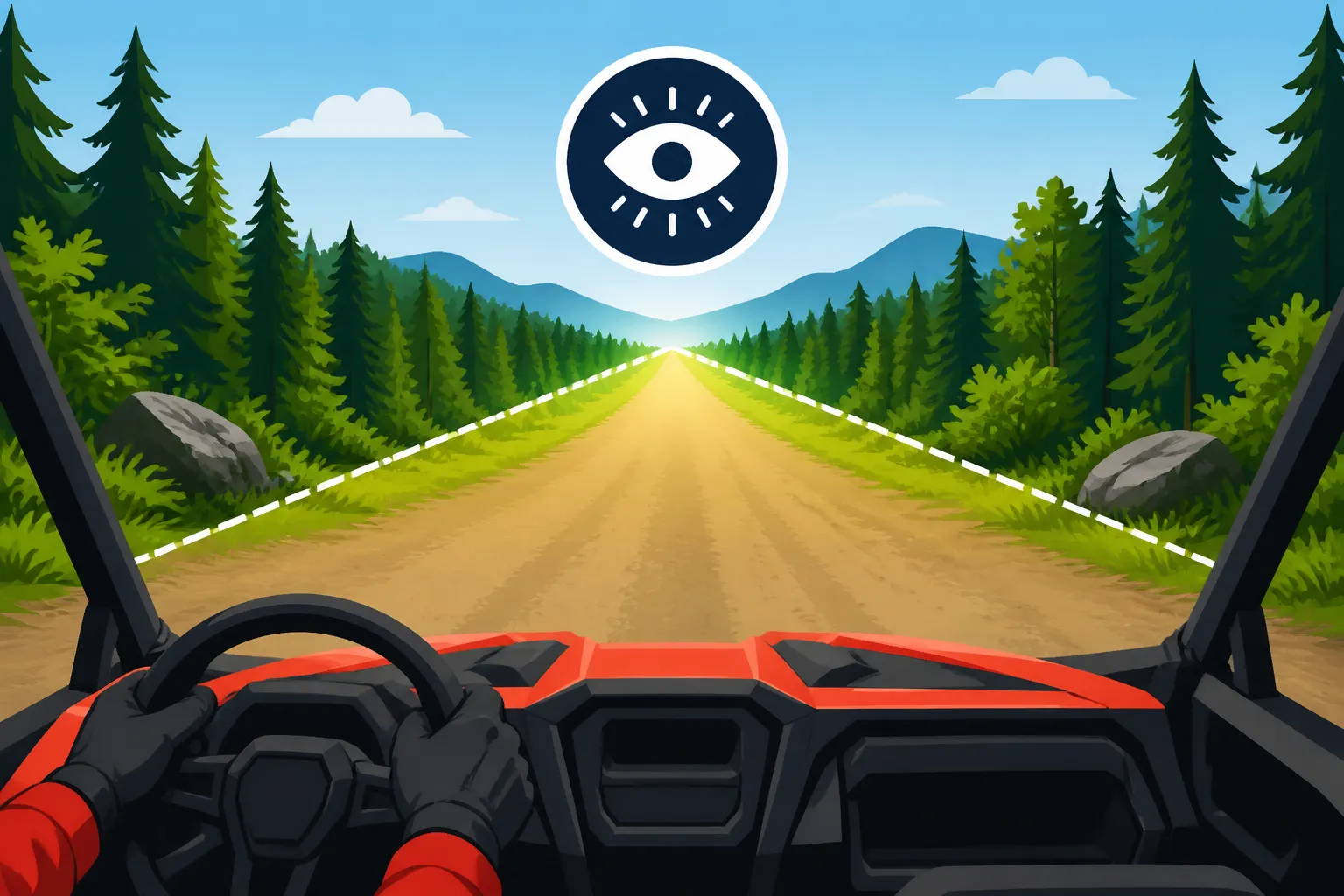
A "sightline" refers to the unobstructed view you have of the road ahead and behind, as well as the view other motorists have of you. The 100-metre rule at 50 km/h essentially means that if you're riding your off-highway vehicle on a road section where you're allowed to maintain a speed of 50 km/h, you must have a clear, unobstructed view of the road for at least 100 metres in both directions. Moreover, any approaching vehicle must also have an unobstructed view of you for at least 100 metres. This dual requirement is crucial.
Imagine you're approaching an intersection or a point where you're allowed to cross or briefly ride a road. Before you even get close, you need to assess the visibility. Are there bends in the road, hills, dense trees, or buildings that block your view, or the view of other drivers, for that full 100 metres? If so, you cannot maintain 50 km/h; you must slow down significantly, or, if the sightline is severely restricted, you might not be able to proceed at all until it's safe. This rule directly accounts for the time it takes for both you and another driver to perceive a hazard, react, and then brake to a stop. For more on these distances, check out [Quebec Crossing Sightline Distances].
Applying the Sightline Rule to Different Road Situations
This sightline rule applies to any scenario where your ATV or side-by-side intersects with public road traffic. This includes, but isn't limited to, crossing highways, making turns onto municipal road segments, or even just exiting a private driveway onto a permitted road section. Every time you're about to put your wheels on pavement where other vehicles might be present, you need to perform this sightline assessment. The rule is especially pertinent for [Quebec Crossings at Right Angles], where you're making a direct perpendicular movement across traffic lanes.
Consider a scenario where a federated trail crosses a secondary highway. Even if there's a sign indicating an ATV crossing, you, as the operator, are still responsible for ensuring that the 100-metre sightline is clear in both directions before you proceed at 50 km/h. If a curve in the road or a stand of trees reduces that visibility, you must reduce your speed to achieve the sightline requirement appropriate for that lower speed (for example, 50 metres for 30 km/h). This responsibility falls squarely on the rider's shoulders. To enhance your awareness of your surroundings, especially in tricky lighting conditions or dusty environments, you might consider aftermarket mirrors or specialized lighting. For example, some riders find that high-quality, wide-angle mirrors can really help with checking blind spots, and heavy-duty aftermarket lighting, like options from SuperATV, can improve how visible you are to other motorists, though they don't create sightlines through obstacles.
Navigating Exceptions and Penalties
Understanding the rules is one thing; knowing when and where they apply, and what happens if you don't follow them, is another. Quebec's Off-Highway Vehicle Act isn't just a guideline; it carries real consequences for non-compliance, all designed to underline the seriousness of safety.
When You Might Encounter This Rule on the Road
The 100-metre sightline rule at 50 km/h primarily comes into play during the specific, limited instances where ATVs and side-by-sides are permitted on Quebec's roads. These aren't widespread allowances; they are very targeted exceptions. The most common scenarios include:
- Crossing a Public Road: This is perhaps the most frequent application. When a federated trail needs to cross a provincial highway or a municipal road, you'll be on the pavement for a brief moment. During this crossing, you must ensure that required sightlines are met for the speed you intend to travel.
- Accessing a Trail Segment: Sometimes, to get from one part of a trail to another, you might have a short, authorized section of public road to ride. These are often explicitly signed and might fall under specific municipal bylaws, such as the [Quebec Municipal Road Access Up to 1 Kilometre] rule. Even on these designated stretches, the sightline requirements for your speed are paramount.
- Accessing Services: In very limited circumstances, you might be allowed to use a short road section to reach fuel, lodging, or other services directly adjacent to a trail, again, usually via specific municipal designation.
In all these cases, the law expects you to actively assess the environment for sightlines. This isn't just about avoiding a ticket; it's about avoiding a serious accident. For example, when performing [Quebec Rules for Crossing a Highway], the implications of misjudging an approaching vehicle's speed and distance can be severe. Having a well-maintained machine is also a part of this equation. For instance, ensuring your brakes are always in top condition and that your machine's steering is responsive helps you react quickly if a sightline turns out to be shorter than you initially thought. Some riders choose durable aftermarket components from a brand like SuperATV to ensure their machine can handle unexpected situations on varied terrain, including short road stints.
Consequences of Failing to Observe Sightline and Speed Rules
The stakes are incredibly high when you ignore road rules designed for safety. The most immediate and severe consequence is, of course, the risk of an accident. Collisions between off-highway vehicles and road vehicles can lead to serious injuries, extensive property damage, and even fatalities, for everyone involved. Your off-highway vehicle offers less protection than a car, making you particularly vulnerable.
Beyond the immediate danger, there are significant legal and financial penalties. If you are caught riding an ATV or side-by-side on a road without respecting the specific rules, including the sightline and speed requirements, you could face hefty fines. These [Quebec Fines for Riding a Public Road] can quickly add up, and repeat offenses can lead to even more severe penalties, including seizure of your machine in some cases. Ignoring these rules could also impact your insurance coverage, potentially leaving you personally liable for damages in the event of an accident. Furthermore, being cited for such infractions can also have implications for your regular driver's license, as many OHV violations are linked to your provincial driving record. This is distinct from, but just as serious as, [Quebec Penalties for Riding Unregistered], which focuses on the machine's legal status rather than its operational conduct on the road.
Practical Tips for Safe Road Riding and Crossings
Adhering to Quebec's road rules for ATVs and side-by-sides isn't just about avoiding fines; it's about ensuring your safety and the safety of everyone else on the road. Here are some practical steps you can take to make sure you're always riding responsibly and legally when you encounter pavement.
Essential Practices for Ensuring Compliance
First and foremost, slow down. Even if the authorized speed limit for your ATV on a road segment is 50 km/h, approaching any intersection or crossing at a reduced speed gives you more time to assess the situation and ensure those critical sightlines are met. It’s always better to be overly cautious than to rush. Before you even reach the pavement, ease off the throttle, be prepared to stop, and scan far down the road in both directions.
Make eye contact with other drivers if possible, and assume they haven't seen you. This defensive riding posture is crucial when sharing space with faster-moving traffic. Secondly, always be aware of local bylaws. While the LVHR sets provincial standards, municipalities can have their own specific rules regarding ATV access on certain roads. If you're riding in an unfamiliar area, check with the local club or municipality for any specific regulations. Understanding [Why Quebec Roads Are Closed to Quads by Default] instills a healthy respect for the stringent exceptions that do exist. Never assume a road is open to OHVs unless you see clear signage or have verified it.
Equipping Your Machine for Maximum Visibility
While the 100-metre sightline is about the unobstructed view, you can significantly enhance your presence to ensure other drivers see you within that view. Your machine must have legal lighting, including headlights and taillights, which should always be on when you're on public roads, even during daylight hours. But don't stop there. Consider adding extra visibility features:
- Auxiliary Lighting: Aftermarket LED light bars or spot lights, like those available from SuperATV, can dramatically increase your visibility to other motorists, especially in low light conditions or if you're riding through shadows. Remember, it's not just about you seeing, it's about being seen.
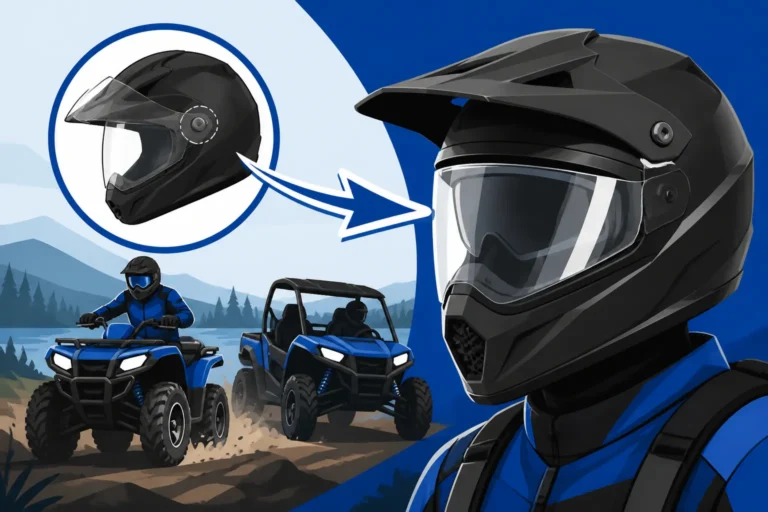
- Reflective Gear: Wear brightly coloured clothing and a reflective vest. Ensure your helmet also has reflective elements. Adding reflective tape to your machine can also help, particularly on the sides.
- Proper Mirrors: Ensure your ATV or side-by-side has well-positioned and clear mirrors. These are essential for keeping track of traffic behind you, especially before making a turn or crossing a road.
- Horn: A working horn is not just a convenience; it's a safety device. Use it to alert others to your presence if needed.
Regular maintenance is also key. Ensure your brakes are sharp, your tires are in good condition, and all your lights are functional. A well-maintained machine responds predictably, which is vital when you need to react quickly to traffic conditions or sudden changes in sightline.
| Speed Limit (km/h) | Minimum Sightline Required (Metres) | What it Means for You |
|---|---|---|
| 30 | 50 | Requires a clear, unobstructed view of 50 metres in both directions at all times. Ideal for very slow crossings or extremely restricted areas. |
| 50 | 100 | This is the standard for many authorized ATV road sections and crossings. Demands careful assessment of your environment for clear visibility. |
| 90 (N/A for ATVs) | 200 | This higher requirement for faster road vehicles highlights the danger and increased reaction time needed when interacting with high-speed traffic. |
Disclaimer
This article is for general informational purposes only and does not constitute professional advice. Laws, prices and regulations vary by location and change over time. Consult a qualified professional for guidance on your specific situation.