Riding a Quebec Beach on a Quad
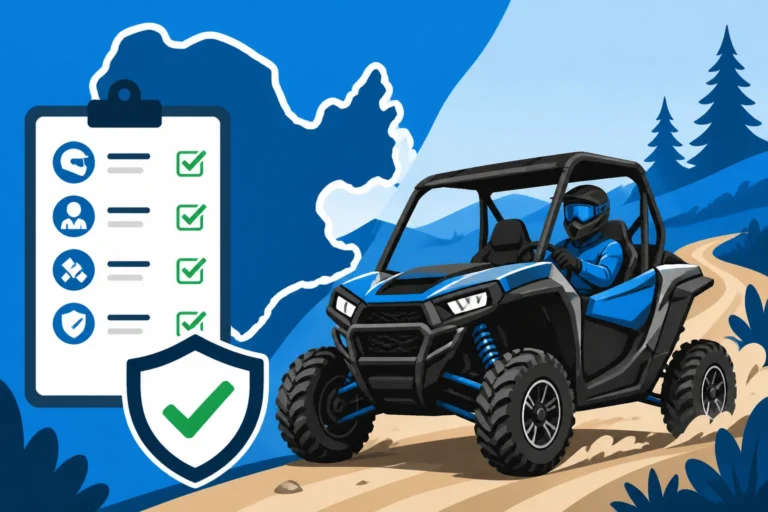
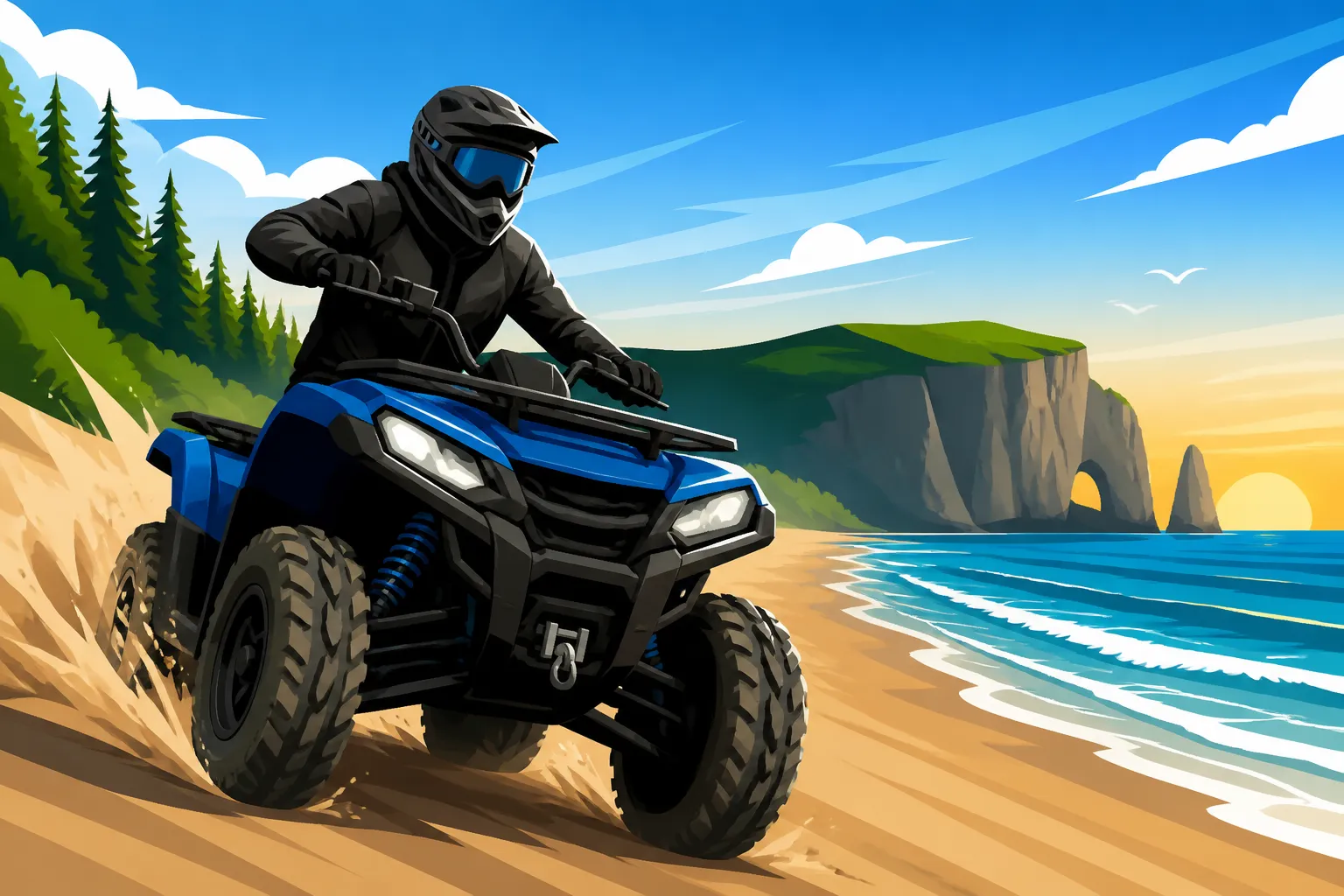
That dream of tearing along a windswept Quebec beach on your quad, salty air stinging your face, is a powerful one for many off-road enthusiasts. However, the reality of where you can and cannot ride your ATV or side-by-side in Quebec can be a confusing minefield, and beaches are a prime example of areas where a misplaced tire can lead to serious trouble. This guide is here to cut through the confusion, clearly outlining the strict rules and significant consequences surrounding off-highway vehicle use on Quebec's beautiful coastlines, and help you find legal alternatives for your sand-riding adventures.
The Allure of the Beach Ride and Why It's Often a Trap
There's something undeniably captivating about the idea of riding your quad or side-by-side across an open stretch of sandy beach. The vast expanse, the unique terrain, the sound of the waves — it paints a picture of ultimate freedom and exhilaration. For many, it feels like the perfect natural playground for an off-highway vehicle, a place where the wide-open spaces should naturally welcome adventurous spirits. This vision of endless sandy trails and splashing through shallow waters is a common fantasy, often fueled by images from other regions or media. You see it in movies, or hear stories from places with different regulations, and it's easy to assume that such a natural environment would be fair game for off-roading here in Quebec.
The Dream Versus Reality for Off-Roaders
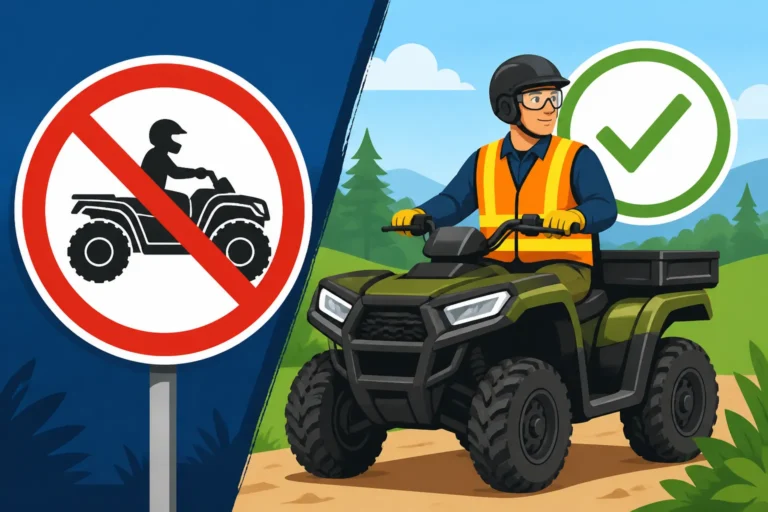
That widespread appeal of beach riding often clashes dramatically with the actual regulations in Quebec. Riders frequently envision pristine, untouched stretches of sand as simply "open land," forgetting that these environments are governed by specific laws designed to protect them. The disappointment can be truly crushing when you arrive at a stunning coastal area, quad in tow, only to find prominent signs prohibiting vehicle access, or worse, to receive a hefty fine for an honest mistake. It's a frustrating reality check for those who simply want to enjoy their machines in a picturesque setting. The desire for that unique feeling of riding on sand is completely understandable, but in Quebec, this particular dream needs to be carefully re-evaluated against the backdrop of environmental protection and public safety. It’s not just about finding a place to ride; it's about respecting the land and the laws that preserve it.
Environmental Concerns and Fragile Ecosystems
The primary reason why beaches in Quebec are, with extremely rare exceptions, off-limits to ATVs and side-by-sides boils down to environmental protection. Coastal ecosystems, including beaches, dunes, and adjacent marshlands, are incredibly fragile and vital habitats. Dunes, for instance, act as natural barriers against erosion and storm surges, protecting inland areas, but their delicate structure can be easily damaged by the weight and traction of off-highway vehicles. A single pass can crush vegetation, destabilize sand, and begin a cycle of erosion that takes years, if not decades, to reverse.
Beyond the physical landscape, beaches are crucial breeding grounds and feeding areas for a wide variety of wildlife. Shorebirds, turtles, and countless invertebrate species rely on these undisturbed spaces for their survival. The noise, exhaust, and physical presence of quads can disrupt nesting birds, crush eggs or juveniles, and alter feeding patterns, leading to significant ecological harm. When you consider the bigger picture, it becomes clear why authorities, both provincial and municipal, are so diligent in protecting these sensitive zones from vehicular traffic. It's about preserving biodiversity and ensuring the long-term health of our natural heritage, and understanding this helps put the strict rules into perspective.
Understanding Quebec's Laws on Off-Highway Vehicles and Beaches
Navigating the legal landscape for off-highway vehicles in Quebec can feel like a maze, especially when it comes to specific environments like beaches. The general principle is that recreational riding on beaches is prohibited, but understanding why and how these rules are enforced requires a look at both provincial legislation and local by-laws. It's not just a suggestion; these are legally binding restrictions designed to protect our natural resources and ensure public safety.
The Off-Highway Vehicle Act and Public Lands
The primary piece of legislation governing your quad in Quebec is the [Quebec's Off-Highway Vehicle Act and Your Papers]. This act lays out the broad strokes for where and how off-highway vehicles can be operated. While it doesn't specifically list "beaches" as prohibited, it broadly categorizes areas where riding is not permitted, which includes most public lands that aren't specifically designated as trails or routes. Beaches, particularly those along the St. Lawrence River, its estuaries, and the province's many lakes, are typically considered public domain or environmentally sensitive zones. This means they are generally subject to restrictions that prioritize conservation and public access without motorized interference.
The Act places a strong emphasis on designated trails and private land with explicit permission. If an area isn't a recognized, federated trail or private property where you have written permission, it's usually off-limits. Beaches fall squarely into this grey area for many riders, but the default assumption should always be that you cannot ride there unless there is clear, official signage stating otherwise, which is exceptionally rare for recreational purposes. The provincial government, through various ministries, manages these public lands and generally prohibits activities that could cause environmental damage or conflict with other public uses.
Municipal By-Laws and Local Restrictions
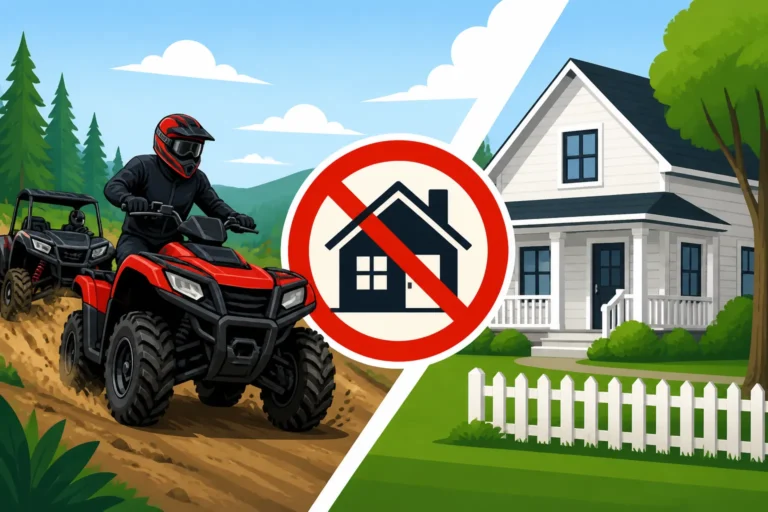
Adding another layer of complexity, municipalities in Quebec often have their own specific by-laws that further regulate activities within their territories, including on beaches within their jurisdiction. Even if a particular beach isn't explicitly mentioned in the provincial Off-Highway Vehicle Act, a local municipality can (and very often does) enact its own prohibition against motorized vehicles on its beaches and waterfront areas. These local rules can be even more stringent than provincial guidelines, reflecting specific community concerns or environmental vulnerabilities.
It's absolutely crucial to check for local signage when approaching any beach or coastal area. Ignoring these signs, even if you genuinely didn't know the by-law, is not an excuse in the eyes of the law. A town might have a beautiful stretch of shoreline that seems remote and inviting, but a simple sign at the access point can quickly turn your beach riding fantasy into a costly mistake. Always assume that beaches are restricted areas for ATVs and side-by-sides and prioritize checking local regulations or looking for clear, official indications of permitted use before you even think about putting a wheel on the sand. You might also want to review general guidelines for [Quebec Municipal By-Laws on Riding Hours] to get a sense of how varied local rules can be.
Exceptions: Extremely Rare and Specific Use Cases
While the rule of thumb is "no recreational riding on beaches," it's worth acknowledging that there are, on extremely rare occasions, specific and highly controlled circumstances where an off-highway vehicle might be seen on a Quebec beach. However, it’s critical to understand that these are not for recreational purposes and require explicit authorization. For instance, emergency services (police, fire, search and rescue) might use ATVs or side-by-sides to access remote beach areas during an incident. Environmental agencies or researchers may obtain permits for specific projects that require limited vehicle access for data collection or conservation efforts.
Another scenario could involve municipal workers performing essential maintenance or cleanup operations, where an ATV might be the most practical vehicle for the task. Sometimes, in very specific, designated event zones, a permit might be issued for a special event that temporarily allows a vehicle, but this is always under strict supervision and for a defined period. These exceptions are few and far between, always temporary, and never grant individuals the right to ride their personal machines for leisure. If you see a quad on a beach, it's almost certainly there under one of these authorized, non-recreational capacities. Don't mistake it for permission for yourself; riding illegally can lead to significant penalties, similar to [Quebec Penalties for Riding Unregistered] in other prohibited areas.
What Happens If You're Caught Riding on a Prohibited Beach?
The thought of getting caught riding where you shouldn't be is unsettling, and on a prohibited Quebec beach, the consequences can be quite severe. It’s not just a slap on the wrist; the fines and other penalties are designed to deter illegal activity and protect sensitive environments. Understanding the potential fallout can be a powerful motivator to stick to designated riding areas.
Fines, Penalties, and Machine Seizure
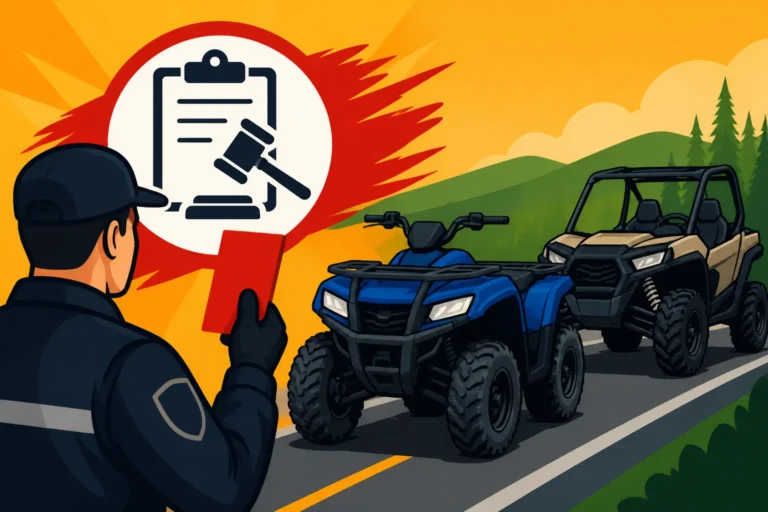
If you're caught operating your ATV or side-by-side on a beach where it's prohibited, you can expect to face significant monetary fines. These aren't minor parking tickets; they can quickly add up to hundreds or even thousands of dollars, depending on the specific by-law or provincial regulation that has been violated. Enforcement agencies, whether it's the Sûreté du Québec, municipal police, or environmental officers, take these infractions seriously due to the ecological impact and potential disturbance to other beachgoers.
Beyond the immediate fine, there's also the very real possibility that your machine could be impounded. This means your quad would be towed away and held at a storage facility, incurring additional towing and daily storage fees that you would be responsible for. Releasing your machine can be a lengthy and expensive process, often requiring proof of ownership, payment of all outstanding fines and fees, and sometimes even a court appearance. This isn't just an inconvenience; it can mean losing access to your machine for an extended period, adding a huge financial burden and a major headache to your riding season. Remember that authorities conduct [Quebec Equipment Checks by Patrols] and will be looking for many other compliance issues as well.
Environmental Damage and Legal Consequences
The legal consequences of riding on a prohibited beach can extend beyond just fines for unauthorized vehicle use. Because beaches are often environmentally sensitive areas, you could also face charges related to environmental damage. Depending on the extent of the impact – for example, if you've damaged fragile dunes, disturbed nesting wildlife, or polluted the area – you could be subject to further fines or even more severe legal repercussions under environmental protection acts. These types of charges underscore the seriousness with which Quebec regards the protection of its natural habitats.
Furthermore, illegal riding on beaches has a broader impact on the off-road community as a whole. Such incidents often draw negative attention from the public and media, fueling a perception that all ATV and side-by-side riders are irresponsible. This can, in turn, lead to calls for stricter regulations, further limiting access to legal riding areas for everyone. It’s a collective responsibility to adhere to the rules, not just to avoid personal penalties, but to help maintain a positive image for the sport and protect future riding opportunities. Even if you're lucky enough to avoid a fine, if your actions lead to an accident, knowing [Quebec Accident Reporting Rules] will be crucial, regardless of whether you were riding legally or not.
The Importance of Knowing the Rules
It's a tough lesson to learn, but ignorance of the law is never an acceptable defense. The onus is entirely on the rider to know where they can and cannot legally operate their off-highway vehicle. This means actively researching local municipal by-laws, understanding the broad strokes of provincial legislation, and paying close attention to signage at access points. Assuming a beach is open because you don't see a "No ATVs" sign is a dangerous gamble, as restrictions can be implicit in larger environmental protection zones or simply not posted at every single entry point.
Before you even load your quad onto a trailer with the intention of heading to a coastal area, take the time to consult official sources. Check the website of the local municipality, look for information from Quebec's Ministry of Environment, or contact local tourism offices. The effort spent upfront researching will save you immense headaches, significant financial penalties, and the potential loss of your machine. Responsible riding isn't just about safety on the trail; it's also about knowing and respecting the boundaries, ensuring that Quebec's beautiful natural spaces, like its beaches, remain protected for everyone to enjoy in appropriate ways. If you're ever in doubt about what's permitted on public land, remember to consult [Quebec Crown Land Riding Rules] which generally err on the side of caution when it comes to vehicle access.
Where Can You Get Your Sand Fix in Quebec?
While riding on Quebec's natural beaches is almost universally off-limits, that doesn't mean you have to give up on the exhilarating feeling of kicking up sand with your quad or side-by-side. Quebec offers a fantastic network of approved trails and specific areas where you can legally and safely enjoy a variety of terrains, including some sandy sections. The key is knowing where to look and understanding the difference between a natural beach and a designated off-road area.
Designated Sandpits and Gravel Pits
If it's specifically deep sand you're craving, and you're not getting it on a natural beach, your best bet might be to seek out designated sandpits or gravel pits. These areas, often on private land or within industrial zones, are sometimes opened up by landowners or clubs for off-road recreation. The advantage here is that they are purpose-built or repurposed areas where the impact of vehicles is either managed or less ecologically sensitive. However, it's absolutely crucial to obtain explicit permission before entering any such area. Many sandpits are active industrial sites and dangerous, or they might be private property where [Quebec Trespass Rules for Riders] apply.
Some regions might have specific clubs or organizations that have negotiated access to these types of areas, so checking with local off-road clubs is a smart move. When riding in such conditions, be prepared for challenges: deep sand can quickly overheat your machine and requires different riding techniques. Consider specialized tires for better floatation and traction, and ensure your machine has robust protection, perhaps with skid plates from a brand like SuperATV, to guard against impacts in uneven terrain. Always prioritize safety gear, even in what might seem like a controlled environment.
Exploring Approved Trails with Sandy Sections
Quebec boasts an extensive network of thousands of kilometers of off-highway vehicle trails, many of which offer a diverse range of terrain, including stretches of sand. The [Quebec ATV Trails: The FQCQ Network] is your primary resource for finding these legal and well-maintained routes. These trails are specifically designed for off-road vehicle use, meaning they are managed to minimize environmental impact and provide a safe riding experience. While you won't find yourself riding right alongside the ocean waves, you can definitely experience sandy sections within forests, along old logging roads, or in open fields.
To discover trails with sandy portions, you can use resources like [Quebec Trail Maps and the iQuad App]. These tools often provide details about the type of terrain you can expect on different circuits, allowing you to plan a ride that includes those satisfying sandy stretches. Riding on approved trails also means you’re contributing to the sustainability of the sport through your trail pass fees, which directly support trail maintenance and development. This is a far more responsible and enjoyable way to get your sand fix than risking fines and environmental damage on a prohibited beach. Plus, you'll find plenty of other fantastic scenery along the way, often connecting charming villages and remote wilderness areas.
The Importance of Appropriate Gear and Setup
Regardless of where you find your sandy playground – whether it's a legal pit or a sanctioned trail section – having the right gear and machine setup makes a huge difference. Sand riding, especially deep or loose sand, puts unique stresses on your ATV or side-by-side. Your tires are crucial; while dedicated paddle tires are usually overkill for most Quebec trail sand, a good set of aggressive knobbies with appropriate air pressure will provide better floatation and traction than worn-out tread.
Heat management is another big one. Sand can be tough on clutches and engines. Keep an eye on your temperature gauge, especially on a hot day, and ensure your radiator is clear of mud and debris. For those who frequently ride in dusty or sandy conditions, upgrading air filtration can protect your engine. And speaking of protection, even on approved trails, the diverse terrain (including potential hidden rocks or roots beneath sand) means having sturdy underbody protection is a smart investment. Products from companies like SuperATV, such as heavy-duty skid plates and A-arm guards, can provide that peace of mind, allowing you to focus on the ride without constantly worrying about damaging vital components. Being prepared not only enhances your enjoyment but also extends the life of your machine, ensuring many more years of legal, thrilling off-road adventures.
Disclaimer
This article is for general informational purposes only and does not constitute professional advice. Laws, prices and regulations vary by location and change over time. Consult a qualified professional for guidance on your specific situation.