Contesting a Trail Ticket
Getting a trail ticket for your ATV or side-by-side in Quebec can really throw a wrench in your plans, especially when you feel like you haven't done anything wrong, or perhaps you just misunderstood a rule. It's frustrating to be out enjoying the trails only to face a fine and the headache of dealing with it. This guide is here to walk you through the process of understanding your Quebec trail ticket and, more importantly, how you can go about contesting it if you believe you have a valid case.
Understanding Your Quebec ATV/UTV Trail Ticket
When you're stopped on a trail or a designated road section, the experience can be a bit jarring. You might be focused on the fun, the scenery, or navigating a tricky section, and suddenly, there are sirens or a club patrol stopping you. It's important to understand what kind of ticket you've received and who issued it, as this can sometimes influence the process of contesting it.
What a Trail Ticket Signifies
A trail ticket in Quebec means you've been cited for violating a specific rule or regulation under the province's off-highway vehicle laws, often governed by the [What Quebec's Off-Highway Vehicle Act Changed for Owners]. These tickets can be issued by several authorities. You might be stopped by a Sûreté du Québec officer, a municipal police officer, or even a volunteer patroller from the Fédération Québécoise des Clubs Quads (FQCQ). While the FQCQ patrollers are typically focused on enforcing club rules and ensuring you have your [Quebec Annual FQCQ Trail Pass], they also have the authority to report serious infractions to the police. Police officers, on the other hand, enforce the full spectrum of the law.
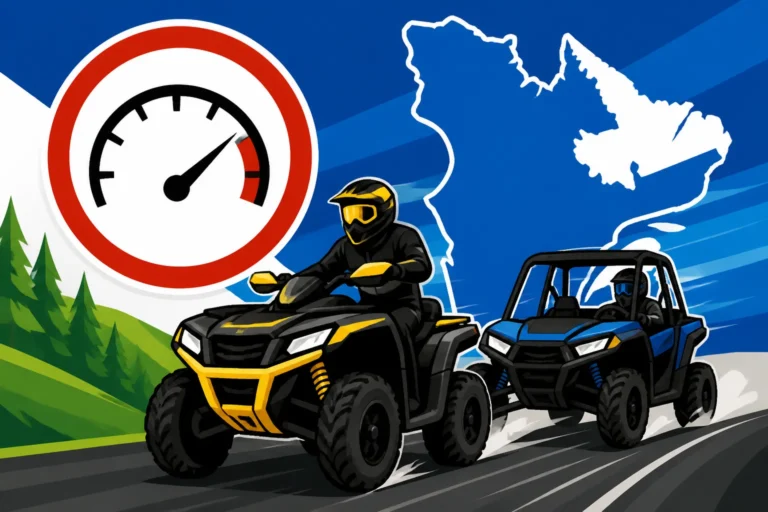
Common reasons for receiving a trail ticket are quite varied and can often catch riders off guard. Perhaps you were going a little too fast, exceeding the [Quebec ATV Speed Limit on Trails] of 50 km/h on a federated trail. Or maybe you were riding outside the permitted [Quebec Riding Hours From 6 a.m. to Midnight], thinking a quick late-night run wouldn't hurt. Age violations are another frequent issue, especially for younger riders who might not meet the [Quebec ATV Age Requirements] or [Quebec Side-by-Side Age Rule of 18] without the necessary [Quebec Training Certificates for Teen Riders] or supervision. Other common tickets include not having a visible [Quebec Plate Placement on a Quad], riding without the required [Quebec Helmet and Visor Rules], or perhaps operating a machine that doesn't meet specific equipment standards, like having proper lighting for night riding or a functioning muffler. Sometimes, you might even get ticketed for riding on prohibited land or straying off the designated [Quebec ATV Trails: The FQCQ Network]. It's a lot to keep track of, and honestly, it's easy to make an honest mistake or simply not be aware of every single nuance of the law. The immediate sting of the ticket often comes with a sense of unfairness, especially if you felt you were being responsible.
Decoding the Information on Your Ticket
Once you've received a ticket, the first thing to do is take a deep breath and carefully read through it. It's not just a piece of paper with a fine amount; it contains crucial information that will dictate your next steps. Every detail on that ticket is important, from the time of day to the specific article of the law you're alleged to have violated.
Typically, a Quebec trail ticket will include several key pieces of information. You'll find the infraction code or the specific article of the Off-Highway Vehicle Act you're accused of breaking. This is vital because it tells you exactly what you need to defend against. There will be the date and time of the alleged infraction, which can be critical if you have evidence (like GPS data or witness accounts) that contradicts the officer's timeline. The location of the incident will also be noted, which is important for confirming if you were, for example, truly on prohibited land or within a designated trail corridor. The issuing officer's name and badge number should be present, which can be useful if there were any procedural irregularities. Of course, the fine amount and a due date for payment will be clearly stated. However, most importantly, the ticket will outline your options, including how to pay the fine or, conversely, how to contest it and plead not guilty. You'll need to look for a section that specifically mentions options like "contester," "non coupable," or "demander une audition" (contest, not guilty, request a hearing). Missing this section could lead you to inadvertently pay the fine and forfeit your right to contest. Sometimes, the language can be a bit formal, making it feel intimidating, but remember, it's simply laying out the legal choices available to you.
Deciding to Contest: Is It Worth It?
Receiving a ticket instantly makes you wonder if it's even worth the hassle to fight it. Is it just easier to pay the fine and move on? While sometimes that's the case, there are definite situations where contesting a ticket makes sense, especially if you truly believe you're innocent or there were significant mitigating circumstances. It’s not just about the money; it’s about standing up for what you believe is right.
Evaluating the Grounds for Contesting
Before you even think about stepping into a courtroom or filling out forms, you need to honestly assess why you believe the ticket is unjust. What are your specific grounds for contesting? Simply feeling "it's not fair" isn't enough; you need concrete reasons.
One of the strongest reasons to contest is a factual error on the ticket or in the officer's assessment. Did the officer record the wrong date, time, or location? Perhaps you were accused of riding on a closed trail, but you have proof that particular section was, in fact, open that day. Another common scenario is mistaken identity, although less common for ATV tickets where IDs are typically checked. What about extenuating circumstances? Maybe you had to briefly deviate from an authorized [Quebec Municipal Road Access Up to 1 Kilometre] onto a prohibited section to avoid an immediate danger or assist another rider in an emergency. These aren't usually cut-and-dry defenses, but they can sometimes lead to a reduced fine or dismissal. Misinterpretation of the rules by the officer can also be a valid ground. For instance, if you were cited for not having your [Quebec Insurance Proof on the Machine] readily visible, but you immediately produced it from your glove box or backpack upon request, the ticket might be contestable on the grounds that you did have the proof, just not in the exact spot the officer expected. Or perhaps you had a proper [Quebec Helmet and Visor Rules] helmet, but the officer claimed it wasn't up to standard, when it actually met all the legal requirements. Accessory choices, like ensuring your machine is equipped with durable, compliant parts from a brand like SuperATV, can also serve as a strong defense if the ticket was related to equipment. For example, if you were cited for insufficient lighting, but you've installed aftermarket lights that clearly exceed the minimum requirements, that could be a point in your favor. It's about building a narrative that clearly shows why the ticket should not stand.
Understanding the Potential Outcomes and Risks
Contesting a ticket is not a guaranteed win; it's a process, and like any legal process, it comes with potential outcomes and risks. It's crucial to go into it with open eyes and a realistic understanding.
The best-case scenario, of course, is having the ticket entirely dismissed. This means no fine, no demerit points (if applicable), and no record of the infraction. Sometimes, even if the charge isn't dismissed, the court might reduce the fine, especially if you present compelling mitigating circumstances, or they might offer an alternative, such as a warning or a different, less severe charge. However, there's always the risk that the judge will uphold the ticket as issued, meaning you'll still have to pay the original fine. In some cases, if you lose, you might also be on the hook for court costs, which can add to the financial burden. Beyond the monetary aspect, contesting a ticket requires a significant investment of your time and effort. You'll need to prepare your case, potentially attend one or more court dates, and deal with the inherent stress of a formal proceeding. For a very minor infraction with a small fine, you have to weigh whether the time and stress are truly worth the potential outcome. For instance, if you're disputing a minimal fee for a [Quebec Club Membership Cost] that you thought was included, but the fine is low, is it worth taking a day off work to argue it? On the other hand, if the ticket comes with significant demerit points or a hefty fine, or if you feel a principle is at stake, then the effort might be entirely justified. Think of it like this: if you spent good money outfitting your machine with quality accessories from SuperATV to ensure safety and compliance, and then you're ticketed for an alleged equipment violation, you might feel a stronger urge to defend that investment and your commitment to responsible riding.
The Step-by-Step Process of Contesting a Quebec Trail Ticket
Once you've decided to contest, it's time to get organized. The legal system has specific procedures that must be followed precisely, and missing a deadline or a crucial step can jeopardize your case. It might seem daunting, but breaking it down into manageable steps makes it much clearer.
Initial Steps After Receiving the Ticket
The first, and perhaps most critical, step after receiving a trail ticket is to not pay the fine. Paying the fine is an admission of guilt, and once you've paid, you generally lose your right to contest the ticket. It's done. So, resist the urge to just make it disappear by paying. You typically have 30 days from the date of issuance to respond to the ticket, so mark that deadline clearly on your calendar.
As soon as possible, you need to start gathering evidence. This is your chance to build a strong defense. Think about what will support your version of events. If the ticket was for speeding, do you have GPS logs from your ride that show your speed? Maybe a photo of your speedometer? If it was for being on a closed trail, can you find official information (website screenshots, club notices) that shows the trail was, in fact, open? Did you have all the necessary [Quebec Registration Paperwork Checklist] for your machine, including proof of [Quebec Insurance Minimum for an Owner]? Take photos of your machine, the location (if safe and possible), any signage, and your equipment, like your helmet or your [Quebec Mirror Requirements on a Quad]. If there were any witnesses, get their contact information. Their testimony could be invaluable. Even if you're sure you were compliant, like having robust SuperATV parts installed for safety or performance, documenting these details immediately can make a big difference later on. Write down everything you remember about the incident: the time you were stopped, what the officer said, what you said, the weather conditions, and anything else relevant. Our memories can fade surprisingly quickly, so getting it down on paper while it's fresh is key.
Formalizing Your Plea of Not Guilty
Once you've gathered your initial evidence and confirmed your decision to contest, the next step is to formally notify the court that you are pleading not guilty. This is usually done by mail or sometimes online, depending on the municipality or court. On the ticket itself, there should be a section where you can check a box indicating that you wish to contest the ticket or request a hearing. Fill out this section completely and accurately.
It's essential to provide your current mailing address, as all future correspondence regarding your case will be sent there. If you move, you must update your address with the court immediately, otherwise you risk missing important notices, including your court date, which could lead to a judgment against you in your absence. Make a photocopy or take a picture of the completed ticket before you send it off. This serves as your proof that you responded within the deadline. If sending by mail, consider using registered mail with a return receipt requested. This provides undeniable proof that your plea was sent and received. The goal here is simply to inform the authorities that you dispute the charge and intend to defend yourself. You don't need to present your entire case at this stage; that comes later. For many, this step alone feels like a small victory – you've taken control and aren't just letting the system roll over you.
Preparing for Your Court Appearance (or Written Submission)
After you've formally pleaded not guilty, you'll eventually receive a notice from the court detailing your hearing date and time. This is when your meticulous evidence gathering and preparation truly come into play.
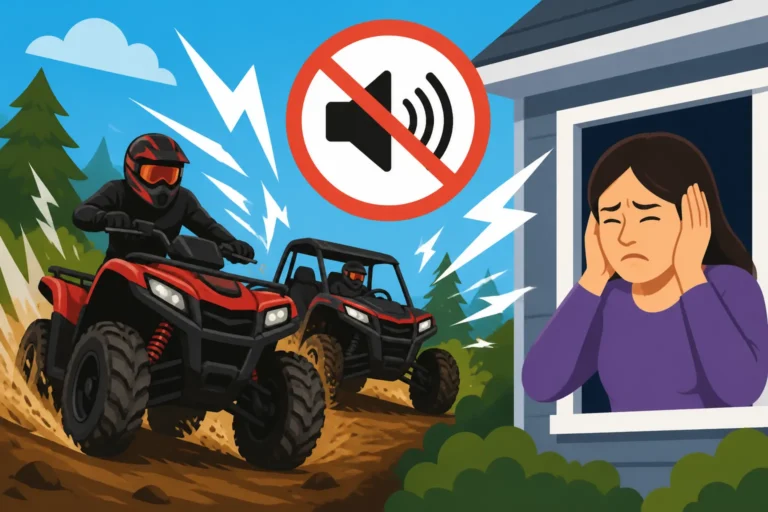
Organize all your evidence in a clear, logical manner. This might include printed photos, screenshots of GPS data, copies of registration and insurance documents, witness statements, and any relevant legal statutes or club rules you've researched. It can be incredibly helpful to create a binder or a folder dedicated to your case, with tabs for different categories of evidence. Write down your narrative of events in a clear, concise way. Practice explaining what happened, focusing on the facts and how they contradict the charge on your ticket. Anticipate questions the prosecutor or judge might ask and prepare your answers. For example, if you were cited for a [Quebec Muffler and Noise Rules] violation, be ready to explain or show that your muffler is stock or meets the legal decibel limits. If you've upgraded parts of your machine with accessories from SuperATV, which are known for their quality, be prepared to explain how those parts meet or exceed regulatory standards, if relevant to your case. If the stakes are high (e.g., a very large fine, potential loss of license, or multiple demerit points), it might be wise to consult with a lawyer specializing in municipal or provincial infractions. While this adds to the cost, a professional can offer invaluable advice, represent you, and navigate the legal intricacies. If you have witnesses, ensure they understand their role and are prepared to testify truthfully. If they can't attend, see if the court allows written affidavits, though live testimony is generally preferred. Remember, you want to present yourself as a responsible, informed individual who is simply seeking fairness.
Common Infractions and Defenses in Quebec ATV/UTV Cases
Understanding the specific nature of your infraction and the common defenses associated with it can significantly strengthen your case. Quebec's Off-Highway Vehicle Act is comprehensive, and many tickets fall into a few key categories.
Speeding and Operating Violations
Tickets for speeding are among the most common. The standard [Quebec ATV Speed Limit on Trails] on federated trails is 50 km/h, and sometimes, in the moment, it's easy to creep over that. Defending against a speeding ticket often involves demonstrating that you were not, in fact, exceeding the limit. Can you provide GPS logs from your phone or a dedicated device that recorded your speed? Some modern machines even log ride data that could be extracted. Was the officer's speed detection method reliable and properly calibrated? Sometimes, it's possible to argue that the terrain itself (e.g., a steep downgrade) momentarily caused an increase in speed that was quickly corrected.
Beyond speed, operating violations include riding outside the allowed [Quebec Riding Hours From 6 a.m. to Midnight] (getting caught on the [Quebec Trails Closed for Hunting Season] after dark, for instance) or riding on prohibited land. For riding outside hours, perhaps you can demonstrate an unavoidable delay, like a mechanical breakdown or assisting another rider. For prohibited land, the defense hinges on proving the land was indeed authorized for ATV use, or that signage was unclear or non-existent, making it impossible for a reasonable person to know it was prohibited. For example, if you're riding a [Quebec Trail Maps and the iQuad App] segment and it suddenly diverts onto private land without clear signage indicating this, you might have a case. Or perhaps you were on a legitimate [Quebec Municipal Road Access Up to 1 Kilometre] stretch that was signed, but the officer believed you were illegally riding a public road. Clarifying the specific by-laws or sections of the Act that apply to the location can be crucial.
Documentation and Equipment-Related Tickets
Many tickets stem from not having the correct documentation or your machine not meeting specific equipment standards. These are often easier to defend if you genuinely had the required items but perhaps they weren't immediately accessible or visible.
For tickets related to not having a trail pass, registration, or proof of insurance, your defense is simple: provide the proof. If you had a valid [Quebec Annual FQCQ Trail Pass] but simply forgot to stick the decal on your fender, bringing the actual pass and receipt to court should clear things up. Similarly, if you were cited for no [Quebec ATV Registration With the SAAQ] but simply forgot your papers at home, presenting your valid registration to the judge should resolve the issue. [Quebec Insurance Proof on the Machine] is another common one. While the law requires you to carry it, if you can produce a valid policy document, it shows you were compliant with the spirit of the law, even if you momentarily couldn't produce the physical card. For equipment deficiencies, like not having proper [Quebec Lighting Requirements at Night], [Quebec Mirror Requirements on a Quad], or a compliant [Quebec Muffler and Noise Rules], you'll need to demonstrate that your machine does meet the standards. Perhaps the officer made an assumption. If you've invested in high-quality aftermarket parts from a reputable brand like SuperATV, such as LED lights that exceed factory brightness, or mirrors designed for optimal visibility, showcasing these additions can support your claim of compliance and responsible ownership. It's about showing that you made a conscious effort to adhere to the rules.
Comparing Common Infractions and Defenses
To help you get a clearer picture of potential scenarios, here's a table outlining common infractions, typical defenses, and the kind of evidence that can support your case.
| Infraction | Common Defense | Supporting Evidence |
|---|---|---|
| Speeding (e.g., over 50 km/h) | Actual speed was within limit; officer's reading was off | GPS logs, witness testimony, calibrated speedometer, machine's ride data |
| No Trail Pass | Pass was purchased and valid, but not displayed | Digital/physical FQCQ pass, receipt, club membership proof |
| No Registration/Insurance Proof | Valid documents exist, but not on person | Physical SAAQ registration, insurance policy, digital copies, proof of recent renewal |
| No Helmet/Improper Helmet | Helmet was worn and met standards | Photos of helmet, certification labels, expert opinion (if necessary) |
| Riding Outside Permitted Hours | Unavoidable circumstances; misinterpretation of time | Repair records, witness statements for breakdown, GPS data showing exact time of incident |
| Riding on Prohibited Land | Signage unclear/absent; emergency detour | Photos of area signage, official trail maps, witness testimony, GPS route tracking |
| Underage Rider/No Training Certificate | Rider met age requirement/had valid certificate | Birth certificate, [Quebec Training Certificate Requirements], parental authorization |
| Equipment Violation (Lights, Mirrors, Muffler) | Equipment was compliant/exceeded standards | Photos of equipment, manufacturer specifications (e.g., SuperATV part specs), repair receipts |
Remember, preparing thoroughly and presenting your case clearly and respectfully is key. It might feel like a hurdle, but with the right approach, you can navigate the process of contesting a trail ticket in Quebec.
Disclaimer
This article is for general informational purposes only and does not constitute professional advice. Laws, prices and regulations vary by location and change over time. Consult a qualified professional for guidance on your specific situation.