Parental Authorization in Writing
Navigating the world of off-road vehicle regulations for young riders in Quebec can feel like trying to untangle a bowl of spaghetti – confusing, frustrating, and with many twists and turns you didn’t expect. For parents, the biggest headache often comes down to understanding exactly when and how their child can legally enjoy their ATV or side-by-side, especially when they're not on your own private property. This guide is here to shed some light on the crucial requirement of parental authorization in writing, helping you understand the rules so your family can ride safely and legally.
Understanding Parental Authorization for Young Riders in Quebec
The world of off-highway vehicles, or VHRs (Véhicules Hors Route), in Quebec has seen some significant shifts over the past few years, particularly concerning young riders. What might have been acceptable a decade ago has changed, and these changes are crucial for parents to understand to ensure their children are safe and compliant with the law. One of the key areas of focus is how and when a minor is permitted to ride, especially when they aren't on land directly owned by their parents.
Why Written Authorization Became Essential
Before recent changes, the rules for young riders on private land, especially land not owned by their immediate family, could feel a bit hazy. This ambiguity sometimes led to misunderstandings, safety concerns, and even legal complications. Quebec’s Off-Highway Vehicle Act, often referred to as the LVHR (Loi sur les Véhicules Hors Route), was updated to bring more clarity and stricter guidelines, particularly after September 10, 2021. This date is significant because it marked a turning point in how off-road riding is regulated, especially for minors. You can dive deeper into [What the LVHR Replaced] to understand the historical context.
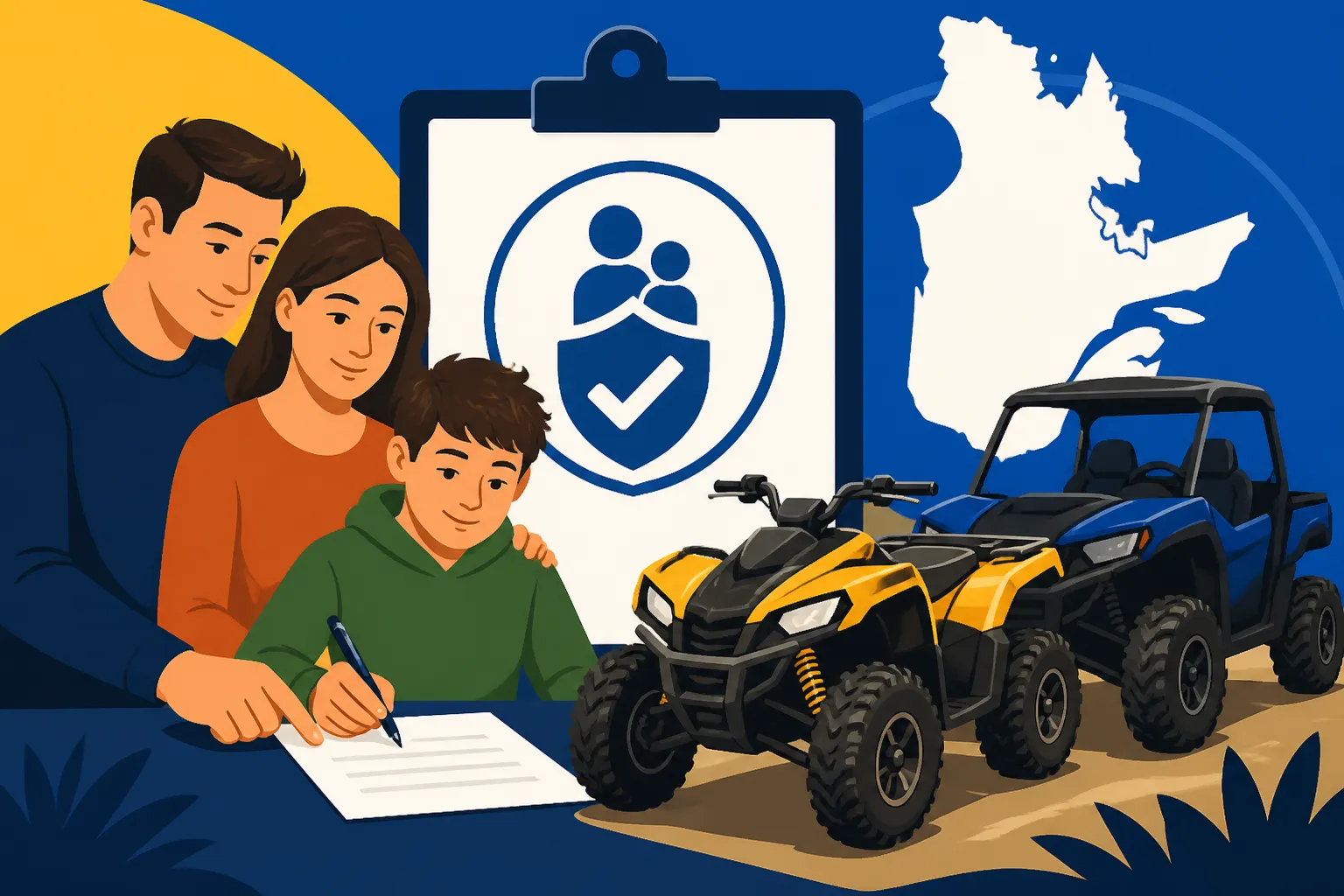
The introduction of mandatory written parental authorization stemmed from a desire to formalize consent and accountability. It's not just about getting permission; it's about ensuring that parents are fully aware of where their child is riding, under whose supervision, and that they explicitly grant consent for such activities. This document acts as a legal safeguard, clearly stating that the parent or guardian is authorizing the activity, thereby minimizing risks and clarifying responsibilities should any incident occur. Without this clear authorization, a young rider might inadvertently put themselves, and their supervising adult, in a precarious legal situation.
The Core Purpose: Private Land and Supervision
At its heart, written parental authorization in Quebec is primarily designed for situations where a rider under 16 is operating an ATV or side-by-side on private land that does not belong to their parents or legal guardians. This is a critical distinction. If your child is riding on your family's own farm or cottage property, this specific written authorization isn't required by the law. However, the moment they step (or ride) onto a friend's acreage, a neighbour's field, or any other private property where you aren't the deeded owner, that authorization becomes legally necessary.
It's also important to remember that this authorization does not grant permission for a minor under 16 to ride on federated trails. The law is very clear: no one under 16 is permitted on designated federated trails, even with parental consent or adult supervision. The goal of this authorization is to ensure that when a child is on non-family private land, they are still under responsible adult supervision. This designated adult, who may or may not be the parent, takes on a direct role in overseeing the young rider. The idea is to create a clear chain of responsibility and ensure safety standards are maintained, even in informal riding environments. Understanding [Adult Supervision Off Family Land] is key here, as it outlines the expectations for those overseeing young riders.
Who Needs Written Authorization and When?
The specifics of who requires this written authorization, and under which exact conditions, can sometimes be a point of confusion for many parents. It's not a blanket rule for all young riders, but rather applies to a very particular demographic and set of circumstances within the Quebec ATV and UTV landscape. Getting this right is crucial to avoid any unexpected run-ins with authorities or complications during a ride.
Riders Under 16 on Non-Family Private Land
The primary group for whom this parental authorization is mandated consists of riders who are under 16 years of age and wish to operate an off-road vehicle on private land that is not owned by their parents or legal guardians. Let's break that down with an example. Imagine your 14-year-old, who has a properly sized youth ATV, wants to spend a weekend at their friend’s cottage in the Laurentians. The friend’s family owns a large piece of land where they ride their machines. In this scenario, for your 14-year-old to legally ride their ATV on that friend’s private property, you, as their parent, must provide a written authorization. Without it, technically, they shouldn't be riding there.
It's vital to differentiate this from riding on your own property. If that same 14-year-old is riding on your family's farm, [Quebec Rules for a 15-Year-Old on Family Land] would apply, which generally permits riding under direct parental supervision without a specific written authorization for that land. However, as soon as they leave your property boundaries and ride on someone else's private land, even with permission from that landowner, the written parental authorization becomes a legal necessity. This distinction helps to ensure that all parties—the parents, the supervising adult, and the landowner—are clear on the terms and responsibilities involved in the young rider's activity. Remember, this authorization does not permit riding on public roads or federated trails, which have their own strict age limits that prohibit anyone under 16.
The Nuances for Different Machine Types
While we often refer to "ATVs," the term "off-road vehicle" in Quebec encompasses a range of machines, including side-by-sides (UTVs). The parental authorization primarily applies to the rider's age, not necessarily the specific type of machine, with some important caveats related to machine size and passenger rules. For instance, while a 14-year-old might be authorized to ride a youth ATV on a friend's property with written parental consent, they cannot drive a side-by-side if they are under 18. [Quebec Side-by-Side Age Rule of 18] is firm on this, regardless of parental authorization. The law prioritizes the appropriate matching of rider to machine and the inherent risks associated with larger, more powerful vehicles.
When considering machines for young riders, parents should always ensure the ATV is age-appropriate and properly sized for their child. Youth models are specifically designed with lower power outputs and smaller dimensions to suit younger, less experienced operators. Even with written authorization, riding an oversized or overpowered machine is a significant safety risk. Parents should also ensure the machine is well-maintained. Equipping a youth ATV with appropriate safety accessories, perhaps even rugged components from a brand like SuperATV that enhance stability or protection, can add an extra layer of confidence, though it's the rider's age and the legal consent that remains paramount. The authorization letter should ideally mention the specific machine being ridden to avoid any ambiguity.
Crafting a Comprehensive Parental Authorization Letter
Once you understand why and when parental authorization is needed, the next step is actually putting it into writing. This isn't just a casual note; it's a formal document that needs to contain specific information to be valid and effective. Think of it as a mini-contract that clearly outlines your consent and the parameters of your child's riding activity. A well-drafted letter can prevent a lot of headaches down the line.
Essential Information to Include
A robust parental authorization letter should leave no room for doubt or misinterpretation. Here's a breakdown of the crucial details you must include:
- Parent/Guardian Information: Your full legal name(s), current address, and primary contact phone number(s).
- Minor Rider Information: The full legal name of your child, their date of birth, and their current address. It's also wise to include their SAAQ client number if they have one (from their VHR registration or driver's license, if applicable for older teens).
- Off-Road Vehicle Details: Specifics about the machine(s) your child will be riding. This includes the make, model, year, and crucially, the Vehicle Identification Number (VIN) for each ATV or side-by-side. You might also include the Quebec VHR plate number if the machine is registered.
- Duration of Authorization: Clearly state the dates for which the authorization is valid. Is it for a specific weekend? A summer vacation? Or a longer, ongoing period? Be precise (e.g., "From May 1st, 202X, to August 31st, 202X").
- Specific Location(s) of Riding: Explicitly name and provide the full address of the private property where your child is authorized to ride. For example, "on the private land owned by [Friend/Family Name] located at 123 Main Street, Rural Town, Quebec."
- Supervising Adult (if different from parent): If another adult will be supervising your child, include their full name and contact information, stating that they have your consent to supervise.
- Emergency Contact & Medical Consent: Provide emergency contact details for yourself and any other relevant parties. Furthermore, it's highly recommended to include a clause granting permission for medical treatment in case of an emergency, allowing the supervising adult to act quickly if you cannot be reached.
- Date and Signature: The document must be dated and signed by the parent(s) or legal guardian(s). While not always legally required, having it notarized by a public notary can add an extra layer of legal weight and authenticity, especially if you anticipate any potential challenges or if the child will be far from home.
Here's a simple table to summarize these key elements:
| Category | Essential Details to Include |
|---|---|
| Parent/Guardian Info | Full Name(s), Address, Phone Number(s) |
| Minor Rider Info | Full Name, Date of Birth, Address, (SAAQ Client Number) |
| Off-Road Vehicle Details | Make, Model, Year, VIN, (Quebec VHR Plate Number) |
| Authorization Period | Specific Start and End Dates (e.g., May 1, 202X – August 31, 202X) |
| Permitted Locations | Full Address(es) of Non-Family Private Land |
| Supervising Adult | Full Name, Contact Info (if different from parent) |
| Emergency & Medical | Emergency Contact(s), Consent for Medical Treatment |
| Formalities | Date, Parent/Guardian Signature(s) (Consider Notarization) |
Beyond the Basics: Important Clauses
While the essential information creates a solid foundation, adding a few extra clauses can strengthen your authorization and further define expectations for both your child and any supervising adults. These additional points often focus on safety, responsibility, and acknowledging the risks inherent in off-road riding.
Consider including statements that:
- Affirm Safety Gear Use: Explicitly state that the child is authorized to ride only while wearing all required safety equipment, including an approved helmet and appropriate eye protection. Emphasizing adherence to [Quebec Helmet and Visor Rules] reinforces your commitment to their safety.
- Stipulate Rule Following: Insist that your child will adhere to all safety rules established by the supervising adult and the landowner, as well as general safe riding practices. This could include respecting speed limits appropriate for the terrain, avoiding reckless behaviour, and not carrying unauthorized passengers if the machine is a single-rider ATV. Passengers on an ATV in Quebec are subject to specific rules outlined in [Quebec Passenger Rules on an ATV].
- Acknowledge Rider Competence: While not a substitute for formal training (like [Quebec FQCQ Training Certificates for Teens] which are often for older youth), you might include a statement that you believe your child has received adequate instruction in the safe operation of the specified off-road vehicle.
- Machine Condition: Mention that the authorized riding is conditional on the machine being in safe operating condition. Encouraging the use of quality parts and accessories, perhaps even from a reputable brand like SuperATV, for maintenance or upgrades, can contribute to overall machine reliability and safety, giving you peace of mind.
- Revocation Clause: A simple statement that this authorization can be revoked at any time by the parent or guardian, ensuring you maintain ultimate control.
By including these additional points, you create a more comprehensive document that not only grants permission but also sets clear expectations for responsible and safe riding. It demonstrates that you've considered the various aspects of off-road activity beyond just the act of riding itself. These detailed documents can be critical "papers" to have, alongside your [Quebec's Off-Highway Vehicle Act and Your Papers].
Common Questions and Practical Tips for Parents
Even with a well-crafted authorization letter, parents often have lingering questions about the practicalities and implications of this requirement. Understanding the potential pitfalls and adopting best practices can make a big difference in ensuring a smooth and safe experience for your young rider. After all, the goal is for them to enjoy their time on the trails and private lands, not to encounter unnecessary legal hurdles.
What Happens Without Proper Authorization?
Ignoring the requirement for written parental authorization for your under-16 rider on non-family private land can lead to several unpleasant consequences, none of which you want to deal with. First and foremost, if your child is stopped by a local peace officer or a federated trail patrol (even if they are only crossing an authorized municipal road to get to another private property), and they don't have the necessary document, it could result in fines. These fines are designed to ensure compliance with the specific age and supervision rules set forth in the LVHR. These are not minor infractions, and they add up quickly.
Beyond monetary penalties, there's the issue of liability. In the event of an accident or incident on non-family private land, the absence of written authorization could complicate insurance claims and legal proceedings. It could imply a lack of parental oversight or consent, potentially increasing the legal exposure of both the supervising adult and the landowner. It sends a signal that proper procedures weren't followed. This is why having your ducks in a row with documentation, including understanding [Quebec Parental Authorization Forms], is so vital. It's not just about avoiding a ticket; it's about protecting everyone involved from unforeseen legal and financial repercussions.
Ensuring Compliance and Safety
As parents, our number one priority is the safety and well-being of our children. Simply providing a written authorization isn't the end of your responsibility; it's an ongoing commitment to ensuring compliance and fostering safe riding habits. First, make sure your child always carries a copy of the written authorization with them when they ride on non-family private land. A physical copy is best, but a clear, legible digital copy on a smartphone might also be accepted by some authorities, though a physical paper often provides less room for debate.
Regularly review the authorization with your child, reminding them of the rules, the areas they are allowed to ride, and the importance of respecting the land and any supervising adults. Open communication is key. Furthermore, make sure any supervising adult is fully aware of the authorization's terms and their responsibilities. This includes ensuring the child uses the appropriate safety gear and operates a well-maintained machine. Consider inspecting the ATV or side-by-side regularly for wear and tear, and ensure any aftermarket parts, perhaps from a brand like SuperATV, are installed correctly and contribute to the machine's safety and performance. Emphasize that the authorization is a privilege, not a right, and that responsible riding is expected at all times. By staying engaged and proactive, you can ensure that your child enjoys their off-road adventures safely and legally within Quebec. These simple steps, especially after [Quebec Rules That Changed in 2021], go a long way.
Disclaimer
This article is for general informational purposes only and does not constitute professional advice. Laws, prices and regulations vary by location and change over time. Consult a qualified professional for guidance on your specific situation.