Who the Patrol Officers on a Federated Trail Are
There’s nothing quite like the feeling of hitting a beautiful Quebec trail on your ATV or side-by-side. The fresh air, the stunning scenery, the camaraderie with your fellow riders – it’s pure freedom. But let’s be honest, that freedom can sometimes come with a little knot of anxiety, especially when you spot an official-looking vehicle or someone waving you down. Many riders wonder, "Who exactly are these folks patrolling the trails, and what can they do?" This guide aims to clear up that confusion, giving you a comprehensive understanding of the various patrol officers you might encounter on Quebec's federated trail network.
Understanding the Different Types of Patrols on Quebec Trails
When you’re out enjoying Quebec’s vast network of ATV trails, you might encounter a few different types of individuals or groups tasked with maintaining order and ensuring safety. It's easy to lump them all together, but each has a distinct role, level of authority, and focus. Knowing who's who can make a big difference in how you interact with them and understand their requests.
The Backbone: Club Trail Patrollers (Federation Volunteers)
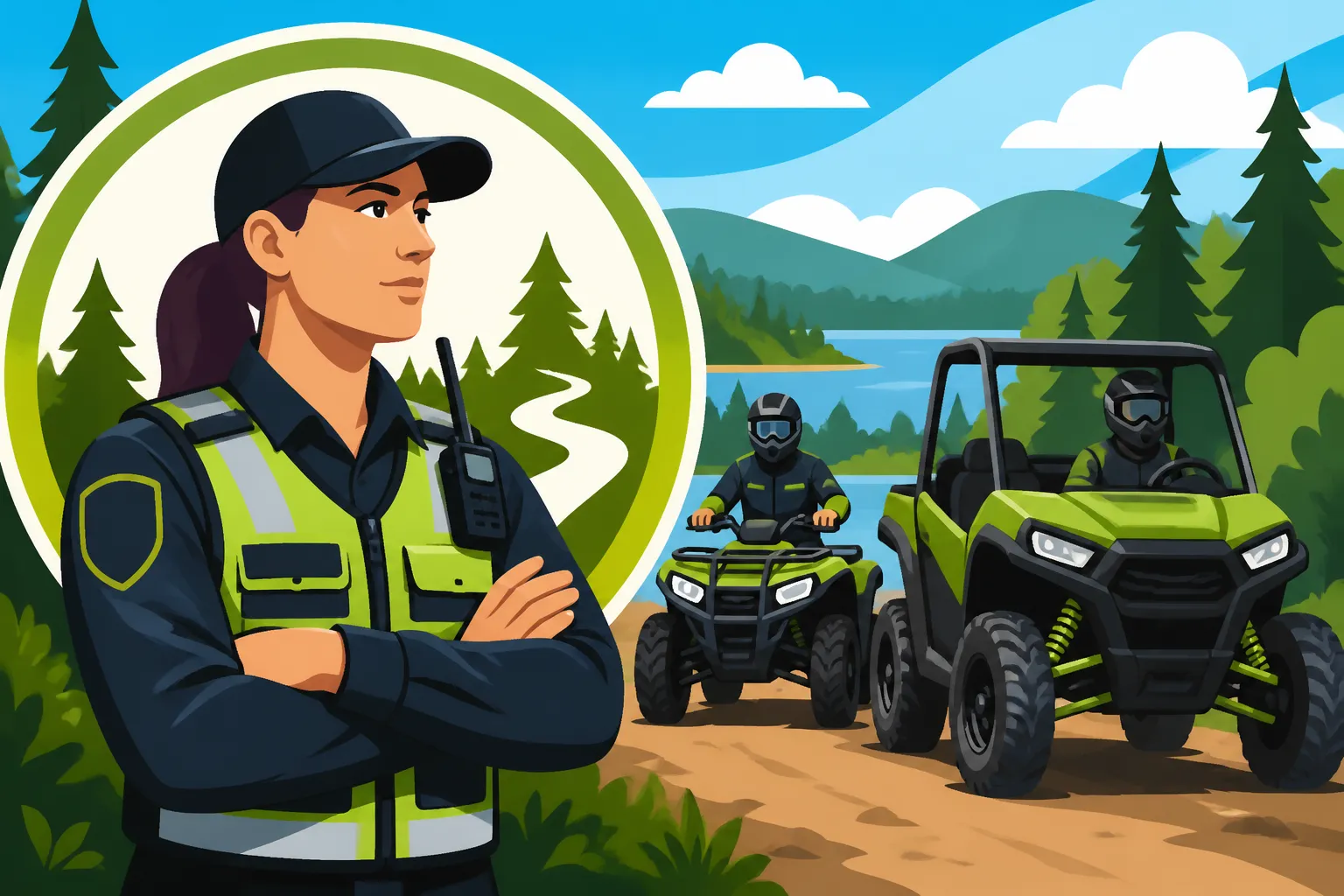
These are arguably the most common and often the most visible faces you’ll see on the trails. Quebec’s immense network of over 25,000 kilometres of federated trails doesn't just maintain itself; it’s largely thanks to the dedication of volunteers from the various local ATV clubs. These individuals are part of the Fédération Québécoise des Clubs Quads (FQCQ) system, and they truly are the backbone of organized off-road riding in the province. They’re often fellow riders, passionate about the sport, and committed to keeping the trails safe and enjoyable for everyone. Their primary role isn't necessarily law enforcement, but rather ensuring that riders are compliant with FQCQ rules and regulations, which in turn helps keep landowner access secure. They understand the trails like the back of their hand and are often the first point of contact for issues like fallen trees, lost riders, or minor mechanical breakdowns. They often serve as ambassadors for the sport, promoting safe riding practices and ensuring that everyone has their proper [Quebec Trail Pass Proof on the Trail].
Law Enforcement: Sûreté du Québec and Municipal Police
While club patrollers are essential, real law enforcement officers also make appearances on Quebec’s trails. This primarily includes the Sûreté du Québec (SQ), which is the provincial police force, and occasionally municipal police forces in areas within their jurisdiction. Unlike volunteer patrollers, these officers are fully empowered law enforcement agents. They are there to enforce the actual laws of Quebec, particularly the Off-Highway Vehicle Act (Loi sur les véhicules hors route, or LVHR), and any other relevant provincial statutes. This means they have the authority to issue tickets for violations, conduct investigations, and even make arrests if necessary. Their presence on trails is typically proactive, ensuring that riders are not only following FQCQ rules but also adhering to crucial legal requirements like having a valid driver's license, proper registration through the SAAQ, and ensuring machines meet safety standards. They are also on the lookout for impaired driving or any other criminal activity. It’s a common misconception that police don’t venture onto ATV trails, but they absolutely do, and their presence is critical for serious infractions.
Wildlife Protection and Other Government Agents
Beyond club volunteers and police, you might also cross paths with other government agents, though perhaps less frequently on main federated trails. This group can include wildlife conservation officers (often referred to as game wardens), park wardens in provincial parks or protected areas, or even forest rangers. Their focus is generally on environmental protection, wildlife management, and ensuring compliance with regulations related to hunting, fishing, and protected natural spaces. For example, if you're riding through a wildlife reserve or on Crown land, a conservation officer might check to ensure you're not disturbing wildlife, adhering to specific access rules for those areas, or that your machine isn't causing undue environmental impact. While their primary mandate isn't ATV law enforcement directly, they do have powers to enforce aspects of the Off-Highway Vehicle Act that pertain to their environmental responsibilities. They are typically concerned with where you are riding, whether it's an authorized area, and that you are respecting the natural environment.
What Authority Do These Patrols Actually Have?
Understanding who's who is one thing, but knowing the extent of their powers when they stop you is another entirely. This is where a lot of rider confusion, and sometimes frustration, can arise. It’s important to remember that while all patrols aim to ensure safety and compliance, their legal authority can differ significantly.
The Powers of a Federated Club Patroller
When a club patroller flags you down on a [Quebec ATV Trails: The FQCQ Network], they are primarily acting as representatives of the FQCQ and the local club. Their authority stems from the rules of the federation and the agreements made with landowners. This means they can:
- Request to see your FQCQ trail pass: This is their most common check, as the pass is crucial for funding trail maintenance and confirming you have permission to be on the federated network.
- Request to see your SAAQ registration certificate: While they cannot issue a ticket for non-registration, they can report it to law enforcement. They enforce the FQCQ rule that states you must have valid registration.
- Request to see your driver's license: Again, they can't ticket you for not having one, but they can report it and can deny you continued access to the trail if you don't comply with FQCQ rules.
- Inform you of trail rules and safety guidelines: This includes speed limits, staying on marked trails, and respecting property boundaries. They might point out areas where [Quebec's 100 Metre Rule Near Homes] applies.
- Deny you access to the trail network: If you don't have a valid trail pass, appear to be breaking FQCQ rules, or are operating your machine in an unsafe manner, they can instruct you to leave the federated trails.
- Report serious infractions to law enforcement: If they observe a serious violation, such as impaired riding, dangerous operation, or riding without a license/registration, they can contact the Sûreté du Québec.
What they cannot do is issue official government tickets or make arrests. They are not police officers, even if they wear uniforms or drive official-looking ATVs. However, ignoring their requests can lead to law enforcement involvement, which is a situation you definitely want to avoid. Remember, these volunteers are working to keep the trails open and safe for everyone, including you. It's always best to be cooperative and respectful. You can read more about [What a Club Trail Patroller Can Make You Do].
The Full Scope of Police Authority on Trails
The Sûreté du Québec and municipal police officers have the full authority of the law. When they stop you on an ATV trail, they can:
- Demand to see your driver's license: [Quebec Requires a Driver's Licence Since 2021] for all off-highway vehicle operators on federated trails.
- Demand to see your SAAQ registration certificate: Your machine must be registered with the SAAQ.
- Demand to see proof of liability insurance: Quebec mandates a minimum liability coverage for all off-highway vehicles.
- Demand to see your FQCQ trail pass: Riding on federated trails without a pass is a finable offense under the Off-Highway Vehicle Act.
- Inspect your machine for safety compliance: This includes checking for proper lighting, mirrors, exhaust, and overall safe operating condition. They'll look at things like your tires, such as those you might find from a brand like SuperATV, to ensure they're appropriate and in good condition.
- Administer roadside sobriety tests: If they suspect impaired driving, they have the authority to conduct tests and make arrests.
- Issue fines (tickets) for any violations of the Off-Highway Vehicle Act: This could range from speeding (Quebec has a [Quebec's 50 km/h Speed Limit for ATVs] on trails) to riding without a helmet, no registration, or no license.
- Impound your vehicle: In serious cases, such as repeat offenses or dangerous driving, they can seize your ATV.
- Make arrests: For criminal offenses or severe violations.
Their authority is extensive and directly tied to provincial laws. It’s paramount to comply with their requests promptly and respectfully. Any defiance can escalate the situation quickly. You are legally obliged to provide the requested documents and cooperate with their safety checks.
The Role of Conservation Officers and Park Wardens
Conservation officers and park wardens operate under specific legislation related to environmental protection, wildlife, and natural resource management. While their primary focus isn't general ATV enforcement, they do have significant powers within their jurisdiction:
- Enforce specific park or protected area regulations: If you're riding in a provincial park or reserve, they can enforce rules about where ATVs are allowed, noise restrictions, and environmental impact.
- Check for hunting/fishing licenses and compliance: If you are using your ATV to access hunting or fishing grounds, they will ensure you have the correct permits and are following regulations.
- Address environmental damage: They can fine riders for leaving trails, polluting, or damaging natural habitats.
- Report Off-Highway Vehicle Act violations to police: If they encounter a rider breaking the LVHR, they can report it to the Sûreté du Québec or other relevant law enforcement.
Their authority, like that of the police, is backed by law, although their scope is more specialized. Respecting their directives is crucial, especially when riding in sensitive environmental areas.
What Do Patrols Look For When They Stop You?
When any patrol officer, whether volunteer or law enforcement, stops you on the trail, they have a checklist in mind. Knowing what they're looking for can help you be prepared and ensure a smooth interaction. It’s not about catching you out, but ensuring everyone is safe and compliant with the rules that keep our trails accessible.
Essential Documents and Proof of Compliance
This is usually the first and most critical check. Patrols want to ensure you have the legal right to be operating your machine on the trails and that your machine is properly documented.
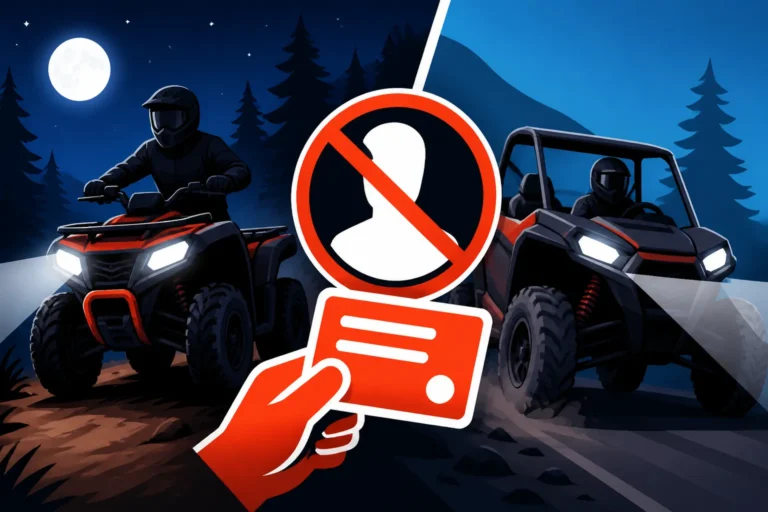
- Driver's Licence: For any rider aged 16 or older on a federated trail, a valid driver's license (any class that allows you to drive a car, for example) is mandatory. For those 16 or 17, an additional [Quebec Training Certificate Requirements] is also required. Police will ask for this first.
- SAAQ Registration Certificate: This document proves your ATV or side-by-side is properly registered with the Société de l'assurance automobile du Québec (SAAQ). It's your machine's identification paper. [Quebec ATV Registration With the SAAQ] is fundamental to legal riding.
- Proof of Liability Insurance: The SAAQ provides mandatory liability insurance with your registration, but some riders carry additional private insurance. Either way, you need to show proof of the minimum required coverage. [The $1 Million Liability Floor Every Owner Carries] is the current standard.
- FQCQ Trail Pass: If you're on a federated trail, you absolutely need a valid [Quebec's Annual FQCQ Trail Pass]. This sticker must be affixed to your machine in a visible spot. Without it, you’re essentially trespassing on the club-maintained network.
- Ownership Documents (less common but possible): In some situations, especially if there's suspicion of theft or a newly acquired machine, an officer might ask for proof of ownership like a bill of sale. [Quebec Registration and Proof of Ownership] is key if this arises.
It’s always a good idea to have physical copies of these documents with you, preferably in a waterproof pouch. While some patrols may accept a clear photo on your phone, it’s not guaranteed. [Does a Phone Photo Count as Proof on Trail?] is a question often asked, but a physical copy is always best.
Machine Condition and Safety Equipment
Beyond paperwork, patrols will visually inspect your ATV or side-by-side to ensure it meets safety standards and isn't illegally modified. This is especially true for law enforcement officers during [Quebec Equipment Checks by Patrols].
- Helmet and Visor/Goggles: Quebec has strict [Quebec Helmet and Visor Rules]. Riders and passengers must wear an approved helmet that meets safety standards. If the helmet doesn't have an integrated visor, separate goggles are required to protect your eyes.
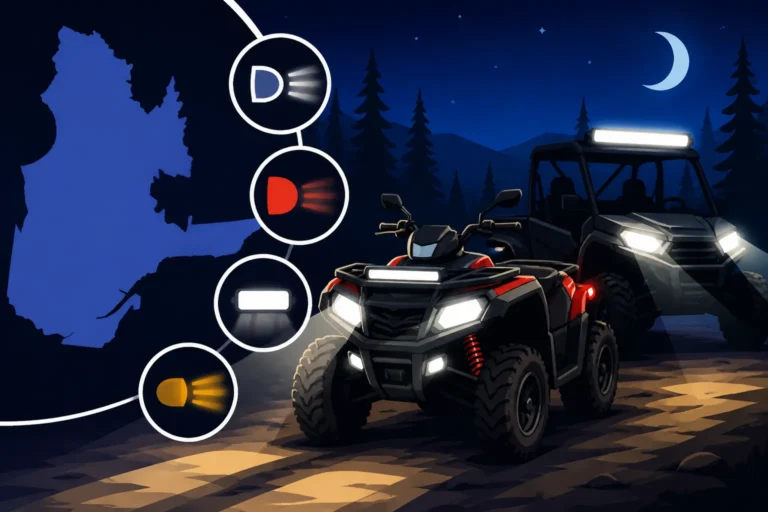
- Headlights, Taillights, Brake Lights: All must be functional. Riding at night or in low visibility conditions requires adequate lighting. [Quebec Lighting Requirements at Night] are specific.
- Muffler/Exhaust System: Excessive noise is a common complaint. Patrols will check if your exhaust system is factory standard or if aftermarket modifications, like those some riders get from SuperATV, still comply with noise regulations. Aftermarket parts should always be chosen with an eye toward compliance.
- Mirrors: A working rear-view mirror is often required, particularly on side-by-sides. [Quebec Mirror Requirements on a Quad] specify this.
- Passenger Capacity: Is your machine designed to carry a passenger, and are you exceeding its factory-designated capacity? [Quebec Passenger Rules on an ATV] are strictly enforced.
- General Condition: They’ll look for obvious mechanical issues, unsecured cargo, or other unsafe modifications.
These checks are for your safety and the safety of others on the trail. A machine in poor condition is a hazard.
Rider Conduct and Adherence to Regulations
Finally, patrols are also observing how you are riding and your general behaviour.
- Speed: Are you adhering to the posted speed limits on trails (typically [Quebec's 50 km/h Speed Limit for ATVs]) and riding appropriately for conditions?
- Staying on Marked Trails: Leaving designated trails can damage the environment and violate landowner agreements.
- Impaired Riding: Officers are always vigilant for signs of alcohol or drug impairment, which carries severe penalties. [Quebec Impaired Riding Penalties] are no joke.
- Age Requirements: Ensuring that all riders, especially youth, meet the [Quebec ATV Age Requirements] for the type of machine they are operating and the trails they are on.
- Respect for Others: Are you riding respectfully, not causing unnecessary disturbance to other riders, cottages, or wildlife?
How to Interact Respectfully and Effectively with Patrols
Encountering a patrol on the trail doesn't have to be a stressful experience. In fact, if you're prepared and cooperative, it can be a brief and even positive interaction. The key is to understand your role and approach the situation with respect.
Remaining Calm and Cooperative
First and foremost, when you see a patrol signal for you to stop, do so safely and promptly. Pull over to the side of the trail, turn off your engine, and keep your hands visible. This immediately shows respect and cooperation. Many riders feel a surge of anxiety or even defensiveness, but remember, these individuals are doing a job aimed at public safety and trail preservation. Being aggressive, argumentative, or attempting to flee will only escalate the situation and can lead to more serious consequences.
If it's a club patroller, they are often volunteers who just want to ensure everyone is having a good time safely and legally. Treat them with the same courtesy you'd expect on the trail. If it's a police officer, their authority is absolute, and respectful compliance is your best strategy. They are trained to assess situations, and a calm, cooperative rider is far less likely to draw extended scrutiny. [Being Stopped on a Trail] is common, and how you react matters.
Presenting Your Documentation Promptly
As soon as you are stopped, have your essential documents ready. This includes your driver's license, SAAQ registration, proof of insurance, and FQCQ trail pass. Having them organized, perhaps in a small waterproof bag, will make the process much faster. When asked, hand them over without argument or delay.
Table: Who Checks What and Their Authority
| Patrol Type | Primary Documents Checked | Key Areas of Focus | Authority Level |
|---|---|---|---|
| Club Trail Patroller | Trail Pass, SAAQ Reg, Driver's License | FQCQ rules, landowner access, trail safety, rider conduct | Report violations, deny trail access, advise riders |
| Sûreté du Québec/Municipal Police | Driver's License, SAAQ Reg, Insurance, Trail Pass | LVHR compliance, machine safety, impaired driving, criminal activity | Issue fines, seize vehicles, make arrests |
| Conservation Officer/Park Warden | Permits (hunting/fishing), IDs | Environmental protection, wildlife, park rules | Issue fines, enforce specific natural resource laws |
Being prepared helps you appear responsible and makes the interaction efficient. Avoid fumbling around or making the patrol wait unnecessarily. If you happen to be riding a modified machine, perhaps with a heavy-duty bumper or upgraded suspension from SuperATV, ensure all your customizations are still compliant with local regulations.
Understanding Your Rights and Responsibilities
While cooperation is key, it's also important to understand what a patrol can and cannot do. Police officers have broad powers, including searching your vehicle if they have reasonable grounds. Club patrollers, however, do not have the power to search you or your machine beyond asking to see visible documents and ensuring your pass is affixed. If you feel a request from a club patroller is outside their authority, you can politely ask for clarification, but always comply with police. If you're unsure about your rights in a specific situation, especially with law enforcement, you can state, "I would like to cooperate, but I don't consent to a search" or "I would like to speak with a lawyer," though this may prolong the stop. Remember that [What Happens If You Refuse] to comply with a police officer's lawful order can lead to immediate charges. It's always best to be polite, answer truthfully, and provide the required information. Your main responsibility is to operate your machine safely and legally, and to have all necessary documents at hand.
Ultimately, patrols on Quebec’s ATV trails, whether they are dedicated volunteers or law enforcement professionals, are there for a reason: to keep you safe, protect the environment, and ensure the continued viability of this incredible sport. A little preparation and a lot of respect go a long way in making every interaction a smooth one.
Disclaimer
This article is for general informational purposes only and does not constitute professional advice. Laws, prices and regulations vary by location and change over time. Consult a qualified professional for guidance on your specific situation.