1 Kilometre With Signage
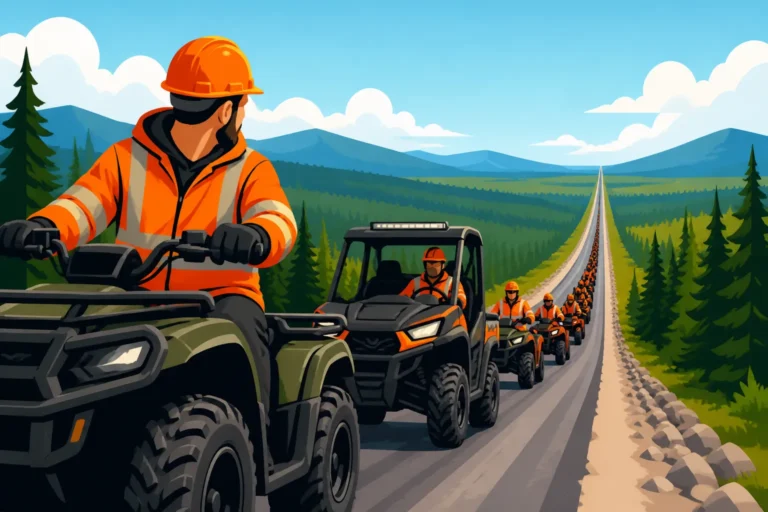
You’re out on your quad, enjoying the beautiful Quebec trails, when suddenly you realize you need to cross a short stretch of municipal road to get to the next section, or maybe just to grab some gas. It feels like such a minor thing, but the rules around riding ATVs and side-by-sides on public roads in Quebec can be confusing and, let's be honest, a little anxiety-inducing. The thought of getting a hefty fine just for being in the wrong place for a few hundred feet is enough to make anyone second-guess their route. This guide is here to clear up exactly when and how you can legally use an ATV or side-by-side on a road for that crucial kilometre, especially focusing on the vital role of signage in making these short connections possible.
The Restricted Reality: Off-Road Vehicles on Quebec Roads
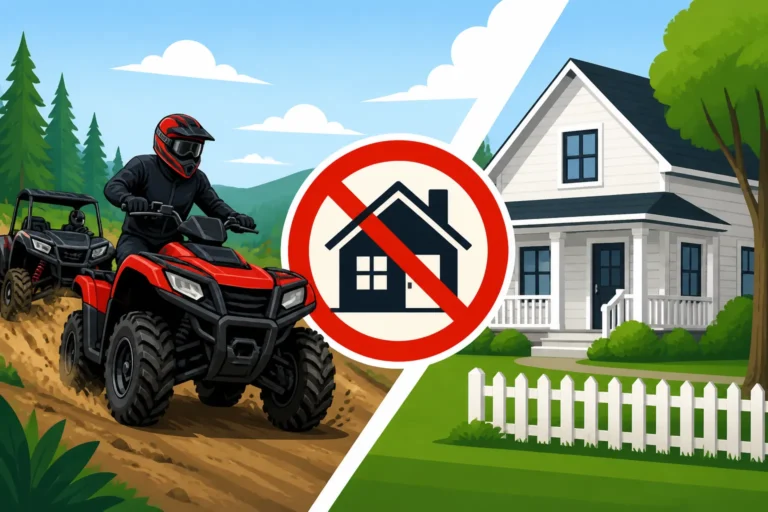
For many riders, the dream is to simply connect from their cottage to the nearest gas station, or bridge a gap between two amazing trail sections without trailering their machine. However, the fundamental rule in Quebec is that off-highway vehicles, including quads (VTTs) and side-by-sides (VHRs), are primarily intended for off-road use. The default is not to ride them on public roads. This can be frustrating, especially when a mere few hundred feet could save you a significant detour.
The provincial government recognized this practical need, but they put very specific parameters in place to ensure safety and maintain the off-road nature of these machines. It's not a free-for-all, and understanding these limitations is key to enjoying your ride without running afoul of the law. You can't just hop on any road you please, even for a short distance. There are strict conditions, and the absence of specific signage is often the clearest indicator that you shouldn't be there. The rules are designed to prevent casual road use while allowing for essential connections to the vast [Quebec ATV Trails: The FQCQ Network].
The 1-Kilometre Municipal Road Access Rule
The Quebec Off-Highway Vehicle Act (LVHR) provides a narrow window for off-road machines to use public roads, specifically granting municipalities the power to authorize segments. This crucial provision allows you to ride your ATV or side-by-side on a public road for a maximum distance of one kilometre. This isn't just any road; it must be a municipal road, and it must be explicitly authorized by that municipality. It's a very targeted permission, aimed at helping riders bridge gaps between trails or access services like gas stations, restaurants, or lodging that are just off the trail network.
This one-kilometre limit is not arbitrary; it’s a carefully considered distance to allow for practical connectivity without encouraging extensive road use. Think of it as a necessary evil to keep the trail network functional. If you need to cover more than a kilometre on a public road, you’re almost certainly breaking the law unless there’s a highly specific and rare municipal by-law that permits otherwise, which would still require proper signage. It’s also important to remember that this rule applies to municipal roads, not provincial highways or major arteries. Attempting to ride your quad on those is a definite no-go and can lead to serious fines. For a deeper dive into the overall regulations, check out [Quebec ATV Road Rules Under the LVHR].
When the 1-Kilometre Rule Applies
So, when can you actually use this one-kilometre allowance? The primary intent is for connecting sections of the federated trail network, or to access an essential service that is located very close to a trail. Imagine you're riding a beautiful section of trail, and suddenly you hit a river. The only way to continue on the designated trail is to cross a bridge that’s part of a municipal road. This is precisely the kind of scenario the rule is designed for.
Another common situation is when a gas station or a small town's general store is located just off the trail. Instead of having to trailer your machine, you can legally ride that short distance on the municipal road to refuel or grab a bite. This significantly enhances the convenience and accessibility of the trail system, making multi-day rides much more feasible. However, this isn't an excuse for joyriding on roads. The spirit of the law is about practicality and connectivity for legitimate trail users, not casual cruising. You might find that some aftermarket parts from a company like SuperATV, designed for durability and performance, are a great investment for machines that regularly navigate these varied terrains, providing peace of mind whether on trail or making a quick road connection.
Mandatory Signage: Your Official Green Light
The most critical aspect of the one-kilometre road access rule, and frankly, the part that often trips up riders, is the absolute requirement for proper signage. Without the specific signs indicating authorized access, that one-kilometre stretch of road is completely off-limits to your ATV or side-by-side. You cannot make your own judgment call based on local knowledge or common sense; the signs must be there. This isn't a suggestion, it's a non-negotiable legal requirement.
The signage acts as the official permission from the municipality, making it clear to both riders and law enforcement where off-highway vehicles are allowed. It removes ambiguity and ensures that everyone is on the same page. Without it, you're not just risking a ticket; you're operating illegally. It's a key reason why [Quebec Municipal Road Access Up to 1 Kilometre] is so dependent on local municipal decisions and proper posting.
Recognizing Authorized Road Signage
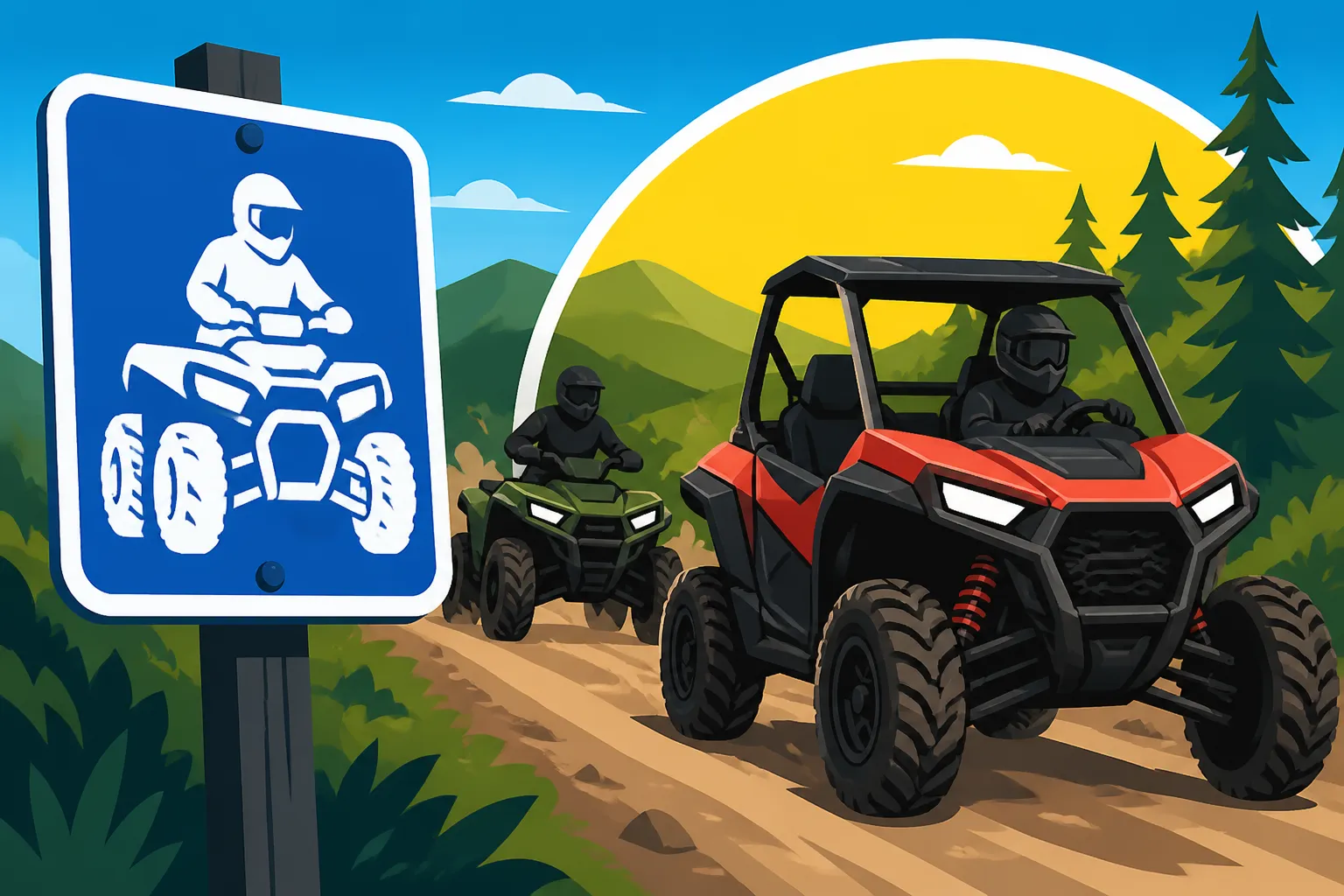
So, what exactly does this crucial signage look like? You're typically looking for specific blue signs with white pictograms, often depicting an ATV or a side-by-side. These signs will clearly indicate the beginning and end of the authorized road segment, and sometimes even specify the permitted direction of travel. They are designed to be easily recognizable and to stand out, leaving no doubt about the road's status.
Think of it like a trail marker, but for a piece of public road. These signs are often placed at intersections or at the exact points where a trail connects to a road, or where a service road begins. If you don't see these explicit signs, assume the road is prohibited. Even if you've ridden a particular stretch before, always keep an eye out for current signage. Municipalities can change their by-laws, and consequently, the signage, without much fanfare. Relying on outdated knowledge can lead to trouble. [Quebec Signage for an Authorized Road Stretch] provides more insight into what to look for.
What Happens Without Proper Signage?
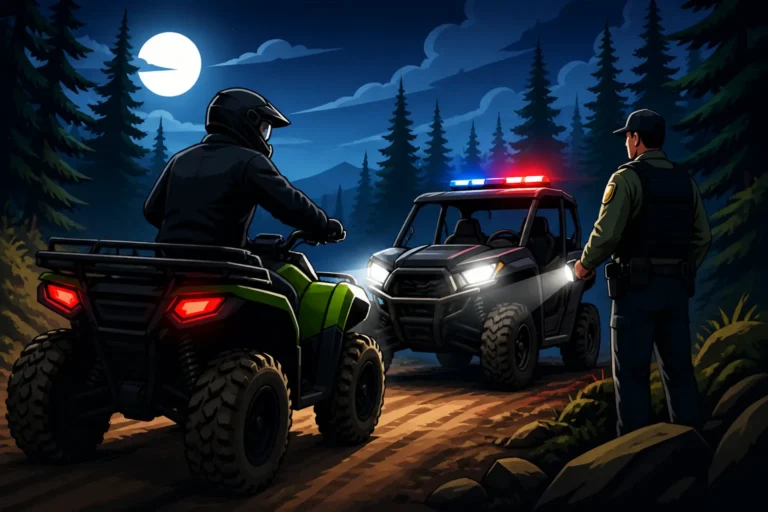
Riding on a public road without the explicit authorization indicated by proper signage is considered an illegal act. This isn't just a minor infraction; it can result in significant fines and penalties. Law enforcement, whether provincial police (Sûreté du Québec) or local municipal officers, are well aware of these rules and regularly patrol areas where ATVs might illegally access roads.
Imagine being pulled over just a few hundred metres from your destination, thinking you were doing nothing wrong, only to be hit with a substantial ticket because there was no sign authorizing that particular stretch. It's a frustrating scenario that can easily be avoided by being vigilant about signage. The absence of a sign means the road is closed to your machine. Period. This is why many riders will invest in sturdy accessories, even things like strong mirrors from SuperATV, not just for safety on trails but to ensure maximum visibility and compliance when making these short, legal road transitions.
Beyond the Kilometre: Exceptions and Municipal Authority
While the one-kilometre rule with signage is the standard, it's worth understanding that municipalities hold significant power in determining off-road vehicle access within their territories. This means that while one town might strictly adhere to the one-kilometre rule, another might have a specific by-law that allows for slightly different conditions or longer stretches, albeit always with proper authorization and signage. However, these longer authorizations are rare and typically for very specific, often remote, areas.
It's crucial not to generalize rules from one municipality to another. What's legal in Saint-Michel might be strictly forbidden in Sainte-Sophie. Always check local regulations if you plan to stray from the federated trail network. The Quebec Off-Highway Vehicle Act sets the provincial framework, but local governments have the power to further restrict or, in specific cases, expand access under strict conditions. This is part of [Quebec Municipal By-Laws on Riding Hours] and other local regulations that can impact your ride.
Workers and Specific Exemptions
There are some very specific exemptions to the general road rules, primarily for individuals using their ATVs or side-by-sides for work purposes. For instance, farmers might be allowed to use certain road segments to access fields, or forestry workers to reach remote work sites. These exemptions are not for recreational use and typically come with their own set of strict conditions and requirements, often involving specific permits or authorizations.
A worker operating an off-highway vehicle on a public road for a work-related task may be exempt from the kilometre limit and signage requirements if their work directly necessitates it. This applies to situations like hydro line maintenance, telecommunication workers, or even snow removal contractors using ATVs with plows. However, these are professional exemptions, not recreational ones. If you're riding for fun, these exceptions do not apply to you. You can learn more about specific exemptions for workers in [Quebec Workers Riding a Kilometre of Road].
The Role of By-Laws and Notification
For a municipality to authorize a road segment for ATV use, they must pass a specific by-law. This isn't a casual decision; it's a formal process that involves public notice and local council approval. Once a by-law is passed, the municipality is then responsible for installing and maintaining the required signage. Furthermore, the LVHR requires municipalities to notify the Ministry of Transports of any authorized road segments. This ensures a centralized record and helps maintain consistency across the province. This 15-day notification is critical for the legal framework.
So, when you see those official signs, know that they represent a formal decision-making process at the municipal level, backed by provincial legislation. They're not just random postings. This diligence helps ensure that when you're riding, you're doing so on roads that have been formally assessed for ATV access, minimizing risks for everyone. It also means that should a by-law be rescinded, the signs must be removed, changing the legal status of that road segment.
Here’s a quick overview of road access requirements:
| Feature | Authorized Municipal Road Segment (1km max) | Non-Authorized Road (Default) | Major Highway/Provincial Road | Work-Related Exemption |
|---|---|---|---|---|
| Signage Required? | YES (Mandatory) | NO (Prohibited) | NO (Prohibited) | Often has specific permits or exemptions, but general signage not required for their use. |
| Maximum Distance | 1 kilometre | 0 kilometre | 0 kilometre | Varies by work need, not limited to 1km |
| Purpose | Trail connection, access to services | Illegal for recreational use | Illegal for recreational use | Essential for employment/task |
| Driver's License | Mandatory | Mandatory (if caught) | Mandatory (if caught) | Mandatory |
| Helmet | Mandatory | Mandatory (if caught) | Mandatory (if caught) | Mandatory |
| Insurance | Mandatory | Mandatory (if caught) | Mandatory (if caught) | Mandatory |
| Fines for Non-Comp. | Yes, if conditions not met | Significant Fines | Significant Fines & Penalties | Fines if specific work rules not followed |
Navigating the Rules: Staying Legal and Safe
Understanding the one-kilometre rule and the absolute necessity of signage is paramount for any ATV or side-by-side rider in Quebec. It's not just about avoiding fines; it's about ensuring your safety and the safety of other road users. When you're on a public road, even for a short stretch, you're sharing the space with cars, trucks, and pedestrians, and different rules of the road apply.
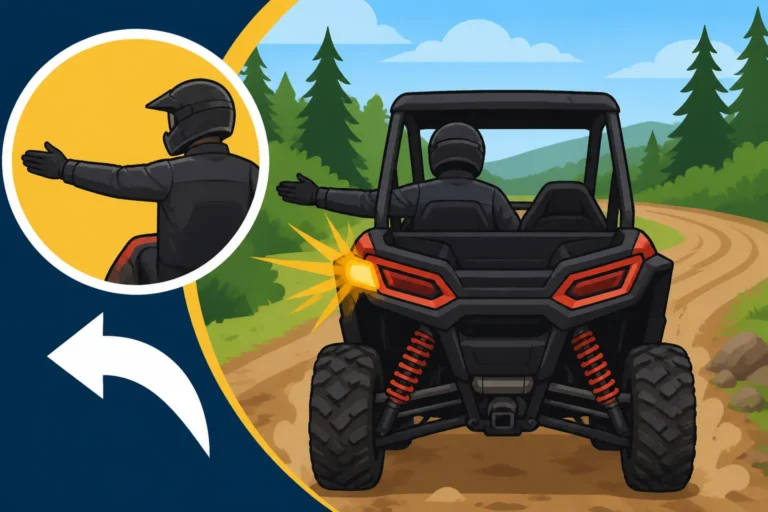
Always be vigilant about the signs, ride defensively, and ensure your machine is properly equipped with functional lights, mirrors, and, if applicable, turn signals. Aftermarket lighting solutions, perhaps from a reputable brand like SuperATV, can greatly enhance your visibility to other motorists, a critical consideration for road sections. Remember that even on an authorized road segment, you are bound by speed limits, helmet requirements, and holding a valid [Quebec Requires a Driver's Licence Since 2021]. Ignoring these can quickly turn a legal transit into a costly infraction.
Consequences of Non-Compliance
The penalties for riding an off-highway vehicle on an unauthorized public road in Quebec can be substantial. Fines can range from hundreds to thousands of dollars, depending on the nature of the infraction and whether it's a repeat offense. These aren't just minor tickets; they can put a serious dent in your wallet and your riding budget. Beyond the financial cost, there's also the risk of having your machine impounded in certain serious situations, or losing demerit points on your driver's license.
It’s crucial to remember that the SAAQ (Société de l'assurance automobile du Québec), which registers and insures your quad, takes these rules seriously. Riding illegally on a road could also impact your insurance coverage in the event of an accident, leaving you financially vulnerable. Therefore, always err on the side of caution. If there are no signs, do not ride on the road. For more information on potential fines, you can refer to [Quebec Fines for Riding a Public Road].
Planning Your Route with Road Sections in Mind
Before you head out on any ride that might involve short road sections, take the time to plan your route. Use current trail maps or GPS apps like iQuad which often indicate authorized road crossings or segments. Don't rely solely on memory or verbal directions from others, as conditions and regulations can change. A quick check of a municipal website or even a call to the local FQCQ club can provide clarity on specific road access points.
Preparing your machine is also important. Ensure your lights are working, your tires are in good condition, and you have all your necessary paperwork, including your driver's license, registration, and proof of insurance. This preparedness not only helps you stay legal but also ensures a safer and more enjoyable riding experience. The Quebec trail network is vast and incredible, and by respecting the rules, we ensure that these crucial road connections remain available for all responsible riders.
Disclaimer
This article is for general informational purposes only and does not constitute professional advice. Laws, prices and regulations vary by location and change over time. Consult a qualified professional for guidance on your specific situation.