Sightlines of 50, 100, 150 and 200 Metres
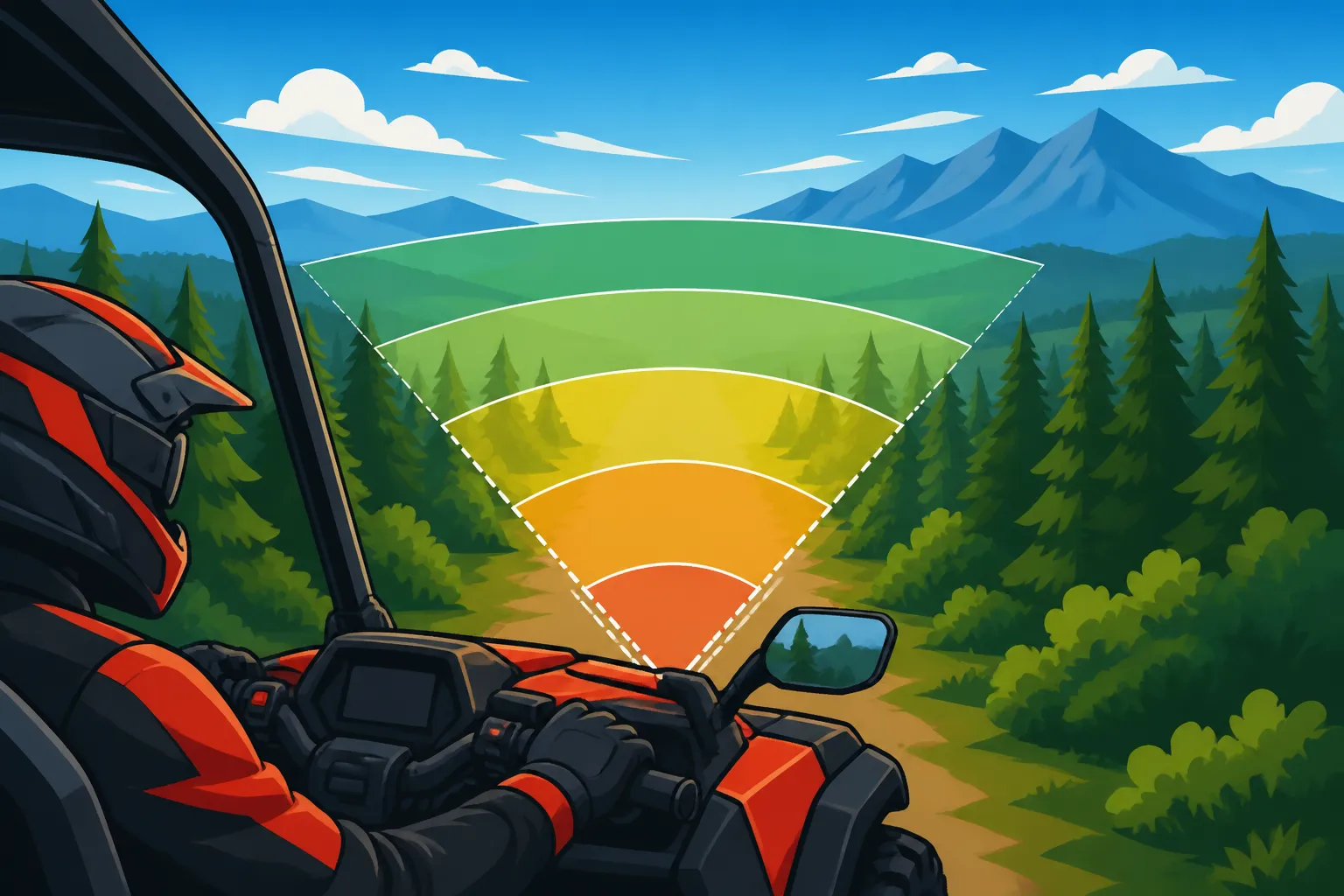
Navigating the specific rules for off-highway vehicles (OHVs) in Quebec can feel like a maze, especially when it comes to understanding how you can safely and legally interact with public roads. One of the most critical, yet often misunderstood, aspects of these regulations is the concept of sightlines. It's not just about looking both ways; it's about how far you can see, and how that distance changes based on the speed of other traffic. This guide will meticulously break down the various sightline requirements in Quebec, helping you understand where and how to safely cross or briefly access public roads with your ATV or UTV.
Decoding Quebec's Off-Highway Vehicle Act and Sightlines
The world of off-highway vehicle regulations in Quebec changed quite a bit with the updated Off-Highway Vehicle Act (LVHR) that came into effect on September 10, 2021. This wasn't just a minor tweak; it was a comprehensive overhaul aimed at improving safety for everyone, both on and off the trails. Among the many things it clarified and mandated, the rules surrounding road crossings and temporary road access became much more explicit, with sightlines playing a central role. For riders, it can be frustrating to feel like you're constantly poring over legal texts when all you want to do is enjoy the vast trail network Quebec has to offer. But these rules are truly designed to keep you, and everyone else, safe.
The Critical Importance of Clear Sightlines
At its heart, the requirement for clear sightlines is about preventing collisions. When you're operating an ATV or UTV, you're on a machine that handles differently than a car, and you're often moving between different types of terrain. Suddenly emerging from a trail onto a paved road, or trying to cross a busy highway, presents inherent risks. The idea is to ensure that both you, as the OHV operator, and any approaching motorist have ample time to see each other and react appropriately. This means having an unobstructed view for a specific distance in both directions. Without these clear views, you're essentially gambling with safety, which is something no one wants to do on a ride.
It's a common scenario: you're out on a beautiful [Quebec ATV Trails: The FQCQ Network] ride, perhaps enjoying the stunning fall colours, and your trail suddenly meets a public road. You might just need to cross it to pick up another trail section, or maybe ride a short distance to access a gas station or a local restaurant. In these moments, the sightline rules kick in, demanding your full attention. The legislation essentially states that if you can't see far enough, or if other drivers can't see you, then that specific maneuver simply isn't permitted. It puts the onus on the rider to assess the conditions and make a safe decision, which sometimes means finding an alternative route.
Where Sightline Rules Come into Play
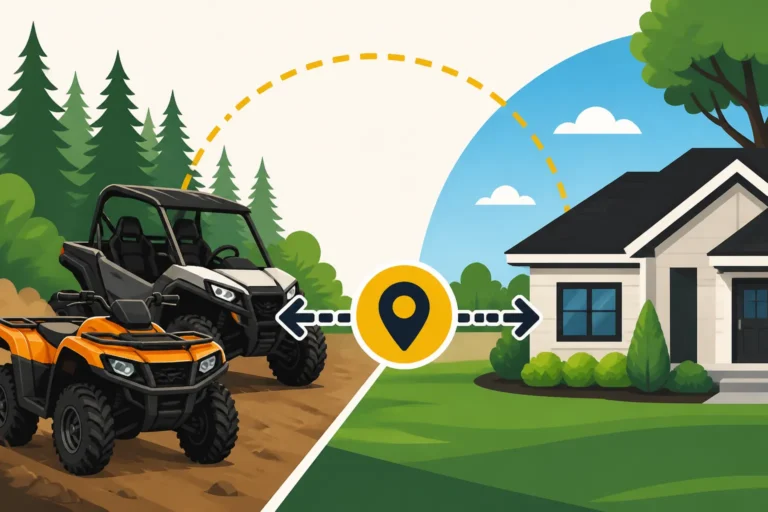
The sightline requirements aren't just for random, unplanned road appearances. They apply specifically to any situation where your off-highway vehicle is going to interact with a public road. This includes crossing a public road, which is often a necessity when navigating Quebec's expansive trail system. It also covers those short, permitted stretches where you might be riding on a public road for up to [Quebec Municipal Road Access Up to 1 Kilometre] to link two trail segments, reach a service, or access private property. Each of these scenarios carries its own set of rules, but the underlying principle of adequate sightlines remains constant.
Think about it from the perspective of a driver in a car. They're often moving at a higher speed and might not be expecting an ATV or UTV to suddenly appear. The LVHR aims to create a predictable environment, where everyone has a fighting chance to see and be seen. This means that before you even consider entering a public road, you need to stop, assess the situation, and confirm that the required sightlines are met. It’s a moment to pause, take a deep breath, and prioritize safety over speed. Even on a quiet country road, these rules are in place because you can never fully predict when another vehicle might appear.
The Distinct Sightline Distances You Must Observe
Quebec's regulations are quite specific about the distances required for sightlines, and these distances are directly tied to the speed of traffic on the road you're interacting with. This isn't a one-size-fits-all rule; it's a graduated system designed to match the potential danger with the visibility needed to mitigate it. Understanding these thresholds is absolutely crucial for safe and legal riding. It's not enough to just glance quickly; you need to be able to judge distances effectively to ensure you're in compliance and, more importantly, safe.
| Traffic Speed (Road You're Crossing) | Minimum Sightline Required (Each Direction) | Typical Road Context | OHV Crossing Rules |
|---|---|---|---|
| Up to 30 km/h | 50 Metres | Low-speed rural roads, minor intersections, agricultural access routes | Stop, yield, cross at right angle |
| Up to 50 km/h | 100 Metres | Common paved roads, village roads, collector roads | Stop, yield, cross at right angle |
| Up to 90 km/h | 200 Metres | Higher-speed provincial roads, major arteries | Stop, yield, cross at right angle |
The 50 Metres of Sightline at 30 km/h
This particular requirement applies when you're crossing or accessing a road where the maximum speed limit for traffic is 30 km/h or less. While not as common on major thoroughfares, you might encounter these lower speed limits in very rural areas, on specific service roads, or within certain designated zones where vehicle speeds are intentionally restricted. Even though the speed limit is low, 50 metres (about 164 feet) is still a significant distance to have a clear, unobstructed view in both directions.
Imagine you're exiting a forest trail onto a quiet gravel road that serves a few cottages. The local by-law might limit traffic to 30 km/h. Before you nudge your machine onto that surface, you need to be certain you can see at least 50 metres up the road and 50 metres down the road. This means no dense bushes, no sharp blind turns, and no parked vehicles blocking your view. It's about ensuring that if a slow-moving tractor or a family car is approaching, both you and they have enough time to react and avoid any potential conflict. Even at 30 km/h, a collision can be serious, so this "shorter" sightline is still a vital safety measure.
The 100 Metres of Sightline at 50 km/h
This is arguably the most common sightline requirement you'll encounter as an OHV rider in Quebec, as the [Quebec's 50 km/h Speed Limit for ATVs] on trails is mirrored by many secondary roads. When you're looking to cross a public road where the speed limit is up to 50 km/h, you absolutely must have a clear line of sight for at least 100 metres (approximately 328 feet) in each direction. This is a much more substantial distance and demands a thorough assessment of your surroundings.
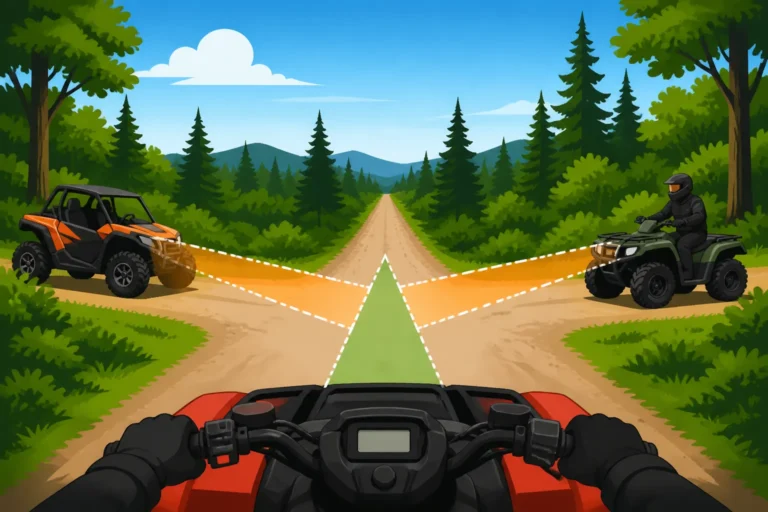
Picture yourself at the edge of a federated trail, preparing to cross a paved two-lane road in a small town. The speed limit signs clearly state 50 km/h. You bring your quad to a complete stop, just before the pavement. Now, you need to scan both ways, ensuring that there are no cars, trucks, or motorcycles within that 100-metre window. This means looking beyond the immediate bend, past the culvert, and confirming no oncoming traffic. If there's a slight rise in the road or a stand of trees just shy of that 100-metre mark, and it obstructs your view, then you cannot legally or safely make that crossing. It's a non-negotiable safety buffer designed to give everyone ample braking distance.
The 200 Metres of Sightline for Faster Roads
For roads where the speed limit is higher, specifically up to 90 km/h, the required sightline jumps to a significant 200 metres (roughly 656 feet) in each direction. While ATVs themselves are generally restricted to lower speeds on roads, you're crossing traffic that can be moving much faster. This considerable distance is critical for safety on provincial roads or other major arteries where traffic flow is swifter. It's a recognition that higher speeds drastically reduce reaction time and increase stopping distances for other vehicles.
Imagine your trail network requires you to cross a busier secondary highway with a 70 km/h or even 90 km/h limit. This isn't a casual crossing; it requires extreme caution and a very clear view. You would bring your machine to a stop and scan for traffic. Seeing 200 metres down a road means having a completely unobstructed view for roughly two football fields' length. If there's a crest in the road, a long curve, or any permanent structure that blocks that view, you simply cannot make the crossing. This is where patience becomes paramount, and if conditions don't permit a safe crossing, you must find another way, even if it adds miles to your journey. Using specialized mirrors, perhaps from a brand like SuperATV, might give you a slightly wider field of view, but they don't replace the need for you to physically ensure those sightlines are clear yourself.
Practical Application: How to Judge and Ensure Proper Sightlines
Knowing the distances is one thing, but actually applying them in the real world, often in dynamic environments, is another challenge entirely. It requires a keen eye, good judgment, and a steadfast commitment to safety. The terrain, weather, and even the type of foliage can all impact your ability to achieve those crucial sightlines. This isn't a moment to rush or assume; it's a moment for careful, deliberate action.
Before You Initiate a Cross or Enter the Road
The moment you approach a public road from a trail, your mindset needs to shift. Your first action should always be to bring your ATV or UTV to a complete stop before entering the road surface or even the shoulder. This isn't just a suggestion; it's a legal requirement and a fundamental safety practice. Once stopped, engage your parking brake if your machine has one. This frees your hands to look, listen, and carefully assess the situation without your machine creeping forward.
From this stopped position, you need to conduct a thorough scan. Look left, then right, then left again. Take your time. Don't just glance; actively search for oncoming traffic, bicycles, pedestrians, or anything that might be moving. Listen for approaching vehicles you might not yet see. Are there any sharp curves or hills that obstruct your view within the required distance? Is the sun directly in your eyes or is glare an issue? Consider how long it will take for your machine to safely accelerate and complete the [Crossing a Quebec Road at a Right Angle]. This assessment phase is where you confirm that those 50, 100, or 200 metres are truly clear and accessible.
What "Sightline" Really Means from Your Machine
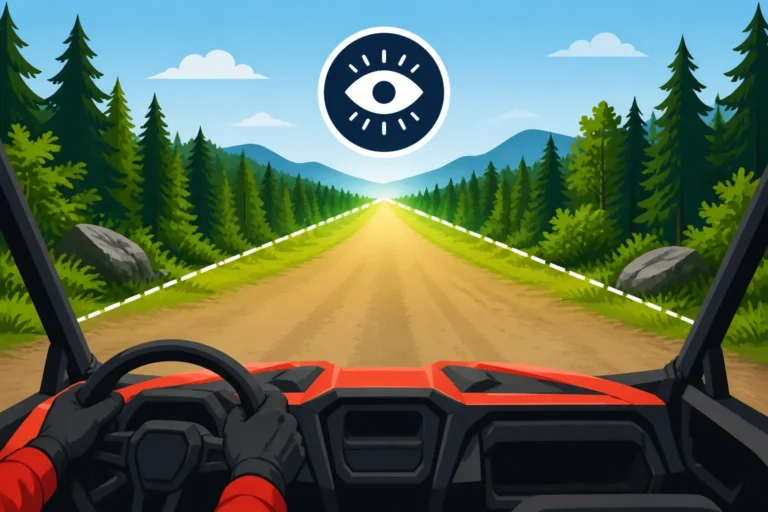
The term "sightline" isn't just an abstract legal term; it's intensely practical. It means your unobstructed view from your position on the machine. What you can see might be different from what a pedestrian can see, or what a driver in a tall truck can see. Your lower perspective on an ATV or UTV means that even small bushes, parked cars, or variations in terrain can block your critical line of sight. It's important to remember that this isn't about what might be clear; it's about what is definitively clear.
Furthermore, consider environmental factors. Fog, heavy rain, or even just dust from a passing vehicle can temporarily reduce visibility. In such conditions, the required sightlines might be impossible to achieve, and you would need to wait until conditions improve or find an alternate route. While aftermarket accessories like wide-angle mirrors or even specialized lighting from companies like SuperATV can enhance your general awareness on the trails, they don't substitute for the direct, unimpeded visual confirmation of clear sightlines when interacting with public roads. The responsibility always falls to the operator to ensure safety.
The Golden Rule: When in Doubt, Don't Go
This is perhaps the simplest, yet most crucial, piece of advice for navigating road crossings with your OHV: if you have any doubt whatsoever about meeting the sightline requirements, or if you feel uneasy about the safety of a crossing, do not proceed. It's far better to err on the side of caution, even if it means waiting for a long time, or having to turn around and find a different, safer route. A few extra minutes or miles are a small price to pay for avoiding a serious accident.
Fatalities and serious injuries often occur at road intersections when OHVs are involved. These aren't just statistics; they're real people, real families affected. Ignoring a blind corner, trying to "beat" an oncoming car, or simply misjudging the speed of traffic can have devastating consequences. Trail clubs and law enforcement alike emphasize this point constantly: your life, and the lives of others, depend on your careful judgment. No shortcut is worth that risk.
Common Scenarios and Specific Exceptions
While the general rules for sightlines are clear, Quebec's Off-Highway Vehicle Act also accounts for specific scenarios and some limited exceptions that are important for riders to understand. These nuances often arise due to the diverse terrain and infrastructure found across the province, but they still operate within the overarching framework of safety.
Crossing a Quebec Road at a Right Angle
When you do have a clear sightline and determine it's safe to cross a public road, the manner in which you execute the crossing is also regulated. You must always cross [Crossing a Quebec Road at a Right Angle]. This means you should aim to enter the road perpendicular to the flow of traffic, proceed directly across to the other side, and then immediately return to the trail or shoulder. You shouldn't angle across the road, merge into traffic, or make a wide turn.
This requirement is about minimizing your time in the roadway and making your intentions as clear as possible to any other road users. An abrupt, direct crossing is generally more predictable than a curving or merging maneuver. Once you've confirmed your sightlines and executed the stop, look, and listen, you should then proceed purposefully and efficiently across the road. Avoid lingering or stopping in the middle of the road, as this only increases your exposure to risk.
The 500 Metres Where Terrain Forces It
Quebec recognizes that not every trail meets a road at a perfectly flat, clear intersection. Sometimes, the natural landscape itself can present challenges. This is where the concept of [500 Metres Where Terrain Forces It] comes into play. If the terrain itself makes it genuinely impossible to meet the standard sightline requirements (e.g., dense forest right up to the road, a steep embankment, or a deep ravine), the law allows for an exception where, in certain specific circumstances, you might be allowed to ride along the shoulder or extreme right of the roadway for a maximum distance of 500 metres.
This is not a blanket permission to ride on roads. It's a very specific exception, and it comes with strict conditions. For instance, you must be moving at the slowest possible speed, always keeping to the far right, and yielding to all other traffic. This provision is typically for connecting two trail segments where no other safe option exists, and where the terrain actively prevents a standard crossing. It's a last resort, not a convenience, and you must still exercise extreme caution. You'll often see specific signage or indications from local clubs when this exception is valid for a particular stretch.
Municipal Road Access Up to 1 Kilometre
Another important allowance within the LVHR is the ability for municipalities to designate short stretches of road for OHV use, typically to connect trail segments or provide access to services. These are the [Quebec Municipal Road Access Up to 1 Kilometre] rules. While these designated sections allow you to ride on the road, they still come with speed limits (typically 50 km/h for ATVs, as per [Quebec's 50 km/h Speed Limit for ATVs]) and, crucially, demand adherence to road safety principles, including awareness of sightlines.
When riding on these designated municipal road segments, you are expected to operate your machine like any other vehicle on the road, albeit at OHV-specific speeds. This means staying to the right, respecting all traffic laws, and being constantly aware of your surroundings, including blind spots, intersections, and the approach of other vehicles. Even though you're "allowed" to be on this stretch of road, your responsibility for maintaining vigilance and ensuring safe operation, including being able to see and react to traffic, remains paramount. A well-maintained machine, perhaps with robust protection and visibility accessories from SuperATV, can enhance safety but the rider's attention is always the primary factor.
The Consequences of Disregarding Sightline Rules
Ignoring sightline regulations isn't just a minor infraction; it carries significant legal and, more importantly, safety implications. The intent behind these rules is to protect lives, and when they are bypassed, the risk of severe outcomes skyrockets. It's crucial for every rider to understand that there are tangible consequences for non-compliance, ranging from financial penalties to devastating accidents.
Penalties and Fines for Non-Compliance
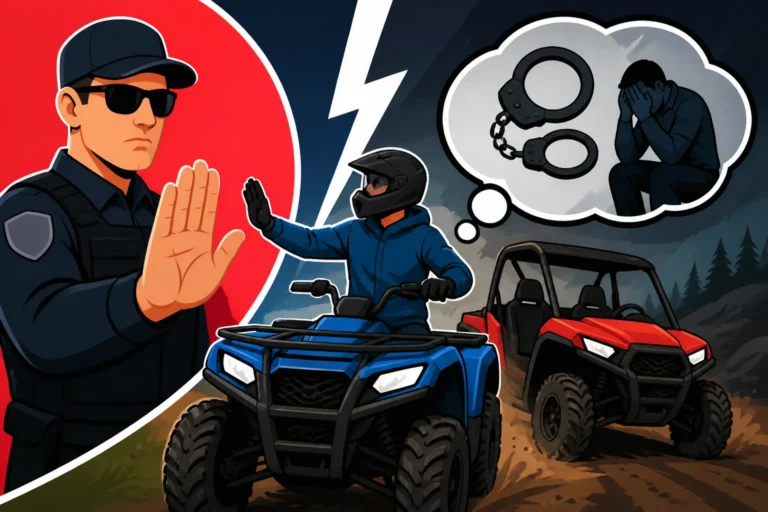
If you're caught by law enforcement or a trail patrol violating the sightline requirements, you can face substantial [Quebec Fines for Riding a Public Road]. These aren't small tickets that you can just shrug off; they can be costly and put a serious dent in your wallet. The exact amount can vary depending on the severity of the infraction, but fines are designed to be a deterrent and reflect the seriousness of the safety risk involved. Additionally, repeated offenses could lead to further penalties, like the suspension of your off-highway vehicle registration or even your driver's license, if the offense is linked to your driving privileges.
Beyond the immediate fine, remember that a citation for a safety violation can sometimes impact your insurance rates. Insurers look at a rider's history, and a record of unsafe operation can be a red flag, potentially leading to higher premiums down the line. It's a double whammy: a direct financial penalty and a potential long-term increase in your cost of ownership. These aren't trivial consequences; they're designed to reinforce the importance of following the rules for everyone's safety.
The Grave Safety Implications
Far more serious than any fine or penalty is the potential for an accident. Disregarding sightline rules dramatically increases your risk of a collision with another vehicle. When you pull out onto a road without a clear view, you're essentially entering a blind spot for oncoming traffic. Drivers simply won't have enough time to see you, react, and brake, especially at higher speeds. The outcome of such a collision, particularly between a large vehicle and an ATV or UTV, can be catastrophic.
These aren't just theoretical risks. Every year, accidents occur at intersections and road crossings precisely because sightlines were not respected. These incidents can lead to severe injuries, permanent disabilities, or even fatalities for OHV operators, passengers, or occupants of other vehicles. The laws are not there to inconvenience you; they are there to save lives. Prioritizing safety by strictly adhering to sightline requirements is not just about avoiding fines, it's about coming home safe at the end of every ride.
The Role of Trail Patrols and Enforcement
While you might primarily associate local police or the Sûreté du Québec with enforcing road rules, it's important to remember that federated trail networks also have their own system of enforcement. [What a Club Trail Patroller Can Make You Do] is more than just checking your trail pass. Trail patrols, often volunteers from local clubs, are empowered to educate riders and report infractions to the proper authorities. They are out on the trails precisely to ensure that everyone is riding safely and respecting the rules, including those pertaining to road crossings and sightlines.
When a trail patroller observes you failing to respect a required sightline at a road crossing, they have the authority to intervene, provide a warning, or, in more serious cases, report the incident. This can lead to official fines being issued later. They are a visible presence, and their role is a vital part of maintaining the safety and reputation of the entire Quebec OHV community. Knowing that these rules are actively enforced should serve as an additional reminder of their importance, ensuring you take every necessary precaution when your ride brings you into contact with public roads.
Disclaimer
This article is for general informational purposes only and does not constitute professional advice. Laws, prices and regulations vary by location and change over time. Consult a qualified professional for guidance on your specific situation.