Snorkels on a Quebec Circuit
A snorkel can help protect an ATV or side-by-side’s intake during certain water crossings, but it does not make the machine waterproof or turn a Quebec trail into a safe place to ford deep water. This guide explains what a snorkel does, how to assess crossings, and how to plan a ride without putting your machine or other trail users at unnecessary risk.
What an ATV snorkel does and does not do
The parts a snorkel may protect
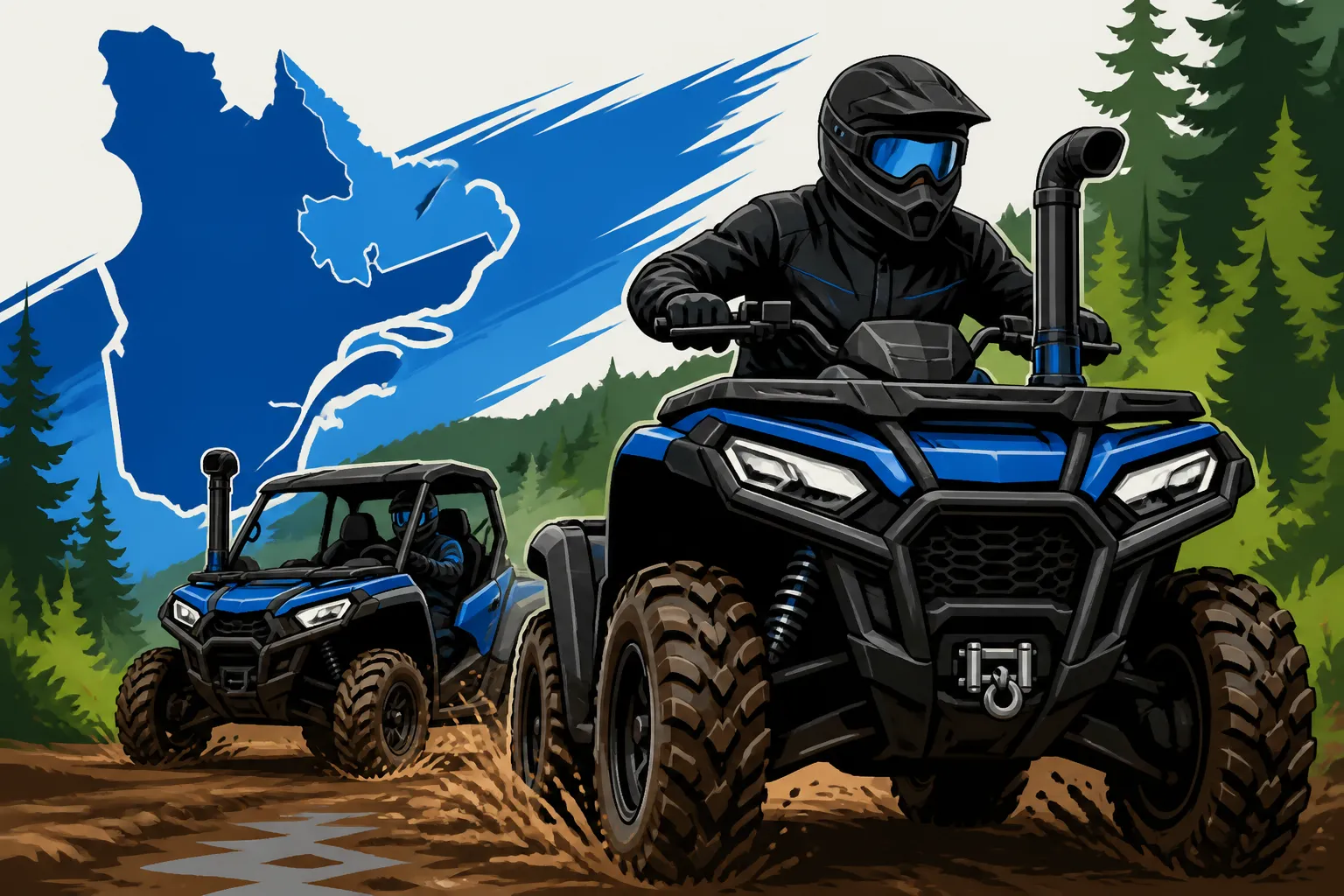
An ATV or UTV snorkel kit typically raises the engine’s air intake above its original position. Some kits also extend the CVT intake and exhaust vents, which can reduce the chance of water entering the belt housing during a crossing. Depending on the machine and setup, other vulnerable openings may need attention too.
That last point matters: a raised engine intake alone does not protect every system. Electrical connectors, wheel bearings, differentials, transmission breathers, and other components may have their own limits. A snorkel is one modification within a broader setup, not a magic waterproofing package.
Think of a snorkel as extra protection against a specific risk: water reaching an opening that could cause damage. It does not raise the machine’s frame, seal its body, improve traction, or prevent water from entering through places the kit does not address.
Why a snorkel does not make a machine amphibious
Water depth is only one part of a crossing. Current, the shape of the bottom, hidden holes, slippery rocks, floating debris, and the machine’s clearance all affect the risk. A shallow-looking crossing can still have a soft edge or a sudden drop that catches a tire or pulls the machine off line.
Water can also enter through areas unrelated to the engine intake. If it reaches the engine, the result may be serious damage. If it gets into the CVT housing, the belt may slip or behave unpredictably. Even when the machine keeps running, water and grit can create problems that appear later.
A snorkel is not a reason to seek deeper water, ignore a closure, or ride into a crossing you cannot inspect. On a Quebec circuit, the safest crossing is often the official bridge or culvert a little farther along the route—not the shortcut through a creek.
How to judge water on a Quebec trail
Check the route before you reach the crossing
Quebec trail conditions can change after heavy rain, spring thaw, or maintenance work. A crossing that was passable on a previous ride may now be deeper, faster, or blocked by debris. Before heading out, review Quebec Trail Conditions Before You Go and pay attention to club notices, local signage, and closures. A mapped line does not guarantee the trail is open or that every feature is safe to cross.
Use an official trail map or club information as your primary guide to the federated route. A planning tool such as onX Offroad can be useful for reviewing your broader route and terrain, but it should complement—not replace—current local trail information. If your map and a closure sign disagree, follow the sign.
If rain is in the forecast or the area has recently had heavy rainfall, build flexibility into the day. Check Quebec Trail Closures After Heavy Rain before leaving, and be prepared to turn around or choose another route. A long ride through the Laurentians, Charlevoix, or another remote region can feel like a commitment once you are well away from your starting point, but a change of plan is better than trying to force a crossing.
Assess the crossing without riding into it
Stop before the water and look for a designated bridge, culvert, bypass, or posted crossing point. Follow the marked route rather than creating a new line through the surrounding land. Federated trails may pass through sensitive areas and private property; Staying on a Federated Corridor helps keep access respectful and predictable for everyone.
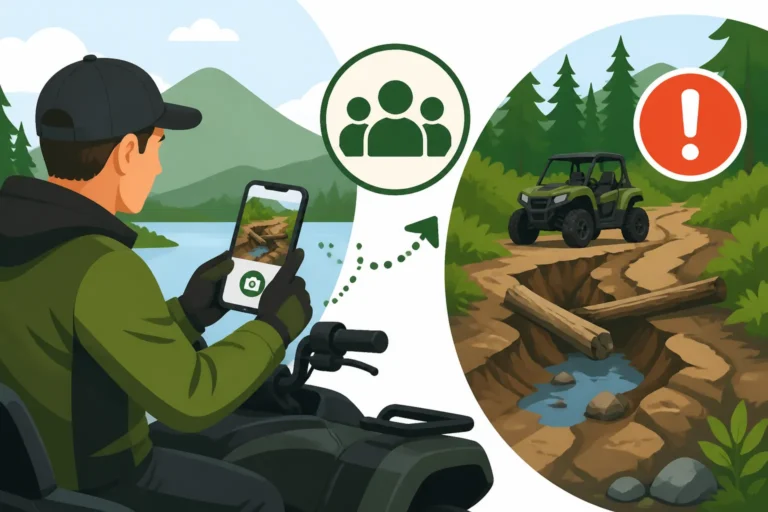
If a crossing is permitted and appears manageable, assess it from a safe place on foot only when you can do so without entering dangerous water. Look for current, an uneven or soft bottom, submerged rocks, and a clear exit on the far bank. If you cannot see enough to make a reasonable judgment, or if the water is moving forcefully, do not ride through.
Never assume that a crossing is acceptable just because another rider used it. Water levels and trail conditions can change quickly, and the machine, tires, load, and experience level may differ. If the route is blocked or a crossing seems unsafe, turn back and contact the local club or trail authority when practical.
| Situation | Safer choice | Why it matters |
|---|---|---|
| A marked bridge or culvert is available | Use the marked route | It avoids unnecessary water exposure and protects the trail corridor |
| The water is moving quickly | Do not enter | Current can shift a machine or rider before the depth is obvious |
| The bottom or far bank cannot be assessed | Turn around or find an approved alternative | Hidden holes and soft exits can trap a machine |
| A closure or detour is posted | Follow it | A snorkel does not override trail access rules |
| The crossing looks deeper than the machine’s safe operating limits | Do not attempt it | Intake protection does not prevent water entering other parts of the machine |
Preparing a snorkeled ATV or UTV for a circuit
Check the complete setup, not just the snorkel pipes
Before a trip, confirm that the snorkel kit is installed securely and that its connections are intact. Look for loose clamps, cracked hoses, damaged seals, or openings that have come apart after vibration. If the kit includes separate CVT vent extensions, inspect those too. Follow the machine and kit manufacturers’ instructions, especially if the vehicle has been modified.
Ask a qualified mechanic or experienced installer to review the setup if you are unsure which openings remain vulnerable. This is particularly sensible after a home installation or if the machine has been used in muddy conditions. A raised intake can still be compromised by a poor connection, and an extension that is routed incorrectly may create problems rather than reduce them.
Keep in mind that a snorkel can affect how an engine breathes and how the machine performs. Changes to intake or exhaust routing may require careful installation and maintenance. Don’t make assumptions about your machine’s safe water depth based on another owner’s setup; different models and modifications can have different limitations.
Carry the right recovery and maintenance gear
A remote circuit is not the place to discover that you lack a basic recovery item. Bring a suitable tow strap, basic tools, a first-aid kit, and a way to communicate that fits the remoteness of the route. For longer distances between services, Carrying Extra Fuel on a Remote Leg is also worth considering when it applies to your machine and route.
After a wet or muddy ride, inspect the machine rather than parking it and assuming everything is fine. Check the air filter and airbox for moisture or debris, and examine the CVT housing if the machine was exposed to water. Follow the manufacturer’s procedure if you find water where it should not be. Avoid restarting an engine if you suspect water has entered it; get qualified help instead.
A thorough post-ride wash and inspection can help catch mud buildup and damage before the next outing. The advice in Washing a Machine After a Quebec Ride is useful after a circuit, while Keeping a Radiator Clear on a Long Circuit can help you remember another area that may collect mud and debris. Cleaning is not merely cosmetic: packed material can hide damage or interfere with cooling.
Riding responsibly when water is part of the route
Protect trails, land, and other riders
A machine with a snorkel may invite the temptation to make a splash, but repeated passes through wet or muddy sections can damage the trail, widen a crossing, and affect nearby land. Stay on the marked route and avoid spinning tires to push through. If the ground is soft or the trail is being damaged, stop rather than making the problem worse.
Keep noise and speed considerate near cottages, homes, and other trail users. A group should cross one at a time where appropriate, leaving enough room for the rider ahead to clear the section safely. Don’t crowd someone who has stopped to assess a crossing. Respecting these habits is part of Quebec Trail Etiquette Locals Expect, especially on shared corridors and routes near communities.
Some trails cross private land, and access depends on maintaining respectful use. Do not ride around a barrier or create a detour onto adjacent property. Review Quebec Trails That Cross Private Land if you are planning a route through areas where access rights and landowner permission matter.
Make navigation and turn-back decisions part of the plan
Before leaving, share your route and expected return time with someone who is not riding with you. Save key trail information for offline use if your phone may lose coverage. onX Offroad can help with personal route planning and tracking, while local club information and Quebec Trail Maps and the iQuad App can help you understand the established trail network. Check that the route you intend to follow is open and suitable for your group.
Agree in advance on what will make the group turn back: rising water, a washed-out section, poor visibility, an unfamiliar crossing, or a machine showing signs of trouble. This avoids the familiar pressure of “we’ve come this far” when everyone is tired and the light is fading. A turn-back decision is not a failed ride; it is part of planning a ride responsibly.
A snorkel can be useful for a machine that encounters occasional water, but it should not be the reason to choose a more hazardous route. Check the whole machine, read current trail information, use marked crossings, and leave questionable water alone. In Quebec, a safe circuit is one you can complete while protecting the machine, the trail, and the people who share it.
Disclaimer
This article is for general informational purposes only and does not constitute professional advice. Laws, prices and regulations vary by location and change over time. Consult a qualified professional for guidance on your specific situation.