Keeping a Radiator Clear on a Long Circuit
A radiator can clog surprisingly quickly on a Quebec ATV or UTV ride: wet clay, grass, leaves and fine trail debris can pack against the cooling fins before the group has finished a muddy section. This guide explains how to prevent buildup, check the cooling system safely, and respond when a machine starts running hot far from the trailhead.
Why radiators clog on Quebec ATV and UTV trails
How mud and debris block airflow
A radiator needs airflow to carry heat away from the coolant. Its thin fins provide lots of surface area, but that design also gives mud, seeds, grass and bits of leaves places to collect. Once debris forms a mat over the fins, air has a harder time moving through them. The engine may then run hotter than normal, especially during slow, demanding riding.
Quebec trail conditions can make the problem feel sudden. A machine may come through a wet, clay-heavy section looking muddy but operating normally, then begin to show a temperature warning on the next slow climb. Grass and brush can be just as troublesome as mud: stems may catch on the front of the radiator and hold other debris in place.
The radiator’s location matters, too. Some machines have front-mounted radiators that take direct hits from mud thrown up by the tires. Others use different layouts, screens or ducting. Check your owner’s manual to understand where your radiator sits, how the manufacturer recommends cleaning it, and what temperature warnings mean for your specific machine. Don’t assume a UTV and an ATV have the same access panels or cooling-system design.
Trail conditions that raise the risk
Low-speed riding can leave less natural airflow across a radiator than faster travel. That makes long, slow sections especially demanding when the engine is working hard. Deep mud, tall grass, wet leaves and repeated water crossings can all add debris, while a group ride can mean you’re following machines that throw material into your path.
A route that was dry on your last visit may be very different after rain. Before leaving, check Quebec Trail Conditions Before You Go and Quebec Trail Riding After a Storm. Conditions can vary from one section to another, so a route plan shouldn’t be treated as a guarantee that every trail is passable or dry.
For a longer outing, choose a route with your machine, riding pace and group experience in mind. Quebec Quad Circuits Worth Riding can help with route ideas, while Planning a Route on the Interactive Map is a useful reminder to think about distance, access and where you may be able to stop. A mapping tool such as onX Offroad can support planning, but it doesn’t replace checking trail status and access with the relevant local club or land manager.
Prepare the cooling system before you leave
Make a quick pre-ride inspection routine
A brief inspection at home or at the staging area can catch problems before they become trail problems. With the engine off and cool, look at the radiator’s exposed surface for packed dirt, bent fins, leaves or grass. Check for obvious damage and signs of a coolant leak. If the radiator is hidden behind a grille or panel, follow the manufacturer’s instructions for accessing it rather than forcing parts loose.
Check coolant level only as directed in the owner’s manual. Cooling systems can be pressurized when hot, so never remove a radiator cap on a hot machine. If the reservoir is low, or you notice a leak, don’t simply top it up and head out without understanding the cause. A cooling issue can worsen under load, and a small leak may leave you stranded later in the ride.
It’s also worth making sure the machine’s intake screens, radiator guards and surrounding airflow paths are clear. A guard can help protect against damage, but a guard covered in mud can still restrict airflow. If you recently installed accessories or altered bodywork, confirm that the changes haven’t blocked a vent or changed how air reaches the radiator.
Pack for cleaning and an unexpected stop
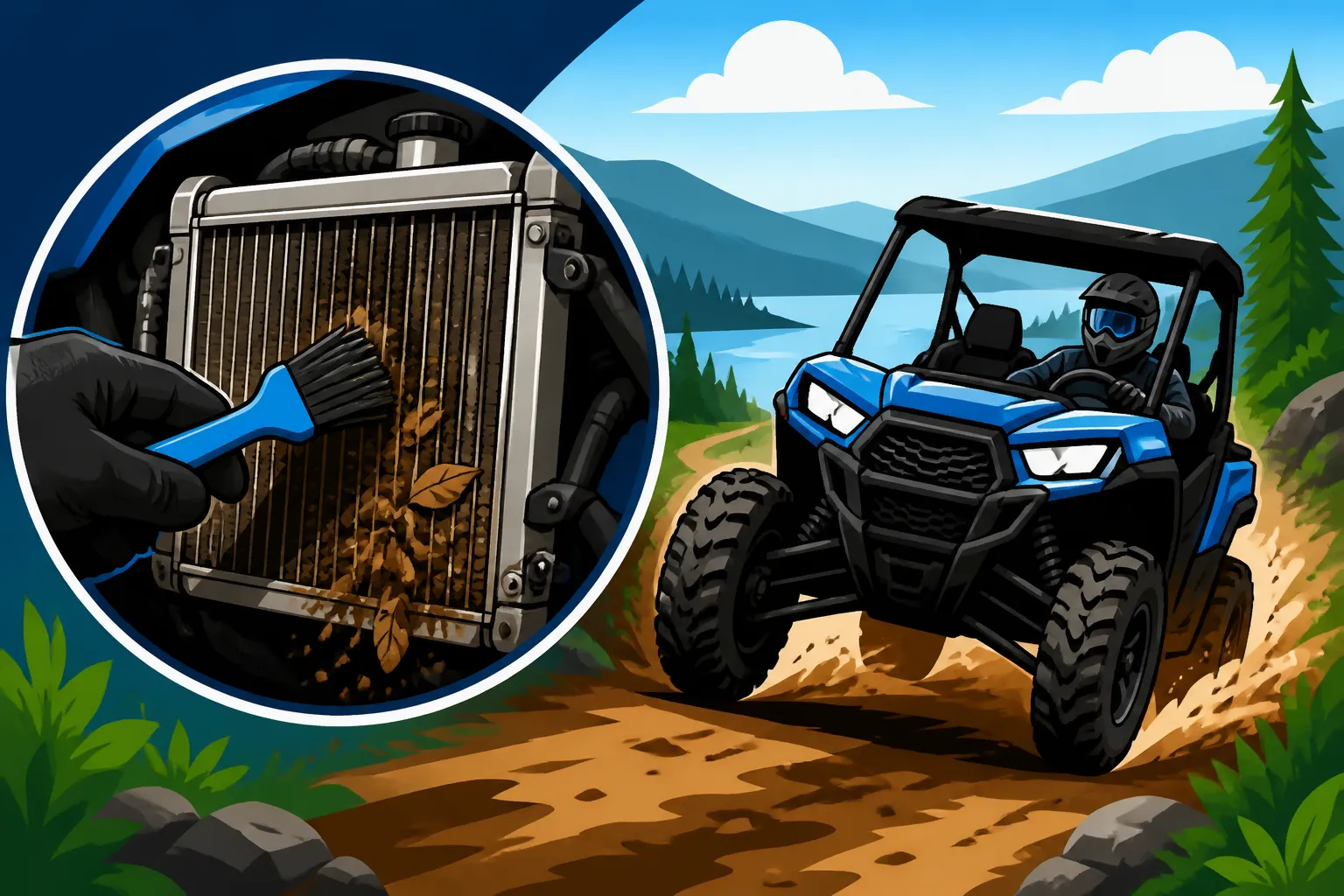
For a longer circuit, carry a small cleaning kit that suits your machine. A soft brush and a clean cloth can help remove loose debris without scraping delicate fins. If you plan to rinse the radiator, know what the manufacturer recommends and whether water is available where you’ll stop. Avoid using a pressure washer close to the fins: concentrated pressure can bend them or push debris deeper into the cooling pack.
A practical pre-ride checklist can be short enough to use consistently:
- Let the engine cool before inspecting the radiator or coolant system.
- Check the radiator face, guards and nearby air openings for debris.
- Look for leaks or damage and verify coolant only as the manual directs.
- Pack a soft brush, water if appropriate, gloves and basic recovery supplies.
- Tell the group where you plan to stop if a machine needs attention.
For a multi-day route, expand that kit and inspection routine. Packing for a Multi-Day Ride offers relevant preparation ideas, and Carrying a Spare Belt on a Long Circuit is a useful reminder that remote riding involves more than one possible mechanical interruption. A map reference such as onX Offroad may help you think through route options and where you might need to turn back, but confirm local trail access and closures before setting out.
Keep the radiator clear while riding
Adjust your pace and check at natural stopping points
You don’t need to stop after every muddy patch, but make radiator checks part of natural pauses: a lunch break, fuel stop, regrouping point or scenic stop. Check more often after sustained slow riding through tall grass or sticky mud. A quick look can reveal a buildup while it’s still manageable, rather than after the machine starts warning you.
In a group, leave enough space to avoid riding directly in another machine’s spray when conditions allow. This won’t keep every speck of mud off your radiator, but it can reduce the amount thrown into your path. On narrow trails, don’t compromise safe spacing or trail etiquette just to avoid debris. Quebec Trail Etiquette Locals Expect and Staying on a Federated Corridor are useful reminders to ride considerately and stay on the route.
When you stop, switch off the machine and give hot components time to cool before working around them. Brush away loose debris gently. If mud has dried into a dense layer, don’t dig at the fins with a hard tool. Use a careful cleaning method recommended for your machine, and avoid pushing material further into the radiator.
Understand the signs of overheating
A temperature warning, a rising gauge, steam, a change in engine performance or an unusual smell can signal trouble. The exact warning system depends on the machine, so learn what the dashboard indicators mean before riding. If a warning appears, don’t assume it will disappear safely just because the trail opens up ahead.
Stop in a safe place, switch off the engine if the manual directs you to do so, and let the machine cool. Keep clear of hot coolant and don’t open the radiator cap while the system is hot. Once it is safe to inspect, look for visible debris, leaks or damage. If the warning returns after a careful clean and cool-down, or if you see leaking coolant or steam, continuing may turn a manageable issue into serious engine damage.
Use the group’s route plan to make a conservative decision. If you can’t identify or resolve the cause, arrange recovery or turn back when it is safe and permitted. A route reference such as onX Offroad can help with general navigation planning, but don’t assume a map alone confirms that a particular access road, private connection or trail exit is open.
What to do when debris or overheating appears
Clean carefully and avoid common mistakes
The safest first move is usually to stop somewhere stable and out of the way of other riders. Turn the machine off and allow it to cool. Once it’s safe to work, remove loose grass, leaves and mud with a soft brush or another method approved by the manufacturer. Clean from the direction recommended in the owner’s manual, since the right approach depends on radiator layout and access.
Avoid scraping fins with a screwdriver, metal pick or hard-edged tool. Bent fins may reduce airflow and can be difficult to straighten without causing more damage. Avoid spraying water onto hot components, and don’t use a high-pressure washer at close range. If you can’t safely reach the debris or don’t know how to remove a panel, don’t force it on the trail.
After cleaning, inspect for damage and check whether the warning has cleared, following the manual’s restart and monitoring instructions. If it heats up again, stop rather than repeatedly restarting and pushing on. A short delay can be frustrating, especially when the group has a reservation or a long route ahead, but an overheated engine can make the ride much more costly and complicated.
Use a decision guide for the trail
A simple decision table can help you avoid making a rushed call when the group is waiting. It is not a substitute for the machine’s manual, and serious symptoms call for stopping and seeking qualified help.
| What you notice | Safer next step | Avoid |
|---|---|---|
| Loose grass or leaves on a cool radiator | Remove gently at a safe stop and recheck | Pulling hard on material caught in the fins |
| Thick mud covering the radiator | Let the machine cool, then clean using the manual’s recommended method | Scraping with metal tools or blasting fins at close range |
| Temperature warning or rising gauge | Stop safely and follow the manufacturer’s shutdown guidance | Continuing to ride to “see if it clears” |
| Steam, coolant leak or repeated warning | Keep clear of hot components and arrange help or recovery | Opening a hot radiator cap or repeatedly restarting |
| Bent fins or visible radiator damage | Avoid demanding riding and get the machine inspected | Assuming a quick rinse has fixed the problem |
When riding remotely, make sure someone in the group knows your intended route and check-in plan. First Aid on a Remote Circuit covers another part of sensible backcountry preparation: a mechanical delay can quickly become a people-and-planning issue if weather changes, daylight fades or someone is injured. Be willing to shorten the ride when the machine, trail or conditions no longer feel manageable.
Disclaimer
This article is for general informational purposes only and does not constitute professional advice. Laws, prices and regulations vary by location and change over time. Consult a qualified professional for guidance on your specific situation.