Quebec Rules for Riding a Forest Road
Navigating the myriad of rules and regulations for riding your ATV or side-by-side in Quebec can sometimes feel like trying to untangle a particularly stubborn knot. Especially when it comes to forest roads, there's a lot of confusion about what's allowed, what's strictly prohibited, and where the grey areas lie. This guide aims to cut through that complexity, providing clear, actionable information so you can enjoy Quebec's beautiful wilderness without running afoul of the law.
Understanding Quebec's Forest Roads: Not All Paths Are Equal
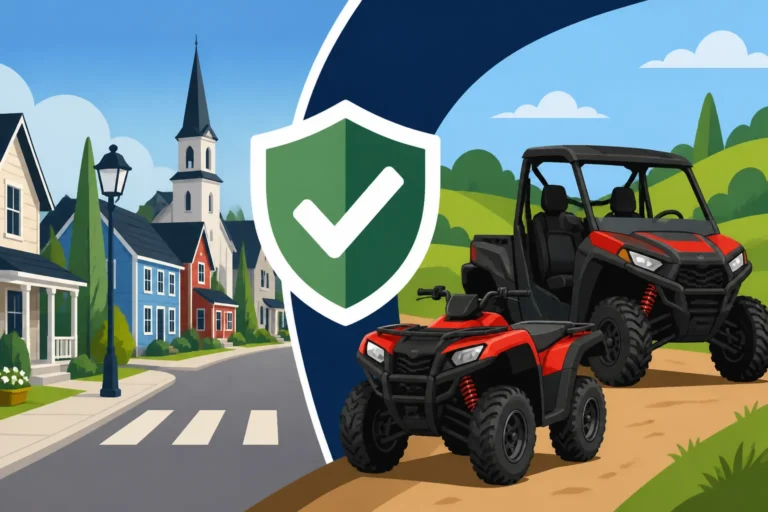
When we talk about "forest roads" in Quebec, it's easy to picture any dirt track winding through trees. However, from a legal standpoint for ATV and UTV riders, not all these paths are created equal. It's crucial to understand the distinctions because your rights and responsibilities change dramatically depending on the type of road you're on. Many riders get frustrated when they think they're on an "off-road" trail, only to find out it's technically a public road with different rules.
Public Forest Roads vs. Federated Trails
First off, let's distinguish between public forest roads and the vast network of federated trails maintained by the FQCQ clubs. Federated trails are purpose-built and managed for off-highway vehicles, and you need a [Quebec's Annual FQCQ Trail Pass] to ride them. They are generally well-marked, and their use is specifically regulated under the Off-Highway Vehicle Act. These are often what people think of as "forest roads," but they have a distinct legal status.
Public forest roads, on the other hand, are often maintained by the government (like the Ministère des Forêts, de la Faune et des Parcs – MFFP) or by logging companies, primarily for resource extraction and access to remote areas. These roads are generally open to a wider range of vehicles, including cars and trucks, and are often not part of the federated trail system. This is where the confusion often arises: you might be on a dirt road deep in the woods, but it's still considered a "public road" for the purposes of traffic laws, even if it feels very much "off-road." The key takeaway is that if it's not explicitly a federated trail with FQCQ signage, you should assume it's a public road until proven otherwise.
Private Land and Restricted Access Roads
Beyond public forest roads and federated trails, you'll also encounter private land roads. These could be access roads to cottages, hunting camps, or privately owned timberland. Riding on these roads without explicit permission from the landowner is considered trespassing, and it's a surefire way to get a ticket and sour relations with local residents. Always respect private property signs and never assume access.
Some forest roads, particularly those leading to active logging sites or sensitive environmental areas, might be entirely restricted to the public. These will usually have gates, clear signage, or barriers. Ignoring these restrictions isn't just illegal; it can be dangerous if heavy machinery is operating, or if you're entering an area with unstable terrain. Always keep an eye out for these notices, even if you’ve ridden the same area before, as conditions and access can change rapidly.
General Rules for Riding on Quebec Forest Roads
So, if you've identified that you're on a public forest road, what rules apply? Many riders assume that because it's a dirt road in the middle of nowhere, typical road rules don't count. This is a common and costly mistake. The reality is that many of the same regulations that govern your ATV use on designated trails or even limited municipal road stretches still apply. It's frustrating, I know, when you just want to enjoy the ride, but knowing these details can save you a hefty fine.
Registration, Insurance, and Licensing
First and foremost, your off-highway vehicle must be properly registered with the SAAQ and have valid liability insurance. This isn't just for federated trails; it's a provincial requirement for any use of your machine, even on non-federated public forest roads. You need to be able to present [Quebec Registration and Proof of Ownership] and proof of insurance if requested by a peace officer. Riding an unregistered or uninsured machine will lead to significant [Quebec Penalties for Riding Unregistered] and possibly impoundment.
Just like on any other public thoroughfare, you need a valid driver's licence to operate an ATV or side-by-side on a forest road. [Quebec Requires a Driver's Licence Since 2021] for all off-highway vehicle operators aged 16 and over. If you're a young rider between 16 and 18, you also need to have successfully completed a specific FQCQ training course. Without the proper licensing, you're not just risking a ticket; you're putting yourself and others at risk, and your insurance could be voided in the event of an accident.
Helmet, Visor, and Equipment Rules
Quebec has clear and strict rules about helmets and protective gear, and these absolutely apply to forest roads. You, and any passengers, must wear an approved protective helmet that meets current safety standards. This means a helmet designed for off-road use, securely fastened. Additionally, you need eye protection, either a visor integrated into your helmet or separate goggles. [Quebec Helmet and Visor Rules] are not optional; they are about your safety.
Beyond helmets, your machine itself must meet certain equipment standards. This includes having working headlights and taillights, even during the day, as visibility can be poor in wooded areas. You also need a functional exhaust system (no overly loud aftermarket modifications), and effective brakes. While not always mandatory, I strongly recommend a good set of SuperATV skid plates if you're tackling rougher forest roads; they can save your undercarriage from nasty rock damage. A mirror or two is also required if your machine didn't come with them, to ensure you can see what's behind you on shared access roads. Trail patrols and local law enforcement perform [Quebec Equipment Checks by Patrols], and they'll be looking for these things.
Speed Limits and Riding Hours
While forest roads might seem like a place to let loose, they often fall under the same speed regulations as other public access roads where ATVs are permitted. The general [Quebec's 50 km/h Speed Limit for ATVs] applies on most trails and access roads, unless otherwise posted. Always keep an eye out for signage that might indicate a different limit, especially in areas with residences, campsites, or active work sites. Speeding on any road, forest or otherwise, carries significant fines.
Regarding riding hours, the general rule is from 6 a.m. to midnight. However, this can be modified by local municipal bylaws or specific restrictions for certain forest areas. While you might feel secluded, noise can still carry, and riding late at night can disturb wildlife and residents in nearby cabins or outfitter camps. Always be mindful of the time, and avoid riding after hours to prevent unnecessary complaints.
Specific Scenarios and Exceptions on Forest Roads
Quebec's off-highway vehicle laws do make allowances for specific situations on forest roads, recognizing that these paths are often essential for various professional and recreational activities. However, these are exceptions, not blanket permissions, and they come with their own set of rules. It’s important to understand these nuances to avoid fines and ensure you're riding legally.
Workers, Trappers, and Farmers
For individuals using ATVs or side-by-sides as part of their profession, some rules might be relaxed or specific conditions applied. For example, [Quebec Rules for a Worker on a Quad] might allow them to use their machine on specific roads that are otherwise restricted, or to operate outside of standard riding hours if their work demands it. Similarly, trappers accessing their lines might have certain exemptions for helmet use at very low speeds when actively checking traps, provided they are under 30 km/h and making frequent stops. [Quebec Rules for a Trapper on a Quad] reflect this need for practical access in remote areas.
Farmers using their ATVs on forest roads that connect their fields or properties may also have specific provisions under [Quebec Rules for a Farmer on a Quad], particularly regarding registration or insurance requirements if the machine is exclusively used for agricultural purposes on their own land or private access roads. However, if they venture onto public roads, even forest roads, the standard registration and insurance rules typically kick in. It's always best for these professionals to confirm the specific exemptions that apply to their activities with the SAAQ or local authorities.
Crossing Public Roads and Setback Rules
Even on forest roads, you might encounter situations where your route requires crossing a paved public road or riding a short distance on one to connect two sections of forest. Quebec's law allows for short segments of municipal roads (up to 1 kilometre) to be used by ATVs if authorized by the municipality and clearly signed. When crossing a public road, you must do so at a right angle, after coming to a complete stop and ensuring no traffic is approaching. You also need sufficient sightlines – the clearer the view, the safer the crossing.
The "setback rule" is another important consideration, even on remote forest roads. This rule generally dictates that off-highway vehicles cannot operate within 100 metres of a dwelling, building, or property line without the owner's permission. While some older trails or established routes might have a grandfathered 30-metre setback, it's wise to maintain the 100-metre distance whenever possible. This rule is designed to reduce noise and disturbance for residents. When planning your route on forest roads, be mindful of any isolated cabins or properties you might pass, even if they seem abandoned.
Here’s a quick overview of common scenarios and what generally applies:
| Scenario | Registration/Insurance | Driver's Licence | Helmet/Visor | Speed Limit | Riding Hours | Setback Rule |
|---|---|---|---|---|---|---|
| Federated Trail | Yes | Yes (16+) | Yes | 50 km/h | 6 a.m. to midnight | 30m (grandfathered) |
| Public Forest Road | Yes | Yes (16+) | Yes | 50 km/h (unless posted) | 6 a.m. to midnight | 100m (default) |
| Private Forest Road (with perm.) | Yes (default) | Yes (default) | Yes (default) | Owner's rules/Safety | Owner's rules/Safety | Not applicable |
| Worker on Forest Road | Yes (usually) | Yes | Yes (usually) | Work-specific | Work-specific | May be exempt |
| Trapper on Trapline (low speed) | Yes | Yes | No (under 30 km/h, stops) | 30 km/h max | No specific limit | May be exempt |
| Farmer on Farm Land | Maybe (if private only) | Maybe (if private only) | Yes (recommended) | Farm-specific | Farm-specific | Not applicable |
Note: "Yes (default)" means it's generally required but specific, very limited private-land use exceptions might exist. Always confirm with authorities for specific professional exemptions.
Best Practices and Staying Safe on Quebec's Forest Roads
Riding Quebec's vast network of forest roads can be an incredibly rewarding experience, offering access to stunning scenery and remote wilderness. However, the very nature of these roads — their remoteness, variable conditions, and shared use — means that responsible riding and preparedness are paramount. It's not just about following the rules; it's about being a good steward of the land and ensuring your own safety.
Respecting the Environment and Other Users
Forest roads are often shared by a variety of users: loggers, campers, hunters, hikers, cyclists, and other off-road enthusiasts. Always yield to larger vehicles, especially logging trucks, which have right-of-way and can be hard to stop quickly. Dust can be a major issue, so slow down when passing other vehicles or groups to minimize its impact. Being courteous goes a long way in fostering positive relations between different user groups.
Beyond other people, we share these spaces with abundant wildlife. Keep your speed in check, especially at dawn and dusk, when animals are most active. Encounters with moose, deer, and bears are not uncommon, and a sudden collision can be devastating. Always stay on marked paths and roads to minimize your impact on fragile ecosystems. Remember, we're guests in their home.
Preparedness for Remote Riding
When you're far from civilization, a simple breakdown can turn into a serious situation. Always carry essential tools, a tire repair kit, and a basic first-aid kit. Consider a winch on your machine, especially if you're venturing into muddy or challenging terrain; a good SuperATV winch can get you out of a sticky spot. Bring extra fuel, water, and emergency food. Even if your phone has a signal in some areas, don't rely on it; a satellite communication device or GPS unit is a much safer bet for truly remote rides. Tell someone your planned route and estimated return time.
The weather in Quebec's forests can change rapidly. Pack appropriate gear for rain, cold, or sudden temperature drops, even if the day starts sunny. Forest roads can become incredibly muddy and slick after rain, so adjust your riding style accordingly. Having knobby tires and a reliable four-wheel drive system will serve you well. Being prepared isn't about expecting the worst; it's about being ready for anything the wilderness might throw your way.
Enforcement and Penalties
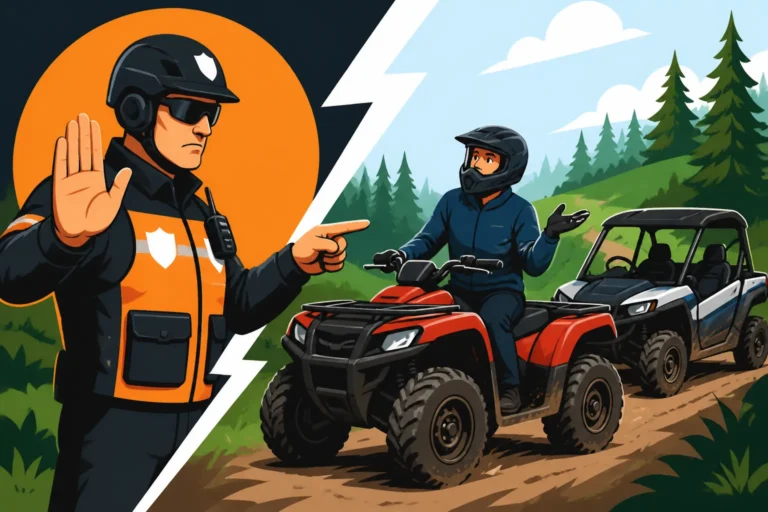
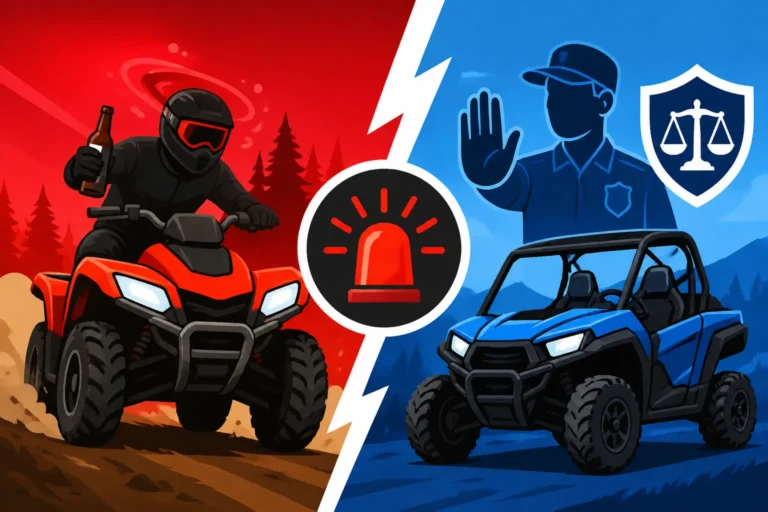
It's a common misconception that enforcement is lax on remote forest roads. While you might not see a patrol officer around every corner, local police, provincial police (Sûreté du Québec), and even MFFP wardens do patrol these areas. They have the authority to stop you, check your registration, insurance, licence, and equipment, and issue tickets for violations. Fines for infractions can be substantial, and in some cases, your machine could be impounded.
Remember, the rules are in place for safety, environmental protection, and ensuring everyone can enjoy Quebec's natural resources responsibly. Understanding [Quebec ATV Road Rules Under the LVHR] is your responsibility as an operator. By following the guidelines outlined in this guide, being prepared, and respecting the environment and other users, you can ensure your adventures on Quebec's forest roads are safe, legal, and unforgettable.
Disclaimer
This article is for general informational purposes only and does not constitute professional advice. Laws, prices and regulations vary by location and change over time. Consult a qualified professional for guidance on your specific situation.