Quebec Rules for a Visiting Vermont Rider
Heading north from Vermont for some incredible ATV or UTV riding in Quebec sounds like an amazing adventure! But let's be real, crossing the border with your machine isn't like simply driving to a different county; Quebec has a distinctly different set of rules for off-highway vehicles, and misunderstanding them can quickly turn a fun trip into a frustrating one with unexpected fines. This guide is here to walk you through everything a Vermont rider needs to know to enjoy Quebec's vast trail network safely and legally, making sure your cross-border experience is smooth sailing from start to finish.
Understanding Quebec's Unique Off-Highway Vehicle Landscape
Many riders from outside Quebec, especially our neighbours from Vermont, often assume that rules for ATVs and UTVs are fairly standard across North America, or at least similar between neighbouring jurisdictions. While there are certainly common threads – wear a helmet, don't drink and drive – Quebec's approach to off-highway vehicles (OHVs), or VHRs (Véhicules Hors Route) as they're officially called here, is quite unique. It's a system that prioritizes safety, trail preservation, and a highly organized network, which means a few extra steps for visitors.
Why Quebec's Rules Differ from Vermont's
The biggest difference you'll encounter is Quebec's deeply embedded club system and the comprehensive legal framework, primarily the Act respecting off-highway vehicles (LVHR), which came into full effect in 2021. In Vermont, you're likely familiar with ATV registrations and trail passes managed by state agencies and local clubs, often with reciprocal agreements with other states. Quebec, however, operates under a single, provincial system coordinated by the Fédération québécoise des clubs de quads (FQCQ) for trails and the Société de l'assurance automobile du Québec (SAAQ) for official registration and insurance.
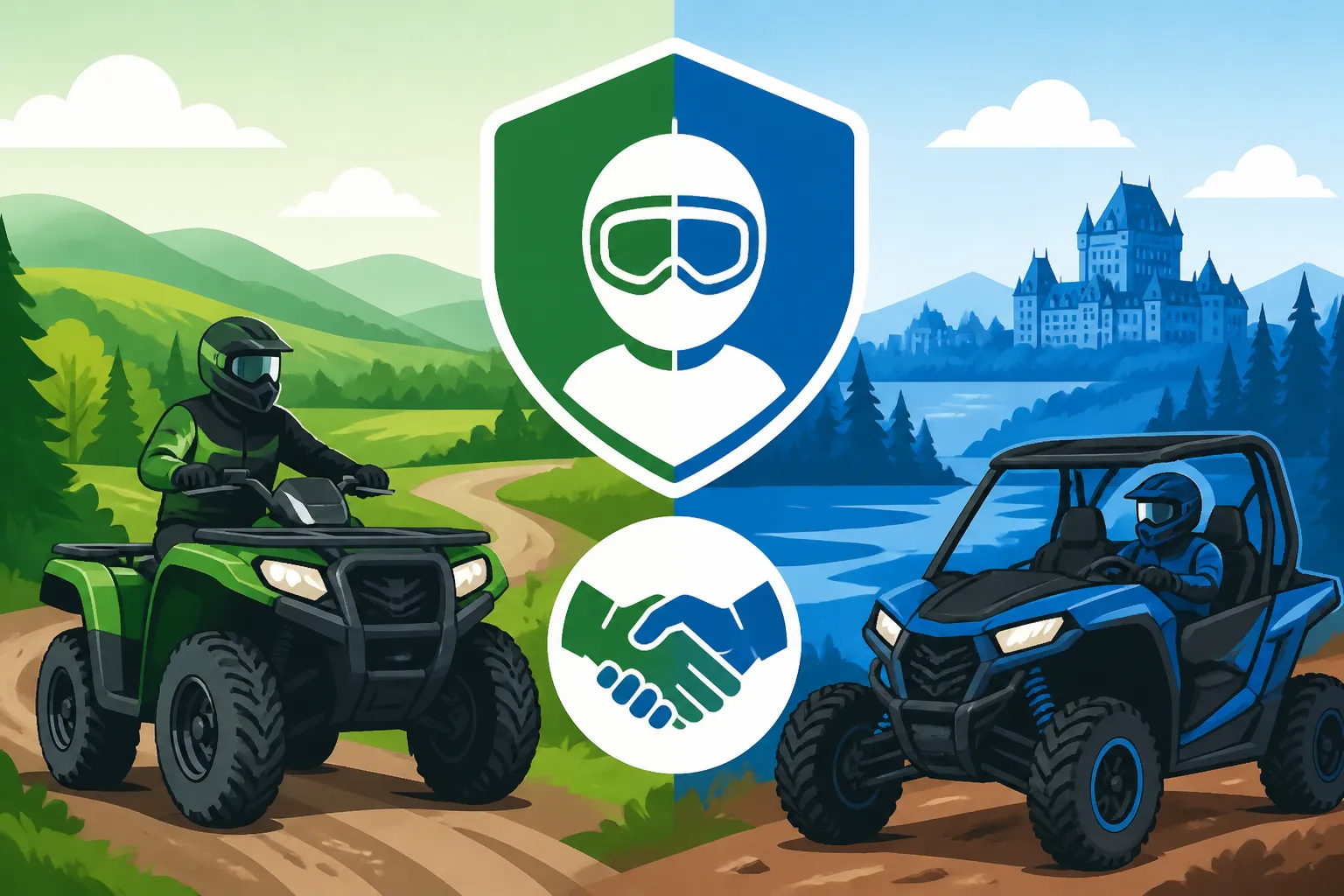
This centralized approach means less variation between regions within Quebec, but a stark contrast when compared to Vermont's laws. For instance, Vermont's public road access rules might be more lenient in certain areas, or liability insurance minimums could be different. The frustration for many visiting riders often stems from the expectation that "my machine is legal where I live, so it should be fine here," but Quebec's distinct legal framework doesn't always see it that way. It's not about better or worse, just different, and knowing these differences is your first line of defense against problems.
The SAAQ: Registrar, Insurer, and Rule-Setter
For Quebec residents, the SAAQ plays a truly unique role: it's not just the agency that registers their ATV or UTV and issues their VHR plate, but it's also the default provider of their mandatory liability insurance. This integration is something most Vermont riders won't have encountered. While you won't be registering your Vermont-plated machine with the SAAQ, their influence over the off-highway vehicle landscape in Quebec is profound, especially when it comes to minimum insurance requirements and how the law is enforced.
It's crucial to understand that even though your machine is registered in Vermont, you still need to comply with Quebec's minimum liability insurance requirements when riding here. The SAAQ sets these standards, and they are rigorously enforced. You can read more about this unique setup in [Quebec's SAAQ Is Registrar and Insurer]. This means you need to verify your existing Vermont insurance policy provides adequate coverage for Quebec, which is a common stumbling block for many visitors.
Essential Paperwork and Equipment for Vermont Visitors
Now that we've touched on the "why," let's dive into the "what" – specifically, the critical documents and equipment you'll need to ensure your Quebec riding adventure is completely above board. This is where most of the pre-trip planning for a Vermont rider will happen, and getting it right means the difference between smooth trails and potential fines.
Quebec Trail Passes: A Mandatory Requirement
This is perhaps the single most important piece of paperwork for any visiting rider. Forget about your Vermont trail passes; they hold no weight on Quebec's federated trails. To ride on the vast FQCQ network in Quebec, you absolutely must purchase a [Quebec Trail Pass for a Visiting Vermont Rider]. There are no reciprocity agreements between Quebec and any US state, including Vermont, so every rider needs their own Quebec pass.
You can usually purchase these passes online through the FQCQ website. They offer various options, including daily passes for quick trips, three-day passes for weekend excursions, and even summer passes if you plan on extended stays. While I can't give you exact figures, know that the price will reflect the duration of the pass. You'll receive a digital confirmation, and often a physical sticker that needs to be affixed to your machine where it's clearly visible, typically on the front fender. Don't skip this step; trail patrols regularly check for valid passes, and riding without one will lead to a hefty fine.
Insurance and Proof of Ownership
Beyond the trail pass, your next critical item is proof of insurance. As mentioned earlier, Quebec has a mandatory minimum liability insurance requirement for all off-highway vehicles operating in the province. While Quebec residents get this through the SAAQ, Vermont riders need to ensure their own insurance policy meets this standard. Historically, [Quebec Liability Minimum Rose to $1 Million], and this figure is generally what you should be aiming for. You need to contact your insurance provider in Vermont before your trip to confirm that your policy covers you for at least $1 million in third-party liability while riding an ATV or UTV in Quebec.
It's not enough to think you're covered; you need to be sure and carry physical proof. This means having your insurance policy document or a certificate of insurance with you on every ride. A digital copy on your phone might be accepted in some situations, but a physical copy is always safer and less prone to issues with dead batteries or poor cell signal on remote trails. Alongside insurance, always carry your proof of ownership (like your registration certificate or title) and your valid driver's licence. These documents are what any law enforcement officer or trail patrol will ask to see if you're stopped.
Equipment and Machine Compliance
Quebec has specific regulations regarding the equipment your ATV or UTV must have to be ridden legally on its trails. While many of these are common sense and likely already on your Vermont machine, it's worth a quick review to avoid any surprises.
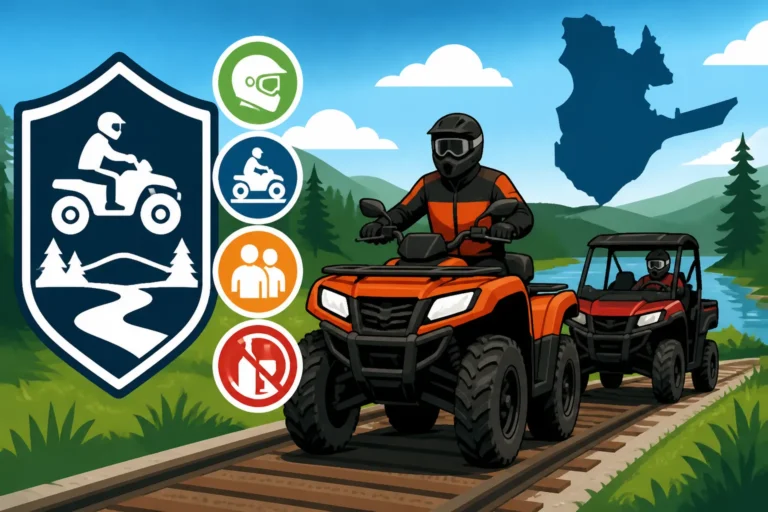
- Helmets and Eye Protection: This is non-negotiable. Everyone on the machine, driver and passenger, must wear an approved helmet. And it's not just a helmet; you also need a visor or goggles. [Quebec Helmet and Visor Rules] are quite clear on this. While Vermont might allow certain exceptions, Quebec generally requires both.
- Mirrors: Your machine must be equipped with at least one rearview mirror firmly attached to the left side of the handlebar or steering column.
- Headlights and Taillights: These must be functional and used when visibility is low, or at night. Many trails also require them to be on even in daylight.
- Muffler: The exhaust system must be in good working order and comply with noise regulations. Extremely loud or modified exhausts might attract unwanted attention.
- Brakes: Functional brakes are, of course, a must.
- General Condition: Your machine should be in good mechanical condition. Any modifications should not compromise safety or compliance with the manufacturer's original design, especially regarding passenger capacity. For instance, if your ATV is designed for one rider, don't ride it with a passenger.
Before you cross the border, give your machine a thorough check-up to ensure everything is in working order and meets these basic requirements. It's a small investment of time that can save you significant hassle.
Navigating Quebec's Roads and Trails: What Vermont Riders Need to Know
Quebec's trail system is extensive and well-maintained, but how you access it, and what you do while on it, is strictly regulated. For Vermont riders accustomed to different norms, understanding these specifics is paramount to a trouble-free experience.
Road Access and Crossing Rules
This is perhaps one of the most significant differences a Vermont rider will encounter. In Quebec, ATVs and UTVs are, by default, not permitted on public roads. Full stop. There are very, very limited exceptions, and they are strictly defined. You cannot simply ride your machine down the road to the gas station, the restaurant, or to connect to the next trail unless specific conditions are met.
The primary exception allows you to ride on a public road for a distance of up to one kilometre, but only if that section of road is clearly indicated by official signage authorizing off-highway vehicle use. This means a sign posted by the municipality or the FQCQ, not just a dirt track that looks like a trail. [Quebec Municipal Road Access Up to 1 Kilometre] is a common allowance, but it's always sign-dependent. Without the sign, you cannot be on the road.
Furthermore, when crossing a public road (from one trail segment to another), you must do so at a right angle to the road, after stopping and ensuring the way is clear. There are also specific sightline distances required to ensure safety at these crossings. The fines for riding illegally on a public road in Quebec are substantial, so it's critical to stick to marked trails and designated crossings. Don't assume that because a local is doing it, it's legal.
Age and Passenger Restrictions
Quebec also has strict age requirements for operating ATVs and UTVs on its federated trails and public land. For an ATV, the minimum age is 16 years old, and for a side-by-side (UTV), it's 18 years old. This is regardless of how experienced a younger rider might be in Vermont or if they hold a licence there. These rules apply to everyone, visitors included.
When it comes to passengers, [Quebec Rules for Passengers on a Quad] stipulate that an ATV can only carry a passenger if it was specifically designed by the manufacturer to do so and is equipped with a seat and footrests for that purpose. Riding two-up on a single-seat ATV is illegal and dangerous. For UTVs (side-by-sides), passengers must occupy factory-installed seats and use seatbelts. If you have younger family members, ensure they meet the minimum age and are always seated correctly and securely.
Speed Limits, Riding Hours, and Trail Etiquette
Quebec's federated trails have clearly defined rules of engagement that promote safety and respect for the environment and local communities.
- Speed Limits: The general [Quebec ATV Speed Limit on Trails] is 50 km/h (approximately 31 mph). On shared trails where snowmobiles are also permitted in winter, the speed limit for snowmobiles is higher (70 km/h), but ATVs must still adhere to the 50 km/h limit. Always obey posted speed limits, as they can vary in certain areas.
- Riding Hours: Most trails have defined [Quebec Riding Hours From 6 a.m. to Midnight]. Riding outside these hours, especially after midnight, can result in fines. Some municipalities or specific trail sections might have even more restrictive hours, so always check local signage or trail maps.
- Trail Etiquette: This is crucial for maintaining good relations with landowners and local communities, which ultimately ensures the trail network remains open.
- Stay on Marked Trails: Never deviate from marked and authorized trails. Riding off-trail can damage ecosystems and lead to trespassing charges.
- Respect Private Property: Many trails cross private land. Leave gates as you found them, don't litter, and keep noise to a minimum near residences.
- Yield to Others: Be courteous to other trail users, including hikers, cyclists (if on shared-use trails), and especially groomers.
- Pack it In, Pack it Out: Take all your trash with you.
- Mud Season: Be aware of [Quebec Thaw Dates by Club]. Many trails close during spring thaw to prevent damage. Riding on closed trails can lead to significant fines.
Common Pitfalls and How to Avoid Them
Even with the best intentions, it's easy for visiting Vermont riders to fall into traps simply because the Quebec system is so different. Being aware of these common mistakes can save you a lot of grief.
The "It's Different Back Home" Trap
This is arguably the biggest pitfall. It's natural to assume that the rules you're familiar with in Vermont will largely apply elsewhere. However, as we've discussed, Quebec's system for OHVs is fundamentally distinct. The most common manifestations of this trap include:
- Insurance Misconceptions: Assuming your Vermont liability coverage is sufficient without verification. Always call your insurer.
- Road Use Assumptions: Believing you can use roads for short distances or connections as you might in parts of Vermont. In Quebec, unauthorized road riding is a serious offense.
- Trail Pass Validity: Thinking your Vermont club sticker or registration covers you in Quebec. It doesn't.
- Age Limits: Letting a 17-year-old from Vermont drive a side-by-side because they're licensed back home. Quebec's 18+ rule for UTVs is absolute for all riders.
The golden rule here is: when in Quebec, follow Quebec's rules. Ignorance of the law is not a valid defense, and the fines can be substantial. For example, [Quebec Penalties for Riding Unregistered] can be applied if you're caught without a valid Quebec trail pass, even if your machine is legally registered in Vermont.
Language Barriers and Local Customs
While Quebec is generally welcoming to English-speaking visitors, particularly in tourist areas, official documents, signs, and interactions with law enforcement or trail patrols will predominantly be in French.
- Documents: Ensure you understand your trail pass, insurance, and any rental agreements (if you're renting) if they are in French. It's helpful to have a translation app on your phone for quick reference, but better to understand the key points before you hit the trail.
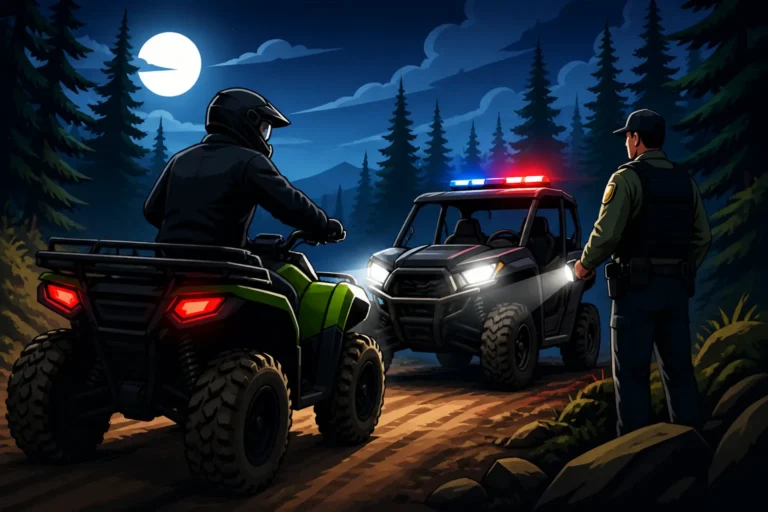
- Communication: A basic "Bonjour," "Merci," and "Pardon" goes a long way. If you're stopped by a patroller, be polite and cooperative. Most patrollers understand English, especially when dealing with tourists, but starting in French shows respect.
- Asking for Directions: Don't hesitate to ask locals for help, but always confirm any advice against official maps or the iQuad app. Sometimes well-meaning locals might suggest shortcuts that are, in fact, illegal or on private land.
Planning Your Route and Staying Informed
Successful, legal riding in Quebec depends heavily on good planning. Don't just show up and expect to wing it.
- Official Resources: Rely on official FQCQ resources. The FQCQ website and their iQuad app are indispensable for trail maps, conditions, and regulations. The app allows you to download maps for offline use, which is critical in areas with spotty cell service.
- Check Conditions: Always check [Quebec Trail Conditions Before You Go]. Trail closures, especially during spring thaw (typically late April to early May, but it varies by region and year) or due to weather events like heavy rain, are common. Riding on a closed trail is a serious offense and can damage trails, leading to future closures.
- Club Specifics: Know which FQCQ club manages the trails you plan to ride. Their individual websites often have local updates, events, or specific rules for their territory.
- Border Considerations: Ensure you know exactly where the international border is. While it might seem obvious, some trail systems can run very close, and accidentally crossing back into the US without proper documentation for your machine can create headaches when trying to re-enter Quebec. You can also gain some perspective by reading [Quebec Registration Compared to Vermont].
Table: Key Differences for Vermont Riders in Quebec
| Feature | Vermont (Typical) | Quebec (Mandatory for Visitors) |
|---|---|---|
| Registration | State-issued registration (valid in Vermont) | Vermont registration valid, but Quebec Trail Pass required for trails |
| Trail Pass | State or club pass (often reciprocal) | Mandatory [Quebec Trail Pass for a Visiting Vermont Rider] (no reciprocity) |
| Liability Insurance | State minimum, often private provider | Minimum $1 Million liability required (verify with your insurer) |
| Road Access | Varies by state/town, often more liberal | Generally prohibited, limited 1 km sections with signage |
| Age for ATV | Varies, often 12+ with training/supervision | 16 years old (minimum) |
| Age for Side-by-Side | Varies, often 16+ with licence/training | 18 years old (minimum) |
| Helmet/Visor | Helmet always, visor/goggles might vary | Helmet and visor/goggles mandatory for all riders |
| Documents to Carry | Licence, registration, insurance | Licence, Vermont registration, Quebec Trail Pass, proof of $1M liability insurance |
By taking the time to understand and adhere to these Quebec-specific rules, your trip from Vermont can be an incredible opportunity to explore a truly spectacular off-highway vehicle paradise. Happy trails!
Disclaimer
This article is for general informational purposes only and does not constitute professional advice. Laws, prices and regulations vary by location and change over time. Consult a qualified professional for guidance on your specific situation.