Quebec Riding in Mosquito Season
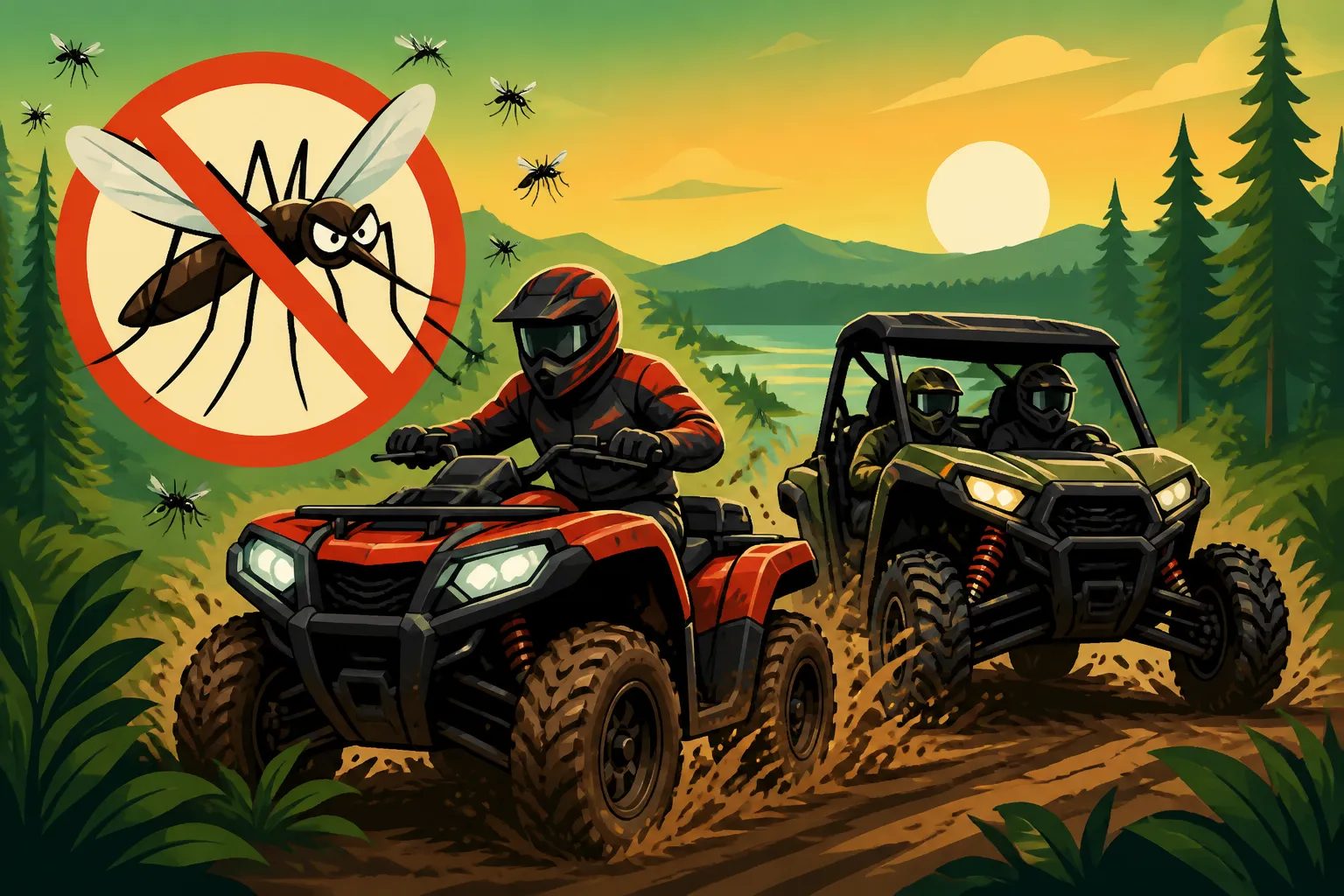
A Quebec ATV ride can feel perfect at the trailhead, then become a battle with mosquitoes as soon as you stop in a damp, sheltered stretch. The worst weeks vary with weather, elevation and region, so a fixed calendar is only a rough guide. This guide explains when bugs are likely to be bothersome, how to prepare, and how to plan a ride that stays comfortable and safe.
When mosquitoes are worst on Quebec trails
Think in conditions, not fixed dates
Mosquito activity often increases during the warmer part of the riding season, especially where water and vegetation create sheltered, damp habitat. But there isn’t one reliable “mosquito season” date for all of Quebec. A wet spring, a warm spell, recent rain, local terrain and the time of day can all change what you encounter.
A trail through a shaded, low-lying area may feel much worse than an exposed route nearby. Calm air can make mosquitoes harder to avoid, while a breeze often makes riding more comfortable. Areas with standing water, marshy edges, ditches and dense vegetation are worth treating as possible bug hotspots, particularly when you stop.
The calendar can also be misleading because trail access and insect activity don’t always line up. Spring thaw closures may delay riding on some trails, while other areas become accessible at a different time. Check local updates before setting off, and use [Quebec's Spring Thaw Closure] and [Quebec Trail Conditions Before You Go] to understand why opening dates and conditions can vary.
Expect differences between regions and ride types
A route in the Laurentians, Outaouais or Mauricie may feel different from a ride in Charlevoix, Saguenay, Gaspésie or Bas-Saint-Laurent. Even within one region, a forested corridor, a wetland crossing and an open gravel road can have noticeably different conditions. Elevation and exposure matter too: a breezy ridge and a sheltered creek valley are not the same kind of ride.
Your pace and stopping pattern matter as much as the route. While moving, airflow can make bugs less noticeable. Once the group pulls over to check a map, adjust a helmet or wait for a rider, mosquitoes have more time to find exposed skin. A picnic or long photo stop beside water can turn a tolerable ride into an uncomfortable one.
Use seasonal guides as context rather than guarantees. [Quebec Riding in May] can help you think about early-season conditions, while [Quebec Riding in July] covers a different part of the riding season. Neither can predict the exact bug pressure on a particular trail or day, so check the forecast and local trail information close to departure.
How to prepare for a mosquito-heavy ride
Dress for protection without compromising riding safety
Long sleeves and long pants can reduce exposed skin, but riding clothing still needs to fit properly and allow you to move freely. Choose light, breathable layers that won’t snag on branches or interfere with the machine’s controls. Secure cuffs and collars where practical, and consider a neck gaiter or similar covering if it fits comfortably under your helmet.
A fine head net can help during a long stop or while setting up camp, but it must not obstruct your vision or interfere with your helmet, goggles or face protection. Keep your normal riding visibility first. If a net flaps, fogs your eyewear or shifts into your line of sight, it can create a more serious problem than the insects.
Insect repellent can be useful on exposed skin when used according to its label. Apply it before heading into the woods, follow the product’s instructions for reapplication, and be careful around eyes, cuts, food and equipment surfaces. If you use clothing treatments, follow the product directions and don’t assume that a treatment intended for fabric is suitable for skin.
Keep your stops short, planned and comfortable
A simple ride plan can reduce the time everyone spends standing still in a buggy spot. Decide in advance where you’re likely to stop for fuel, food, a route check or a group regroup. If the trail allows a safe, legal stopping area with more airflow and less nearby vegetation, it may be a better choice than pulling over beside a wet ditch.
Before anyone removes gloves or opens a bag, have the group settle the machines in a safe place. Then keep the stop purposeful: check the route, confirm everyone is ready and move on when the task is done. This is especially helpful for families and larger groups, where a quick pause can otherwise turn into a long break.
A small kit can make a big difference when someone gets bitten or a stop runs longer than expected. Pack a repellent, a spare lightweight layer, water, a basic first-aid kit and a sealable bag for items that should stay clean. If a rider has a known sensitivity to bites or insect products, plan around their needs and follow any professional guidance they already have.
| Situation | What helps | What to watch for |
|---|---|---|
| Riding through a sheltered forest section | Covered skin and repellent used as directed | Heat, restricted movement and visibility |
| Stopping near water or dense vegetation | Choose a safer, more open stopping area when possible | Standing water, soft ground and trail obstruction |
| Checking navigation | Agree on the route before stopping when practical | Don’t use a phone while operating the machine |
| A group waits for a slower rider | Regroup at a planned location with room to pull over | Avoid blocking the trail or stopping on a blind approach |
| Riding near dusk | Add suitable layers and keep lighting and visibility in mind | Reduced light, changing insect activity and fatigue |
Plan the route around conditions and access
Check trail status before you leave
Mosquitoes are only one part of a good ride plan. A trail can be wet, damaged, temporarily closed or unsuitable for your machine even when the weather seems inviting. Check the relevant club or trail network information before departure, and make sure your planned route is open for the type of riding you intend to do.
Weather changes can affect more than comfort. Heavy rain may leave puddles, soft shoulders, washouts or slippery surfaces, and it can make some sections harder to ride safely. Read [Quebec Trail Closures After Heavy Rain] alongside the latest local trail notices rather than assuming a route is fine because it was open on your last visit.
Navigation apps can be useful for organizing a route, but don’t treat a line on a screen as proof that a trail is open or that riding is permitted there. If you use onX Offroad, compare what you see with current information from the relevant Quebec club or official trail source. You can also review [Quebec Trail Maps and the iQuad App] for context on following Quebec trail information. Download or save the details you need before you lose service, and keep a backup plan.
Choose ride timing with comfort and visibility in mind
Mosquitoes can be more noticeable when the air is still and riders are stationary, so timing your breaks matters. Starting early may help you avoid some of the heat and crowds, but it isn’t a guarantee of fewer bugs. Late-day riding may bring its own challenges, including lower visibility and fatigue. Choose a schedule that fits the group, the route and the local rules rather than chasing a supposedly perfect hour.
Build a little flexibility into the itinerary. If a low, wet section is unpleasant, don’t pressure the group to push through just to keep a schedule. A safe alternate route is useful only if it is open, authorized and appropriate for your machine. A map app, including onX Offroad, can help with orientation, but confirm proposed detours against current trail information instead of turning onto an unverified track.
For a multi-region trip, plan each day separately. Conditions around a trailhead near Saint-Hippolyte may differ from those near a route in the Outaouais or Charlevoix. Check the relevant club updates, forecast and access notes for each area. If you are riding through a shared or busy corridor, [Quebec Trail Etiquette Locals Expect] is a helpful reminder to stay predictable, respect other users and keep stops considerate.
A practical plan for the day
Use a simple pre-ride checklist
The night before, check the weather, trail status and route. Confirm that the group knows where the ride begins, where you expect to stop and how you’ll regroup if riders become separated. Look at the route for long stretches without convenient services, and make sure everyone has enough fuel, water and appropriate clothing.
Before loading up, check that helmets and eyewear fit correctly with any extra layers. Pack repellent where it can be reached without unpacking the whole machine, but store it securely so it can’t spill. Keep first-aid supplies and water accessible. If you use an app such as onX Offroad, save the information you’ll need before departure and have another way to orient yourself if your phone battery runs low or coverage disappears.
At the trailhead, take a moment to assess the actual conditions. If the route is wet, visibility is poor or the group is already uncomfortable, adjust the plan. The best decision may be a shorter loop, a different open route or a postponed ride. Check [Quebec Riding in October] for a seasonal contrast: cooler weather may reduce the mosquito problem, but it brings other considerations such as shorter daylight and changing trail conditions.
Respond sensibly if the ride becomes uncomfortable
If bugs become intense, don’t let irritation push anyone into rushing, riding too close or ignoring hazards. Pull over only where it is safe and permitted, get the group organized, and deal with exposed skin or clothing before continuing. If someone is distracted by bites, overheated by added layers or having trouble seeing through their eyewear, pause and address that before riding again.
Be considerate of the trail and nearby land. Avoid creating a new stopping spot by driving off the corridor, and don’t leave litter such as wipes, packaging or used repellent containers behind. Keeping the ride tidy and staying on authorized routes helps preserve access for everyone.
Finally, treat insect comfort as one factor in the ride, not the only one. Good preparation can make a buggy day manageable, but safe riding still depends on suitable clothing, a realistic route, current trail information and a group willing to change plans when conditions call for it.
Disclaimer
This article is for general informational purposes only and does not constitute professional advice. Laws, prices and regulations vary by location and change over time. Consult a qualified professional for guidance on your specific situation.