Quebec Wildlife on the Trail
A wildlife encounter can turn an ordinary Quebec ATV ride into a tense moment, especially when an animal appears around a blind bend or near a quiet trailhead. Knowing how to respond helps protect you, your riding group, and the animal. This guide covers common wildlife sightings, safe riding habits, and what to do when an animal is close to the trail.
Wildlife You May See on Quebec Trails
Quebec’s forests, wetlands, and backcountry corridors are home to animals that may cross or travel along ATV routes. Sightings vary with region, season, weather, and time of day, so even a familiar trail can feel different from one ride to the next.
Moose, deer, and other large animals
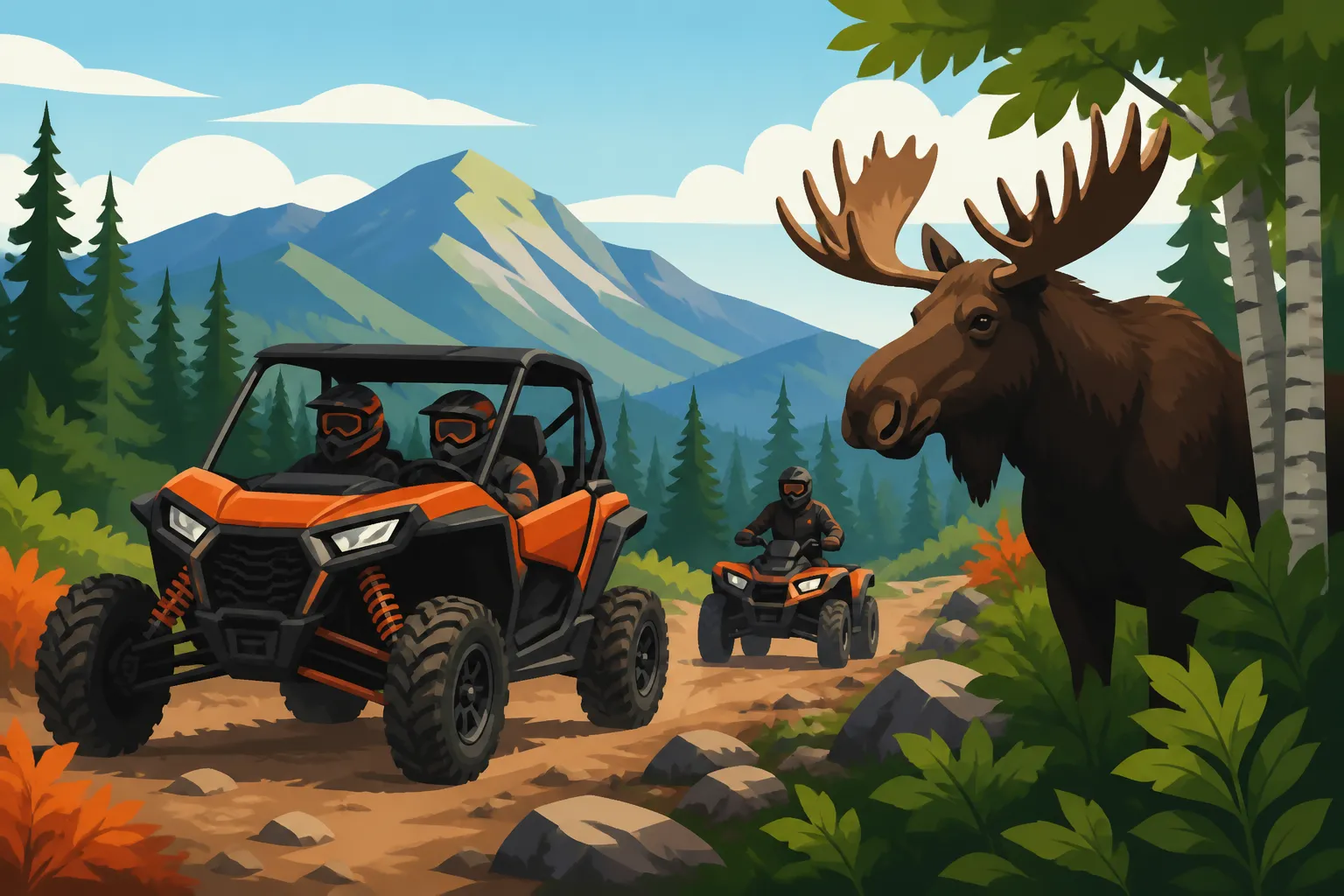
Moose and white-tailed deer can appear in wooded areas, along the edges of clearings, or near water. You might see one standing beside the trail, crossing ahead, or moving through brush where it is difficult to judge its size and direction. In places such as Charlevoix, the Laurentians, and parts of Gaspésie, riders may travel through habitat where large mammals are present.
A moose deserves particular caution. It is a large, powerful animal, and its behaviour can be hard to read. A moose that looks calm may still react suddenly, especially if it feels trapped, is protecting a calf, or has limited room to move. Do not assume it will leave the trail just because an ATV is approaching.
Deer may be smaller, but they can still bolt across the route with little warning. If one crosses in front of you, slow down and look for others following behind. A group can move in quick succession, and the first animal’s movement does not mean the trail is clear.
For more detail on keeping your distance and responding to a close encounter, see [Quebec Moose Encounters While Riding]. The same basic approach applies to other large wildlife: make space, avoid sudden movements, and do not try to drive an animal in a particular direction.
Bears, foxes, and smaller wildlife
Black bears, foxes, coyotes, porcupines, and beavers are among the wildlife riders may encounter in Quebec. Some animals may be visible only briefly before disappearing into cover. Others, particularly porcupines, may move slowly enough that a rider has time to stop safely and wait for them to leave the route.
A bear sighting does not automatically mean there is an immediate threat, but it does call for calm, careful behaviour. Do not approach, surround, chase, feed, or try to photograph the animal from close range. If it is near the trail, stop at a safe distance and give it room to move away. If it does not leave, turn back when you can do so without getting closer.
Smaller wildlife still matters. Running over an animal or startling it into a dangerous escape can cause harm, while a sudden swerve can put riders at risk. Stay alert for movement at the trail edge, particularly in shaded sections and near water or dense vegetation.
How to Ride Safely Around Wildlife
The safest response to wildlife is usually prevention: keep your speed appropriate to the conditions, stay alert, and leave enough room to stop. A trail that seems empty can still have animals nearby, especially where vegetation blocks your view.
Slow down where visibility is limited
Blind corners, narrow wooded corridors, hill crests, and trail sections beside wetlands deserve extra attention. Reduce speed before you reach a place where you cannot see far ahead. If an animal steps onto the trail, braking in a controlled way is usually safer than swerving into brush, a ditch, or an oncoming lane.
Keep enough distance from the rider ahead to react if they stop suddenly. This matters on group rides: the person at the front may spot an animal first, while riders farther back may not see why the group has slowed. Agree on clear signals before setting out, and do not assume the rider behind you knows what is happening.
Dust, rain, dusk, and changing light can make wildlife harder to see. A route that was easy to read in bright daylight may become more demanding after a shower or as shadows lengthen. Check [Quebec Trail Conditions Before You Go] and adjust your plans to the visibility and surface conditions you actually face.
Stop, leave space, and avoid crowding
If wildlife is on the route, stop before you reach it. Keep the ATV pointed in a safe direction, leave the engine running only if doing so does not appear to distress the animal, and give it time to move away. Avoid revving, honking, or repeatedly moving closer to encourage it to leave.
On a group ride, ask everyone to remain together at a safe distance rather than spreading out around the animal. Multiple machines can make an animal feel cornered, even if each rider believes they are giving it room. Do not block its likely escape route or follow it into the trees.
If the animal does not move, waiting is not always the right answer. It may be safer to turn around or use an authorized alternate route. Do not leave a marked corridor to get around an animal, and do not ride across private land without permission. [Staying on a Federated Corridor] and [Quebec Trails That Cross Private Land] are useful reminders that a wildlife encounter does not create permission to take an unofficial shortcut.
| Situation | Safer response | Avoid |
|---|---|---|
| Animal crosses ahead | Slow down, stop if needed, and watch for others | Accelerating after the first animal |
| Large animal remains on the trail | Wait at a distance or turn back safely | Approaching, surrounding, or trying to herd it |
| Animal is near a group | Keep riders together and leave its escape route open | Spreading machines around it |
| Visibility is poor | Reduce speed and increase following distance | Riding at the pace you would use in clear conditions |
| Route is blocked by wildlife | Use an authorized option or return the way you came | Cutting onto an unmarked trail or private property |
Plan for Wildlife Before You Ride
A little preparation can prevent a rushed decision in the woods. It also helps your group understand where it is permitted to ride and what to do if a route is blocked.
Check route information and local notices
Before departure, check trail conditions, closures, and any local notices that may affect access. Trails can change with weather, land access, maintenance work, or seasonal restrictions. If you are riding through an area with a closure or a signed detour, follow the posted direction rather than improvising around it.
Official club information and trail signage should guide decisions about access. Digital maps can help you plan and understand where you are, but a map should not be treated as permission to ride every visible track. If you use onX Offroad while planning, compare what you see with current local trail information and signs on the ground. A mapping tool is most useful when it supports good route planning, not when it encourages riders to leave an authorized corridor.
For route planning, [Quebec Trail Maps and the iQuad App] covers another mapping option riders may use to follow Quebec trail routes. Whatever tools you carry, download or review what you need before leaving an area with unreliable reception, and keep a backup plan for getting back to a known trail.
Think about season, weather, and hunting activity
Wildlife movement and trail conditions change through the year. A wet trail can reduce traction and visibility, while a storm may leave branches or other obstacles across the route. Before heading out after heavy weather, review [Quebec Trail Riding After a Storm] and any available club updates. If conditions are poor, postponing the ride may be the sensible choice.
During hunting seasons, take local notices seriously and confirm which routes remain open. Do not assume that a trail is safe or available simply because you rode it earlier in the season. [Quebec Hunting Season Trail Rules] can help you understand why seasonal information matters. Wear suitable high-visibility clothing where appropriate, remain on the authorized route, and be considerate of other land users.
When choosing a digital map, onX Offroad can be one part of your planning routine, but it should not replace checking local access rules or route closures. If your map and a posted sign appear to conflict, do not treat the map as a reason to ignore the sign. Confirm the route through a reliable local trail source before continuing.
What to Do During and After an Encounter
A calm response is easier when everyone in the group already knows the plan. Wildlife sightings can be exciting, but the priority is to avoid disturbing the animal and prevent a sudden manoeuvre that could injure a rider.
Make a simple group plan
Before the ride, agree that the first rider to spot wildlife will slow or stop in a controlled way and signal the group. Decide how you will regroup if the trail is narrow or visibility is limited. Riders should avoid crowding the person at the front; leave enough room for everyone to stop without piling up.
If a large animal is close, keep passengers seated and riders on their machines unless there is a clear, safe reason to do otherwise. Do not send someone forward to get a better look. The group should remain quiet, avoid blocking the animal’s path, and move away only when it is safe to do so.
It can help to have a simple fallback: wait, turn back, or contact local authorities if the animal appears injured, trapped, or dangerous and you can do so safely. Do not try to handle or rescue wildlife yourself. The right response is to give it space and seek appropriate help from a safe location.
Leave the trail and the animal undisturbed
After the animal moves away, continue slowly and stay alert. It may have companions nearby, or it may cross the trail again. Do not follow it for a closer look or stop in a place that creates a hazard for other riders.
Keep noise and litter under control. Food scraps can attract animals, and feeding wildlife can create risks for both animals and people. Pack out everything you bring in, and do not leave food where animals can reach it. If you take a photo, do so only from a safe distance without delaying or changing the animal’s movement.
If you report a blocked route or an unusual wildlife hazard, share the location as accurately as you can and follow local reporting guidance. A mapping app such as onX Offroad may help you identify your position during planning, but confirm any incident-reporting method with the relevant club or local authority. For everyday riding, following [Quebec Trail Etiquette Locals Expect] helps protect wildlife habitat and keeps shared corridors safer for everyone.
Disclaimer
This article is for general informational purposes only and does not constitute professional advice. Laws, prices and regulations vary by location and change over time. Consult a qualified professional for guidance on your specific situation.