Quebec Municipal Road Access Up to 1 Kilometre
It's incredibly frustrating when you're out on the trails, enjoying the vast beauty of Quebec, only to find a public road standing between you and the next section of amazing riding, or worse, between you and that much-needed gas station. You know the rules around off-road vehicles can feel like a maze, especially when it comes to riding on pavement. This comprehensive guide is here to clear up the confusion surrounding Quebec's specific regulations for accessing municipal roads for up to 1 kilometre, ensuring you understand exactly when and how you can legally make those short pavement stints.
Understanding Quebec's Off-Highway Vehicle Act (LVHR) and Road Access
Navigating the rules for off-highway vehicles (OHVs) in Quebec can sometimes feel like you need a law degree. At its core, Quebec's Act respecting off-highway vehicles, often referred to as the LVHR (Loi sur les véhicules hors route), is designed to keep everyone safe and preserve the integrity of our trail networks. But let's be real, sometimes a trail just doesn't connect perfectly, or you need to pop into a village for supplies. That's where the nuances of road access come into play, and it's a topic that causes a lot of head-scratching among riders.
The General Prohibition: Why Roads Are Usually Off-Limits
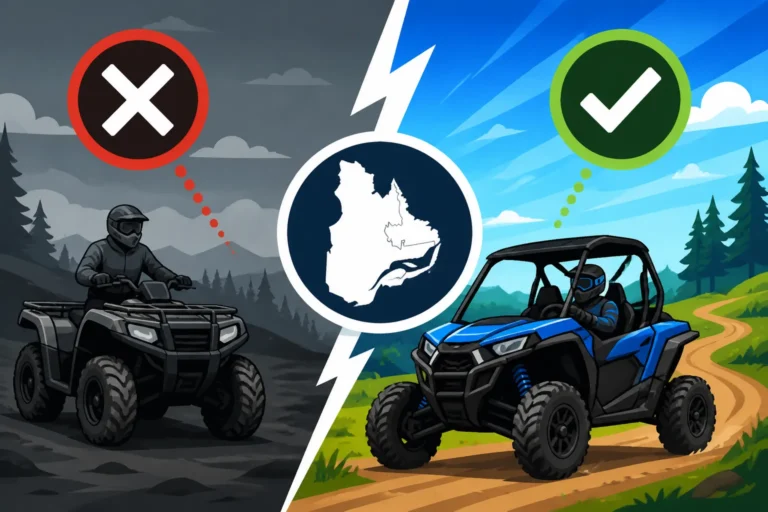
The foundational principle in Quebec is pretty straightforward: ATVs and side-by-sides (which the SAAQ calls VHRs or véhicules hors route, and often referred to as VTTs or véhicules tout-terrain) are generally not permitted on public roads. This isn't just a random rule; it's rooted in safety and the distinct operational differences between an off-road machine and a street-legal vehicle. Quads are designed for uneven terrain, mud, and climbing, not for sharing asphalt with cars, trucks, and motorcycles at higher speeds. Their tires, suspension, and lack of certain safety features (like fully enclosed cabs on many models) make them less suitable for road conditions. This is why you'll see strict guidelines in [Quebec ATV Road Rules Under the LVHR] for what's allowed and what's not.
Imagine the chaos if every quad could just cruise down Autoroute 10 without specific restrictions. The risk of accidents would skyrocket, not to mention the wear and tear on machines not built for sustained road use. This general prohibition aims to keep our roads safe for traditional vehicles and our off-road riders where they belong: on dedicated trails or private property. It's a system designed to manage risk and maintain order, even if it sometimes feels like it adds an extra layer of complexity to our rides.
The Crucial Exception: When You Can Use a Road
While the general rule is "no public roads," Quebec law understands that sometimes, it's simply unavoidable or pragmatic to use a short stretch of pavement. This is where the exceptions come in, acting as vital bridges in our riding adventures. These aren't loopholes to exploit, but carefully defined conditions that allow for brief, specific uses of municipal roads. Think of it as a tightly controlled access pass rather than a free ride. These exceptions are critical for connecting different sections of the vast [Quebec ATV Trails: The FQCQ Network], allowing riders to complete circuits, reach amenities, or simply get from point A to point B when a direct trail link isn't available.
These exceptions are often what differentiate a successful, legal ride from a potential run-in with law enforcement. Understanding them isn't just about avoiding a ticket; it's about being a responsible rider who respects the infrastructure and rules put in place for everyone's benefit. The key is that these allowances are always conditional, never blanket permissions, and they almost always come with strict requirements regarding how you operate your machine and what kind of road you're on.
The "1 Kilometre Rule" Explained
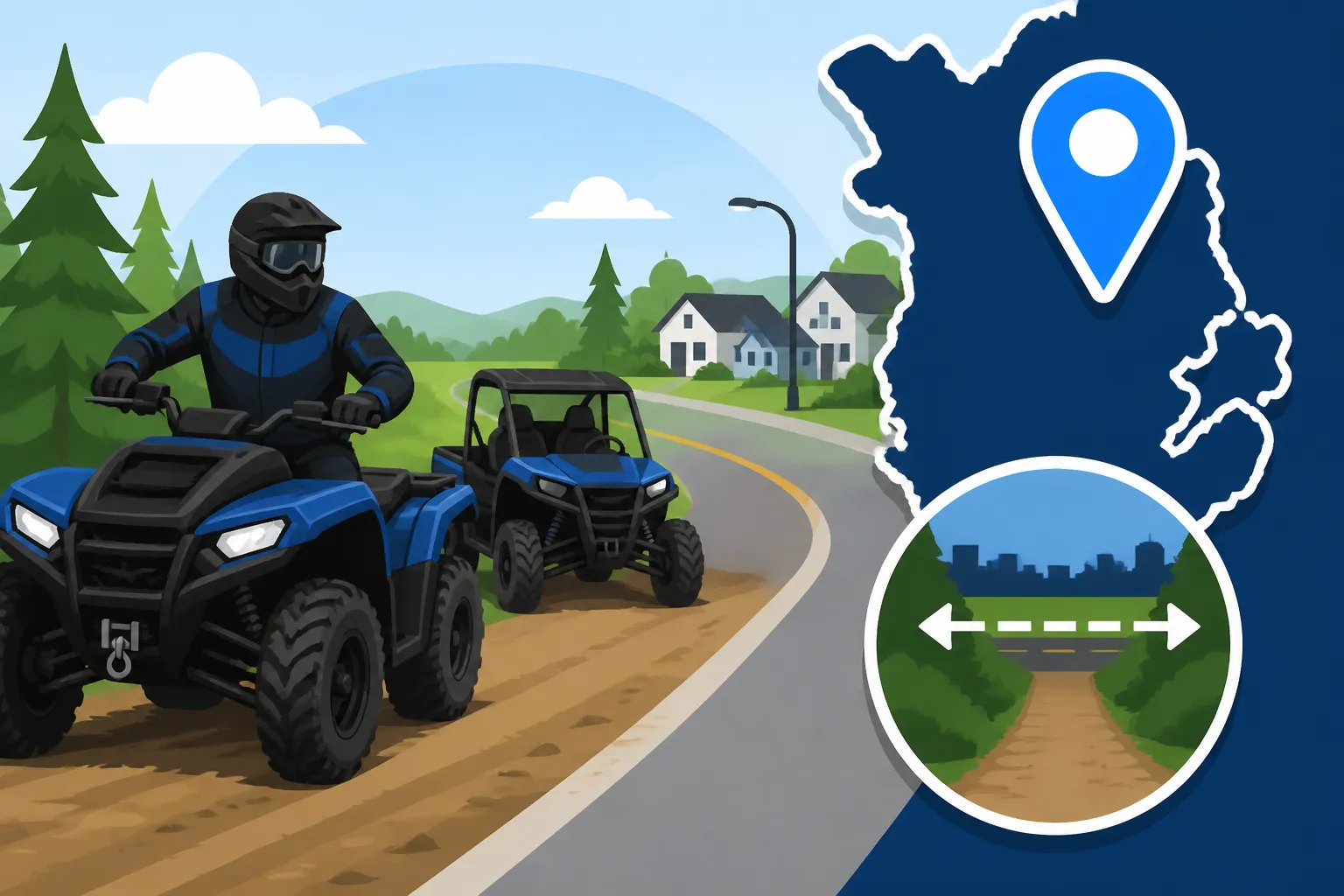
One of the most common and crucial exceptions for ATV and UTV riders in Quebec is the ability to use a municipal road for a maximum distance of 1 kilometre. This rule is designed for specific, limited purposes: either to connect two sections of a federated trail where no direct off-road link exists, or to access a service like a gas station, a restaurant, or an accommodation. It's not a green light for joyriding on paved roads, nor is it permission to bypass long sections of trail by using the street. The intention is purely practical and utilitarian.
When you find yourself on such a stretch, you're expected to operate your machine as safely and efficiently as possible, recognizing you are sharing the road with vehicles not always accustomed to quads. This 1-kilometre limit is very specific, and exceeding it without explicit municipal authorization (which we'll cover later) can lead to fines. It's a precise measure, so always be mindful of your distance when you're making these connections. Riders often carry GPS or use apps like iQuad to monitor their distance accurately, ensuring they stay within legal limits. This rule serves as a lifeline for many clubs and riders, allowing the seamless flow of the trail network even when pavement gets in the way.
Specific Conditions for the 1 Kilometre Rule
Simply knowing you can use a road for 1 kilometre isn't enough; it's vital to understand the how. Quebec's laws are particular about the conditions under which this exception applies. These conditions are in place to minimize risks and ensure that when OHVs do briefly share municipal roads, they do so predictably and safely for all road users. It's not just about avoiding a fine; it's about being a courteous and responsible member of the community, whether you're on dirt or asphalt.
Designated Road Sections and Signage Requirements
For a municipal road to be legally accessible to ATVs for that 1-kilometre stretch, it absolutely needs proper signage. This isn't optional; it's a legal requirement. These signs, typically installed by the municipality in collaboration with the local ATV club, clearly indicate where OHVs are permitted to enter and exit the road, and for what purpose (e.g., trail link, access to services). If you don't see the specific signage, assume the road is off-limits. You can't just decide a road looks like a good candidate for the 1-kilometre rule. The absence of signage is a clear indication that the exception does not apply. This is a critical point that many riders miss, leading to unnecessary penalties.
The signage is crucial because it informs both the ATV rider and other motorists of the shared road conditions. It eliminates ambiguity and ensures that everyone is aware of the presence of off-highway vehicles. Without it, you're not just risking a ticket; you're creating a potential safety hazard by operating your machine where other drivers might not expect you. Always keep an eye out for these specific markers; they are your official invitation to use that short stretch of pavement. [Quebec Signage for an Authorized Road Stretch] details what to look for.
Purpose of Road Use: Accessing Services or Linking Trails
The 1-kilometre rule isn't a free pass to cruise down Main Street for fun. The law is very clear about the purpose for which you can use that short road segment. Primarily, it's for two distinct reasons:
- Accessing Services: This means you're heading directly to a gas station, a convenience store, a restaurant, a specific lodging, or similar essential services. You're not meant to be leisurely exploring the town. The route should be the most direct path to your destination.
- Linking Trail Sections: Often, the federated trail network might have gaps where a natural obstacle, private property, or urban development prevents an uninterrupted off-road path. In these cases, a short section of municipal road, properly signed, allows riders to connect from one trail segment to another. This is vital for maintaining the continuity of long-distance routes and circuits.
These purposes are not suggestions; they are legal definitions. Straying from these defined purposes, even within the 1-kilometre limit, could put you in violation of the law. For instance, if you use the 1-kilometre stretch to visit a friend's house in the village when there was a trail nearby, you could face a fine. The intention behind your road use truly matters in the eyes of Quebec's law.
Speed Limits and Safe Operation on Roads
When you're on a public road, even for a short 1-kilometre stretch, you are no longer just an off-road rider; you're sharing the road with cars and trucks. This means a shift in your operational mindset and strict adherence to specific speed limits and safety protocols. While the general [Quebec ATV Speed Limit on Trails] is 50 km/h, on public roads, the rules can be different and often more restrictive, especially for OHVs.
Typically, when an ATV is permitted on a road for these short stretches, it must operate at a reduced speed, often capped at 30 km/h or sometimes even lower, depending on municipal by-laws and signage. Always look for posted speed limits specific to OHVs, or default to a cautious speed well below the posted limit for cars. Furthermore, you must:
- Stay to the Right: Keep as far right as safely possible on the road.
- Single File: Ride in single file if you're in a group.
- Signal Turns: Use appropriate hand signals or, if equipped, turn signals.
- Be Visible: Ensure your headlights and taillights are on, even during the day. Consider adding auxiliary lighting or reflective elements, and ensure your mirrors (perhaps from a brand like SuperATV which offers a range of durable, adjustable mirrors designed for off-road vehicles that often see mixed use) are properly adjusted for maximum visibility.
- Yield to Other Traffic: Always give way to cars and other road users.
Operating safely means being highly aware of your surroundings, anticipating the movements of other vehicles, and never assuming they see you. Remember, a quad handles very differently on pavement than on dirt, especially when braking or turning. Smooth, controlled movements are essential.
Crossing Roads and Intersections Safely
Beyond riding along a road for up to a kilometre, there will be countless times when your trail simply needs to cross a public thoroughfare. This is another specific allowance within the LVHR, but like the 1-kilometre rule, it comes with its own set of stringent safety requirements. Road crossings are inherently high-risk areas, and Quebec law goes to great lengths to minimize the potential for accidents between fast-moving road traffic and off-highway vehicles.
Right-Angle Crossings and Sightline Distances
When a trail intersects with a public road and requires you to cross, Quebec law mandates that this crossing must be made at a right angle (as close to 90 degrees as possible) to the road. This isn't just a suggestion; it's a critical safety measure. Crossing at a right angle minimizes the time your machine spends in the path of oncoming traffic and allows you to clearly see and be seen from both directions. It avoids diagonal movements that can be unpredictable and confusing for other drivers.
Furthermore, specific sightline distances are required at these crossings. This means that from the point where you stop before entering the roadway, you must have an unobstructed view of oncoming traffic for a certain distance, and vice-versa. These distances vary based on the speed limit of the road you are crossing:
| Road Speed Limit | Minimum Sightline Distance Required |
|---|---|
| 30 km/h | 50 metres in each direction |
| 50 km/h | 100 metres in each direction |
| 90 km/h or more | 200 metres in each direction |
If these sightline distances cannot be met due to trees, buildings, or terrain, the crossing is deemed unsafe and is generally not permitted unless a specific exception applies (like the 500-metre rule, which we'll discuss next). Always stop, look, and listen carefully before proceeding. Never gamble on a crossing if you don't have clear visibility. [Quebec Crossing Sightline Distances] further clarifies these critical requirements.
Stopping Before Entering a Public Road
This might seem like common sense, but it's a legal requirement often overlooked or rushed by enthusiastic riders. Before you even contemplate crossing a public road, you must come to a complete stop. This isn't a rolling stop or a quick glance; it's a full, deliberate halt. The law dictates you must stop at the limit line or, if none exists, at a point where you have a clear view of traffic without entering the roadway itself.
This pause allows you to assess the traffic situation fully, ensuring there's ample time and space to cross safely. It's also an opportunity to double-check that your machine is in the right gear for a quick, decisive crossing. A momentary stop might feel like it breaks your flow, but it's a non-negotiable step in ensuring your safety and compliance with the law. This rule applies equally whether you're crossing a quiet country road or a busier municipal thoroughfare.
The 500 Metre Exception for Difficult Terrain
While the right-angle crossing and sightline rules are generally strict, Quebec law does account for geographical realities. Sometimes, the terrain immediately adjacent to a road is simply too difficult, dangerous, or impassable for an ATV to make a direct, right-angle crossing while maintaining the required sightlines. In such cases, the law allows for a specific exception: you may use the shoulder or edge of the roadway for a distance of up to 500 metres to reach a safer or more suitable crossing point. This is often referred to as the [Quebec's 500 Metre Terrain Exception].
This exception is not an invitation to extend your road use casually. It's strictly for navigating truly challenging terrain that prevents a standard crossing. If you utilize this 500-metre allowance, you must still adhere to all other road safety rules: operating at a reduced speed, staying to the far right, signaling turns, and maintaining full awareness of road traffic. It's a provision designed to enhance safety in areas where natural conditions make ideal crossings impractical, not to provide extra paved riding time. Always remember its specific purpose and never abuse this flexibility.
Municipal Authority and By-Laws
Quebec's Off-Highway Vehicle Act (LVHR) sets the overarching provincial framework for ATV and UTV use, but it also grants significant authority to municipalities. This means that while there are province-wide rules, local governments have the power to enact their own by-laws that can either restrict or, more often, extend the possibilities for off-road vehicle access within their specific territories. This local control is incredibly important because it allows communities to tailor rules to their unique landscapes, populations, and trail needs.
Understanding this dynamic between provincial law and local by-laws is key for any rider in Quebec. What might be allowed in one municipality might be prohibited in another, or vice versa. This is particularly true for those 1-kilometre access rules. A municipality could decide to extend certain sections of road for more than 1 kilometre, or even open entire routes, if they follow the proper procedures. This is why checking local regulations is just as important as knowing the provincial act.
How Municipalities Can Extend or Restrict Access
While the provincial law sets the baseline of a maximum 1-kilometre use for specific purposes, municipalities have the power to go beyond this. Through formal by-laws, a local government can designate specific road sections for off-highway vehicle traffic for distances greater than 1 kilometre, or even open up a network of roads within its boundaries. This is often done to:
- Boost Local Tourism: Connecting trails through a village can bring riders directly to local businesses, offering an economic benefit.
- Improve Trail Connectivity: Sometimes, a longer road stretch is the only feasible way to link important trail systems without disturbing sensitive areas.
- Respond to Community Needs: Residents or local clubs might advocate for specific road access to improve safety or convenience.
However, this extended access isn't automatic. When a municipality decides to open up roads, it must follow a strict process, including studies, public consultations, and importantly, installing clear and sufficient signage to inform all road users. Without these specific municipal by-laws and the accompanying signage, the provincial 1-kilometre rule remains the default limit. Conversely, a municipality could also pass by-laws that further restrict ATV access on roads, even for the 1-kilometre rule, if they deem it necessary for public safety or environmental protection. Always check with the local municipality or the local FQCQ club for specific rules in an area. You can find more details in [Quebec Municipal Road Access Up to 1 Kilometre].
The 15-Day Notification Requirement to the Ministry
When a municipality decides to create or modify a by-law concerning off-highway vehicle access on its roads, there's a crucial administrative step they must follow: notifying the Ministère des Transports du Québec (MTQ) and the Ministère de la Sécurité publique (MSP). Specifically, the municipality must send written notice to these ministries at least 15 days before the new by-law comes into effect. This [Quebec's 15-Day Notice to the Ministry] is not just bureaucratic red tape; it serves several important purposes:
- Coordination and Awareness: It ensures provincial authorities are aware of changes in local regulations, which helps in coordinating safety campaigns, enforcement efforts, and updating official maps or guidelines.
- Public Information: While the municipality is responsible for local signage, the ministries being informed means there's a central record of these changes, potentially aiding in informing the public on a wider scale.
- Oversight: It provides the ministries an opportunity to review the by-law, ensuring it aligns with provincial objectives and doesn't create undue safety risks or conflicts with other provincial laws.
For riders, while you won't be directly involved in this notification process, it's good to know that these checks and balances exist. If a municipality opens a new road section, it's done through a formal process that involves more than just a local decision. It reinforces the idea that road access for OHVs is a carefully considered matter.
What to Do If a Municipality Changes Rules
Local by-laws are not set in stone; they can and do change. A municipality might open a new section of road one year and then, due to complaints, accidents, or new urban planning, decide to close it or restrict access the next. This can be incredibly frustrating for riders who have become accustomed to a certain route.
If you hear about potential changes to local road access rules, or if you arrive in a new area, here’s what you should do:
- Check Local Signage: This is always your first and most reliable source of information on the ground. If signs have been removed or new ones installed, adhere to them.
- Consult the Local Club: Your local FQCQ (Fédération des clubs de motoneigistes et de VTT du Québec) club is usually the best resource for up-to-date local information. They work closely with municipalities and are often the first to know about changes to trail access and road use.
- Visit the Municipal Website: Many municipalities post their by-laws online. Look for sections related to leisure vehicles or off-road vehicles.
- Use the iQuad App: The official FQCQ iQuad app is regularly updated with trail and road access information. It’s an invaluable tool for planning your routes and staying informed.
Remember, ignorance of the law is not an excuse. It's your responsibility as a rider to be aware of the rules in the areas you're riding. A little proactive research can save you a lot of trouble, including hefty [Quebec Penalties for Riding Unregistered] or on unauthorized roads.
Equipment and Driver Requirements on Public Roads
When you transition from a private trail to a public municipal road, even for that brief 1-kilometre stretch, your ATV or UTV and your conduct as a driver are held to a higher standard of scrutiny. This isn't just about the road rules; it's about specific equipment and driver requirements designed to integrate off-highway vehicles as safely as possible into the broader traffic environment. You wouldn't drive a car on a public road without lights or a license, and the same careful consideration applies here. This is where your machine needs to be ready for its momentary starring role on the asphalt.
Driver's Licence and Minimum Age Rules
This is non-negotiable: to operate an ATV or UTV on any public road in Quebec, even for the 1-kilometre exception or a simple crossing, you must possess a valid driver's licence. This isn't just a recommendation; it's a legal mandate that came into effect in 2021. This means a Class 5 (car) licence, or an equivalent licence from another jurisdiction, is required. [Do You Need a Licence for an ATV in Quebec?] clarifies this unequivocally.
Furthermore, Quebec has strict minimum age requirements for operating these machines:
- 16 years old: For ATVs (VTTs).
- 18 years old: For side-by-sides (VHRs, or four-seat machines).
If you are 16 or 17 years old and riding an ATV, you also need to hold a valid FQCQ training certificate. This certificate proves you've received specific safety training for off-road vehicles, a crucial step for younger riders to gain the skills and knowledge needed to operate safely. Even if you have a driver's licence, if you don't meet the age or certificate requirements for the specific machine on a public road, you are breaking the law. These rules are in place to ensure that only individuals with a demonstrated level of competence and maturity are operating potentially dangerous machines on shared public spaces.
Essential Equipment: Helmet, Lights, Mirrors
Your machine also needs to meet certain equipment standards when it touches public pavement. These are not just for show; they are vital safety features:
- Helmet and Visor: A compliant helmet is mandatory at all times when riding an ATV or UTV, both on and off trails, but it's especially critical on public roads. Quebec law also requires a visor (or goggles if your helmet doesn't have one) to protect your eyes. [Quebec Helmet and Visor Rules] details these requirements.
- Headlights and Taillights: Your machine must have working headlights and taillights. These must be on at all times when operating on a public road, day or night, to ensure maximum visibility to other drivers.
- Brake Lights: A functional brake light is essential to signal your deceleration to traffic behind you.
- Mirrors: Your ATV or UTV must be equipped with at least one rear-view mirror, properly adjusted, allowing you to see traffic approaching from behind. Many riders opt for aftermarket mirrors, such as those from SuperATV, known for their durability and wide field of view, which can be a significant upgrade for machines that frequently encounter road sections.
- Muffler: Your machine must have an effective muffler in good condition. Excessive noise from modified exhausts is a common complaint and can lead to fines.
Neglecting any of these equipment requirements can result in fines and, more importantly, compromises your safety and the safety of others on the road. Always perform a quick check of these essentials before embarking on any ride that involves road access.
Insurance and Registration Proof on Your Machine
Just as with any other vehicle operating in Quebec, your ATV or UTV must be properly registered with the SAAQ (Société de l'assurance automobile du Québec) and carry the mandated liability insurance. This isn't optional; it's a legal requirement for all off-highway vehicles used anywhere other than strictly private land, and especially when on public roads. [Quebec's Liability Insurance Rule] mandates a minimum of $1 million in civil liability insurance.
When you're on a public road, whether for a crossing or a 1-kilometre stretch, you are legally required to have proof of your registration and insurance with you. This means carrying your SAAQ registration certificate and your insurance certificate. While a physical copy is best, some patrols may accept a clear photo on your phone, but it's always safer to have the actual documents. If stopped by a law enforcement officer or a trail patrol officer, they will ask for these documents. Failure to produce them can result in significant fines. This ensures that in the unfortunate event of an accident, all parties are protected, and the legal framework is in place. Think of it as your machine's passport for its brief legal venture onto the pavement.
Common Scenarios and Practical Advice
Knowing the legal framework is one thing, but applying it to real-life riding situations is where the rubber meets the road (literally!). Whether you're a seasoned rider or new to Quebec's extensive trail network, you'll inevitably encounter scenarios where the 1-kilometre rule or road crossing provisions come into play. Being prepared and understanding the nuances of these common situations can make all the difference between a smooth ride and a frustrating encounter with the law.
Riding to a Gas Station or Restaurant
This is perhaps the most frequent use of the 1-kilometre road access rule. You're out on a long ride, enjoying the scenery, and suddenly that fuel gauge starts looking a little too low, or your stomach starts rumbling. The trail might not lead directly to a gas pump or a cozy diner, but a short municipal road stretch might be your lifeline.
Practical Advice:
- Plan Ahead: Before you even leave, check your route for gas and food stops. Use your iQuad app or a physical map to identify businesses located close to trail access points. Don't wait until you're on fumes!
- Look for Signage: As emphasized, the road segment must be signed for ATV access. If it's not, you're taking a risk. Sometimes, a trail might end just across the street from a gas station, requiring only a legal crossing, but not a full kilometre on the road.
- Direct Route: Once on the road, take the most direct route to the service. Avoid detours or cruising through residential streets for sightseeing. The purpose is to access the service, not to tour the town.
- Slow and Steady: Reduce your speed, stay to the right, and be hyper-aware of other vehicles. Remember that cars might not expect an ATV on the road, even if it's a designated access point. This is an opportune time to ensure your machine's visibility is optimized, perhaps with aftermarket turn signals or auxiliary lights from a reputable brand like SuperATV.
- Park Respectfully: Once you reach your destination, park your ATV or UTV in an appropriate spot, out of the way of vehicle and pedestrian traffic.
Remember, this brief road stint is a means to an end – getting your fuel or food – so make it quick, safe, and compliant.
Linking Two Sections of Trail
Quebec boasts an incredible 25,000 kilometres of federated trails, but sometimes, even with such an expansive network, natural obstacles, private land, or urban development create unavoidable gaps. This is where the 1-kilometre rule often acts as a critical connector, allowing riders to maintain continuity on longer circuits without having to trailer their machines.
Practical Advice:
- Trust the Maps: The FQCQ's official maps (like the Carte Québequad) and the iQuad app are designed to show these designated road links. If the app shows a link on a public road, it means it's an authorized section.
- Follow Signage Closely: These connectors will be clearly marked at both entry and exit points. Ensure you follow the designated path, as veering off onto an unauthorized parallel road can lead to fines.
- Group Riding: If riding in a group, maintain single file and sufficient spacing on the road section. Signal your intentions clearly to other riders and road users.
- Re-enter Trails Safely: When transitioning back onto a trail from a road, be mindful of any ditches, curbs, or obstacles. Ensure a smooth and safe re-entry.
These linking sections are indispensable for long-distance touring, enabling routes like Le Summum, which spans 314 kilometres, to be completed without interruption. Understanding and respecting these connections keeps the entire network flowing.
Navigating Residential Areas and Setback Rules
Even if you're only on a municipal road for a kilometre or less, you might find yourself passing through residential areas. This requires an extra layer of caution and respect for the local community. The LVHR also includes specific setback rules that apply when operating off-road vehicles near dwellings, even on trails, but their spirit extends to road sections adjacent to homes.
Practical Advice:
- Quiet Operation: Keep your engine noise to a minimum. Avoid revving your engine unnecessarily. Remember that excessive noise is a common complaint from residents living near trails or access roads, and [Quebec Noise Complaints About Quads] can lead to further restrictions.
- The 100-Metre Rule: While primarily for trails, it's good practice to be aware that the law generally requires trails to be at least 100 metres from a dwelling (though older trails may be grandfathered in at 30 metres). When riding on an authorized road section through a residential area, be particularly mindful and courteous. Your presence is more noticeable here than deep in the forest.
- Speed and Dust: Maintain a low, controlled speed. If it's a gravel road, minimize dust. Your objective is to pass through as unobtrusively as possible.
- Respect Private Property: Even on an authorized road, respect adjacent private property. Do not stop unnecessarily, make excessive noise, or trespass.
By being a good neighbour, even for a brief moment, you help foster positive relationships between the riding community and local residents, which can contribute to the continued access to these vital road links.
Penalties for Non-Compliance
Quebec's Off-Highway Vehicle Act (LVHR) is not merely a set of guidelines; it's a legal framework with real consequences for those who choose to disregard its provisions. While the intent behind the 1-kilometre rule and road crossing exceptions is to facilitate responsible riding, deviating from these rules, or failing to meet the associated requirements, can lead to significant fines and other legal repercussions. No one wants to end a great day of riding with a citation, so understanding the potential penalties is as important as knowing the rules themselves.
Fines for Riding Unauthorized Roads
The most common and immediate consequence of riding an ATV or UTV on a public road without authorization (i.e., not within the 1-kilometre rule, or on an unsigned road, or for an unauthorized purpose) is a monetary fine. These fines are not trivial and are designed to act as a serious deterrent.
Fines for riding on unauthorized public roads can range from several hundred dollars, with additional administrative fees and potential court costs. These aren't just minor annoyances; they can quickly add up and put a significant dent in your riding budget. A single instance of riding outside the permitted conditions can result in a fine similar to what you might pay for a [Quebec Annual Pass vs Summer Pass] for a full season. Law enforcement officers, as well as authorized trail patrol officers, have the authority to issue these tickets. This means that even if you're on a road, a federated trail patrol can still stop you if you're within their jurisdiction and violating a rule related to authorized access.
The core message here is clear: stick to designated trails, use the 1-kilometre rule only where signed and for its intended purpose, and if a road isn't explicitly open to OHVs, assume it's off-limits.
Consequences of Not Following Equipment or Age Rules
Beyond unauthorized road access, failing to meet the driver and equipment requirements can also lead to fines. These penalties underscore the importance of safety and compliance with the basic operational standards for off-highway vehicles, especially when sharing space with other vehicles.
- No Driver's Licence: Operating an ATV or UTV on a public road without a valid driver's licence is a serious offense, often carrying fines similar to those for driving a car without a licence.
- Underage Operation: If a driver is under the minimum age (16 for ATVs, 18 for side-by-sides) or, for 16- and 17-year-olds on ATVs, lacks the mandatory FQCQ training certificate, they face fines. Furthermore, the owner of the machine who allowed the underage or uncertified rider to operate it on a public road can also be held liable and fined. [Quebec FQCQ Training Certificates for Teens] are critical here.
- Missing or Defective Equipment: Fines can be issued for operating a machine on a public road without the required headlights, taillights, brake lights, mirrors, or an appropriate helmet and visor. For example, not having a rear-view mirror can result in a fine, as can an excessively loud muffler. These seemingly minor issues are treated seriously because they directly impact safety and visibility for all road users.
These consequences highlight that operating an ATV or UTV on a public road is not taken lightly in Quebec. It demands full compliance with all regulations, not just some of them.
Impaired Riding on Public Roads
This is arguably the most severe category of non-compliance, and the penalties are commensurately harsh. Just as with cars, operating an ATV or UTV on a public road (or even on a federated trail) while impaired by alcohol or drugs is strictly prohibited and carries very significant legal ramifications.
If caught riding while impaired on a municipal road, you face the same serious penalties as if you were driving a car:
- Criminal Charges: Impaired driving is a criminal offense, not just a traffic infraction.
- Heavy Fines: Substantial fines are imposed upon conviction.
- Licence Suspension: Your driver's licence (for any vehicle, not just your ATV) will be suspended, potentially for a long period.
- Vehicle Seizure: Your ATV or UTV may be impounded.
- Jail Time: For repeat offenders or in cases involving injury, jail time is a real possibility.
- Increased Insurance Premiums: Your insurance costs will skyrocket, not just for your ATV but potentially for all your vehicles.
[Quebec Impaired Riding Fines From $450] are just the starting point; the full legal and personal consequences are far more severe. The message is absolute: never operate any off-highway vehicle on a public road or trail if you are impaired. It's not worth the risk to yourself, other road users, or your future.
Disclaimer
This article is for general informational purposes only and does not constitute professional advice. Laws, prices and regulations vary by location and change over time. Consult a qualified professional for guidance on your specific situation.