Quebec Modified Machines and the Age Rule
It can be incredibly frustrating to navigate the world of ATV and UTV ownership in Quebec, especially when you start looking at modifications or when you have younger family members eager to hit the trails. The rules can feel like a moving target, leaving you wondering if that custom part or your teenager's machine is even legal. This guide will meticulously break down the specific regulations in Quebec concerning modified off-highway vehicles and how these modifications, alongside the machine's original specifications, interact with the age rules for riders.
Understanding Quebec's Off-Highway Vehicle Act for Modifications
Quebec's framework for off-highway vehicles, often referred to as the Loi sur les véhicules hors route (LVHR), is designed with safety at its core. When you start thinking about customizing your quad or side-by-side, it's crucial to understand that these modifications aren't always seen in the same light as they might be in other jurisdictions. The spirit of the law leans heavily towards maintaining the vehicle's factory specifications, particularly concerning safety features and dimensions, to ensure a predictable and safe environment for all riders on federated trails and authorized paths.
What Constitutes a "Modification" in Quebec?
In Quebec, a "modification" isn isn't just about adding flashy lights or a custom paint job, although even those can have implications. The law is primarily concerned with changes that alter the vehicle's original performance, safety characteristics, or its fundamental design. This can include anything from engine tuning to suspension lifts, widening kits, or even significant changes to tire size. For instance, putting larger tires on your ATV might seem innocuous, but if it changes the machine's overall width beyond regulated limits, or significantly alters its center of gravity, it's a modification with legal ramifications. Many enthusiasts turn to aftermarket suppliers like SuperATV for parts, and while these can offer fantastic upgrades, it's essential to scrutinize how they affect your machine's compliance with Quebec's specific rules. The key is whether the change impacts the vehicle's safe operation, its classification, or its adherence to the technical standards set forth by the SAAQ and the Off-Highway Vehicle Act.
Think about it: the manufacturer designed your machine to perform within certain parameters. When you start changing those parameters, you're essentially creating a new set of operating characteristics that may not align with the safety certifications the machine originally received. This isn't to say all modifications are forbidden, but rather that any alteration needs to be considered carefully in light of the law's intent.
Regulatory Philosophy: Safety First, Factory Spec Preferred
The SAAQ and the FQCQ (Fédération québécoise des clubs quads) operate under a clear philosophy: the safer the vehicle, the better. This translates into a preference for machines that adhere closely to their original factory specifications. Why? Because these specifications have undergone rigorous testing to ensure stability, braking performance, and overall safety. When a machine is significantly modified, especially in ways that enhance speed, power, or alter its geometry, it can introduce unpredictable handling characteristics. For example, a lift kit, while providing greater ground clearance (and looking great!), can raise the center of gravity, making the machine more prone to rollovers, especially at speed or on uneven terrain.
This preference for factory spec is particularly relevant when patrols are out on the trails. They're not just looking for trail passes; they're also checking for machines that appear dangerously modified. If your machine looks like it's been heavily altered beyond reasonable limits, you might face questions. The goal is to minimize risks for everyone sharing the trails, and that starts with vehicles that are inherently stable and safe to operate as designed.
Implications for Road Legal Use
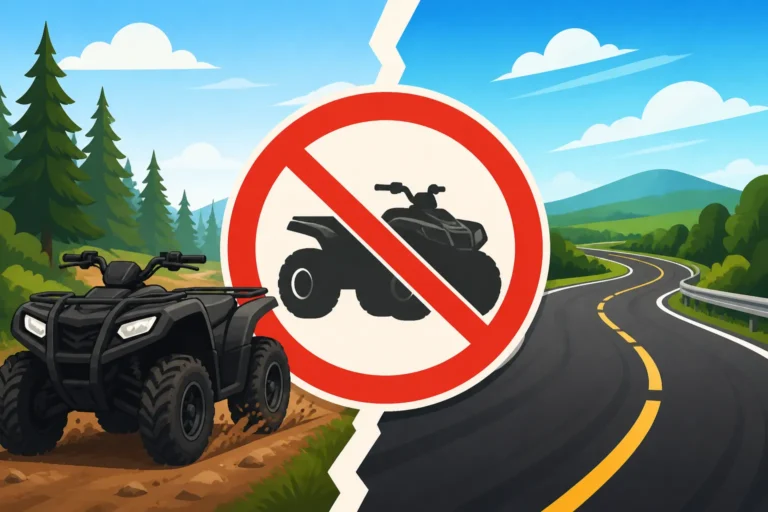
While ATVs and UTVs are primarily off-highway vehicles, Quebec does have very specific, limited allowances for riding on certain public roads, usually for short distances or to access trails. [Quebec ATV Road Rules Under the LVHR] details these regulations. However, modifications can complicate this. If your machine is modified in a way that makes it unstable, too wide, or alters its lighting systems beyond legal requirements, it could easily be deemed unsuitable for any road use, even the limited access permitted. For instance, oversized tires might make your machine too wide for certain road shoulders, or a non-standard exhaust system could violate noise bylaws for municipalities.
The SAAQ is the registrar and insurer for ATVs and UTVs in Quebec, and they focus heavily on public safety. [What the SAAQ Actually Does for Quad Owners] touches on their role. If a modification is perceived to compromise safety, it could impact your ability to legally operate the vehicle anywhere, let alone on roads. It's not just about getting a ticket; it's about potentially invalidating your insurance or facing severe liability if an accident occurs involving a machine that was deemed unsafe due to unapproved modifications.
Age Restrictions and Their Interplay with Machine Types
Quebec is very clear about who can ride what, and when. These age restrictions are non-negotiable and are in place to protect younger riders who might not have the experience, strength, or judgment to safely operate powerful off-highway vehicles. It's not just about having a [Quebec Training Certificate Requirements] for teens; it's also about the machine itself.
Standard ATV Age Rules: 16 Years and Up
For most standard ATVs, the minimum age to operate on federated trails or authorized public land in Quebec is 16 years old. This rule has been in effect since changes to the Off-Highway Vehicle Act. A 16-year-old rider must hold a valid driver's licence (any class, including a learner's permit for cars) and, if they are 16 or 17 years old, they also need to have successfully completed a mandatory training course from a recognized organization like the FQCQ. [Quebec Rules for a 16-Year-Old Rider] provides more detail. This age limit is crucial because ATVs, even smaller ones, require a certain level of physical capability and decision-making skills.
This isn't a suggestion; it's the law. Allowing a child under 16 to ride an ATV on a federated trail means risking substantial fines for both the rider and the adult in charge. Even on private land, while the training certificate isn't mandatory, the spirit of responsible riding still suggests that a younger rider needs adequate supervision and instruction.
Side-by-Side (UTV) Age Rules: The 18-Year Minimum
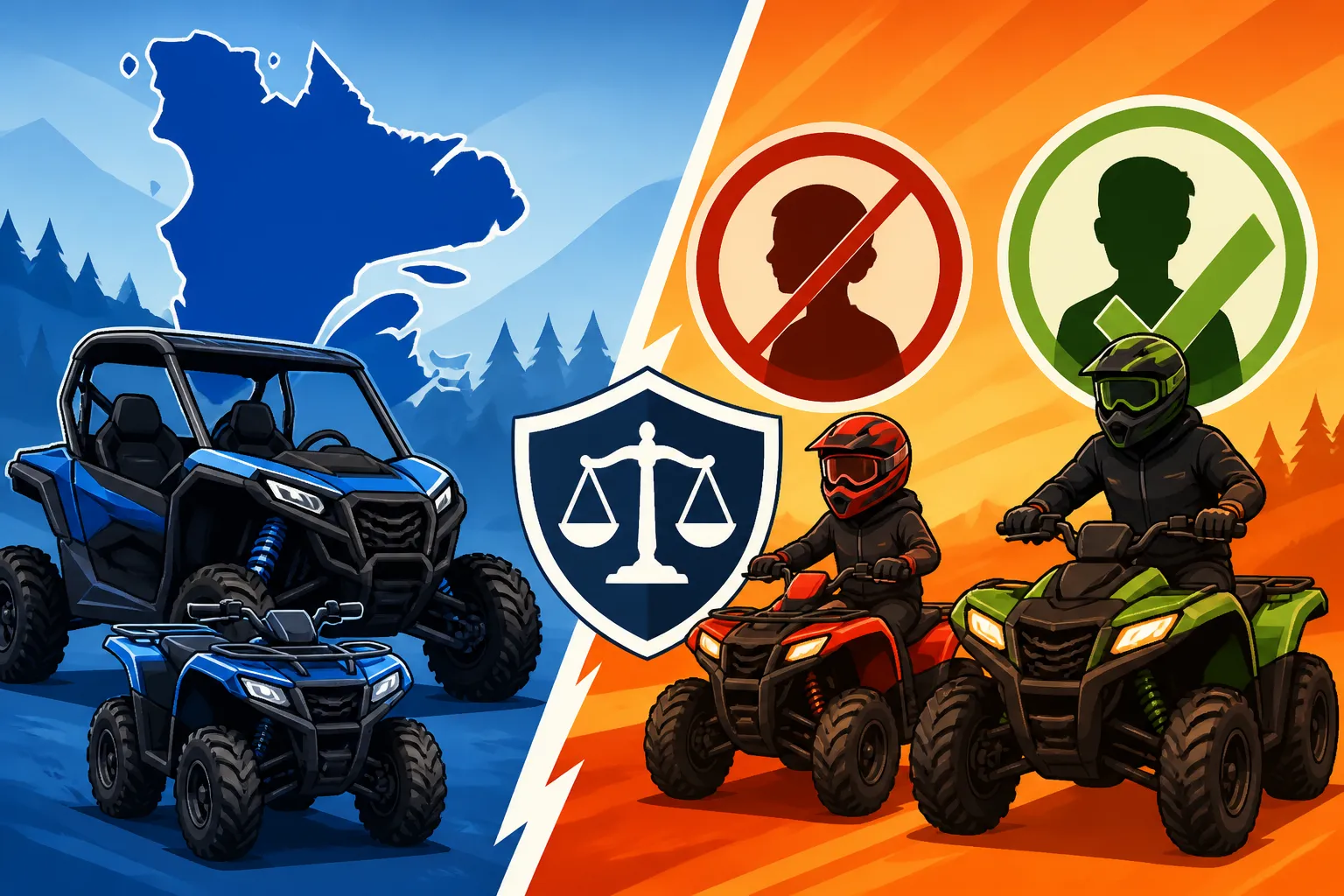
Side-by-sides (UTVs), with their often larger size, heavier weight, and car-like controls, come with an even stricter age requirement in Quebec. To drive a side-by-side on federated trails or authorized public areas, you must be at least 18 years old and possess a valid driver's licence. This higher age limit reflects the increased power and mass of these machines, as well as the potential for carrying passengers. A 16 or 17-year-old, even with a training certificate, is explicitly prohibited from operating a side-by-side on regulated trails. [Quebec Rules for a Side-by-Side Driver] elaborates on this.
It's common for families to own side-by-sides for their versatility and capacity, but it's paramount to enforce this age rule strictly. The temptation might be there to let a responsible 17-year-old take the wheel, but doing so could result in serious legal trouble and, more importantly, put them and others at risk. The law is designed to ensure that those operating these larger machines have the maturity and experience to handle them safely.
Special Cases: Youth Machines and Private Land
While the general age rules are quite strict for federated trails, there are some specific exceptions, primarily concerning youth-model ATVs and riding exclusively on private land. Youth ATVs, generally smaller machines with engine displacements under 90cc and speed governors, are designed for younger riders. However, even these machines have age recommendations from their manufacturers, and Quebec law stipulates that riders under 16 may only operate them on private land with the owner's permission and under adult supervision. [Quebec Rules for a 15-Year-Old on Family Land] is a good resource. They are absolutely not permitted on federated trails.
Riding exclusively on private land offers a bit more flexibility, but it doesn't mean a free-for-all. While the SAAQ's registration and insurance requirements still apply to most machines, and the formal training certificate isn't mandated for youth riders on that private land, parental authorization and adult supervision are still crucial. The fundamental principles of safety and responsible operation should always guide decisions, regardless of whether you're on a trail or your back forty.
| Machine Type | Minimum Age for Federated Trails | Licence Required | Training Certificate (16-17) | Private Land Exceptions (Under 16) |
|---|---|---|---|---|
| Standard ATV | 16 years | Yes | Yes | Yes, with supervision and permission |
| Side-by-Side (UTV) | 18 years | Yes | N/A | Yes, with supervision and permission |
| Youth ATV (<90cc) | Not permitted | N/A | N/A | Yes, with supervision and permission |
The Specifics of Modified Machines and Age-Appropriate Riding
This is where things can get particularly complex. When you combine machine modifications with age restrictions, you enter a zone where safety and legal compliance become even more critical. A modification that might be fine for an experienced adult could render a machine completely unsuitable, or even dangerous, for a younger rider, even if that younger rider meets the minimum age requirement for an unmodified machine.
When Modifications Could Impact Age Compliance
Imagine a scenario where you've added a powerful exhaust system and an ECU tuner to your ATV. While this might be a blast for an adult, if a 16-year-old is operating this souped-up machine, the increased speed and acceleration could make it far more challenging to control. The machine, which was originally deemed appropriate for a 16-year-old, now has performance characteristics that push beyond what's considered safe for that age group's skill level and judgment. Even seemingly innocent modifications, like a wider stance from aftermarket A-arms from a company like SuperATV, could potentially make the machine less stable at higher speeds if the suspension isn't perfectly matched, presenting a heightened risk to an inexperienced rider.
The law considers the vehicle's characteristics when setting age limits. If modifications significantly alter those characteristics, they could, in effect, push the machine out of the "age-appropriate" category, even if the rider technically meets the age for the original machine type. This is less about a specific legal clause, and more about the overarching principle of rider safety and the enforcement officer's discretion when assessing a potentially unsafe situation.
Enhanced Performance and the Risk to Younger Riders
The appeal of enhanced performance is undeniable, whether it's through bigger tires, suspension upgrades, or engine tuning. However, with great power comes great responsibility, especially when it comes to younger riders. An ATV that has been modified for significantly higher speeds or more aggressive handling can quickly overpower a rider with less experience. Younger riders, particularly teenagers, are still developing their judgment, reaction times, and physical strength. Putting them on a highly modified, high-performance machine can expose them to risks they are not equipped to handle.
Consider the psychological aspect: a high-performance machine can tempt a younger rider to push limits, leading to accidents. The legal system, and especially trail patrols, are acutely aware of this. If an incident occurs involving a modified machine operated by a younger rider, the owner could face severe scrutiny regarding negligence and compliance with the spirit of the law, even if no direct "modification law" was broken.
Accessories and Their Effect on Machine Classification
Beyond performance-altering modifications, even accessories can sometimes blur the lines of classification. For example, adding a two-up seat to a single-rider ATV converts it, in practice, into a two-person machine. While [Quebec Passenger Rules on an ATV] generally allow passengers if the machine is factory-designed for it, adding an aftermarket seat without official approval or that compromises the machine's stability could create issues. If a 16-year-old is operating a single-seat ATV with an unapproved passenger seat and has a friend on the back, they are not only violating passenger rules but potentially operating a modified machine in an unsafe manner.
Other accessories, such as extremely bright light bars from SuperATV, while useful for night riding, might violate local bylaws if used on public roads or trails, or even disturb wildlife and other riders. The intent here is not to discourage personalization, but to encourage owners to consider the full impact of any addition or alteration on their machine's safety, classification, and legality, especially when factoring in who will be riding it.
Legal Consequences of Non-Compliance in Quebec
Ignoring the rules around modified machines and age restrictions in Quebec can lead to a cascade of unwelcome consequences, ranging from immediate fines to long-term liability issues. It's not just a slap on the wrist; these regulations are taken seriously for good reason.
Fines and Penalties for Age Rule Violations
Quebec has specific, hefty fines for violating age rules. If a rider under the age of 16 is caught operating an ATV on a federated trail, or if a 16 or 17-year-old is found without their mandatory training certificate, the fines can be substantial. The adult supervising or allowing the ride could also face penalties. For a 16 or 17-year-old operating a side-by-side, the consequences are equally severe, as the 18-year-old minimum for UTVs is strictly enforced. [Quebec Fines for Riding Without a Licence] or proper age compliance are not minor.
These fines are not just financial burdens; they are a clear signal that the province prioritizes safety. Moreover, repeated offenses or severe infractions could lead to other administrative actions, such as the temporary suspension of riding privileges or even the impounding of the vehicle. It's a risk simply not worth taking when dealing with the safety of young people.
Liability Issues with Modified or Unsuitable Machines
Beyond direct fines, operating a modified or age-unsuitable machine can open a Pandora's box of liability issues. In the unfortunate event of an accident, if your machine is found to have been significantly modified in a way that contributed to the incident, or if it was operated by a rider below the legal age, you could be held personally liable. This could mean covering medical expenses, property damage, and even pain and suffering for injured parties. Your insurance company might even deny coverage if the vehicle was deemed "unfit for use" due to illegal or unsafe modifications, or if it was operated by an unauthorized person. [Quebec's Liability Insurance Rule] mandates a minimum coverage, but this can be voided under certain circumstances.
Imagine a situation: a 17-year-old on your heavily modified, high-horsepower ATV has an accident with another trail user. Even if the 17-year-old has their licence and training certificate, the modifications to the machine could be argued as a contributing factor to the accident, potentially making you, the owner, financially responsible far beyond what your insurance might cover.
Insurance Implications for Non-Standard Equipment
Most insurance policies are based on the assumption that your vehicle is operating in its standard, factory-approved configuration. When you introduce significant modifications, you're changing the risk profile of that vehicle. While some insurance providers might offer coverage for certain approved aftermarket parts, many policies have clauses that could deny claims if the vehicle was extensively or unsafely modified without the insurer's knowledge and approval. For example, a claim for damages to a heavily lifted ATV that rolled over might be denied if the insurance company determines the lift kit significantly compromised stability and was not declared.
It's absolutely critical to communicate any significant modifications to your insurance provider. Even if they don't cover the custom parts themselves, ensuring your overall liability and damage coverage remains valid is paramount. Failure to do so could leave you in a very vulnerable financial position after an incident. Always read the fine print of your [Quebec Insurance Minimum for an Owner] policy and consult your insurer about any substantial changes you plan to make to your machine.
Ensuring Compliance: Tips for Owners and Riders
Navigating the rules for modified machines and age restrictions doesn't have to be a minefield. With a little proactive effort and a commitment to safety, you can ensure everyone enjoys Quebec's trails legally and responsibly. It’s all about staying informed and making smart choices.
Consulting Official Sources and Clubs
The absolute best way to stay compliant is to go straight to the source. The SAAQ website is the official authority for registration and regulations in Quebec. Similarly, the FQCQ (Fédération québécoise des clubs quads) provides a wealth of information specific to trail riding, safety, and club rules. These organizations frequently update their guidelines, and their websites are the definitive places to find the most current information. [What Quebec's Off-Highway Vehicle Act Changed for Owners] is a great place to start looking.
Don't hesitate to reach out to your local ATV club. Club volunteers are often riders themselves, deeply familiar with the nuances of provincial and local regulations, and can offer practical advice based on real-world experience. They can also provide insights into specific trail rules or regional bylaws that might affect modified machines or younger riders.
Inspecting Machines Before Each Ride
A pre-ride inspection is more than just checking tire pressure; it's a critical safety ritual, especially for modified machines or when a younger rider is involved. Regularly inspect all modifications to ensure they are securely fastened, not damaged, and operating as intended. Are those new SuperATV A-arms still perfectly aligned? Is the lift kit hardware tight? Are the larger tires showing any signs of rubbing or excessive wear that could compromise safety?
For younger riders, this inspection also includes checking that the machine is appropriate for their size and skill level. Ensure the brakes are responsive, the steering is free, and all controls are within easy reach. A machine that is too powerful or too large, even if technically legal for their age, can quickly become unsafe if they cannot comfortably and confidently operate it.
Training and Supervision for Young Riders
While the mandatory training certificate for 16 and 17-year-olds is a legal requirement, it's truly just the beginning. Ongoing training and consistent supervision are paramount for all young riders, regardless of their age or the machine they're on. Practice safe riding techniques in controlled environments. Teach them about varying terrain, responsible speed management, and trail etiquette. This includes understanding [Quebec's 50 km/h Speed Limit for ATVs] on trails.
For those under 16 riding on private land, direct adult supervision is critical. This means being actively present and engaged, not just within shouting distance. Reinforce safety rules, demonstrate proper riding techniques, and ensure they are always riding within their capabilities and the machine's limits. The goal is to instill a lifelong habit of safe and responsible riding, ensuring that everyone can enjoy the adventure that Quebec's incredible ATV and UTV landscape has to offer.
Disclaimer
This article is for general informational purposes only and does not constitute professional advice. Laws, prices and regulations vary by location and change over time. Consult a qualified professional for guidance on your specific situation.