Quebec Rules for Riding a Shoulder
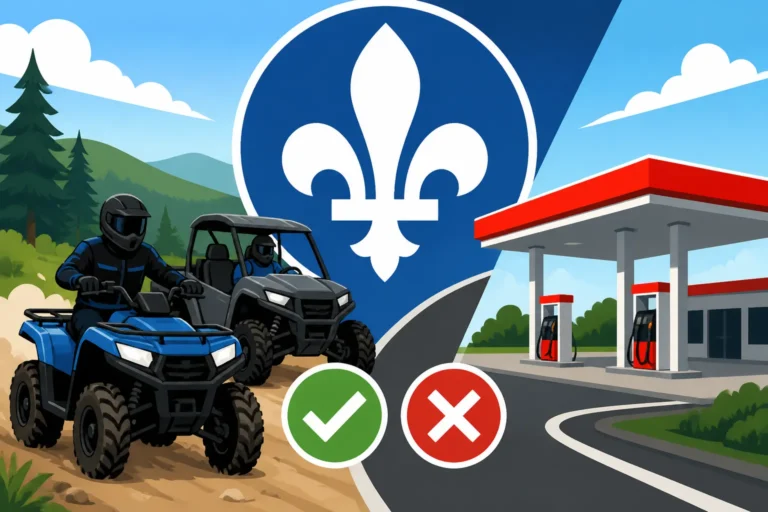
It’s a scenario almost every quad owner in Quebec has faced: you’re out enjoying a ride, and suddenly, you need to get from one trail section to another, or perhaps you need to refuel at a gas station that’s just a short hop down a public road. The question immediately pops into your head – can I just ride on the shoulder? This guide is here to untangle the complexities of Quebec's rules for riding an ATV or side-by-side on the road shoulder, helping you understand when it's allowed, when it's not, and how to do it safely and legally.
The Basics of Road Access for Off-Highway Vehicles in Quebec
Let's be real, the idea of an ATV or UTV cruising down a main road often feels inherently wrong, and for good reason. These machines are designed for off-road adventures, not sharing lanes with cars and trucks. But the reality of our trail networks in Quebec means that sometimes, a short stint on a road is unavoidable. It’s a point of confusion for many, and getting it wrong can lead to serious fines or even accidents.
When Using a Road Shoulder is Even an Option
Generally speaking, Quebec has a strict stance against off-highway vehicles on public roads. You can't just hop on the highway shoulder to shave time off your trip, or cruise through a village on your quad just because it’s convenient. The core principle is that ATVs and side-by-sides belong on designated trails or private land. However, the province's Off-Highway Vehicle Act (LVHR) does acknowledge a practical need for limited road access.
This is where the infamous "1-kilometer rule" comes into play, along with specific municipal bylaws that might either expand or further restrict these allowances. The intent behind these exceptions is purely functional: to allow riders to bridge gaps in the trail network, access essential services like fuel or food, or reach specific lodging facilities. It's not an open invitation to treat public roads as part of the trail. The moments you spend on a public shoulder are moments of heightened awareness, where you are a guest in the domain of other, much larger, and faster vehicles.
The Legal Framework: Quebec's Off-Highway Vehicle Act
Quebec's framework for off-highway vehicles, the Loi sur les véhicules hors route (LVHR), is the ultimate authority here. This act, revised in recent years, meticulously outlines where and how ATVs and side-by-sides (which Quebec officially calls VTTs, or véhicules tout-terrain, and VHRs, or véhicules hors route) can operate. When it comes to roads, the LVHR is quite specific. It differentiates between designated trails, private land, and public roads, with the latter being the most restrictive category.
The Société de l'assurance automobile du Québec (SAAQ) plays a crucial role in all of this. They are not just the registrar for your machine, ensuring it has a proper [Quebec VHR Plates Explained] and is legally identified; the [Quebec SAAQ Is Registrar and Insurer] also mandates that every registered off-highway vehicle carry liability insurance. This insurance isn't just for trail incidents; it's absolutely vital for those moments you must use a road shoulder, protecting you and others in case of an accident involving a regular vehicle. The LVHR and SAAQ regulations are designed with public safety in mind, aiming to minimize conflicts and ensure that when an ATV does briefly enter the road environment, it does so under controlled conditions with adequate protection.
Specific Rules for Riding on the Shoulder
Understanding the general principles is one thing, but the devil is in the details when it comes to riding on the shoulder. It's not a free-for-all, and there are very specific conditions that must be met. Ignoring these can quickly turn a quick connection into an expensive fine.
The 1-Kilometre Rule and Its Application
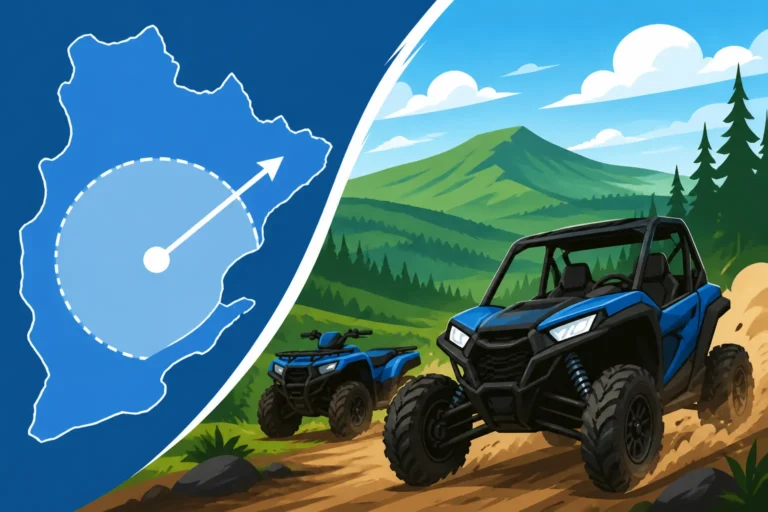
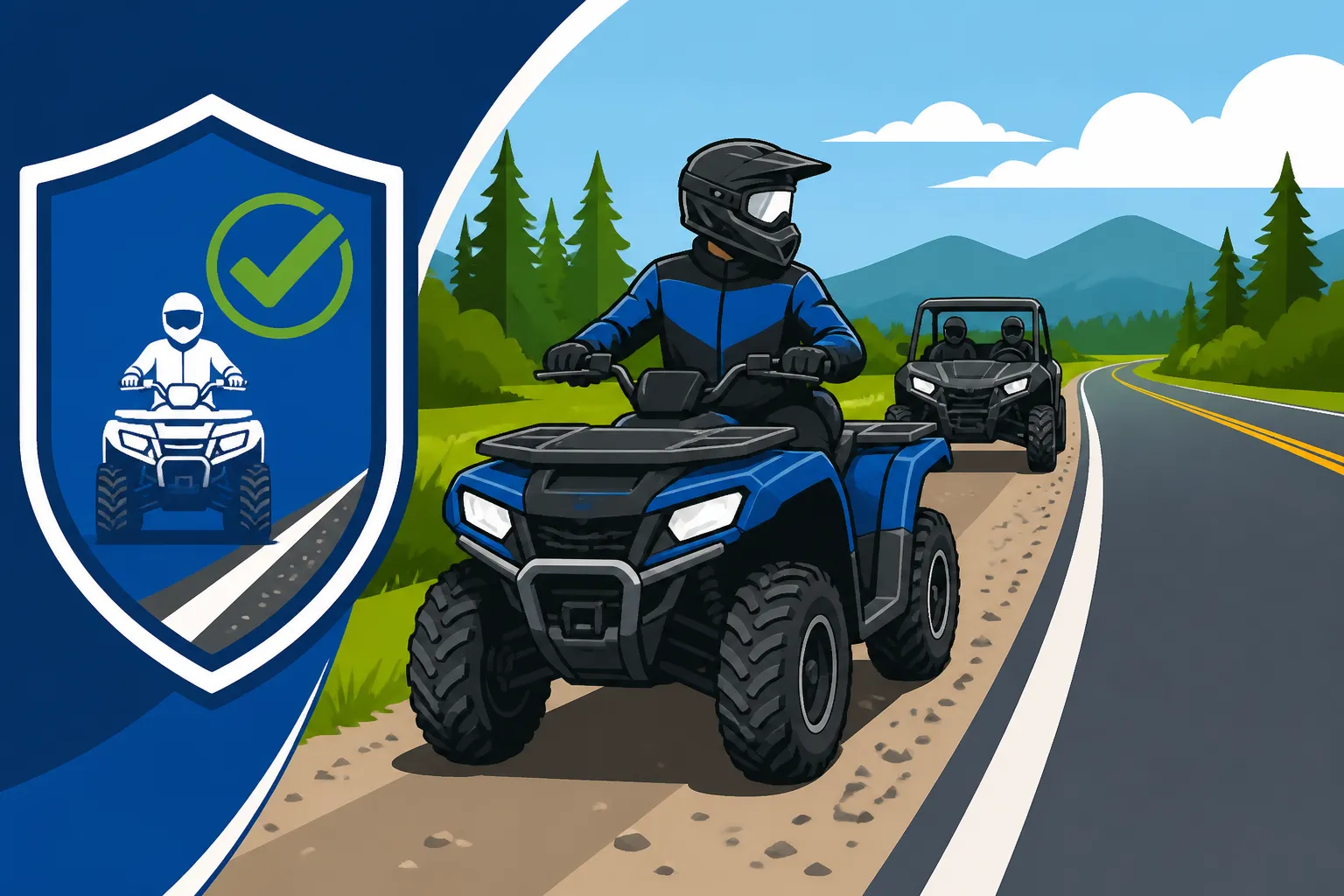
The "1-kilometre rule" is arguably the most common and often misunderstood exception. This rule permits you to ride your ATV or side-by-side for a maximum distance of one kilometre on a public road, specifically on the shoulder, for the purpose of connecting two sections of a federated trail or to access a service. This isn't a blanket permission for any road. Critically, this exception only applies to road sections that have been explicitly authorized by the municipality and are marked with specific [Quebec Signage for an Authorized Road Stretch]. If there are no signs indicating that ATVs are permitted, then the 1-kilometre rule does not apply, and you are generally prohibited from using that shoulder.
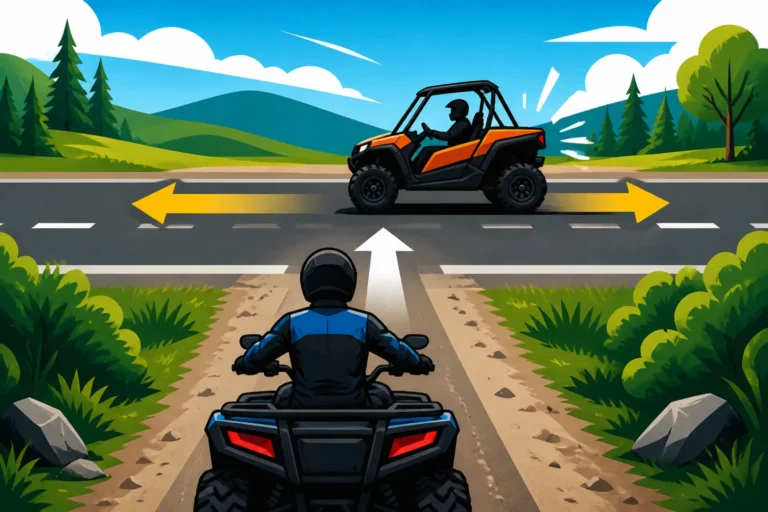
When you are on an authorized 1-kilometre stretch, you must stay on the shoulder. This means keeping as far to the right as safely possible, away from the main flow of traffic. You are not allowed to enter the main traffic lanes unless absolutely necessary to avoid an obstacle and only if it is safe to do so. This limited access is not about convenience; it's about necessity and safety. For instance, if you're riding a longer circuit like [Le Summum and Who It Suits], you might encounter several of these authorized road sections that are essential for linking vast trail networks. During these stretches, having proper visibility is key. Adding accessories like bright LED turn signals or side mirrors, perhaps from a brand like SuperATV, can significantly enhance your presence to other drivers, making your brief shared use of the shoulder safer.
Navigating Different Types of Shoulders
The "shoulder" isn't a uniform entity across Quebec. You might encounter paved shoulders in more developed areas, gravel shoulders on rural routes, or even dirt shoulders bordering unpaved concession roads. The legal rules for riding on the shoulder apply universally, regardless of its composition, but the practicalities and safety considerations certainly change.
On a paved shoulder, you might experience smoother riding, but the proximity to faster-moving vehicles can feel more intimidating. You'll need to be extra vigilant for debris that might have been pushed off the main road. Gravel or dirt shoulders, while offering a surface more akin to a trail, present their own challenges: loose material can affect steering and braking, especially on a heavy side-by-side. Dust can also be a significant issue, reducing visibility for both you and following vehicles. In all cases, the primary directive is to maintain control and keep your machine stable. Your machine's tires and suspension, perhaps upgraded with components designed for varied terrain from SuperATV, can help manage these transitions more effectively, but operator caution remains paramount. Always adapt your speed and riding style to the specific conditions of the shoulder you are on.
Equipment and Conduct Requirements on Shoulders
Riding an ATV or UTV, even on an authorized road shoulder for a short distance, means you're operating within the purview of Quebec's vehicle laws. This brings a specific set of equipment and conduct requirements that are non-negotiable. First and foremost, you and any passengers must be wearing an approved helmet. [Quebec Helmet and Visor Rules] are quite strict, requiring a visor or goggles. Your machine must also be properly equipped with functional headlights and taillights – essential for visibility, even in broad daylight, and absolutely critical if you're riding near dawn, dusk, or night. [Quebec Lighting Requirements at Night] are clear on this.
Mirrors are another key piece of equipment. The LVHR requires your machine to have at least one mirror providing a clear rear view. [Quebec Mirror Requirements on a Quad] help you monitor traffic approaching from behind, which is crucial when you're sharing space with cars. As for conduct, you must have a valid driver's licence. [Do You Need a Licence for an ATV in Quebec?] The speed limit for ATVs on any public road, including shoulders, is generally 50 km/h. [Quebec's 50 km/h Speed Limit for ATVs] It's also vital to maintain a safe distance from other vehicles, use your signals when turning or changing position, and be predictable in your movements. Your [Quebec Insurance Proof on the Machine] must be carried with you, along with your driver's licence and [Carrying a Driver's Licence on a Federated Trail] pass if applicable, as trail patrols or law enforcement can request to see them at any time.
Exceptions, Prohibitions, and Best Practices
While the 1-kilometre rule offers some flexibility, it's crucial to understand that it's an exception, not a rule. Most roads in Quebec remain entirely off-limits for ATVs and side-by-sides. Navigating these rules successfully means knowing when you can't ride and adopting smart, safe habits when you can.
When Riding on the Shoulder is Absolutely Forbidden
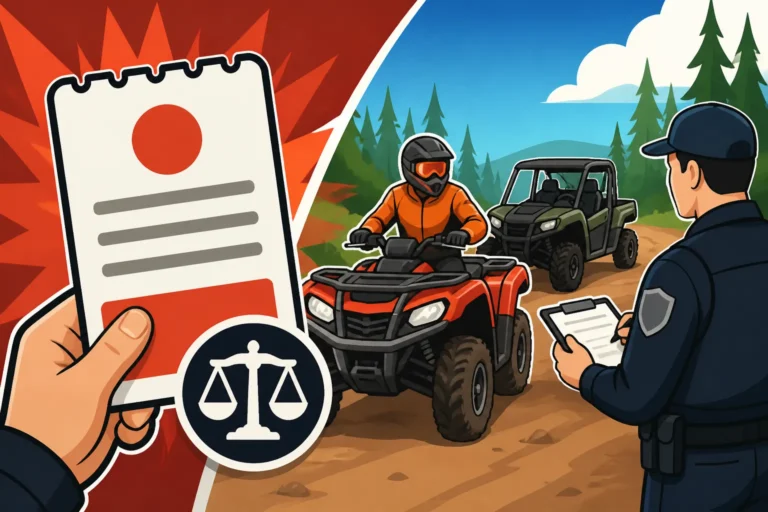
Let's get this straight: there are many places where riding on the shoulder is simply not an option, regardless of the 1-kilometre rule or any other exception. You cannot ride your ATV or side-by-side on provincial highways, expressways, or any road with a posted speed limit higher than 70 km/h. These are high-speed, high-volume thoroughfares where off-highway vehicles pose an extreme safety risk. Attempting to use the shoulder of such roads will not only land you with significant [Quebec Fines for Riding a Public Road] but also put your life and the lives of others in serious jeopardy.
Similarly, riding within the main thoroughfares of densely populated urban areas is generally prohibited. Even if a side street has a shoulder, the intent of ATV legislation is to keep these machines away from heavy traffic and pedestrian zones. A public road is not a shortcut, nor is it an extension of the trail system, unless explicitly designated and signed. Thinking a short hop on a prohibited shoulder won't matter is a dangerous assumption; law enforcement patrols these areas, and the penalties for non-compliance are steep.
Municipal By-Laws and Local Variations
Here's where things can get a little tricky, and it highlights the importance of doing your homework before you ride through an unfamiliar area. While the provincial LVHR sets the general framework, municipalities in Quebec have the power to create their own bylaws that can either expand or further restrict ATV access on their local roads. For instance, a municipality might choose to open up more than just the 1-kilometre for ATV use on certain roads, perhaps to connect a village to a main trail. [Quebec Municipal Road Access Up to 1 Kilometre] can be extended, but only if the municipality goes through the proper channels and installs the necessary signage.
Conversely, a municipality might decide to prohibit ATV use entirely on specific roads or within certain zones, even if the provincial 1-kilometre rule might technically apply. This is especially common in areas concerned about noise, dust, or traffic safety. The takeaway here is that you cannot assume uniformity. Always look for the official signage that permits ATV access on a road. If you're unsure about a specific area, checking local club websites or contacting the municipal office can clarify any [Quebec Municipal By-Laws on Riding Hours] or road access rules that differ from the provincial standard. It’s always better to be safe than sorry.
Safety Tips for Sharing the Road with Other Vehicles
When you do find yourself on an authorized road shoulder, safety becomes your absolute top priority. You are sharing space with vehicles that are much faster, larger, and often less aware of your presence. Here are some best practices to keep yourself and others safe:
- Be Visible: Wear brightly colored gear. Ensure your headlights and taillights are always on and clean. If you've invested in aftermarket lights from SuperATV, make sure they're properly aimed and not blinding to oncoming traffic. Some riders even use whip flags for added vertical visibility, especially on a side-by-side that might be partially obscured by roadside vegetation.
- Ride Predictably: Avoid sudden swerves or stops. Signal your turns well in advance. Assume drivers don't see you, and be prepared to react to their movements. Maintain a consistent, safe speed appropriate for the conditions and the specific shoulder you're on.
- Stay Right: Keep as far to the right of the shoulder as safely possible, giving ample space to passing vehicles. Do not drift into the main traffic lane.
- Watch for Intersections and Driveways: These are common conflict points. Slow down, look carefully for cross-traffic, and make eye contact with drivers if possible.
- Carry Your Papers: Always have your valid driver's licence, [Quebec Insurance Proof on the Machine], and your [Quebec Trail Pass Proof on the Trail] (if on a federated connection) readily accessible. Law enforcement may stop you to verify these documents.
By adhering to these safety practices, you can minimize the risks associated with riding on Quebec's road shoulders and ensure your ride remains enjoyable and trouble-free.
| Scenario | Permitted on Shoulder | Prohibited on Shoulder | Notes |
|---|---|---|---|
| Connecting two federated trails | Yes (if signed, max 1km) | No (if not signed) | Requires municipal authorization and signage |
| Accessing gas/food/lodging | Yes (if signed, max 1km) | No (if not signed) | Requires municipal authorization and signage |
| Provincial Highway/Expressway | No | Yes | Extremely dangerous and illegal |
| Roads > 70 km/h speed limit | No | Yes | High speed, high risk |
| Densely populated urban areas | Generally No | Generally Yes | Check local municipal bylaws |
| Roads with specific ATV prohibition bylaws | No | Yes | Municipal rules can override general rules |
Disclaimer
This article is for general informational purposes only and does not constitute professional advice. Laws, prices and regulations vary by location and change over time. Consult a qualified professional for guidance on your specific situation.