Quebec Calls an ATV a VTT
It can be incredibly confusing when you're trying to figure out the rules for riding off-road in Quebec, especially when everyone seems to use different terms for the same machine. You hear "ATV," "quad," "four-wheeler," and then the official provincial bodies drop "VTT" on you, leaving you wondering if they're even talking about the same thing or if there's some subtle distinction you're missing. This guide is here to clear up that head-scratching terminology, explaining exactly what Quebec means by "VTT" and why understanding this seemingly small detail is so important for every rider in the province.
Understanding the Terminology: ATV vs. VTT
When you first dive into the world of off-road riding, the sheer variety of terms used can make your head spin. In Quebec, this confusion often boils down to a fundamental linguistic difference: the preference for "VTT" over the more globally recognized "ATV." It's not just a matter of translation; it reflects a specific legal and cultural context that all riders, especially newcomers, need to grasp.
What "VTT" Really Means in Quebec
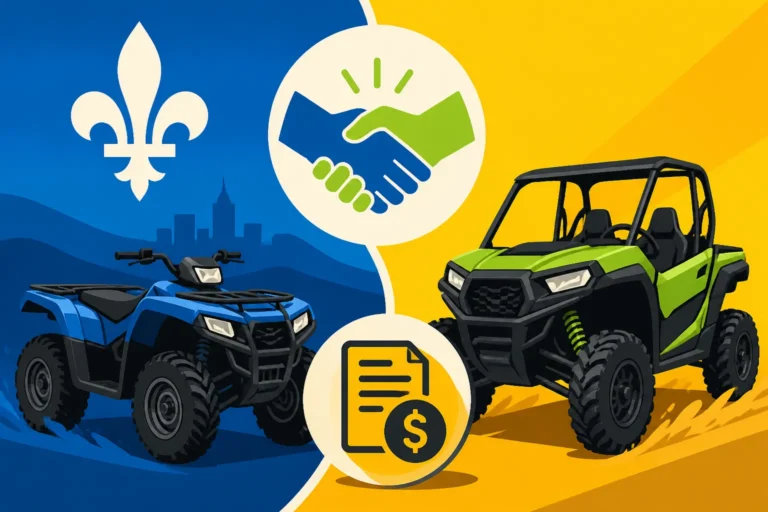
The acronym "VTT" stands for Véhicule Tout-Terrain, which directly translates from French to "All-Terrain Vehicle." So, in essence, a VTT is exactly what an ATV is. The distinction isn't in the type of machine but in the language used to describe it, particularly in an official capacity. While many parts of North America use "ATV" as the standard term, Quebec, being a predominantly French-speaking province, naturally adopted its French equivalent for all legal, administrative, and club-related purposes.
This means that any time you're looking at documents from the SAAQ (Société de l'assurance automobile du Québec), reading the provincial off-highway vehicle act, or engaging with local federated clubs like the FQCQ, you'll encounter the term "VTT." It's the standard, universally understood descriptor within the province for what most English speakers call an ATV. This consistency helps to avoid ambiguity in laws, regulations, and insurance policies, ensuring everyone is on the same page about the machines being discussed.
The "Quad" and "Four-Wheeler" Nicknames
Beyond the official "VTT" and the English "ATV," riders often use more informal terms like "quad" or "four-wheeler." These nicknames are deeply ingrained in the riding community and are perfectly fine for casual conversation around the campfire or on the trail. They evoke the image of a rugged, four-wheeled machine designed for tackling diverse terrain, which is precisely what most VTTs are built for.
However, it's crucial to remember that while these terms are widely understood, they aren't official. You won't find "quad" or "four-wheeler" on your SAAQ registration papers or in the formal text of Quebec's off-highway vehicle laws. These are colloquialisms, much like calling a pickup truck a "rig" or a motorcycle a "bike." They add character to the culture of riding but hold no legal weight. When it comes to side-by-sides (UTVs), the situation is similar; while they might be colloquially grouped with "quads" by some, officially, they also fall under the broader "VTT" classification in Quebec, often with specific sub-categories or regulations tailored to their size and seating capacity.
Official Recognition and Legal Implications
Understanding that "VTT" is the official term in Quebec isn't just about semantics; it has real, tangible implications for how you interact with provincial authorities and how your machine is legally recognized. From registration to navigating the intricacies of the law, every official interaction will hinge on this specific terminology.
The SAAQ and Its Use of VTT
The SAAQ is the provincial body responsible for both registering and insuring off-highway vehicles in Quebec. This dual role means that every piece of official documentation related to your machine—from your initial registration certificate to annual renewal notices—will consistently refer to it as a VTT. When you apply for a [Quebec ATV Registration With the SAAQ] or receive your [Quebec Registration Renewal Notices], the language used will be Véhicule Tout-Terrain.
It's vital to embrace this terminology when communicating with the SAAQ. If you call them to inquire about your "ATV registration," they will understand what you mean, but they will likely respond using "VTT." Using the correct provincial term ensures clarity and demonstrates that you understand the local regulatory framework. This common language minimizes potential misunderstandings, streamlines processes, and helps you navigate any bureaucratic steps related to owning and operating your off-road machine in Quebec. Remember, they are the gateway to getting your [Quebec VHR Plates Explained] and ensuring your machine is road-legal for sanctioned crossings.
The Off-Highway Vehicle Act and VTT Definitions
Quebec's primary legislation governing off-road vehicles is the Act respecting off-highway vehicles, often referred to by its French acronym, LVHR (Loi sur les véhicules hors route). This act meticulously defines what constitutes a "VTT" and sets out the rules for their operation, equipment, and access. It is within this legal framework that all types of recreational off-highway machines, including traditional ATVs and side-by-sides, are categorized. [Quebec's Off-Highway Vehicle Act and Your Papers] are what govern your riding experience.
The Act specifies dimensions, weight limits, and passenger capacities for different types of VTTs, which then dictates things like mandatory safety equipment, age restrictions for drivers, and where these vehicles can be operated. For instance, while a standard single-rider ATV is a VTT, a larger side-by-side with multiple seats also falls under the VTT umbrella but might have additional rules regarding driver age or the necessity of seatbelts. Understanding the legal definitions laid out in the LVHR is paramount, as non-compliance can lead to fines and penalties. By using "VTT," the law creates a clear, unambiguous classification for all these diverse machines, ensuring that the rules apply consistently across the board.
Why Does the Terminology Matter for Owners?
You might think it’s just a word, but in the realm of owning and operating an off-road vehicle in Quebec, the term "VTT" carries significant weight. Misunderstanding this simple linguistic difference can lead to confusion, delays, or even issues with legal and financial obligations.
Navigating Registration and Paperwork
When you're dealing with the official processes of buying, selling, or simply registering your off-road machine in Quebec, using and understanding the term "VTT" is non-negotiable. Whether you're acquiring a brand-new machine from a dealer or buying a used one from a private seller, all the SAAQ forms, titles, and registration certificates will clearly identify your vehicle as a Véhicule Tout-Terrain. Trying to complete paperwork while thinking of it only as an "ATV" can create a disconnect.
For instance, when preparing a bill of sale for a private transaction, both buyer and seller need to be clear on what is being transferred. Using a standardized document, perhaps one you can customize from a platform like LawDepot, ensures that the vehicle is correctly identified as a "VTT" in the transaction details. This clarity helps to prevent issues during the transfer of ownership at the SAAQ and provides concrete proof of the transaction for both parties. Making sure your paperwork is consistent with official provincial language simplifies every step, from paying [Quebec ATV Registration Costs Explained] to ensuring your machine is properly documented in your name.
Insurance and Liability Considerations
Every VTT owner in Quebec is legally required to carry a minimum amount of liability insurance. This isn't just a good idea; it's the law. When you approach an insurance provider to obtain coverage, your policy documents will invariably refer to your machine as a VTT. It’s the standard classification used across the insurance industry in the province to ensure there's no ambiguity about what type of vehicle is being covered.
Communicating clearly with your insurer, using terms they recognize, helps ensure you get the right coverage for your specific machine. While they will likely understand "ATV," using "VTT" aligns with their internal classification systems and the legal framework they operate within. It reinforces that you're seeking coverage for an off-highway vehicle as defined by Quebec law. This distinction is especially important when discussing the [Quebec Insurance Minimum for an Owner] and understanding the scope of your policy, ensuring you're adequately protected in the event of an incident on the trails.
Practical Applications for Riders and Buyers
For those actively involved in the Quebec off-road scene, whether as an owner, a buyer, or a regular trail rider, the understanding of "VTT" extends beyond just theoretical knowledge. It impacts how you acquire your machine, how you prepare it for the trails, and how you engage with the wider riding community.
Buying and Selling a VTT in Quebec
The process of buying or selling a VTT in Quebec is heavily dependent on clear and accurate documentation. If you're [Buying From a Private Seller in Quebec], you'll need a robust bill of sale. This document, which legally transfers ownership, should explicitly refer to the machine as a Véhicule Tout-Terrain to align with SAAQ requirements. Many individuals find it helpful to use pre-made templates, such as those available through services like LawDepot, which can be customized to include all necessary details, including the proper VTT designation, vehicle identification number (VIN), and sale price.
When you take this bill of sale to the SAAQ to register the machine in your name, the clerks will be looking for this precise terminology. Any discrepancies or vague descriptions could potentially cause delays in the registration process. Similarly, when selling, ensuring your documentation correctly identifies the machine as a VTT protects both you and the buyer, establishing a clear legal record of the transaction. This attention to detail safeguards against future complications and ensures a smooth transfer of ownership. For a detailed rundown, consult [Quebec SAAQ Forms for a Private Sale].
Trail Passes and Club Membership
Quebec boasts an extensive network of federated trails, managed by over 100 member clubs under the umbrella of the Fédération Québécoise des Clubs de VTT (FQCQ). When you purchase a trail pass for these incredible routes, you're buying a pass for a "VTT." The FQCQ itself is dedicated to VTTs, and all its resources, from trail maps to regulations, are framed around this terminology. [Quebec ATV Trails: The FQCQ Network] are all about VTTs.
Your trail pass sticker, which you proudly display on your machine, signifies that your VTT is authorized to ride on these trails, provided you adhere to all other provincial and club rules. Trail patrols, who ensure rider compliance, will also be looking for VTT passes and confirming that your machine falls within the definition of a VTT as per the provincial act. Engaging with a local VTT club means joining a community that consistently uses and understands this term, reinforcing its status as the definitive identifier for your off-road adventures across the province.
Common Misconceptions and Clarifications
Despite the consistent use of "VTT" by official bodies and the riding community in Quebec, some confusion persists, especially for those new to the province or coming from regions where "ATV" is the norm. Clearing up these misconceptions is key to a smooth and enjoyable riding experience.
The Myth of Separate Rules for ATVs vs. VTTs
One of the most persistent misunderstandings is the idea that an "ATV" in Quebec might be subject to different rules than a "VTT." Let me be absolutely clear: in Quebec, there is no legal distinction between an ATV and a VTT. They are one and the same. The province's Act respecting off-highway vehicles applies uniformly to all machines that fit the technical definition of a Véhicule Tout-Terrain, regardless of whether you personally refer to it as an ATV, a quad, or a four-wheeler.
This means that all regulations concerning speed limits, helmet requirements, age restrictions, and registration obligations apply equally. If you're a visitor from Ontario, New Brunswick, or Vermont, where "ATV" is the standard, rest assured that your machine is recognized as a VTT in Quebec and must adhere to all local VTT laws. The frustration of trying to find "ATV rules" and only seeing "VTT rules" can be real, but the good news is you're looking at the exact same set of regulations. The confusion simply stems from the language barrier, not a fundamental difference in vehicle classification.
Side-by-Sides, Dirt Bikes, and Other Off-Roaders
While "VTT" serves as the overarching term for many recreational off-highway vehicles in Quebec, it's worth noting how other types of machines fit in, or don't. Side-by-sides (SxS), also known as UTVs (Utility Terrain Vehicles), are indeed considered a type of VTT under Quebec law. They are built for all-terrain use and, as such, fall under the same registration and liability insurance requirements as their smaller, single-seat counterparts, though specific operating rules (like age requirements for drivers or passenger capacity) might differ slightly. You'll find specific guidelines for [Quebec Rules for a Side-by-Side Driver].
However, not all off-road vehicles are VTTs. Dirt bikes, for example, typically fall under a different classification and have their own set of rules regarding registration, trail access, and operation. While they are also "all-terrain vehicles" in a literal sense, legally, they are distinct from VTTs. Similarly, specialized farm equipment or industrial off-road vehicles might have exemptions or different regulations depending on their primary use. The key takeaway is that when you see "VTT" in Quebec, it generally refers to the classic quad-style machine and multi-passenger side-by-sides, which comprise the vast majority of recreational off-highway vehicles registered with the SAAQ and riding the federated trails. The phrase [What VTT Means on a Sign] is a clear indicator you're in VTT country.
Here's a quick overview of how these terms compare in Quebec:
| Term | Usage Context | Official Status in Quebec | Legal Definition | Implications for Owners |
|---|---|---|---|---|
| VTT | SAAQ, LVHR, FQCQ, official docs | Primary Official Term | Véhicule Tout-Terrain | Mandatory for all official paperwork, insurance, trail passes. |
| ATV | English-speaking regions, informal in QC | Unofficial in QC | All-Terrain Vehicle | Understood, but not used on official Quebec documents. |
| Quad | Colloquial, informal | Unofficial | Informal term for 4-wheeled ATV/VTT | Widely understood among riders, but avoid on official forms. |
| Four-Wheeler | Colloquial, informal | Unofficial | Informal term for 4-wheeled ATV/VTT | Common nickname, but not legally recognized. |
| Side-by-Side | Descriptive, manufacturer term | Falls under VTT | Multi-passenger VTT | Registered as a VTT, but may have specific operating rules. |
Disclaimer
This article is for general informational purposes only and does not constitute professional advice. Laws, prices and regulations vary by location and change over time. Consult a qualified professional for guidance on your specific situation.