Quebec Registration Before Your First Ride
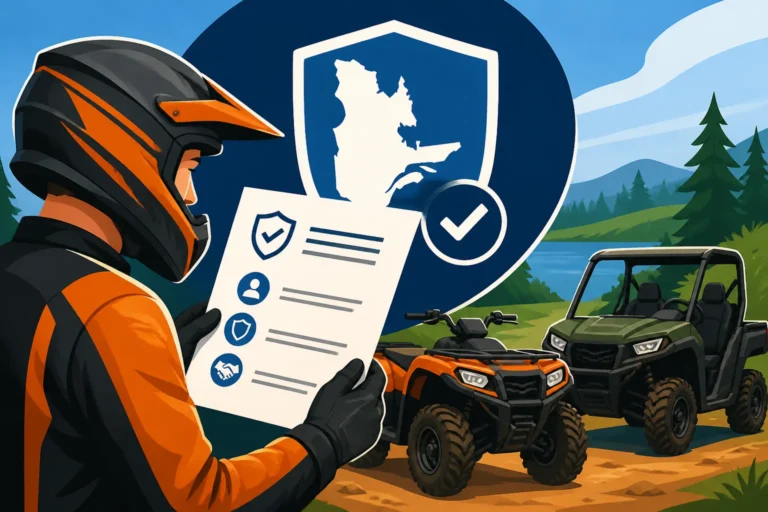
It's incredibly easy to get excited about a new quad or side-by-side purchase, especially when you're dreaming of hitting those incredible Quebec trails. But before you even think about firing up that engine and heading out, there's a crucial step many folks overlook or misunderstand: getting your machine properly registered with the Société de l'assurance automobile du Québec (SAAQ). This guide is going to walk you through exactly what you need to know and do to ensure your off-highway vehicle is fully compliant, avoiding potential headaches and fines down the road.
Understanding Why Quebec Demands Registration Before You Hit the Trails
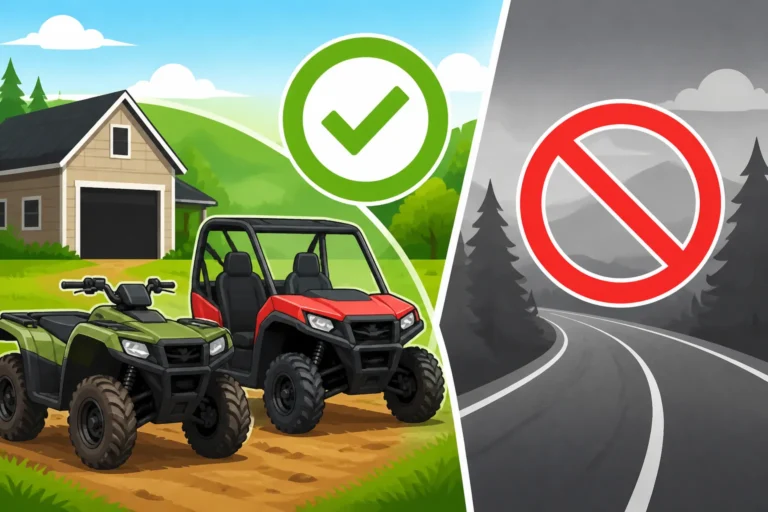
So, you've got your ATV or side-by-side, maybe it's sparkling new from the dealership, or perhaps it's a trusty used machine you found through a private sale. The excitement is palpable, but hold on a minute! In Quebec, you absolutely cannot ride an off-highway vehicle (OHV) on any public or federated trail, or even cross a public road, without it being properly registered. This isn't just a suggestion; it's the law. Skipping this step can lead to significant fines and a lot of unnecessary stress, not to mention the safety implications. It really boils down to ensuring everyone on the trails is accountable and insured.
The Legal Framework: Quebec's Off-Highway Vehicle Act
The foundation for all this lies in Quebec's Off-Highway Vehicle Act, also known as the LVHR. This legislation specifically governs the use, operation, and registration of off-highway vehicles like ATVs and side-by-sides (which Quebec often refers to as VTTs or VHRs). The Act is designed to enhance rider safety, protect the environment, and establish clear rules for trail access and public road crossings. Before its significant update in 2021, many riders might have had different understandings of the rules, but now, the expectations are clearer than ever. [What Quebec's Off-Highway Vehicle Act Changed for Owners] is a good read if you want to dive deeper into the historical context.
The law mandates that any OHV operating on trails or public land must have a valid registration certificate and an official VHR plate issued by the SAAQ. This isn't just for enforcement; it's also a system to ensure that every machine is identifiable and linked to a responsible owner. It’s part of a larger safety net, ensuring that if something goes wrong, there's a clear process for identification and accountability. Imagine the chaos on the trails if there were no way to track ownership; it would be a free-for-all, and that's exactly what the Act aims to prevent.
The Dual Role of the SAAQ: Registrar and Insurer
What makes Quebec unique, and sometimes a bit confusing for newcomers, is the SAAQ's dual role. Unlike many other jurisdictions where registration and insurance are handled by separate entities, the SAAQ acts as both the registrar of your off-highway vehicle and the primary insurer for civil liability. When you register your ATV or side-by-side, you're not just getting a plate; you're also automatically acquiring the mandatory civil liability insurance that every OHV owner in Quebec must carry. [Why the SAAQ Registers and Insures Your Quad] explains this in more detail.
This integrated approach simplifies things in some ways, as you only have one agency to deal with for these two critical aspects. However, it also means that the SAAQ's requirements for identification, proof of ownership, and payment are all-encompassing. The annual fee you pay isn't just for the sticker and plate; a significant portion goes towards this essential liability coverage. This coverage is crucial because it protects you and others in case of an accident where your machine causes damage or injury. It’s about ensuring financial responsibility on the trails.
The Consequences of Riding Unregistered
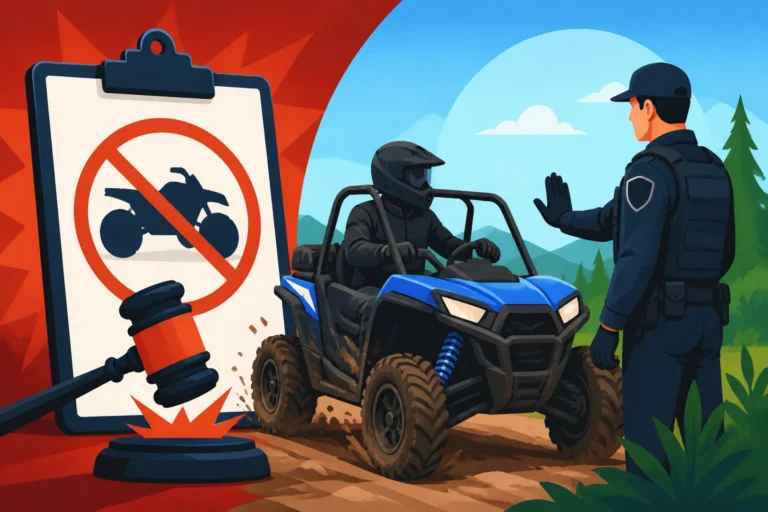
Let's not sugarcoat it: riding an unregistered ATV or UTV in Quebec is a recipe for trouble. If you're stopped by a trail patrol officer or a Sûreté du Québec officer and your machine isn't registered, you're facing fines that can easily run into the hundreds of dollars. We're not talking about a slap on the wrist here. This isn't just for federated trails either; even if you're just crossing a short stretch of municipal road to get to another section of trail, that machine needs to be registered.
Beyond the financial penalty, riding unregistered means you're operating without the mandatory civil liability insurance provided by the SAAQ. This is perhaps the most significant risk. If you're involved in an accident and cause injury to another person or damage to property, you could be personally responsible for those costs, which could be astronomical. The [Quebec Liability Minimum Rose to $1 Million], so imagine being on the hook for that. It’s a huge gamble that simply isn't worth taking. Plus, an unregistered machine might even be impounded, adding towing and storage fees to your woes. It's truly not worth risking your hard-earned money and peace of mind. [Quebec Penalties for Riding Unregistered] outlines the various citations you could face.
Essential Documents for Your Quebec ATV or UTV Registration
The SAAQ is pretty particular about paperwork, and for good reason. They need to correctly identify both you and your machine to ensure everything is above board. Walking into an SAAQ service outlet without the right documents is almost guaranteed to result in a wasted trip. It's far better to prepare thoroughly before you go. Think of it like getting ready for an important appointment; you wouldn't show up without your resume, right? This is similar, but for your off-road adventures.
Proof of Ownership: The Core Document
This is arguably the most critical document you'll need. The SAAQ needs absolute confirmation that you are the legal owner of the ATV or UTV you're trying to register. The specific document depends on how you acquired the machine:
-
Purchased from a Dealer: If you bought your machine new or used from a Quebec dealership, they will typically provide you with a sales contract or an official bill of sale that clearly identifies the machine (make, model, year, VIN/serial number) and confirms your purchase. Dealers are usually well-versed in the SAAQ's requirements and often handle the initial paperwork on your behalf, especially for new machines, making the process smoother. However, always double-check what they submit and what you need to keep. [Quebec SAAQ Steps After a Dealer Purchase] offers a good outline.
-
Purchased from a Private Seller: This is where things can get a little trickier, and a robust bill of sale is absolutely essential. This document should include:
- Full names and addresses of both buyer and seller.
- Date of sale.
- Full description of the machine (make, model, year, colour).
- The complete Vehicle Identification Number (VIN) or serial number. Seriously, double-check this against the machine itself!
- The sale price.
- A statement that the seller certifies they are the legal owner and the machine is free of liens (though the SAAQ will verify liens anyway).
- Signatures of both parties.
It's also highly advisable to have the seller's previous SAAQ registration certificate. This proves their ownership and helps the SAAQ with the transfer. If you're looking for a reliable template for a private sale, resources like LawDepot can provide professional-looking bill of sale forms that cover all the necessary legal bases, ensuring you don't miss any critical details. [Quebec SAAQ Forms for a Private Sale] also details what's needed.
-
Gifted, Inherited, or Imported: These scenarios have their own specific requirements. For a gifted machine, a sworn declaration (affidavit) stating it was a gift is often needed. For an inherited machine, you'll need documents like the will or a death certificate and proof of your legal right to the machine. For an imported machine, customs documentation and federal import forms are crucial. Always call the SAAQ or check their website for the precise documents in these less common situations.
Personal Identification and Residency
The SAAQ needs to confirm who you are. This means bringing valid identification. Typically, your Quebec driver's license will suffice, as it proves both your identity and your residency in Quebec. If you don't have a Quebec driver's license (perhaps you're a newcomer to the province), you might need to present a combination of other documents:
- Proof of Identity: A valid passport, a birth certificate, or another form of government-issued photo ID.
- Proof of Residency: Documents like a utility bill (electricity, internet, phone), a rental agreement, or a property tax bill that clearly shows your name and current Quebec address.
- Social Insurance Number (SIN): While not always explicitly asked for upfront, having your SIN on hand can sometimes streamline the process as it's linked to government services.
The key is to bring originals, not just photocopies, as the SAAQ agent will need to verify them. Don't make the mistake of showing up with just your old driver's license if it doesn't reflect your current address; they'll send you home to get more proof. [Quebec ATV Registration for Newcomers] is a helpful resource if you've recently moved to Quebec.
Addressing Missing Paperwork Scenarios
What happens if you've bought a used machine and the previous owner can't find the old registration certificate, or perhaps you misplaced a crucial document? This is a common frustration, but it's not always a dead end.
- Missing Previous Registration: If the seller doesn't have the old SAAQ registration, the bill of sale becomes even more critical. The SAAQ may still be able to process the transfer using the VIN/serial number, but it might take a bit longer as they verify the machine's history. It’s always best practice to insist on the previous registration when buying privately. If you're creating a bill of sale, using a comprehensive template from a service like LawDepot can ensure you've covered all bases for the sale agreement itself, even if other historical documents are scarce.
- No Bill of Sale: This is a much tougher situation. Without proof of ownership, the SAAQ will likely refuse to register the machine. If you bought it without a bill of sale, you'll need to work with the seller to create one retroactively. If that's impossible, you might be in a very difficult spot. This is why a solid bill of sale is non-negotiable for private transactions. [Quebec ATV Registration Without a Bill of Sale] goes into more depth on this challenging scenario.
- Missing or Illegible VIN/Serial Number: This is a serious issue. The SAAQ relies heavily on the VIN/serial number to identify the machine. If it's missing, defaced, or unreadable, the SAAQ may require an inspection or even refuse registration until the identity of the machine can be clearly established. Never buy a machine without a clear, intact VIN.
Always remember, the SAAQ's primary goal is to ensure legitimate ownership and safety. If something seems off with your paperwork, they're likely to err on the side of caution. Being prepared and having all your ducks in a row will save you a world of hassle. For a general checklist, check out [Documents to Bring to a Service Counter].
Navigating the SAAQ Registration Process Step-by-Step
Alright, you've gathered all your documents, you've double-checked everything, and you're ready to make it official. The actual process of registering your ATV or UTV in Quebec is fairly straightforward, but it must be done in person for the initial registration.
The Initial Visit to an SAAQ Service Outlet
Your first step is to visit an SAAQ service outlet. You can find these offices in most towns and cities across Quebec. It's often a good idea to check their website for branch locations and operating hours before you go, and sometimes, you can even book an appointment online to avoid long wait times. When you arrive, be prepared to:
- Present Your Documents: Hand over your proof of ownership (bill of sale, sales contract), personal identification, and proof of residency. The agent will review everything carefully. They might ask questions to clarify details about your purchase or the machine itself.
- Verify Machine Details: The SAAQ agent will input the machine's details, particularly the VIN or serial number, into their system. They'll confirm the make, model, and year. This is where any discrepancies in the VIN will become apparent, so ensuring it matches your bill of sale and the machine itself is crucial.
- Pay the Registration Fees and Taxes: You'll be required to pay the annual registration fee, which includes the mandatory civil liability insurance. Additionally, if you bought your machine from a private seller, you will owe the Quebec sales tax (QST) on the purchase price declared on your bill of sale, unless specific exemptions apply (like it being a gift, though even then, fair market value might be assessed). The agent will calculate the exact amount. The cost varies based on the machine type and the current SAAQ rates. [Quebec ATV Registration Costs Explained] provides more details on what to expect.
- Receive Your Plate and Registration Certificate: Once payment is processed, the SAAQ will issue you a Vehicle Hors Route (VHR) plate and a registration certificate. This certificate is your official proof that the machine is registered and insured. Congratulations, you're officially good to go!
Remember, this first registration cannot be done online or by mail. An in-person visit ensures all documents are verified and the correct plate is issued. [Quebec ATV Registration With the SAAQ] walks through the general process.
Understanding Your VHR Plate and Its Placement
The VHR plate you receive is distinct from a regular car license plate. It's smaller, designed to fit on the fender of your ATV or the rear of your side-by-side. The SAAQ will typically provide instructions on where to mount it, but the general rule is that it must be clearly visible from the rear of the machine.
Proper placement isn't just about aesthetics; it's about legality and safety. If your plate is obscured by mud, equipment, or mounted in a way that makes it difficult to read, you could still be ticketed. Always ensure your plate is securely fastened, clean, and visible before every ride. It’s your machine’s official identification, after all. [Quebec Plate Size on an Off-Road Machine] and [Where a VHR Plate Mounts on a Quad] offer more specific guidance on this.
The Ongoing Responsibility: Annual Renewals
Once your machine is registered, the responsibility doesn't end there. Just like with a car, your ATV or UTV registration needs to be renewed annually. The SAAQ will send you a renewal notice in the mail, usually a few weeks before your registration expires. This notice will detail the amount due and provide instructions on how to renew.
- Online Renewal: For renewals, you often have the convenience of renewing online through the SAAQ website. This is usually the quickest and easiest method.
- Financial Institution: You can also renew at most financial institutions (banks, credit unions) in Quebec.
- SAAQ Service Outlet: Of course, you can always renew in person at an SAAQ service outlet if you prefer or if there are any changes to your information.
It’s absolutely critical not to let your registration lapse. Riding with an expired registration is the same as riding unregistered, with all the associated risks and penalties. Mark your renewal date on your calendar, set reminders – whatever it takes to ensure you don't forget. [Quebec ATV Registration Renewal Each Year] is a great resource for managing your annual obligations.
What to Expect After Your ATV or UTV is Registered in Quebec
Once you've successfully navigated the SAAQ process, paid your fees, and have that shiny new VHR plate in hand, you might think you're done. While the heavy lifting is over, there are still a few important things to understand about your registration and what it means for your responsibilities as a Quebec OHV owner.
Your Registration Certificate and Proof of Insurance
The document the SAAQ gives you after registration is more than just a piece of paper; it's your official registration certificate. This certificate serves as proof of both your machine's registration and the mandatory civil liability insurance provided by the SAAQ. It will clearly state your name, the machine's details, the plate number, and the expiry date of your current registration.
It is absolutely crucial to keep this certificate in a safe place. When you're out riding, you must carry proof of your registration and insurance with you. This can be the physical certificate or, in some cases, a digital copy on your phone, though a physical copy is always safest in case of battery issues or poor signal. A trail patrol officer or police officer has the right to ask for these documents, and not having them can lead to fines. Think of it as your OHV's passport – you wouldn't travel without it! [Carrying an Insurance Certificate on Every Ride] offers practical advice on this.
Liability Coverage: The Quebec Minimum
As mentioned, part of your annual registration fee goes towards a mandatory civil liability insurance policy provided by the SAAQ. This policy is designed to protect you from financial responsibility if your OHV causes bodily injury or property damage to others. For instance, if you accidentally collide with another machine, damage a landowner's fence, or injure a pedestrian (unlikely on a trail, but possible), this insurance is there to cover the costs up to the policy limit.
Currently, the minimum civil liability coverage provided by the SAAQ is $1,000,000. This might seem like a lot, but in today's world of rising medical costs and repair expenses, that amount can be quickly reached in a serious incident. This coverage is distinct from any optional private insurance you might purchase for damage to your own machine or enhanced protection. It’s a baseline, a floor of coverage that ensures a basic level of protection for everyone on Quebec trails. [Quebec's Liability Insurance Rule] delves deeper into the specifics of this coverage.
Carrying Your Papers on Every Ride
This point bears repeating because it's so often overlooked, especially by experienced riders who feel confident they won't get stopped. Every single time you operate your registered ATV or UTV, whether on a federated trail, a designated road crossing, or even briefly on private land that connects to public access, you must have your driver's license, your SAAQ registration certificate (which includes proof of insurance), and your trail pass (if applicable) with you.
Think of it as part of your pre-ride checklist: helmet, gloves, eye protection, and your essential documents. Having them readily accessible – perhaps in a waterproof bag in your storage box or even a secure pocket – will save you a world of trouble if you encounter a patrol. Officers aren't just looking for unregistered machines; they're also verifying driver eligibility (age, license), compliance with equipment rules, and, yes, that you're carrying your official paperwork. Being unable to produce these documents on demand can result in a fine, even if your machine is perfectly registered and insured. It's about demonstrating your compliance, not just being compliant. [Quebec Insurance Proof on the Machine] is another key article to review for this.
Document Checklist for SAAQ Registration
To make your trip to the SAAQ as smooth as possible, here's a handy checklist of documents you'll likely need. Remember to bring originals for verification!
| Document Category | Required Documents (Primary) | Notes / Alternatives |
|---|---|---|
| Proof of Ownership | Bill of Sale (Private Sale) or Sales Contract (Dealer Purchase) | Must clearly state buyer, seller, date, machine details (VIN). For private sales, a template from LawDepot is recommended. |
| Proof of Identity | Quebec Driver's License | Valid passport, birth certificate, or other government-issued photo ID if no QC license. |
| Proof of Residency | Quebec Driver's License (if current address) | Utility bill (electricity, phone), rental agreement, property tax bill, etc., with your name and current address. |
| Previous Registration | Old SAAQ Registration Certificate (from seller) | Highly recommended for private sales to simplify transfer. |
| Payment Method | Debit card, credit card, cash (check SAAQ policy for limits) | Be prepared to pay registration fees and QST on the spot. |
| Other (Situational) | Will/Death Certificate (Inherited), Customs Forms (Imported), Sworn Declaration (Gifted) | Specific to non-standard acquisition methods. |
Getting your Quebec ATV or UTV registered with the SAAQ is a non-negotiable step before you embark on your riding adventures. It ensures your machine is legally recognized, provides essential civil liability insurance, and keeps you compliant with Quebec's Off-Highway Vehicle Act. While the process requires an in-person visit and careful attention to paperwork, preparing thoroughly will make it a quick and painless experience. Once you have that VHR plate and registration certificate, you can hit the trails with confidence, knowing you've done your part to ride safely and legally in beautiful Quebec.
Disclaimer
This article is for general informational purposes only and does not constitute professional advice. Laws, prices and regulations vary by location and change over time. Consult a qualified professional for guidance on your specific situation.