Quebec Registration Compared to Ontario
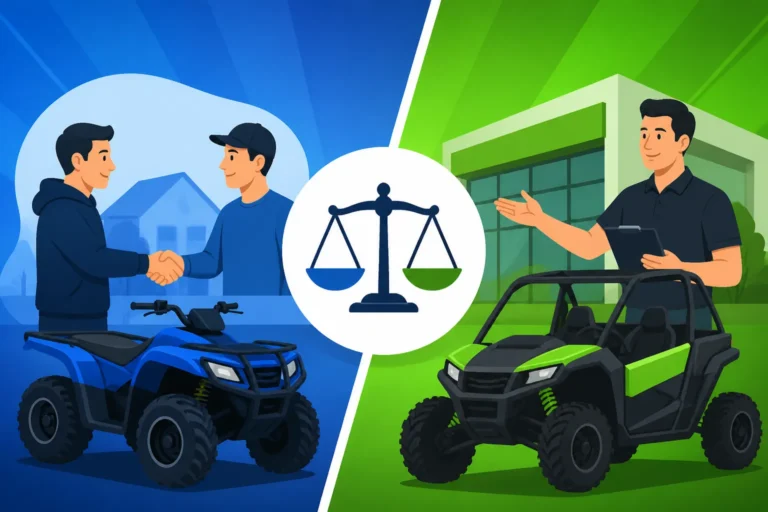
Oh, the age-old question for quad and side-by-side enthusiasts in Eastern Canada: "How does Quebec's ATV registration really stack up against Ontario's?" It's a common source of confusion, especially if you're planning a trip across the Ottawa River, moving between provinces, or even just trying to understand why your friend from the other side has different paperwork. This guide is here to untangle all that, breaking down the distinct systems in each province so you know exactly what to expect and how to stay legal on the trails.
Understanding the Core Differences in How Each Province Handles ATV Registration
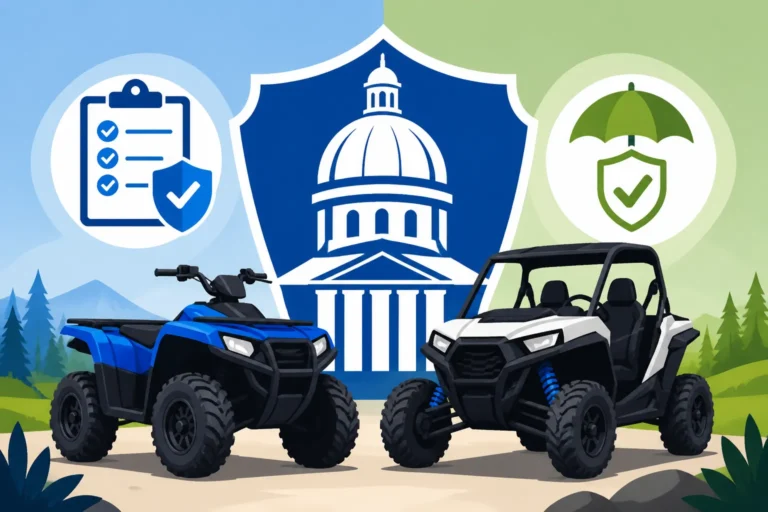
When you're dealing with off-road machines, every province has its own quirks, but Quebec and Ontario offer two fundamentally different approaches to getting your ATV or side-by-side officially recognized and insured. This difference is often the biggest hurdle for riders transitioning between the two.
Quebec's Integrated SAAQ System
In Quebec, everything related to your off-road vehicle (which they call a VTT, or véhicule tout-terrain) goes through one central agency: the Société de l'assurance automobile du Québec, or SAAQ. This is where things get really unique. The SAAQ isn't just a registry; it's also your mandatory insurer for third-party liability coverage. This means that when you register your ATV or side-by-side with the SAAQ, you're automatically buying the basic liability insurance that Quebec requires.
This integrated system streamlines things in some ways, as you only have one governmental body to deal with for registration and that crucial minimum insurance. You'll receive a distinctive VHR plate (which stands for véhicule hors route, or off-road vehicle) that must be affixed to your machine. This registration and insurance package needs to be renewed annually, and the SAAQ will send you [Quebec Registration Renewal Notices] to remind you when it's time. It's a "one-stop shop" approach that many Quebec riders appreciate for its simplicity, though the cost covers both administrative fees and your liability coverage.
Ontario's Separate Approach
Head west into Ontario, and you'll find a more traditional, two-pronged system, much like how cars are handled. Here, the Ministry of Transportation (MTO) is responsible for vehicle registration. You'll register your ATV or side-by-side with them, receiving a license plate and a sticker that confirms your registration is current. This is purely an administrative process to record ownership and get your machine a legal identity.
However, the MTO does not provide insurance. In Ontario, off-road vehicle owners are required to secure their own private liability insurance policy from an independent insurance provider. This means you'll need to shop around, compare quotes, and buy a separate policy before you can legally operate your machine. It requires an extra step, an additional piece of paperwork to carry, and potentially more time to set up initially. The annual renewal involves both renewing your MTO registration sticker and ensuring your private insurance policy remains active.
The Impact on Visiting Riders
These fundamental differences are perhaps most keenly felt by riders who frequently cross provincial borders. If you're an Ontario resident planning a quad trip to Quebec, you absolutely need to understand Quebec's rules. Your Ontario registration and private insurance are valid, but Quebec law also requires a minimum liability coverage that matches its own. While Ontario's minimum may meet this, you need to be aware of the specific requirements, especially regarding trail passes.
Conversely, if you're a Quebec rider heading to Ontario, your SAAQ registration and integrated liability insurance are recognized. However, you'll still need to respect Ontario's specific trail pass requirements and any other local regulations regarding equipment or riding areas. The crucial point here is that you're operating under the laws of the province you're riding in, not just the province where your machine is registered. This is where many riders get caught out, mistakenly assuming their home province's rules cover them everywhere.
Required Documentation and Process for Each Province
Getting your off-road machine legally registered in either Quebec or Ontario involves providing specific documents and following a set process. While some requirements overlap, there are critical distinctions that can trip up even experienced buyers or movers.
Registering an ATV in Quebec
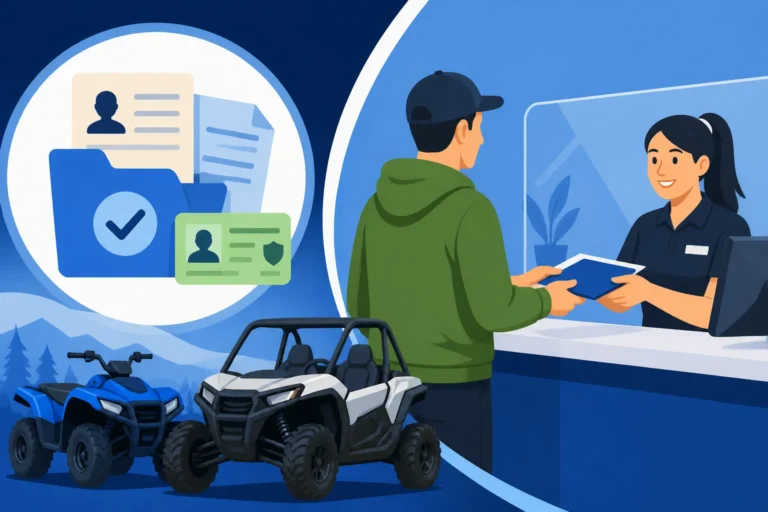
When you're ready to register an ATV or side-by-side in Quebec, whether it's a brand-new purchase or a private sale, you'll need to gather a few essential items before heading to a SAAQ service counter. The core requirements include proof of ownership, proof of identity, and proof of residency. For a new machine, the dealer will typically handle most of the paperwork, often electronically, making the process quite smooth. They'll submit the necessary forms and collect the applicable taxes, including [Quebec Sales Tax on an ATV Purchase].
For a private sale, the onus is on you and the seller. You'll need a clear bill of sale that details the machine, the purchase price, and the contact information for both parties. The SAAQ provides specific forms to facilitate this, which are often a good idea to use to ensure all necessary information is present. You can find more details on these forms in [Quebec SAAQ Forms for a Private Sale]. You'll also need a valid piece of identification (like a driver's license), and proof of your Quebec address. The SAAQ will then process your registration, issue your VHR plate, and collect the combined registration and insurance fee.
Registering an ATV in Ontario
Over in Ontario, the process for registering an ATV or side-by-side typically starts at a ServiceOntario centre. Just like in Quebec, you'll need to present documentation proving ownership and your identity. A properly filled-out bill of sale is crucial here, detailing the vehicle information number (VIN), make, model, year, purchase price, and the names and signatures of both the buyer and seller. If you're unsure about drafting one, using a standardized template can be incredibly helpful – services like LawDepot offer templates that ensure you cover all the legal bases, which can prevent headaches down the road.
Before you can complete the registration, you must have proof of valid private liability insurance. This is a non-negotiable step; ServiceOntario will not issue a plate or sticker without it. So, your first stop after purchasing a machine (or before if you're buying new) is to an insurance broker or company to secure a policy. Once you have your insurance slip, along with your bill of sale and personal identification, you can register the machine and pay any applicable sales tax and registration fees.
Key Paperwork Considerations for Inter-Provincial Transfers
Transferring an ATV or side-by-side between provinces adds another layer of complexity. If you're moving from Ontario to Quebec, you'll essentially be going through the process of [Registering an Ontario Quad After You Move]. This means taking your Ontario-registered machine to the SAAQ, providing your proof of ownership, and registering it under Quebec's system, which will then include its integrated liability insurance. You'll surrender your Ontario plate and receive a Quebec VHR plate.
Moving a Quebec-registered machine to Ontario involves a similar reversal: you'll cancel your SAAQ registration (and often return the VHR plate), then take your machine's ownership documents, along with your newly acquired private insurance, to ServiceOntario to register it under the MTO system. In both scenarios, having a comprehensive bill of sale is paramount, even if the machine has been in your possession for years. A service like LawDepot can help you create a robust bill of sale if the original is missing or insufficient, ensuring you have indisputable proof of ownership for the provincial authorities. This document is the bedrock of any vehicle transfer, proving who legally owns the machine and allowing the new province to collect any applicable taxes.
Insurance, Plates, and Trail Access: Practical Implications
Beyond the initial registration process, the differences between Quebec and Ontario extend to how insurance is structured, how plates are displayed, and even how you access the vast network of trails. These practicalities directly affect your riding experience and legal compliance.
Mandatory Insurance Requirements
The biggest divergence in the two provinces lies in their approach to mandatory liability insurance for off-road vehicles. In Quebec, as we discussed, the SAAQ acts as both the registrar and the primary insurer. When you pay your annual [Quebec ATV Registration Cost], a portion of that fee covers your mandatory third-party liability insurance, which currently stands at [The $1 Million Liability Floor Every Owner Carries]. This coverage is automatically included with your registration, providing a uniform safety net for all registered riders against claims from injuries or damages you might cause to others. It simplifies the process by ensuring every registered machine has the base level of coverage required. [Quebec's Liability Insurance Rule] mandates this, meaning you don't need to chase down a separate insurance policy.
Ontario, on the other hand, operates under a system where registration and insurance are entirely separate entities. While the MTO handles your ATV's registration, you are personally responsible for securing a private liability insurance policy from an authorized insurance provider before you can legally ride. This gives riders more choice in terms of coverage levels and providers, but it also places the onus on them to ensure they have adequate and continuous coverage. Failing to have valid insurance in Ontario, like in Quebec, carries significant penalties, including fines and potential impoundment of your machine. It’s a crucial step that cannot be overlooked.
Plate and Sticker Display
The visual identifiers for your machine also differ between the provinces. Quebec-registered ATVs and side-by-sides are issued a distinctive VHR plate. This plate is typically smaller than a standard car plate and is designed to be mounted on the rear of the machine, usually on the fender. The SAAQ has specific guidelines for [Quebec Plate Placement on a Quad] to ensure visibility. There are no separate annual stickers; the plate itself, along with your physical registration document, serves as proof of current registration and insurance.
Ontario-registered off-road vehicles receive a standard-sized license plate issued by the MTO. This plate also requires an annual sticker, which you'll affix to the plate to indicate that your registration is current. Like Quebec, the plate must be securely mounted and clearly visible on the rear of the machine. The plate and sticker are your primary visual proof of registration, though you should always carry your insurance slip and ownership documents with you when riding.
Trail Pass Reciprocity (or Lack Thereof)
This is a point of frequent misunderstanding and, frankly, frustration for many cross-border riders. Historically, there was some level of reciprocity or a simple add-on pass that allowed riders from one province to use the federated trails of the other. However, this has changed. [Quebec Ended Reciprocity With Ontario], meaning that if you're an Ontario rider, your OFATV (Ontario Federation of ATV Clubs) trail pass is not valid on Quebec's FQCQ (Fédération des Clubs de Motoneigistes et de VTT du Québec) trails, and vice-versa.
This means that if you're planning a trip from Ontario to ride the extensive [Quebec ATV Trails: The FQCQ Network], you must purchase a separate [Quebec's Annual FQCQ Trail Pass] (or a daily/three-day pass, depending on your trip length) to legally access the federated trails. The same applies to Quebec riders venturing into Ontario's trail system. It's an additional cost and an extra sticker for your machine, but it's essential for staying compliant and avoiding fines from trail patrols. Always check the current rules and purchase the appropriate pass for the province you intend to ride in, regardless of where your machine is registered.
Navigating the Cost and Ongoing Responsibilities
Understanding the initial registration process is one thing, but knowing the ongoing costs and responsibilities is key to long-term enjoyment of your ATV or side-by-side in either Quebec or Ontario. These include annual renewals, what happens when you sell your machine, and how the overall financial picture might look.
Comparing Initial and Annual Costs
The initial and annual costs for owning an ATV or side-by-side differ quite a bit between Quebec and Ontario, mainly due to the insurance component. In Quebec, your [Quebec ATV Registration Cost] is a single, combined fee paid to the SAAQ annually. This fee covers both the administrative cost of registration and your mandatory liability insurance. While you can't break down the exact cost for each component, you're paying one sum for both. This simplifies budgeting as there's no separate insurance bill to worry about.
In Ontario, the costs are split. You'll pay an annual registration fee to the MTO for your license plate and sticker. Separately, you will pay a premium for your private liability insurance policy. This premium can vary significantly based on factors like your driving record, the machine's value, where you live, and the coverage limits you choose beyond the minimum. This means that while the MTO registration fee might seem lower than Quebec's SAAQ fee, the combined total of registration plus private insurance in Ontario could be higher or lower depending on your insurance profile. Additionally, in both provinces, if you plan to ride on federated trails, you'll need to factor in the cost of an annual trail pass, such as Quebec's FQCQ pass or Ontario's OFATV pass.
Renewal Processes
Renewing your ATV's registration is an annual responsibility in both provinces, though the process differs. In Quebec, the SAAQ aims to make renewals straightforward. They send out [Quebec Registration Renewal Notices] by mail or electronically, reminding you when your registration is due. You can often renew online, by mail, or in person at a SAAQ service outlet. Once renewed, your existing VHR plate remains valid, confirming your continued registration and insurance coverage. If you let your registration lapse, you risk significant fines and being unable to legally ride, as detailed in [What Happens When Your VHR Plate Lapses].
Ontario's renewal process also involves an annual sticker for your license plate, issued by the MTO. You typically receive a renewal reminder, and you can renew your registration online, at a ServiceOntario centre, or at a designated private license plate issuer. Crucially, before you renew your MTO sticker, you must ensure your private insurance policy is current and valid. The MTO system is linked to insurance databases, and you won't be able to renew your registration if your insurance has lapsed. This emphasizes the dual responsibility of maintaining both valid registration and a separate insurance policy.
Transferring Ownership and Selling
When it comes time to sell your ATV or side-by-side, or transfer ownership to someone else, both provinces have specific procedures that need to be followed to ensure the vehicle is legally removed from your name and properly registered to the new owner. In Quebec, this involves a [Quebec Registration Transfer After a Sale] process with the SAAQ. The seller must declare the sale, and the buyer must then register the machine in their name, paying applicable sales taxes.
In Ontario, the process is similar: the seller completes the transfer portion of the ownership document and provides a bill of sale to the buyer. The buyer then takes these documents, along with proof of their own insurance, to ServiceOntario to complete the transfer and register the machine in their name. A clear, comprehensive bill of sale is absolutely vital in both provinces. Without it, the new owner may struggle to prove ownership, and the seller may remain liable for the machine. This is where standardized documents, like those available through LawDepot, become invaluable, providing a legally sound framework for private sales and protecting both parties. Ensure all details are accurate, signed, and dated to avoid future complications.
Disclaimer
This article is for general informational purposes only and does not constitute professional advice. Laws, prices and regulations vary by location and change over time. Consult a qualified professional for guidance on your specific situation.