Do You Need a Licence for an ATV in Quebec?
It can be incredibly confusing to navigate the specific rules for riding off-highway vehicles in Quebec, especially when it comes to something as fundamental as whether you need a driver's licence. Many folks coming from other provinces or even within Quebec itself assume it's like a bicycle or perhaps a dirt bike on private land – you just hop on and go. But that assumption could lead to some significant headaches, fines, and even serious legal trouble. This guide is here to clear up the confusion and lay out exactly what kind of licence you need (and don't need) to legally operate an ATV or side-by-side in la belle province.
The Straight Answer: Yes, You Need a Driver's Licence for an ATV in Quebec
Let's get straight to it: for the vast majority of situations where you'd be riding an ATV (or VTT, as they're often called here) or a side-by-side in Quebec, you absolutely need a valid driver's licence. This isn't just a suggestion; it's a legal requirement enshrined in the province's off-highway vehicle laws. Gone are the days when you might have heard stories of casual riding without formal licensing. The rules have tightened, and enforcement is quite serious, particularly since the comprehensive changes that came into effect a few years ago.
The reason for this strictness is all about safety and accountability. When you're operating a powerful machine, whether on a federated trail, a designated forest road, or even just crossing a public road, the provincial authorities want to ensure that the operator has demonstrated a basic level of competence and understanding of traffic laws. It’s about protecting not just the rider, but also other trail users, landowners, and the general public. Ignoring this fundamental requirement can quickly turn a fun day out into a very expensive and stressful experience.
This requirement means that anyone planning to ride an ATV or side-by-side on any land where the Off-Highway Vehicle Act applies – which includes the vast network of federated trails, many public lands, and even certain road allowances – must carry a valid driver's licence. Think of it just like driving your car; you wouldn't leave home without your licence, and you shouldn't get on your quad without one either. It's a non-negotiable part of responsible riding in Quebec.
Not Just Any Licence – A Valid Driver's Licence
When we say "driver's licence," we mean a licence that is currently valid and has not been suspended, revoked, or expired. You can't just flash an old, out-of-date card or a learner's permit that doesn't grant full driving privileges. The licence needs to be recognized by the SAAQ (Société de l'assurance automobile du Québec) as a legitimate credential for operating a motor vehicle. This is a crucial distinction that often catches people off guard.
The legal framework specifies that any class of driver's licence that permits you to operate a motor vehicle is generally acceptable. So, whether you hold a Class 5 licence for a passenger car, a Class 6A for motorcycles, or even a licence for heavier vehicles, as long as it's valid, you're usually good to go from a licensing perspective. The emphasis is on proving you have passed official driving tests and are authorized to drive on public thoroughfares, even if your quad will rarely touch asphalt.
It's particularly important to remember that this requirement was reinforced by significant legislative changes. The [Quebec Requires a Driver's Licence Since 2021] update made it unequivocally clear that operating an off-road vehicle on regulated land demands a proper driver's licence. This was a big shift for some riders, especially those who had been riding for years under older, less stringent rules. Staying informed about these changes is key to avoiding legal pitfalls and ensuring you comply with [What Quebec's Off-Highway Vehicle Act Changed for Owners].
The "What If" Scenarios and Exceptions (Or Lack Thereof)
Many riders wonder if there are special exceptions, especially for situations like riding exclusively on private land or for specific purposes like farming. While there are nuances, the general rule of needing a driver's licence remains surprisingly broad for ATVs and side-by-sides on any public access land or federated trail. The Act aims for consistency to prevent loopholes that could compromise safety or enforcement.
For example, if you own a large plot of private land and your ATV never leaves it, technically, the Off-Highway Vehicle Act’s public road and trail provisions might not apply directly. However, if that private land is part of or abuts a federated trail system, or if you ever need to cross a municipal road to get from one section of your land to another, then a valid licence (and all other requirements like registration and insurance) immediately become mandatory. It's really hard to stay entirely off the grid unless you're truly isolated.
Even for farm use, where ATVs are integral tools, the moment that machine touches a public road shoulder or crosses a public thoroughfare, the driver's licence rule kicks in. The intention of [Quebec's Off-Highway Vehicle Act and Your Papers] is to regulate the use of these powerful machines in any context that interfaces with the public sphere. There aren't wide-ranging "agricultural use" exemptions for driver's licences that would let an unlicensed person operate a quad on public paths.
Age Requirements Beyond Just Holding a Licence
While having a driver's licence is paramount, it's just one piece of the puzzle. Quebec also has specific age requirements for operating off-road vehicles, and these can sometimes be a source of confusion, especially for younger riders or families looking to enjoy the trails together. These age restrictions are tied to the type of machine you're operating and the type of land you're riding on.
The province differentiates between ATVs (VTTs) and side-by-sides (VHRs) in terms of minimum age for operation on public or federated lands. This means that even if someone technically has a driver's licence (for example, a young person who got their car licence early), they might still be too young to legally operate certain types of off-road vehicles in certain areas. It's a combination of having the right document and meeting the age threshold for the specific vehicle.
Understanding these age rules is critical for parents, guardians, and anyone considering letting a younger individual ride. Non-compliance can lead to hefty fines not just for the rider, but potentially for the owner of the machine or the supervising adult. It’s all part of the provincial effort to ensure that these powerful machines are handled by individuals with the maturity and experience appropriate for the risks involved.
The Minimum Age for ATV (VTT) Operation
For standard ATVs, which Quebec refers to as VTTs (véhicules tout-terrain), the minimum age to operate one on federated trails, designated roads, or other public lands is 16 years old. This means that if you're 16 or 17, you can operate an ATV, but there's an additional step you must take beyond just having your driver's licence.
Specifically, 16 and 17-year-olds are required to hold a valid driver's licence and must also possess a training certificate issued by the Fédération québécoise des clubs de quads (FQCQ) or an equivalent recognized organization. This certificate demonstrates that they have completed a safety course specifically designed for off-road vehicle operation, covering essential skills, trail etiquette, and safety procedures. It's an extra layer of protection to ensure these younger riders are well-prepared for the trails.
So, if you're between 16 and 18, it's a two-part requirement: a valid driver's licence (like a Class 5) AND the FQCQ training certificate. This is clearly outlined in [Quebec's Minimum Age of 16 for ATV Riders] and is a key piece of information for any family with a teen looking to get into the sport. Without both, even with a valid driver's licence, a 16 or 17-year-old would be riding illegally on federated trails or public lands.
Side-by-Side (VHR) Age Rules – A Different Ballgame
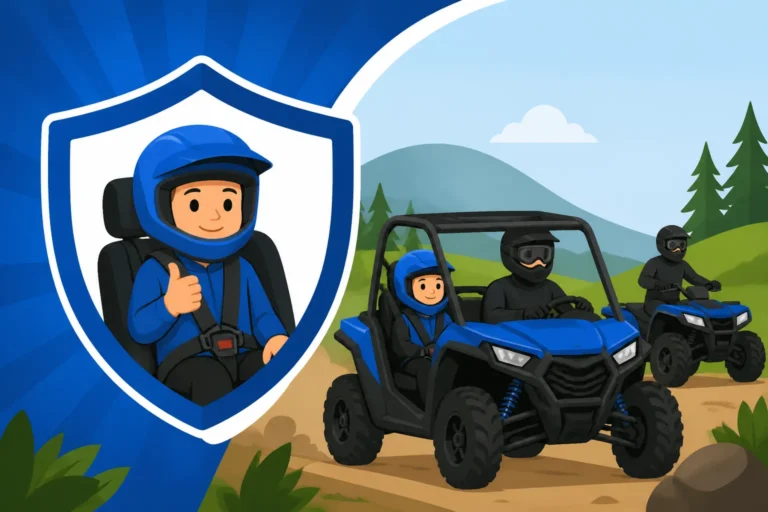
When it comes to side-by-sides, also known as VHRs (véhicules hors route) or multi-place off-road vehicles, the age requirement is even stricter. To drive a side-by-side on public trails or land in Quebec, you must be at least 18 years old. This is regardless of whether you have a driver's licence or an FQCQ training certificate. The extra year of maturity is deemed necessary due to the often larger size, weight, and different handling characteristics of these machines.
This means that a 16-year-old or 17-year-old, even with a valid driver's licence and the FQCQ training certificate for ATVs, is not permitted to operate a side-by-side on Quebec's federated trails or public roads. This rule is often overlooked, leading to potential fines and safety risks. It's a specific distinction that the law makes, recognizing the differences between a single-rider ATV and a multi-passenger side-by-side.
Parents planning family outings with side-by-sides must be particularly aware of this. If you have a 17-year-old with their car licence eager to take the wheel of the side-by-side, they'll have to wait another year. [Quebec Requires 18 for a Side-by-Side] is not just a guideline; it's a hard and fast rule that patrols are diligent about enforcing to ensure the safety of all trail users.
Under 16? Private Land is Your Only Option
For anyone under the age of 16, the rules are even more restrictive when it comes to riding ATVs or side-by-sides in Quebec. Simply put, individuals under 16 years of age are generally prohibited from operating off-road vehicles on federated trails, public roads, or any land where the Off-Highway Vehicle Act applies. There are no provisions for training certificates or special permits that would allow them to ride on these regulated areas.
The only exception for underage riders is if they are operating the machine exclusively on private land, with the explicit permission and supervision of the landowner, and under the direct authority of a parent or guardian. Even then, it's strongly recommended that appropriate safety gear is worn, and the machine is suitable for their size and skill level. However, the moment that machine crosses onto any public access land, the rules about age and licensing kick in, and an underage rider would be in violation.
This is why you'll often see parents teaching younger children to ride on their own large properties or at designated private riding parks, rather than on the extensive FQCQ trail network. If you're a visitor, or even a resident without substantial private land, this means your children under 16 cannot join you on federated quad trails. It's important to respect [Quebec Parental Authorization on Private Land] rules, but also to understand their strict limitations to private property only.
What Kind of Licence Qualifies?
It’s one thing to know you need a licence, but it’s another to understand which kind of licence is acceptable. Fortunately, Quebec's rules are fairly accommodating in this regard, generally accepting any valid driver's licence that permits the operation of a motor vehicle. This streamlines things considerably for most adult riders, as they typically already hold a car or motorcycle licence.
The key is that the licence must be official, issued by a recognized authority, and currently in good standing. This means no temporary permits unless they explicitly grant driving privileges comparable to a full licence, and certainly no expired or suspended documents. The SAAQ's goal is to ensure that anyone operating an off-road vehicle has met the basic competency standards required to drive on public roads, even if the quad itself rarely ventures onto paved surfaces.
This flexibility makes it easier for a wide range of individuals to enjoy Quebec's vast trail network, whether they typically drive cars, trucks, or motorcycles. The focus isn't on specialized training for quads unless you're a younger rider (16-17) who needs the FQCQ certificate. For adults, your regular driver's licence is typically your golden ticket, provided you meet the age requirements for the specific machine.
Car, Motorcycle, or Heavier Vehicles – It All Counts
The good news for most adult riders is that your standard Class 5 passenger car licence in Quebec is perfectly acceptable for operating an ATV or side-by-side on federated trails and public lands. You don't need a special "off-road" endorsement or a motorcycle-specific licence, although a motorcycle licence (like a Class 6A for full motorcycles or 6B for scooters) would also qualify. The logic is that if you're deemed competent enough to handle a car on the road, you possess the foundational skills to operate a quad safely.
This broad acceptance means you won't typically need to go through an entirely new licensing process just to ride your quad. If you've already passed your driving tests for a car, the SAAQ considers that sufficient proof of your ability to operate a motor vehicle responsibly. The critical factor is that the licence must be current and not subject to any restrictions that would prevent you from driving motor vehicles in general.
So, whether you usually navigate city streets in a sedan, haul cargo in a truck, or cruise on two wheels, your existing, valid driver's licence from Quebec is generally all you'll need from a licensing perspective. This is one less hurdle to worry about when you're preparing for your next adventure on the trails.
Visiting Riders: Out-of-Province and International Licences
Quebec welcomes visitors from other provinces and countries to its incredible off-road trail network, and the licensing rules for them are also quite straightforward. If you're visiting from another Canadian province or territory, your valid driver's licence issued by your home province is recognized and accepted in Quebec for off-road vehicle operation. You don't need to get a specific Quebec licence or permit.
Similarly, international visitors who hold a valid driver's licence from their home country are generally permitted to use it to operate an ATV or side-by-side in Quebec. It's always a good idea to have an International Driving Permit (IDP) if your home country's licence is not in English or French, as this can help with identification and interpretation by law enforcement. However, the primary requirement is a valid, unexpired licence from your country of residence.
It's important for all visitors to remember that while their home licence is accepted, they are still subject to all other Quebec off-highway vehicle laws, including age restrictions for specific machines, helmet laws, registration requirements (for the machine itself), and the mandatory [Quebec's Annual FQCQ Trail Pass] if riding on federated trails. While your licence might be recognized, all the other local rules still apply. So, whether you're a [Quebec Rules for a Visiting Ontario Rider] or from further afield like [Quebec Rules for a Visiting Vermont Rider], ensure you know all the rules, not just the licence part.
The Consequences of Riding Without a Proper Licence
Riding an ATV or side-by-side without a valid driver's licence in Quebec is not a minor infraction. It carries significant penalties and can lead to a cascade of problems, from immediate fines to long-term financial liabilities. The authorities take this very seriously because it undermines the safety framework established for off-road vehicle use. Don't fall into the trap of thinking you'll just get a warning; patrols on the trails are equipped and authorized to issue substantial citations.
The risks aren't just about encountering law enforcement. Operating without a valid licence can also have severe implications for your insurance coverage, potentially leaving you personally responsible for damages and medical costs in the event of an accident. It's a gamble that simply isn't worth taking, given the potential for devastating financial fallout. Adhering to the licensing requirements is a fundamental aspect of being a responsible and protected rider in Quebec.
This is why understanding and complying with these rules is so crucial. A moment of oversight or a decision to disregard the law can turn a planned enjoyable ride into a very regrettable experience. Always ensure you have your valid driver's licence on you whenever you plan to operate an off-road vehicle.
Fines and Legal Trouble – It's Not Just a Slap on the Wrist
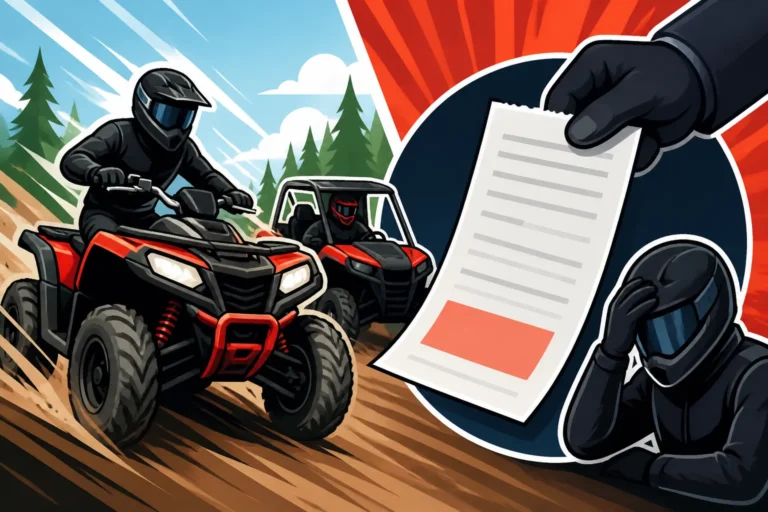
If you are caught operating an ATV or side-by-side on Quebec's federated trails, designated roads, or public lands without a valid driver's licence, you're looking at more than just a stern talking-to. The fines can be substantial. For example, [Quebec Fines for Riding Without a Licence] can quickly add up, easily reaching hundreds of dollars for a first offense, not including any administrative fees or court costs. These aren't minor parking tickets; they are serious citations.
Beyond the monetary penalties, there can be other immediate consequences. Law enforcement officers, including provincial police (Sûreté du Québec) and authorized FQCQ trail patrols, have the authority to order you off the trail and, in some cases, even impound your vehicle until the situation is resolved and a properly licensed operator can retrieve it. Imagine being deep in the backcountry and having your ride abruptly ended, with your machine being towed away – it's a major disruption to your day and an expensive one.
Repeated offenses can lead to even harsher penalties, including increased fines, longer vehicle impoundment periods, and potentially even points on your official SAAQ driving record, which could impact your ability to drive other vehicles. The legal system in Quebec treats off-road vehicle infractions with the same gravity as other motor vehicle offenses, so it's essential to comply fully.
Insurance Implications – A Risky Gamble
Perhaps one of the most significant, yet often overlooked, consequences of riding without a valid driver's licence is the impact it can have on your insurance coverage. In Quebec, all off-road vehicles operated on public land or federated trails must carry mandatory liability insurance, which is typically provided by the SAAQ as part of your registration fee. However, this coverage, and any additional private insurance you might have, is contingent upon you operating the vehicle legally.
If you are involved in an accident while riding without a valid driver's licence, your insurance provider – whether it's the SAAQ or a private company – could deny your claim. This means you could be personally responsible for all damages, including repairs to your own machine, damage to other vehicles or property, and critically, medical expenses for anyone injured, including yourself and any passengers. Given the potential for serious injuries in ATV accidents, these costs can quickly soar into the tens or even hundreds of thousands of dollars.
The minimum liability coverage in Quebec for off-highway vehicles is [The $1 Million Liability Floor Every Owner Carries], which highlights the significant financial risk involved. Riding without a valid licence essentially voids this protection, turning a potentially insured incident into a catastrophic personal financial burden. It’s a gamble that no responsible rider should ever consider taking.
Beyond the Licence: Other Essential Paperwork and Requirements
While having a valid driver's licence is a critical first step, it's by no means the only piece of documentation you'll need to ride legally and safely in Quebec. The province has a comprehensive set of requirements for off-highway vehicles, designed to ensure safety, accountability, and the proper funding and maintenance of its extensive trail network. Overlooking any of these additional requirements can lead to fines, inconvenience, and a premature end to your ride.
Think of it as a checklist before you head out: driver's licence, machine registration, proof of insurance, and if you're on a federated trail, a valid trail pass. All these elements work together to create a regulated environment for off-road vehicle enthusiasts, allowing thousands to safely enjoy Quebec's beautiful landscapes. Being prepared with all your papers is not just about avoiding trouble; it's about being a responsible member of the riding community.
Always make sure you have physical copies or easily accessible digital proof of these documents with you when you ride. Patrols and law enforcement can and will ask to see them. Being organized saves you stress and ensures you can fully enjoy your time on the trails.
Registration and Proof of Ownership
Every ATV and side-by-side operated in Quebec on public land or federated trails must be registered with the SAAQ and display a valid VHR plate. This is a non-negotiable requirement. The registration process ensures that your machine is officially recognized and that the mandatory SAAQ liability insurance is in place. Without a valid registration and plate, your machine is not legally allowed on the trails.
When you go through [Quebec ATV Registration With the SAAQ], you'll be providing proof of ownership, such as a bill of sale or certificate of origin. This links you directly to the machine and is crucial for tracking purposes and in the event of theft or an accident. Always ensure your registration is current and that your [Quebec VHR Plates Explained] is properly affixed to your machine in a visible location.
It's your responsibility as the owner to ensure the registration is always up-to-date. Renewals typically happen annually, and you should receive a notice from the SAAQ. Riding an unregistered machine is another surefire way to incur significant fines and potentially have your machine impounded.
The Mandatory Trail Pass (FQCQ Sticker)
If you plan on riding on Quebec's impressive network of federated trails – which comprises thousands of kilometres across the province – a driver's licence and machine registration are not enough. You must also purchase and display a valid FQCQ (Fédération québécoise des clubs de quads) trail pass. This pass is what grants you legal access to the trails managed by the FQCQ's member clubs.
The trail pass is critical because it funds the maintenance, grooming, signage, and development of these trails. Without the revenue generated from pass sales, this incredible network simply wouldn't exist. There are different types of passes available, including annual, summer, and short-term passes, to suit various riding needs. You can purchase these online through the FQCQ website.
Remember, even if you have your driver's licence and your machine is registered, riding on a federated trail without the proper [Quebec's Annual FQCQ Trail Pass] is an offense that can result in fines. Trail patrols are actively checking for these passes, and they are easily visible when properly affixed to your machine.
Training Certificates for Young Riders
As mentioned earlier, for 16 and 17-year-olds who wish to operate an ATV (VTT) on Quebec's federated trails or public lands, a valid driver's licence is necessary, but it's not the only requirement. They also need to complete an FQCQ-approved training course and obtain a specific training certificate. This certificate is crucial for these younger riders, demonstrating they have received specialized instruction in off-road vehicle safety and operation.
This requirement underscores Quebec's commitment to ensuring that even those with a driver's licence have specific knowledge pertaining to the unique challenges and responsibilities of off-road riding. The courses cover everything from machine controls and basic maintenance to environmental awareness and trail etiquette. It's designed to provide a solid foundation for safe and responsible riding.
Make sure that if you or a young rider in your family is between 16 and 18 years old and plans to ride an ATV on federated trails, they have both their driver's licence and their [Quebec Training Certificates for Teen Riders]. This dual requirement is strictly enforced and is a key part of the province's youth safety initiatives. It’s an extra step, but it’s invaluable for ensuring a safe and enjoyable experience on the trails.
Summary of Key Requirements for Quebec ATV/UTV Riders
To make things a little clearer, here's a quick summary of the main requirements we've discussed. Keep this in mind when you're gearing up for a ride, whether you're a seasoned local or a new visitor. While outfitting your machine with top-tier accessories from brands like SuperATV can enhance your ride, ensuring you meet these foundational legal requirements is always the first priority.
| Requirement | ATV (VTT) Rider (18+) | Side-by-Side (VHR) Rider (18+) | ATV Rider (16-17) | ATV/UTV Rider (Under 16) |
|---|---|---|---|---|
| Driver's Licence | Required (Valid) | Required (Valid) | Required (Valid) | Not applicable on public/federated land |
| Minimum Age | 16+ | 18+ | 16 | Prohibited on public/federated land |
| FQCQ Training Cert. | Not required | Not required | Required | Not applicable on public/federated land |
| SAAQ Registration | Required (for machine) | Required (for machine) | Required (for machine) | Required (for machine, if used on public/federated land by legal rider) |
| SAAQ Insurance | Included with registration | Included with registration | Included with registration | Included with registration |
| FQCQ Trail Pass | Required (for federated trails) | Required (for federated trails) | Required (for federated trails) | Not applicable on public/federated land |
| Private Land Exception | N/A (Licence still recommended) | N/A (Licence still recommended) | N/A (Licence still recommended) | Permitted (with parental authorization & supervision) |
Disclaimer
This article is for general informational purposes only and does not constitute professional advice. Laws, prices and regulations vary by location and change over time. Consult a qualified professional for guidance on your specific situation.