Being Stopped on a Trail
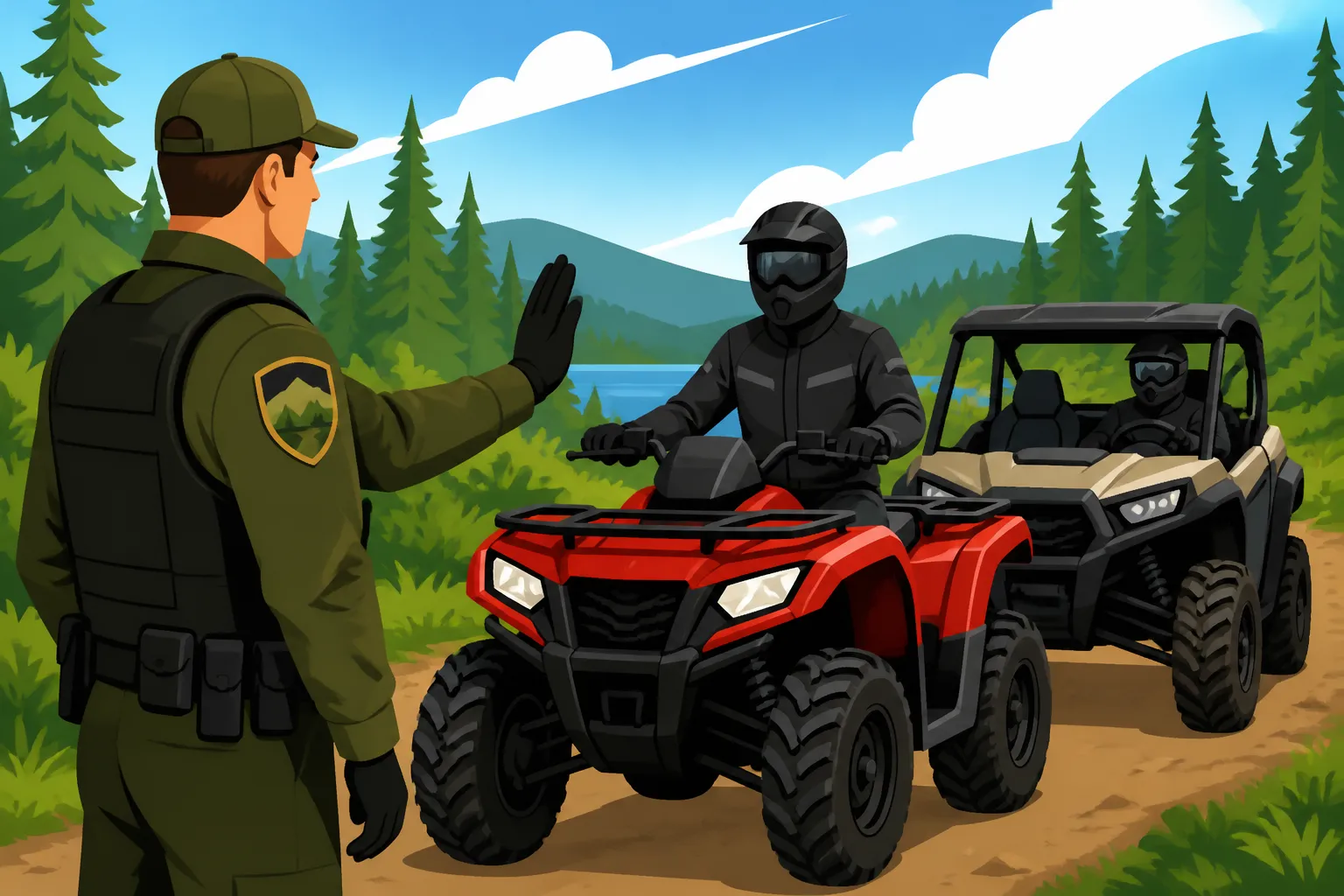
Picture this: you're cruising along a beautiful Quebec ATV trail, enjoying the fresh air and the roar of your engine, when suddenly you see a figure up ahead, signalling for you to stop. Your heart might do a little flutter, a moment of "Uh oh, did I do something wrong?" This guide is all about demystifying that experience, explaining exactly what happens when you're stopped on a Quebec trail, what you need to have ready, and how to make the interaction as smooth as possible.
What Happens When a Patrol Stops You on a Quebec Trail?
It's a scene many of us have faced, whether on the road or the trail. The flashing lights, the raised hand – it can be a bit jarring, even if you know you're doing everything by the book. On Quebec's vast network of off-highway vehicle (OHV) trails, patrols are a regular and necessary part of keeping everyone safe and ensuring the rules are followed. Knowing who can stop you and what to expect can really take the edge off.
Who Can Stop You on a Federated Trail?
You might encounter different types of officials on Quebec's trails, and it's good to be aware of their authority. The primary groups you'll likely see are the Sûreté du Québec (SQ), local municipal police, and the dedicated trail patrols organized by the Fédération des clubs de motoneigistes et de VTT du Québec (FQCQ). You might also run into park wardens if you're riding in a protected area.
These patrols aren't just out to catch people doing wrong; they're also there to assist riders, ensure trail conditions are safe, and educate newcomers about the rules. Their authority to stop you comes from the Loi sur les véhicules hors route (Off-Highway Vehicle Act), which governs all OHV activity in the province. They're typically looking for compliance with safety regulations, valid registration and insurance, appropriate trail passes, and adherence to speed limits and other riding rules. It's their job to make sure everyone is riding responsibly and that the trails remain accessible and safe for all users. They're often volunteers, fellow enthusiasts who dedicate their time to maintaining the integrity of our trail network.
The Initial Interaction: What to Expect
When a patrol signals you to stop, the best first step is always to comply promptly and safely. Slow down, find a safe spot on the side of the trail where you won't obstruct other riders, and turn off your engine. Keep your helmet on until instructed otherwise, but lift your visor so they can see your face and you can hear them clearly. Keep your hands visible, perhaps resting them on your handlebars or knees. This shows respect and cooperation, which can go a long way in making the interaction pleasant and efficient.
The officer or patroller will typically introduce themselves and explain why they stopped you. Sometimes it's a routine check to ensure all riders are properly licensed and equipped. Other times, it might be due to a visible infraction, such as excessive speed, carrying an unauthorized passenger, or having equipment that appears to be non-compliant. For instance, they might have noticed a machine that sounds unusually loud or one that appears to have an expired trail pass. They might also be responding to a specific incident or complaint in the area. Regardless of the reason, a calm and respectful demeanor from your side helps everyone involved. They're not looking for trouble, just ensuring the rules designed for everyone's safety are being upheld.
Essential Documents You Must Present
When you're stopped on a Quebec trail, much like being pulled over in your car, there are specific documents you'll need to provide. Having these readily accessible and in order is paramount to a smooth interaction. It's not about memorizing complex laws; it's about being prepared with the basics.
The "Big Three" Documents Every Rider Needs
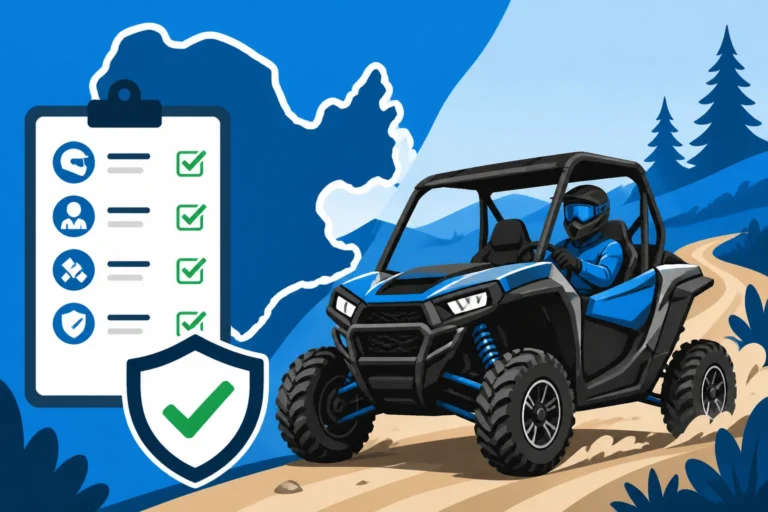
There are three cornerstone documents that every ATV or side-by-side rider in Quebec should always have on them when hitting the trails. These are non-negotiable and are the first things a patrol will ask to see.
First up is your driver's license. Since September 10, 2021, Quebec has mandated that all OHV operators must possess a valid driver's license. This isn't just a suggestion; it's the law. Whether it's a car license (Class 5) or any other valid class, you need to prove you're authorized to operate a motorized vehicle. If you're 16 or 17 years old, you'll also need a valid training certificate issued by the FQCQ. This rule change was a significant one, and patrols are very diligent about checking it. Many long-time riders, used to older rules, sometimes forget this crucial detail. You can learn more about this by reading [Quebec Requires a Driver's Licence Since 2021].
Next, you'll need your vehicle registration and proof of ownership. In Quebec, your ATV or side-by-side (which the SAAQ calls a VHR, or véhicule hors route) must be registered with the Société de l'assurance automobile du Québec (SAAQ). This registration is evidenced by your VHR plate, which must be affixed to your machine, and the registration certificate itself. This document confirms that your machine is legally allowed on public trails and that you've paid the required fees, which include the mandatory minimum liability insurance. The SAAQ is unique in that it acts as both the registrar and a primary insurer for OHVs, providing a baseline liability coverage. Without current registration, you're looking at a fine and potentially having your ride impounded. For more details on the plate itself, check out [Quebec VHR Plates Explained], and for the registration process, see [Quebec ATV Registration With the SAAQ].
Finally, for riding on the vast network of federated trails, you absolutely need a valid FQCQ trail pass. This is your ticket to access the tens of thousands of kilometers of maintained trails across the province. The pass comes as a sticker that must be visibly affixed to your machine. These passes are purchased annually (or seasonally/daily) through the FQCQ, and the funds go directly towards trail maintenance, insurance, and club operations. Riding on a federated trail without a valid pass is a common infraction that patrols actively look for. It's often checked visually by the patrol before they even stop you, by looking for the sticker. It's vital to know that your pass needs to be valid for the current season. Don't assume last year's sticker is still good! You can read more about this in [Quebec Annual FQCQ Trail Pass] and [Quebec Pass Proof on the Trail].
Other Documentation That Might Be Requested
While the driver's license, registration, and trail pass are the "big three," there are a couple of other documents that might be relevant, depending on your situation:
- Insurance Certificate: While the SAAQ provides mandatory basic liability coverage with your registration, some riders opt for additional private insurance to cover damage to their own machine or other risks. If you have such a policy, it's wise to carry proof of it, even if it's just a digital copy on your phone. However, the SAAQ registration itself confirms the minimum liability is in place, as explained in [Quebec's SAAQ Is Registrar and Insurer].
- Training Certificate for Young Riders: If you're 16 or 17 years old, not only do you need a valid driver's license, but you also must have successfully completed an FQCQ-approved safety training course. The certificate from this course should be carried with you. Patrols are especially keen on ensuring younger riders are properly trained and authorized. Check out [Quebec FQCQ Training Certificates for Teens] for more on this requirement.
- Parental Authorization: For riders under 16 (who are generally restricted to private land under adult supervision), written parental authorization might be required, though stops on federated trails for this age group are rare as they shouldn't be there without specific exemptions.
- Proof of Ownership: While your registration certificate serves as primary proof, if you've recently purchased your machine, having a bill of sale handy can clarify any questions about recent transfers.
Here's a quick summary of the key documents:
| Document Type | Purpose | Where to Get It / What It Looks Like |
|---|---|---|
| Driver's License | Proof of legal authorization to operate an OHV. | Issued by SAAQ (or equivalent from another province/country). Your regular license. |
| VHR Registration | Proof machine is registered with SAAQ, includes liability insurance. | SAAQ certificate and VHR plate on machine. |
| FQCQ Trail Pass | Permission to ride on federated trails, funds maintenance. | Sticker visibly affixed to machine, proof of purchase. |
| Training Certificate | Required for 16-17 year olds for safety and legal riding. | Issued by FQCQ-accredited instructor. |
| Additional Insurance | Covers own machine damage, beyond SAAQ basic liability (optional). | Private insurance company's certificate. |
Understanding Equipment Checks and Common Infractions
Beyond just your paperwork, patrol officers are also looking at your machine itself. This isn't just about catching rule-breakers; it's fundamentally about ensuring everyone's safety on the trails. An unsafe machine or rider can put everyone else at risk.
What Patrols Look For: Safety and Compliance
When a patroller approaches your ATV or side-by-side, they'll do a quick visual inspection of the machine and its operator to ensure it meets Quebec's safety standards. This includes several key areas:
- Helmets and Protective Gear: Helmets are mandatory, and they must meet safety standards (like DOT or Snell). Also, you need a visor or goggles to protect your eyes. It’s not just about wearing a helmet, but wearing a compliant helmet. Many riders prefer helmets with integrated visors for convenience, but separate goggles work just as well. For specifics, refer to [Does Your Helmet Need a Visor or Goggles?].
- Lighting: Your machine must have working headlights and taillights, especially if you're riding near dusk or at night. Even during the day, riding with your headlights on is a smart safety practice. Check your bulbs and wiring regularly! For more on this, see [Quebec Lighting Requirements at Night].
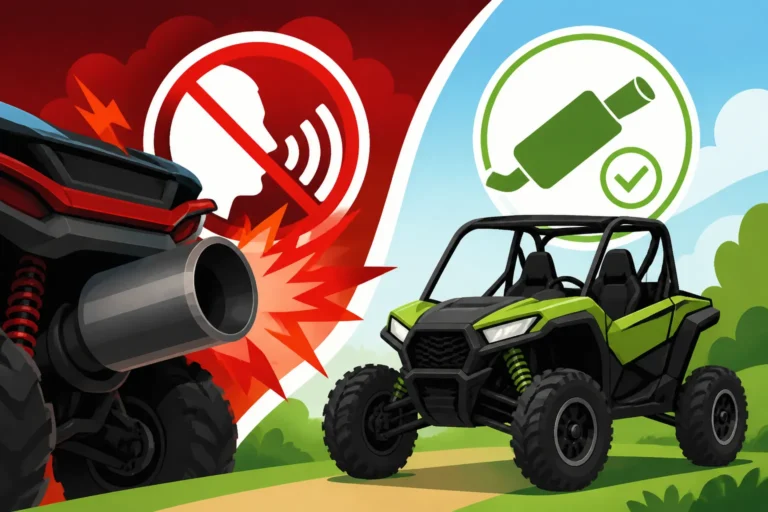
- Muffler and Noise Levels: This is a big one. Quebec has strict noise regulations. Your machine must have a functional muffler, and it must not be excessively loud. Aftermarket exhaust systems are often a point of contention here. If your muffler has been modified to be louder than stock, you could face a fine. Keep your machine as close to factory noise levels as possible. For noise rules, read [Quebec Muffler and Noise Rules].
- Mirrors: While not always strictly enforced on older machines, newer regulations often require at least one mirror on your OHV to allow you to see behind you. This is a basic safety feature, so make sure yours is intact and functional. For mirror specifics, check out [Quebec Mirror Requirements on a Quad].
- Machine Modifications: This is where some riders can run into trouble if they're not careful. While customizing your machine with robust accessories from a company like SuperATV can enhance performance, utility, and protection, it's crucial to ensure these modifications still comply with Quebec regulations regarding vehicle width, height, and overall safety features. For instance, excessively wide tires or lift kits that alter the machine's stability might draw attention. Always check the regulations before making significant changes, ensuring any upgrades, perhaps from a reputable brand like SuperATV, meet local regulations and don't compromise safety or legality. Many riders invest in heavy-duty skid plates or brush guards, like those offered by SuperATV, which can be invaluable on rugged Quebec trails and are generally accepted as long as they don't impede lights or create hazards.
- Passenger Rules: ATVs are generally designed for one operator, unless specifically manufactured with a second seat for a passenger. Side-by-sides typically have multiple factory-designated seats. Carrying more passengers than your machine is designed for, or carrying them improperly (e.g., on the front rack), is a serious safety violation and will result in a ticket. There are also age rules for passengers, so be sure you know them. Learn more about this at [Quebec Passenger Rules on an ATV].
Common Infractions Leading to Tickets
Unfortunately, even with the best intentions, riders sometimes make mistakes or overlook a regulation, which can lead to a ticket. Here are some of the most common infractions:
- No Valid Trail Pass: This is perhaps the most frequent ticket issued. Riding on an FQCQ federated trail without a current sticker or proof of purchase is a clear violation.
- Unregistered Machine: Just like driving a car without plates, riding an unregistered OHV is a major offense.
- No Driver's License: As mentioned, this is a relatively new but very important rule in Quebec. No license, no ride.
- Exceeding Speed Limits: Quebec trails have a strict 50 km/h speed limit for ATVs, and patrol officers do use radar. Going faster is not only dangerous but a sure way to get a ticket. For specific speed rules, refer to [Quebec ATV Speed Limit on Trails].
- Riding Outside Permitted Hours: Most trails have a curfew, typically from 6 a.m. to midnight. Riding after midnight can result in a fine. Check the local club rules as some municipalities might vary.
- Impaired Riding: Operating an OHV while under the influence of alcohol or drugs is treated just as seriously as impaired driving a car, with severe penalties including hefty fines, license suspension, and even criminal charges. Never ride impaired. See [Quebec Impaired Riding Penalties] for more details.
- Illegal Road Riding or Trespassing: Riding on unauthorized public roads or private land without permission. Quebec roads are generally off-limits to OHVs unless specifically marked as authorized sections. For more on land access, check out [Quebec Trespass Rules for Riders].
- Improper Equipment: This includes non-compliant helmets, excessively loud mufflers, or lack of required lighting.
- Passenger Violations: Carrying too many passengers, or passengers who are too young or not properly seated.
Fines for these infractions can vary widely, but they are generally significant. They're designed to deter unsafe behavior and ensure everyone adheres to the Loi sur les véhicules hors route.
Navigating the Interaction and What to Do Next
Being stopped by a patrol isn't anyone's idea of a perfect ride, but how you handle the situation can make a big difference in the outcome. A little preparedness and a calm attitude go a long way.
Staying Calm and Respectful
The most important advice when interacting with a patrol officer is to remain calm, respectful, and cooperative. They are performing their duties, and a hostile or argumentative attitude rarely helps your case.
- Be Polite: Greet the officer respectfully. Answer their questions clearly and truthfully. Avoid making excuses or arguing. If you don't understand a question, politely ask for clarification.
- Cooperate: Provide the requested documents promptly. If you need to reach into a bag or under your seat, tell the officer what you're doing before you do it, to avoid any misunderstanding. Keep your movements slow and deliberate.
- Ask Questions (Politically): If you're unsure why you were stopped or what an infraction entails, it's perfectly fine to ask for an explanation. For example, "Could you please explain what the specific infraction is?" or "What section of the act does this fall under?" This shows you're engaged and trying to understand, rather than being confrontational.
- Avoid Confrontation: Even if you disagree with the officer's assessment, the trailside is not the place for a heated debate. You'll have an opportunity to contest any ticket later through the proper channels. Arguing on the spot usually just escalates the situation and can potentially lead to additional charges, like obstruction.
Remember, most patrollers are fellow outdoor enthusiasts. Their goal is not to ruin your day, but to ensure that the trail system remains safe and sustainable for everyone.
If You Receive a Ticket
If, despite your best efforts, you receive a ticket, take a deep breath. The officer will provide you with a written citation detailing the offense, the relevant section of the law, and the fine amount.
- Understand the Offense: Make sure you understand what you're being ticketed for. Read the ticket carefully. If you have questions about the wording or what specifically you're being accused of, ask the officer politely for clarification before they leave. Knowing the specifics is crucial if you decide to contest it. You can get an idea of the types of costs involved by looking at [Quebec Ticket Costs for Trail Violations].
- Your Options: You generally have two options:
- Pay the Fine: If you believe the ticket is valid or you simply want to put the matter behind you, you can pay the fine within the specified timeframe. Instructions for payment will be on the ticket.
- Contest the Ticket: If you genuinely believe you were unjustly ticketed, or if there's a factual error on the citation, you have the right to contest it in court. The ticket will provide instructions on how to do this. Be prepared to present your case, often with evidence or witnesses, if you choose this route. Seeking legal advice might be beneficial for serious infractions.
- Consequences: Beyond the immediate fine, some infractions (especially more serious ones like impaired riding or repeat offenses) can lead to additional penalties, such as points on your driver's license, temporary suspension of your OHV registration, or even impoundment of your machine. It's always best to be aware of the potential long-term consequences.
Post-Stop Actions
Once the interaction is over, and especially if you received a ticket, it's wise to take a few steps to prevent future incidents:
- Rectify Issues: If you were ticketed for missing documents (like an expired trail pass) or equipment issues (like a non-working headlight), address these immediately. Get your pass, fix the light, or ensure your registration is current. This is not only for legal compliance but for your own safety and the safety of others.
- Review Regulations: Take the incident as a learning opportunity. Go back and review the current Quebec OHV regulations. The FQCQ website is an excellent resource for this. Understanding the rules is the best way to avoid future fines. Sometimes, rules change (like the driver's license requirement), and it's easy to miss an update if you're not actively looking.
- Maintain Your Machine: Regular maintenance isn't just about performance; it's about compliance. Keep your lights, brakes, muffler, and other safety features in top working order. A well-maintained machine is less likely to draw unwanted attention.
By understanding what to expect, being prepared with your documents, and approaching any interaction with respect, you can minimize the stress of being stopped on a Quebec trail and get back to enjoying your ride.
Disclaimer
This article is for general informational purposes only and does not constitute professional advice. Laws, prices and regulations vary by location and change over time. Consult a qualified professional for guidance on your specific situation.