Riding Two Up on a Single Seat
It's a familiar scenario: you're out on the trails, enjoying the crisp Quebec air, and your child or partner wants to hop on the back of your ATV for a quick spin. Or perhaps you're considering a new quad and wondering if that extra seat you saw online will let you carry a passenger. The desire to share the adventure is totally understandable, but when it comes to riding two-up on a single-seat ATV in Quebec, you're stepping into a surprisingly strict regulatory landscape. This guide is here to clear up the confusion and help you understand exactly what Quebec law says about carrying passengers on your off-road machine, ensuring both your safety and legal compliance.
The Strict Truth About Single-Seat ATVs in Quebec
Let's cut right to the chase: in Quebec, the law is exceptionally clear about passenger capacity on all-terrain vehicles. If your ATV was manufactured and sold as a single-seat machine, it means it's designed for one person, and one person only. This isn't just a suggestion; it's a fundamental aspect of the vehicle's design and how it's legally classified under the province's off-highway vehicle regulations. Many riders often assume that if there's space for a second person, or if they're just going a short distance, it's fine. However, this assumption can lead to significant problems, from hefty fines to serious safety risks.
Why One Seat Means One Rider
The "one seat, one rider" rule for single-seat ATVs isn't arbitrary; it's rooted deeply in safety and engineering principles. An ATV's design, including its suspension, braking system, engine power, and most critically, its weight distribution and center of gravity, is calibrated for a single operator. When you add a second person, even a small child, onto a machine not designed for it, you fundamentally alter these dynamics.
Consider cornering, for instance. A single rider shifts their weight intuitively to maintain balance. With two people on a single seat, especially if the passenger isn't experienced in mirroring the driver's movements, this delicate balance is compromised. The machine becomes top-heavy, harder to steer, and significantly more prone to rollovers. Braking distances can increase, and the added weight puts undue stress on components not built for the extra load. This isn't just about comfort; it's about the machine's ability to respond safely and predictably to rider input, especially in varied terrain or emergency situations. The manufacturer's intent is paramount here, and they engineer these machines with single-person use in mind for very good reasons.
The Letter of the Law: What Quebec Says
Quebec's Loi sur les véhicules hors route (Off-Highway Vehicle Act), often referred to as the LVHR, explicitly addresses passenger capacity. Section 19 of the Act states that "No person may ride as a passenger on an off-highway vehicle if the vehicle is not designed for that purpose by its manufacturer." This means if your ATV left the factory as a single-seater, regardless of any aftermarket modifications or perceived space, it remains legally a single-seater.
The Société de l'assurance automobile du Québec (SAAQ), which registers and insures off-highway vehicles in the province, reinforces this. When your machine is registered, its classification is based on its original manufacturer specifications. Trying to ride two people on such a machine can result in fines and other penalties. Trail patrols, often volunteers from local ATV clubs and authorized by the province, are well aware of these rules. They're not just looking for registration papers; they're also enforcing safety regulations, including passenger limits. For a deeper dive into the rules, you can check out [Quebec Passenger Rules on an ATV]. Ignoring these regulations isn't just risking a ticket; it's jeopardizing the safety of everyone on board and potentially complicating matters significantly in the event of an accident.
Understanding Your Options for Riding with a Passenger Legally
Given Quebec's stringent rules, it's clear that if you want to share your off-road adventures, a single-seat ATV isn't the way to do it with a passenger. However, you do have perfectly legal and safe alternatives that are designed specifically for carrying more than one person. It's about choosing the right tool for the job.
The Dedicated Two-Up ATV
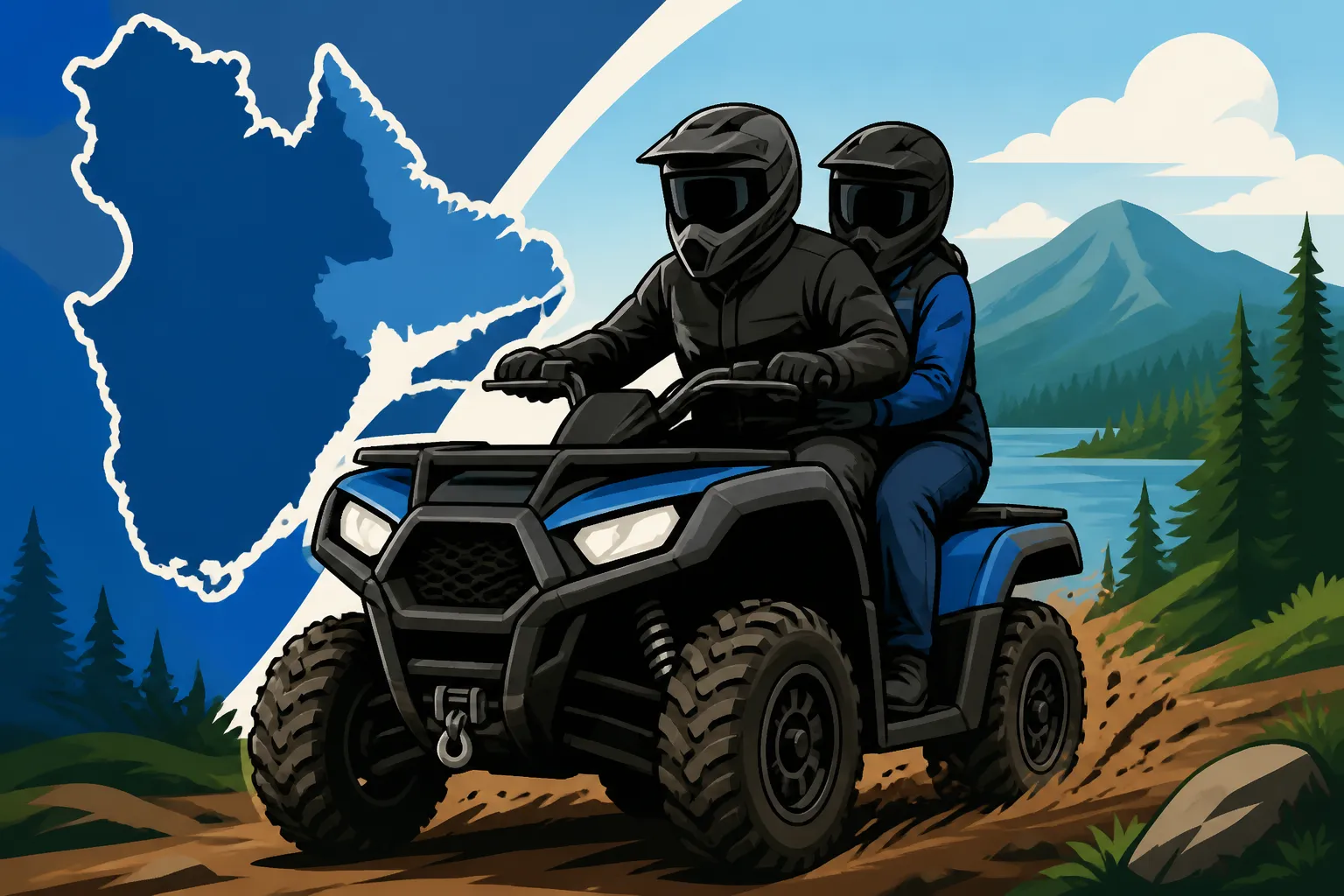
The most direct solution for riding with a passenger on a quad is a factory-built two-up ATV. These machines are purpose-built for two riders and are clearly distinguished from their single-seat counterparts. You'll notice they feature a significantly longer wheelbase, allowing for a stretched seat that comfortably accommodates both a driver and a passenger. Beyond just a longer seat, these models come equipped with essential safety features designed for dual occupancy. This includes dedicated handholds for the passenger to grip securely, a raised backrest to prevent them from sliding off, and often, passenger footrests positioned for comfort and stability.
These design elements are not just add-ons; they are integral to the machine's engineering to ensure safe handling and stability with the added weight of a second person. The suspension is often beefed up, and the overall balance is calibrated for two riders. When you purchase a two-up ATV, its registration with the SAAQ will reflect its capacity for two individuals, making it fully compliant with Quebec law for carrying a passenger. This means you can hit the trails with peace of mind, knowing your machine is safe and legal for shared adventures.
Side-by-Sides: The Ultimate Passenger Solution
For those who prioritize comfort, stability, and the ability to carry multiple passengers, a side-by-side (SxS), also known as a UTV (Utility Task Vehicle), is an excellent choice. Unlike ATVs, side-by-sides typically feature bench or bucket seating, a steering wheel, and often a roll-over protection structure (ROPS) with seat belts, much like a small car. They are explicitly designed to carry multiple occupants, with configurations ranging from two-seaters to models that can comfortably accommodate four or even six people.
Side-by-sides offer a different riding experience, often feeling more stable and secure due to their wider stance and lower center of gravity. They are fantastic for family outings, group rides, or for utility work where carrying equipment and a helper is necessary. In Quebec, side-by-sides fall under the same general off-highway vehicle regulations but are clearly recognized as multi-passenger vehicles. Drivers and passengers must still adhere to specific rules, such as age requirements for drivers and wearing helmets, and [Seat Belts and Factory Capacity] are absolutely critical for safety. If you're looking to consistently ride with one or more passengers, a side-by-side offers the most compliant and comfortable solution. You can find more specific details on [Quebec Rules for a Side-by-Side Driver] and [Registering a Side-by-Side in Quebec].
Aftermarket Seats and the Law
This is where many riders get confused and can inadvertently find themselves on the wrong side of the law. There are numerous aftermarket accessory companies, including reputable ones like SuperATV, that offer a variety of seating solutions for ATVs. You might see comfortable, extended seats, passenger grab handles, or even small backrests that can be bolted onto your existing single-seat ATV. It's easy to look at these and think, "Aha! Now I can carry my child safely!"
However, adding an aftermarket seat or any passenger accessory to a single-seat ATV does not magically change its legal classification in Quebec. The law explicitly refers to the vehicle being "designed for that purpose by its manufacturer." Unless the manufacturer itself has re-certified your specific model with the aftermarket accessory as a two-up machine – which is exceedingly rare for single-seat ATVs – then adding a seat simply means you've made a single-seat machine more comfortable for a second, illegal passenger.
While these aftermarket accessories from brands like SuperATV can be fantastic for enhancing the comfort or utility of a legally compliant two-up ATV or side-by-side, they do not confer legal passenger carrying capacity onto a machine that was originally designed for a single rider. Always verify your vehicle's manufacturer-stated capacity and Quebec's specific off-highway vehicle act (LVHR) to ensure you're riding legally and safely. Don't let the availability of aftermarket parts override the legal requirements.
Practical Considerations and Exceptions (or Lack Thereof)
Beyond the direct legal definitions, there are many real-world scenarios and common questions that come up when discussing passengers on ATVs. It's important to address these to fully grasp why Quebec's rules are structured the way they are, and why exceptions are few and far between. The goal is always to keep everyone safe, and sometimes that means making difficult choices or investing in different equipment.
Riding with Children: A Common Dilemma
It's natural for parents to want to share their passion for ATV riding with their children. A child's small size might lead some to believe that they don't count as a full "passenger" or that the rules might be relaxed for them. Unfortunately, under Quebec law, a child is still a passenger, and the same rules about manufacturer-designed capacity apply. Putting a child on a single-seat ATV, even for a short, slow ride on seemingly safe terrain, is illegal and carries significant risks.
Children, with their smaller stature and developing coordination, are particularly vulnerable. They may not have the strength to hold on properly, the understanding to lean with the driver, or the ability to react quickly to unexpected bumps or turns. An adult driver's instinct might be to protect the child, but the compromised handling of the ATV could make a bad situation worse. If you want to ride with your children, the absolute safest and only legal way in Quebec is on a machine specifically designed for multiple riders, whether that's a two-up ATV or a side-by-side with proper seating and restraints. Understanding [Quebec Rules for a Child Passenger] is paramount for any parent.
Private Land vs. Public Trails
Another common point of confusion is whether the rules change when you're riding on private land that you own or have permission to use. While the direct enforcement of fines by trail patrols is less likely on strictly private property that is not part of a federated trail network, the underlying legal principle and, more importantly, the safety considerations, do not vanish. The LVHR applies to off-highway vehicles in general, regardless of whether they are on public or private land, with some nuanced exceptions for specific uses like farming.
Even if a police officer isn't going to pull you over in your backyard, the fact remains that a single-seat ATV is still designed for one person. The risks of an accident, including rollovers, loss of control, and injury, are just as real on private property as they are on a public trail. Furthermore, if an accident occurs on private land while you are illegally carrying a passenger, your insurance coverage could be significantly impacted. Most insurance policies are predicated on legal operation of the vehicle. This brings us to the next critical point regarding consequences beyond a simple fine.
Consequences Beyond the Fine
While a monetary fine from a provincial or club patrol is an immediate and tangible consequence of riding two-up on a single-seat ATV, the repercussions can extend far beyond that. The most serious concern is personal injury. In the event of an accident, an illegally carried passenger, particularly a child, is at a much higher risk of severe injury. The medical, emotional, and financial toll of such an event can be devastating.
Beyond injury, there are significant insurance implications. Most ATV insurance policies, including the mandatory liability coverage provided by the SAAQ for all registered off-highway vehicles, have clauses that may void or severely limit coverage if the vehicle was being operated illegally at the time of an accident. This means if you are involved in a collision while carrying an unauthorized passenger, you could be personally liable for damages and medical expenses, which can quickly amount to hundreds of thousands of dollars. Quebec has a mandatory [Quebec's Liability Insurance Rule], which outlines the minimum coverage, but operating outside of legal parameters can make this coverage irrelevant. In the eyes of the law, carrying an extra passenger on a single-seat ATV is not just a minor infraction; it's a fundamental breach of safe operating principles that can have long-lasting and severe consequences. Reviewing [Quebec Penalties for Riding Unregistered] can give you a sense of the SAAQ's approach to violations, and the principles often apply to other infractions.
Making an Informed Choice for Your Next Ride
Understanding Quebec's rules for riding two-up on a single-seat ATV might feel restrictive, especially if you had visions of sharing your quad with a loved one. However, these regulations are put in place for a crucial reason: safety. Off-road vehicles can be incredibly fun and offer unparalleled access to Quebec's stunning landscapes, but they also demand respect for their operational limits and the laws governing their use.
The bottom line is this: if your ATV was manufactured as a single-seat machine, it is designed and legally intended for one rider only. Adding a passenger, regardless of their size or the duration of the ride, is a violation of provincial law and significantly increases the risk of an accident and severe injury. Aftermarket accessories, while potentially enhancing comfort or utility, do not change the legal capacity of a machine.
Instead of trying to work around the rules, consider the legal and safe alternatives. Investing in a factory-designed two-up ATV or a multi-passenger side-by-side is the most responsible way to share the thrill of off-road riding with family and friends. These machines are engineered from the ground up to safely accommodate additional riders, ensuring that your adventures are not only thrilling but also fully compliant and worry-free. Make an informed choice, prioritize safety, and enjoy Quebec's trails responsibly.
Here's a quick comparison of your options for carrying passengers:
| Feature | Single-Seat ATV | Two-Up ATV | Side-by-Side (UTV) |
|---|---|---|---|
| Intended Capacity | 1 rider | 1 driver + 1 passenger | 2+ passengers (driver included) |
| Quebec Legal Status | Illegal for passengers | Legal for passengers | Legal for passengers |
| Seat Design | Short, single-person saddle | Longer, extended saddle with backrest | Bench or bucket seats |
| Passenger Safety Feat. | None | Handholds, dedicated footrests, backrest | Seat belts, roll-over protection, grab handles |
| Weight Distribution | Optimized for one rider | Optimized for two riders | Optimized for multiple occupants |
| Handling with Pass. | Compromised, increased rollover risk | Stable, designed for dual operation | Highly stable, like a small off-road vehicle |
| Aftermarket Seats | Does NOT change legal capacity | Can enhance comfort, but capacity is OEM | Can enhance comfort, but capacity is OEM |
| Common Use | Sport riding, utility work (single operator) | Trail riding with a companion, touring | Family outings, group rides, heavy utility work |
| Driver's Licence Req. | Valid driver's licence required | Valid driver's licence required | Valid driver's licence required |
| Minimum Age for Driver | [Quebec ATV Age Requirements] | [Quebec ATV Age Requirements] | [Quebec Rules for a Side-by-Side Driver] (usually 18) |
Disclaimer
This article is for general informational purposes only and does not constitute professional advice. Laws, prices and regulations vary by location and change over time. Consult a qualified professional for guidance on your specific situation.