Passengers Only Where the Factory Allows
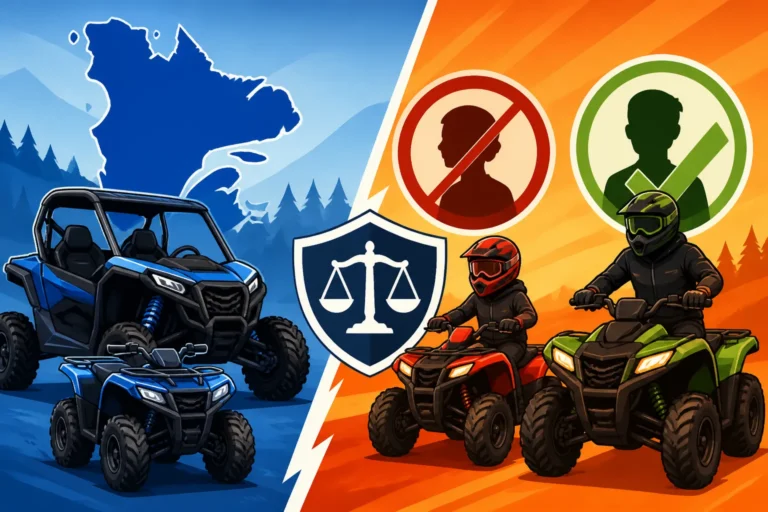
One of the trickiest things about riding ATVs and side-by-sides in Quebec, especially when you’re out with friends or family, is figuring out who can actually ride with you. It's a common frustration: you've got a buddy who wants to tag along, or your kids are begging for a ride, and you're left wondering if your machine is even allowed to carry them, and more importantly, if it's safe and legal. This guide is here to clear up all the confusion around carrying passengers on your off-highway vehicle in Quebec, ensuring you stay on the right side of the law and, most importantly, keep everyone safe.
The Golden Rule: Factory Capacity and Your Machine
When it comes to carrying passengers on an ATV or side-by-side in Quebec, there's one foundational rule that trumps nearly everything else: your machine must be explicitly designed by the manufacturer to carry that number of people. This isn't just a suggestion; it's a legal requirement that plays a huge role in your safety, your liability, and how your insurance will respond in case of an incident. It's a rule built on engineering and safety standards, not just a whim.
Understanding "Factory-Designed for Passengers"
So, what exactly does "factory-designed for passengers" mean? It's more than just having a big enough seat or space on the back. A machine designed for multiple riders will have distinct, factory-installed features that indicate its capacity. For ATVs, this means a "two-up" or "tandem" model, which has an elongated seat, separate footrests for the passenger, and often handholds for them to grip. These aren't just cosmetic additions; they're integrated into the machine's frame and suspension, which has been engineered to safely handle the additional weight and shifted center of gravity that comes with a second person. A traditional single-rider ATV, even if it has a long seat, simply isn't built to distribute weight safely with a second person perched on the back. The handling characteristics change drastically, making it much harder to control, especially over uneven terrain or when turning.
For side-by-sides, this concept is usually more straightforward. Most side-by-sides come from the factory with two, three, or four seats, complete with individual seat belts, dedicated footwells, and robust roll-over protection systems. If your side-by-side has two seats, it’s designed for two people. If it has four, it’s designed for four. The key is that these seating positions are integral to the machine's original design and safety certification. It's not about how many people you can squeeze in, but how many the manufacturer intended and designed for.
Why DIY Modifications Aren't Enough
This is where many riders get into trouble. You might think, "My ATV has a long seat, I'll just add some footpegs for my passenger," or "I'll bolt an extra seat onto the cargo rack of my side-by-side." While your intentions might be good, these homemade modifications are a huge no-go in Quebec. The law is very clear that the machine must be factory-designed for the number of passengers. Adding a seat, footrests, or handholds yourself, no matter how securely you think you've done it, does not change the machine's original certified capacity.
Why is this such a big deal? For starters, the frame, suspension, and braking system of a single-rider ATV are simply not calibrated for the additional weight and altered balance of a passenger. What might seem like a simple addition can severely compromise the vehicle's stability, making it prone to rollovers, especially during turns or over obstacles. Furthermore, the added seating might not offer any crash protection for the passenger, leaving them dangerously exposed. Even if you're looking for quality parts for a factory-designed multi-passenger machine, like those from SuperATV, always ensure any upgrades you're making are for components already present and rated for your machine's original capacity, not to illegally expand it. The general rule here is: if the manufacturer didn't put it there as a dedicated passenger seat, you shouldn't either.
The Legal Ramifications of Non-Compliant Passenger Carrying
Ignoring the factory capacity rule can lead to a heap of legal and financial troubles. If you're caught by a trail patrol or police officer carrying an unauthorized passenger, you could face significant fines. These aren't just minor infractions; they can really hit your wallet. Beyond the immediate fine, the long-term consequences can be even more severe.
Should an accident occur while you're carrying a passenger on a machine not designed for them, your insurance coverage could be jeopardized. Most insurance policies are very specific about adhering to manufacturer guidelines and legal requirements. If you're operating outside these parameters, your insurer might deny a claim, leaving you personally responsible for all damages, medical costs, and potential lawsuits. This means not only paying for your own machine's repairs but also potentially footing the bill for your passenger's injuries, property damage, and any third-party claims. It's a risk simply not worth taking for the sake of a ride. For more details on what patrol officers are looking for, check out [Quebec Equipment Checks by Patrols].
Specifics for ATVs (VTTs) and Side-by-Sides (VHRs) in Quebec
The rules for carrying passengers vary slightly between traditional ATVs, which Quebec calls VTTs (Véhicules Tout Terrain), and side-by-sides, which fall under the VHR (Véhicule Hors Route) classification. Understanding these distinctions is crucial to ensure you're compliant, whether you're heading out for a short jaunt or a longer trail adventure.
ATV (VTT) Passenger Rules in Detail
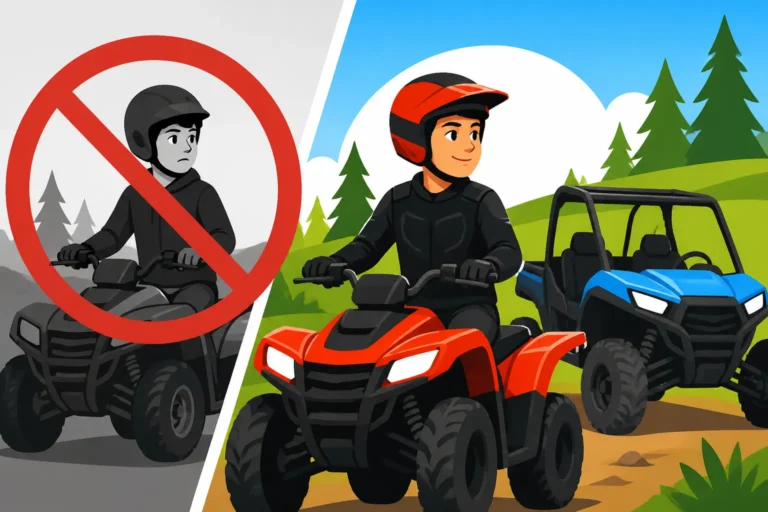
For ATVs, the distinction between a single-rider and a multi-rider machine is paramount. A standard ATV is designed for one person only, the driver. This applies even if the seat looks long enough for two. A "two-up" or tandem ATV, however, is specifically engineered and marketed by the manufacturer to carry a driver and one passenger. These machines are easily identifiable by their extended seat, often with a raised portion for the passenger, dedicated passenger footrests that are separate from the driver's, and passenger handholds. If your ATV doesn't have these factory-installed features, it's a single-rider machine, and carrying a passenger on it is illegal in Quebec.
The law is strictly enforced because the handling dynamics of an ATV change dramatically with a second person. The added weight, especially when it's not centrally distributed and supported by the vehicle's design, can make the ATV unstable, difficult to steer, and significantly increase braking distances. Imagine trying to navigate a rocky trail or make a sharp turn with someone shifting their weight unpredictably behind you on a machine not designed for it – it's a recipe for disaster. Always consult your owner's manual to confirm your ATV's factory-rated passenger capacity. For a deeper dive into the specific regulations, you can read more about [Quebec Passenger Rules on an ATV].
Side-by-Side (VHR) Passenger Rules and Seat Belts
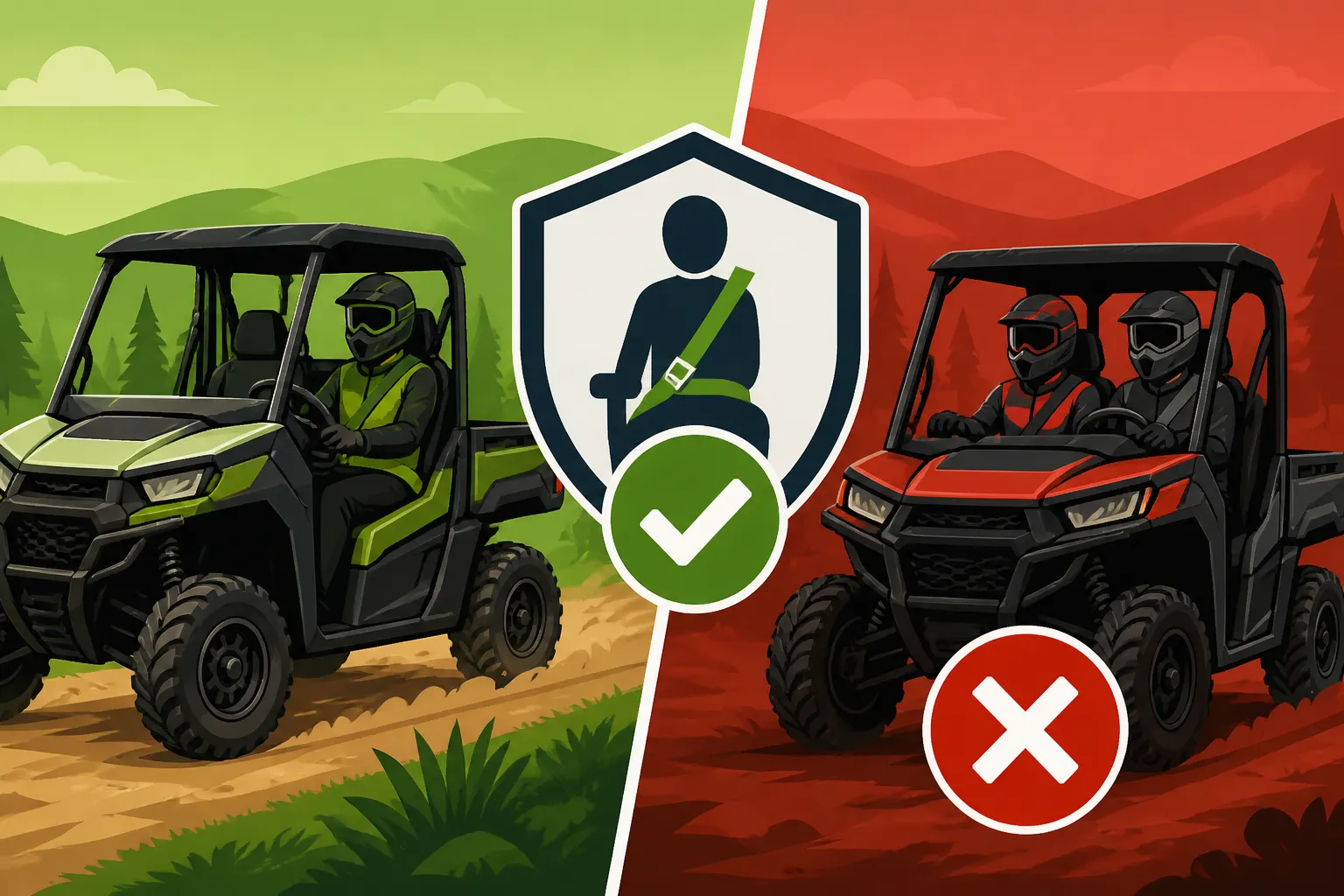
Side-by-sides (VHRs) are generally designed with multiple seating positions, making passenger rules a bit more straightforward, but no less strict. If your side-by-side has two seats, it's for two people. If it has four seats, it's for four people. The key here is that each passenger must occupy a seat that was factory-installed and designed for them, and each must wear a seat belt provided by the manufacturer. Attempting to squeeze an extra person into a space not designed for seating, or having someone ride in the cargo bed, is strictly prohibited and extremely dangerous.
The requirement for seat belts in side-by-sides is non-negotiable. These vehicles, while offering more stability than ATVs, still operate in challenging off-road environments where rollovers can occur. The seat belts, along with the roll-over protection structure (ROPS) or roll bar, are critical safety features designed to keep occupants contained within the vehicle during an incident. Just like in a car, you wouldn't drive without everyone buckled up, and the same goes for a side-by-side. Ensure everyone knows how to properly fasten their seat belt before you set off. For more on this, refer to [Seat Belts and Factory Capacity]. If you're looking to enhance the safety or comfort of your factory-designed multi-passenger side-by-side, reputable brands like SuperATV offer a range of accessories from harnesses to grab handles, but again, these should complement, not replace, original safety equipment or exceed factory capacity.
Child Passengers and Age Restrictions
Carrying children as passengers requires additional consideration and adherence to specific rules in Quebec. While children can be passengers on properly designed multi-passenger ATVs and side-by-sides, there are age and physical requirements to ensure their safety. For ATVs, the child must be able to sit with their feet firmly on the passenger footrests and grasp the handholds throughout the ride. This is crucial because a child who is too small may not be able to maintain their balance or secure themselves, making them vulnerable to falling off, especially over bumps or during turns.
For side-by-sides, children must be able to properly fit into a factory-installed seat and be securely fastened with the machine's seat belt system. Quebec law generally states that no one under the age of 16 can drive an ATV, and no one under 18 can drive a side-by-side, but these minimum ages also apply to passengers in certain contexts, particularly if the child cannot meet the physical requirements for secure seating. Furthermore, operators must exercise extra caution when carrying child passengers, adapting their riding style to be smoother and slower. Always ensure children wear approved helmets and appropriate safety gear, just like adult riders. Understanding these nuances is vital for the safety of your youngest passengers. You can find more information about these specific rules at [Quebec Rules for a Child Passenger].
Safety, Liability, and What Patrols Look For
Beyond simply knowing the rules, it's critical to understand the underlying safety principles and the serious liability implications that come with carrying passengers on your off-highway vehicle in Quebec. Trail patrols aren't just looking for paper infractions; they're looking for unsafe practices that put lives at risk.
Beyond the Law: The Importance of Safety
The legal requirements for passenger capacity are rooted deeply in physics and real-world safety. When you add a passenger to an ATV or side-by-side, you dramatically change the machine's center of gravity, weight distribution, and overall handling characteristics. On an ATV not designed for two, a passenger adds weight high up and towards the rear, making the machine much more prone to wheelies on acceleration or rollovers during climbs, descents, or sharp turns. It becomes significantly harder to steer, brake effectively, and navigate obstacles. The driver's control is compromised, and the risk of an accident skyrockets.
Even on a factory-designed multi-passenger machine, driver skill is paramount. Carrying a passenger requires a smoother, more deliberate riding style. Sudden accelerations, abrupt braking, or aggressive maneuvers can easily unbalance a passenger or cause them to strike against parts of the machine. Communication with your passenger is key: inform them of upcoming bumps or turns, and ensure they understand how to brace themselves. Always ride within your, and your machine's, capabilities, especially with a precious cargo on board. Safety should always be your top priority, even above the excitement of the ride.
Insurance Implications and Liability Concerns
This is where things can get incredibly serious if you're not compliant. Your off-highway vehicle insurance in Quebec is generally mandatory, covering a minimum of [Quebec Insurance Minimum for an Owner], which since 2021, increased to [The $1 Million Liability Floor Every Owner Carries]. This coverage is designed to protect you financially in case of an accident where you're at fault. However, these policies come with terms and conditions. If you're found to be operating your machine in violation of Quebec's Off-Highway Vehicle Act – which includes carrying an unauthorized passenger – your insurance company can deny coverage for an accident.
Imagine this scenario: you're riding your single-seat ATV with a friend on the back. You hit an unexpected rut, lose control, and the ATV rolls, injuring your passenger. Because you were operating outside the legal and manufacturer-specified capacity, your insurance company might refuse to pay for your passenger's medical expenses, lost wages, or even property damage. This leaves you, the driver, personally liable for potentially hundreds of thousands of dollars in costs, not to mention the emotional toll. This is why it’s so critical to respect the factory's design; it’s not just about avoiding a ticket, it’s about protecting your financial future and ensuring those you ride with are truly safe.
What a Trail Patrol Will Check
When you're out on the trails in Quebec, especially on a federated club trail, you might encounter trail patrols or law enforcement officers. These individuals are authorized to stop you and check for compliance with the Off-Highway Vehicle Act. They are highly trained to spot machines that are overloaded or carrying passengers illegally. What will they look for?
First, they'll visually inspect your machine. On an ATV, they'll immediately notice if there's a passenger on a single-seat model that lacks dedicated passenger footrests and handholds. They'll know the difference between a factory two-up and a modified single. On a side-by-side, they'll verify that every passenger has a designated factory seat and is wearing a seat belt. They might also check the machine's VIN or manufacturer's plate to verify its original design specifications.
Beyond the machine itself, they will ask for your [Quebec Insurance Proof on the Machine], your driver's license, and your trail pass. If they determine you are carrying an unauthorized passenger, you will face fines. The immediate consequence will be a ticket, and you may be instructed to have the unauthorized passenger removed from the trail or the machine. Don't try to argue or make excuses; it's better to be informed and compliant beforehand. For a better understanding of what happens when you're stopped, you might find [Being Stopped on a Trail] helpful.
Here's a quick summary of passenger rules in Quebec:
| Machine Type | Passenger Rules | Key Identifier | Seat Belt Required | Minimum Age of Passenger (Generally) |
|---|---|---|---|---|
| Single-Seat ATV | No Passengers Allowed. Designed for driver only. | Shorter seat, no separate passenger footrests or handholds from the factory. | No | N/A (Cannot carry passengers) |
| Two-Up (Tandem) ATV | One passenger allowed. Passenger must be able to reach footrests and handholds. | Longer, elevated seat for passenger, dedicated passenger footrests and handholds from the factory. | No | Depends on ability to sit properly |
| Side-by-Side (VHR) | Passengers allowed up to factory-designated seating capacity. Each passenger must occupy a factory-installed seat and wear a seat belt. No riding in cargo bed or on laps. | Multiple factory-installed seats with individual seat belts and roll-over protection. | Yes | Depends on ability to use seat belt |
The bottom line is simple: stick to what the manufacturer designed your machine for. It’s the safest, smartest, and only legal way to ride with passengers in Quebec.
Disclaimer
This article is for general informational purposes only and does not constitute professional advice. Laws, prices and regulations vary by location and change over time. Consult a qualified professional for guidance on your specific situation.