Sandpits and Quebec Riders
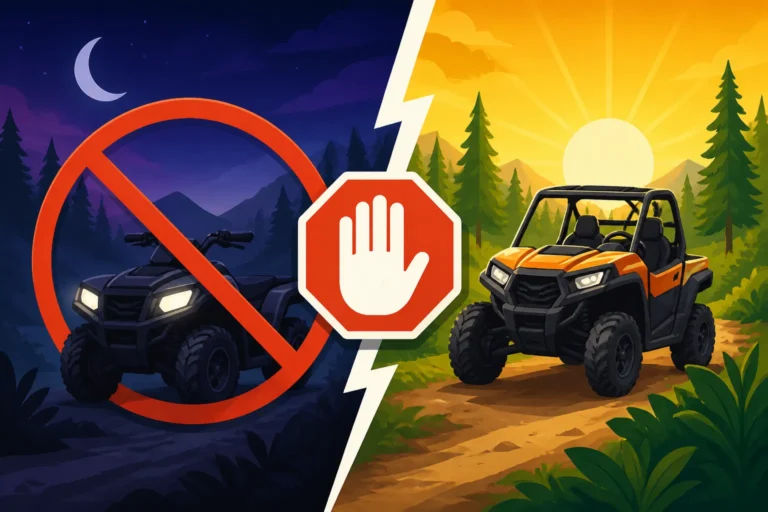
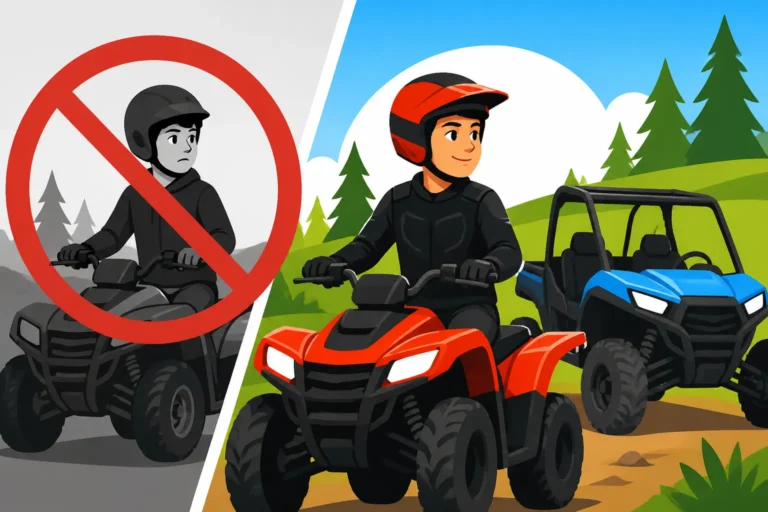
For many Quebec ATV and UTV riders, the sight of a vast, open sandpit can be incredibly tempting. It looks like a playground – challenging dunes, loose traction, and endless possibilities for testing your machine and your skills. But the reality is, pursuing that thrill in unauthorized sandpits can lead to serious legal headaches, hefty fines, and even environmental damage. This guide will walk you through why those alluring sandpits are often off-limits, the risks involved, and where you can legally and safely get your fix for challenging terrain in Quebec.
The Allure and Illegality of Sandpits for Quebec Riders
There's something undeniably captivating about a wide-open sandpit for anyone who loves off-road machines. The sheer scale, the undulating landscape, and the distinct challenge of navigating loose, shifting terrain can feel like the ultimate freedom. But for Quebec riders, that feeling of freedom can quickly turn into a legal quagmire if you're not absolutely sure of the rules.
Why Sandpits Call to Off-Roaders
Picture it: you're cruising along a forest road or perhaps exploring some back country in Quebec, and then, suddenly, the trees open up to reveal a sprawling expanse of sand. It might be an old quarry, a gravel pit that's been excavated for years, or just a natural sand dune area. For a rider, it looks like a blank canvas. The loose traction offers a unique opportunity to practice throttle control, steering through slides, and tackling steep, sandy climbs. It's a place where you can truly feel the power of your machine, pushing its limits and your own. Many riders see it as an ideal spot for practicing advanced techniques or just enjoying a different kind of terrain than the usual groomed trails. The thrill of conquering a tall sand dune or carving through a bowl-like depression is a powerful draw, offering a sense of accomplishment that's hard to replicate elsewhere.
Moreover, the wide-open spaces often give the illusion of being "unclaimed" or "abandoned," leading riders to believe they can ride there without consequence. It feels remote, separated from formal trails and populated areas, which enhances that perception of unrestricted riding. This is where the temptation often overrides good judgment, because appearances can be very deceiving when it comes to land ownership in Quebec. Even if a sandpit looks completely deserted, it almost certainly belongs to someone or falls under specific regulations, meaning that riding there without explicit permission is a gamble.
The Harsh Reality: Sandpits Are Rarely Legal
While the appeal of an open sandpit is strong, the stark truth is that almost all sandpits in Quebec are either privately owned or fall under strict municipal or provincial regulations that prohibit off-road vehicle use. That "abandoned" look is often just an illusion. Construction companies, aggregate businesses, or private landowners typically own these areas, and they haven't forgotten about them, even if they're not actively extracting material. Trespassing on these lands, whether intentionally or unknowingly, is illegal and can carry significant penalties under [Quebec Trespass Rules for Riders].
The problem is that these areas are not public trails. They are not maintained for recreational use, and they certainly aren't insured for your activity. This means that if you get hurt, or if you damage property, you are entirely on your own, and potentially liable for far more than just a small fine. The notion that "nobody will know" is a dangerous one, as landowners and local authorities are often well aware of unauthorized activities and may have surveillance or regular patrols in place to deter them.
It's also important to remember that even if you managed to get permission from a private landowner, there are still layers of liability and insurance to consider. Your personal ATV insurance policy, which you carry as part of your [Quebec's Liability Insurance Rule] through the SAAQ, is generally designed to cover incidents on authorized trails or roads where off-road vehicles are permitted. Riding in a private, unapproved sandpit might put you outside the terms of your coverage, leaving you exposed to immense financial risk if an accident occurs. This is a crucial distinction that many riders overlook in the excitement of finding what appears to be a free-for-all riding zone.
Understanding Land Ownership and Environmental Impact in Quebec
Before you ever consider entering a sandpit, it's absolutely vital to understand who owns the land and the potential environmental consequences of riding there. In Quebec, land ownership laws are clear, and environmental protections are increasingly stringent, especially concerning sensitive areas like excavated pits. Ignoring these can lead to more than just a ticket; it can result in significant legal battles and long-term damage.
Who Owns Sandpits in Quebec?
When you see a sandpit or gravel quarry in Quebec, it's almost invariably owned by a private entity or a public body. Common owners include:
- Construction and Aggregate Companies: These are the most frequent owners of large sand or gravel pits. They're actively using the land for resource extraction, or they've used it in the past and still hold the deed. These sites are essentially industrial workplaces, often with heavy machinery, fluctuating terrain, and active operations. Allowing recreational vehicles on these sites is a massive liability risk for them, so permission is almost never granted. They often have clear "No Trespassing" signs, and they are usually very diligent about enforcing them.
- Municipalities: Some pits might be owned by local municipalities, perhaps for public works projects or waste management. Even if they appear disused, these lands are still municipal property, often subject to specific zoning laws and local by-laws that prohibit ATV access. A municipality has a public duty to ensure safety on its lands, and allowing unrestricted ATV access would be contrary to that duty, making them very unlikely to grant permission.
- Crown Land: While less common for active sandpits, some might be on provincial Crown land. Even on Crown land, specific permits or designations are required for off-road vehicle use. Generally, unless it's a designated trail or area for ATVs, riding on Crown land without explicit authorization is forbidden, especially if it's an environmentally sensitive zone or an area designated for resource management. [Quebec Crown Land Riding Rules] are quite specific, and unauthorized digging or disruption of the land can be a serious offence.
The fundamental point here is that if you don't have explicit, written permission from the landowner, you are trespassing. It's not enough to assume it's abandoned; you must verify ownership and obtain permission. This is often a difficult, if not impossible, task for individual riders seeking a quick thrill. Companies and public bodies are extremely cautious about granting access due to liability, safety concerns, and potential environmental impacts. Even asking might get you flagged as a potential trespasser.
The Environmental and Safety Concerns
Beyond the legal aspect of land ownership, riding in sandpits presents significant environmental and safety risks that responsible riders should always consider. These aren't just minor inconveniences; they can lead to lasting ecological damage and severe personal injury.
From an environmental standpoint, sandpits are often dynamic ecosystems, even if they appear barren. The loose soil is highly susceptible to erosion, and ATV tires can accelerate this process dramatically, especially on slopes. This leads to runoff, sediment pollution in nearby waterways, and disruption of natural drainage patterns. Many sandpits also serve as temporary or permanent habitats for various wildlife, from birds and small mammals to insects and amphibians. The noise, exhaust, and physical presence of off-road vehicles can disturb these animals, disrupting breeding cycles or forcing them out of their habitats. Furthermore, some older pits might contain buried waste or contaminants that can be disturbed, leaching harmful substances into the soil and groundwater. The very act of churning up the sand can release fine particulate matter into the air, affecting local air quality and potentially irritating respiratory systems. It's not just "dirt"; it's a fragile environment.
Safety is another huge factor. Unlike designated trails, sandpits are uncontrolled environments. You might encounter:
- Unstable Terrain: Sand can shift unpredictably, leading to rollovers or machines getting stuck. Steep inclines and declines can collapse without warning.
- Hidden Hazards: Old equipment, rebar, broken glass, abandoned pipes, or other debris can be buried just beneath the surface, posing risks to tires and riders. A sharp piece of metal or concrete could shred a tire, or even worse, cause a serious accident. Even the most robust components from a brand like SuperATV, designed for extreme conditions, can be compromised by hidden dangers in an unregulated environment.
- Steep Drops and Water Hazards: Excavation often creates sudden, unmarked drop-offs that are invisible until it's too late. Pits can also fill with water, creating deep, muddy ponds with uncertain bottoms that could quickly swamp a machine or trap a rider.
- Active Work Sites: Some pits might still be active, even if they look quiet on a weekend. Heavy machinery could be operating, or explosives could be in use. Entering such an area is incredibly dangerous and puts you at risk of collision or injury from industrial operations.
- Lack of Emergency Services: Because these areas are unauthorized, they are usually remote and unmapped for emergency responders. If you have an accident, getting help could take a very long time, especially if you haven't told anyone where you are. This isolation greatly amplifies the risk of any injury.
Considering these environmental and safety risks, the momentary thrill of riding in an unauthorized sandpit simply isn't worth the potential long-term consequences, both for you and the environment.
Legal Repercussions and Responsible Riding Alternatives
The temptation to ride in an open sandpit might be strong, but the legal and safety repercussions in Quebec are severe enough to make it an incredibly poor choice. Rather than risking fines, vehicle impoundment, or even injury, there are abundant legal and responsible ways to enjoy your ATV or UTV in Quebec.
Penalties for Riding in Unauthorized Areas
Riding your ATV or UTV in an unauthorized sandpit or any other private property without explicit permission is considered trespassing. In Quebec, trespassing isn't a minor infraction; it can lead to a cascade of legal problems and financial penalties.
First and foremost, you could face significant fines for trespassing. These fines can vary depending on the municipality and the specific circumstances, but they are generally not trivial and can easily run into hundreds of dollars. Beyond just trespassing, if your riding causes any damage to the property – erosion, ruts, damage to equipment, or disturbance of vegetation – you could be held liable for the cost of repairs and restoration. This could escalate into civil lawsuits from the landowner, seeking compensation for damages, which could far exceed any initial fines. [Quebec Fines for Riding Without a Trail Pass] are already substantial on federated trails; imagine the costs when property damage is involved.
Furthermore, law enforcement or property owners might have the right to impound your machine. Losing access to your ATV or UTV, even temporarily, is a major hassle, not to mention the costs associated with impoundment fees, towing, and storage. In some cases, repeated offences or severe damage could even lead to criminal charges, particularly if the trespassing is deemed malicious or if valuable property is destroyed. Your [Quebec's Off-Highway Vehicle Act and Your Papers] including registration, could be scrutinized, and you could face additional penalties if your machine is not properly registered or if you lack the required liability insurance. It's a risk that far outweighs the temporary thrill of an unauthorized ride.
Moreover, if you are injured while trespassing, your insurance coverage may be void. Most insurance policies specify that they cover legal activities on authorized terrain. An accident in an unauthorized sandpit could leave you without any coverage for medical expenses or machine damage, leading to devastating out-of-pocket costs. This is a critical point that many riders fail to consider until it's too late.
Finding Legal and Safe Places to Ride
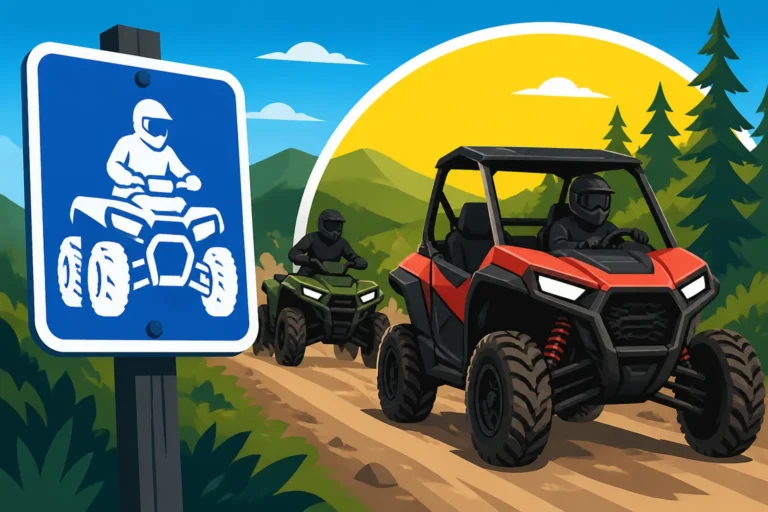
The good news is that Quebec is an incredible destination for ATV and UTV enthusiasts, with thousands of kilometres of legal, safe, and challenging trails to explore. Instead of taking risks in unauthorized sandpits, channel your adventurous spirit towards the vast network of federated trails.
The Fédération Québécoise des Clubs Quads (FQCQ) maintains an extensive network of over 25,000 kilometres of trails across the province. This includes everything from smooth, scenic routes to more technical, challenging sections that will test your machine and skills legally and safely. By purchasing an [Quebec's Annual FQCQ Trail Pass], you gain access to this entire network, which is regularly maintained and patrolled. These trails are designed with safety in mind, clearly marked, and often pass through diverse landscapes, including challenging hilly terrain, muddy sections, and even some sandy areas that are part of the authorized network. The annual pass is your ticket to limitless, legitimate adventure.
Many Quebec clubs also organize poker runs, rallies, and guided tours, which are excellent ways to explore new areas and meet other riders. These events often highlight the most scenic or challenging parts of their local trail systems, ensuring you get a great ride without the legal worries. Joining a local [Quebec Club Membership and the FQCQ] even offers benefits like access to exclusive events and local trail knowledge.
If you're looking for extreme challenges that might mimic some of the demands of a sandpit, consider seeking out outfitters (pourvoiries) or private resorts that cater to off-roaders. Many of these establishments have their own private trail networks, often featuring rugged terrain, technical climbs, and specific areas designed for advanced riding. They might offer guided tours or permit self-guided riding on their property, sometimes even providing rentals. This is an excellent way to experience controlled, challenging environments with the peace of mind that comes from being on authorized and insured land.
Furthermore, for those who love to customize their machines for demanding conditions, investing in high-quality aftermarket parts from companies like SuperATV can significantly enhance your riding experience on legal trails. Heavy-duty A-arms, robust skid plates, and specialized tires can help you tackle the toughest, authorized trails with confidence and safety. These modifications are meant to empower you on legitimate adventures, not to enable illegal activities.
Ultimately, the best way to enjoy your passion for ATV and UTV riding in Quebec is to do it responsibly and legally. Embrace the incredible network of trails and opportunities available through the FQCQ and authorized operators. You'll not only protect yourself from fines and legal troubles but also contribute to the positive image and sustainability of off-road sports in the province.
Here’s a quick overview of the differences between authorized and unauthorized riding areas:
| Feature | Authorized Trail (FQCQ Network) | Unauthorized Sandpit / Private Land |
|---|---|---|
| Legality | Legal with a valid [Quebec's Annual FQCQ Trail Pass] | Illegal (trespassing) without explicit, written permission |
| Ownership | Public land (Crown, municipal) with usage agreements or private land with easements | Private industrial, commercial, or individual property; sometimes municipal or Crown |
| Maintenance | Regularly maintained by volunteer clubs, signed, cleared | Unmaintained, subject to erosion, industrial waste, natural hazards |
| Safety | Designed for safety, emergency access possible, mapped | Uncontrolled, hidden hazards, no emergency access, active work sites possible |
| Liability | Insurance covers incidents within policy terms on authorized trails | Insurance may be void; full personal liability for accidents and damages |
| Fines/Penalties | Fines for violations (e.g., no pass, speeding), but generally for safe conduct | Fines for trespassing, property damage; machine impoundment; potential civil lawsuits |
| Environmental | Managed to minimize impact, designated routes | High risk of erosion, habitat disruption, pollution |
| Community | Supported by clubs, community events, shared passion | Often viewed negatively by landowners and locals; isolated activity |
| Equipment | SuperATV components enhance legal and safe trail riding | Robust SuperATV components still vulnerable to hidden, unregulated hazards |
Disclaimer
This article is for general informational purposes only and does not constitute professional advice. Laws, prices and regulations vary by location and change over time. Consult a qualified professional for guidance on your specific situation.