Quebec Ticket Costs for Trail Violations
It's incredibly frustrating to head out for what should be a relaxing day on the trails, only to have it cut short by a patrol officer and the unwelcome surprise of a ticket. Whether it’s for something you genuinely didn't know was a rule, a simple oversight, or a momentary lapse in judgment, those fines can really put a damper on your passion for riding. This guide aims to pull back the curtain on the kinds of trail violations you might encounter in Quebec, what they generally entail in terms of cost and consequences, and most importantly, how to navigate the rules to keep your rides smooth and ticket-free.
The Reality of Trail Enforcement in Quebec
Heading out onto Quebec's vast network of ATV trails is an amazing experience, but it’s not a free-for-all. There are rules, and there are people whose job it is to ensure those rules are followed. It’s easy to feel like you’re being targeted sometimes, especially if you’re just trying to enjoy the ride, but understanding the system is the first step in avoiding any unpleasant encounters.
Who's Checking Your Papers and Machine?
When you’re out on the trails, you might encounter a few different types of individuals enforcing the rules. The most obvious are police officers from the Sûreté du Québec or even municipal police forces. They have full authority to stop you, check your documentation, and issue tickets for any infractions. Their presence is usually more common in areas with known issues or during peak riding seasons, so don't be surprised to see them in busy trail sections or near popular access points.
Beyond official police forces, you'll also find trail patrols from the various quad clubs that make up the Fédération Québécoise des Clubs Quads (FQCQ). These dedicated volunteers, often seasoned riders themselves, play a crucial role in maintaining the integrity of the trail network. While they don't have the same arresting power as police officers, they absolutely can stop you, ask to see your trail pass and registration, and report serious infractions to the police. They're often the first line of defense against rule-breaking and are incredibly knowledgeable about local conditions and regulations. [What a Club Trail Patroller Can Make You Do] is often more than riders expect.
Finally, in some regions, wildlife conservation officers or even park rangers might be patrolling areas that intersect with ATV trails. They primarily focus on environmental protection, hunting, and fishing regulations, but they are also authorized to enforce the [Quebec's Off-Highway Vehicle Act and Your Papers]. It’s important to treat all these officials with respect and cooperate with their requests, as it can often make the difference between a warning and a hefty fine. They're not just looking to spoil your fun; they're ensuring everyone's safety and the sustainability of the trails.
Common Reasons Riders Get Stopped
So, why might you get flagged down on the trail? It’s rarely arbitrary. Patrols are usually looking for specific indicators of non-compliance. One of the most frequent reasons is a visible lack of proper identification, like not having your [Quebec Plate Placement on a Quad] correctly displayed or a current trail pass sticker. It’s like driving a car without a license plate – it immediately draws attention.
Another major red flag for patrols is obvious unsafe riding behavior. This could be anything from excessive speed, especially in marked slow zones or near residential areas, to reckless maneuvers that endanger other riders or pedestrians. Patrols are keen to crack down on these actions to maintain safety for all trail users and to preserve the reputation of responsible quad enthusiasts. They also look for machines that appear heavily modified, especially if those modifications might compromise safety or compliance. For example, if your exhaust system is excessively loud or your tires are far beyond the legal width, it could be a reason for them to pull you over.
Finally, patrols often conduct random spot checks, especially at popular trailheads or intersections. These checks are designed to ensure riders have all their necessary documentation – including proof of [Quebec Insurance Minimum for an Owner], registration, and a valid driver's licence – and that their machine meets basic equipment requirements. These checks might seem inconvenient, but they're a vital part of maintaining order and safety on the trails, ensuring that everyone is doing their part to ride responsibly.
Understanding the Fines for Key Violations
Quebec has a pretty clear framework for off-highway vehicle regulations, and with that comes a schedule of fines for infractions. While I can't give you exact dollar amounts, as these change over time and can vary based on specific circumstances and repeat offenses, I can certainly explain the types of costs you might incur. Always remember to check the SAAQ or FQCQ websites for the latest figures.
No Registration or Insurance: The Big Hitters
Riding without proper registration is one of the most serious infractions you can commit on a Quebec trail. It’s not just a minor oversight; it means your machine isn't legally recognized or permitted on federated trails or public lands. The Société de l'assurance automobile du Québec (SAAQ) is both the registrar and insurer for off-highway vehicles in Quebec, and they take this very seriously. A ticket for no registration will carry a significant fine, often in the hundreds of dollars, and could even lead to your machine being impounded. This is why understanding [Quebec ATV Registration With the SAAQ] is so vital from the moment you acquire a machine.
Equally grave is riding without valid liability insurance. In Quebec, your ATV's registration automatically includes basic liability insurance coverage provided by the SAAQ, but some riders might also have additional private insurance. The legal minimum liability coverage is crucial because it protects you and others in case of an accident. Being caught without this could lead to fines that are substantial, again, often in the hundreds, and similar impoundment risks. The SAAQ implemented a [Quebec Liability Minimum Rose to $1 Million] not long ago, emphasizing the seriousness of ensuring coverage. These aren't just administrative fees; they're penalties designed to deter unsafe and uninsured operation on shared trails.
The costs associated with these violations aren't limited to the initial fine. If your machine is impounded, you'll face towing fees, storage fees, and administrative charges to get it released. These additional costs can quickly add up, often exceeding the original fine itself. Plus, you’ll still need to rectify the original issue—getting proper registration and ensuring you have insurance—before you can get your machine back on the trail, which means more time, effort, and money. It’s far, far cheaper and less stressful to ensure all your [Quebec Registration Paperwork Checklist] items are in order before you even hit the dirt.
Age, Licence, and Passenger Violations
Quebec has very specific rules regarding who can ride an ATV or UTV and under what conditions. These rules are designed for safety, especially concerning younger riders and passengers. For instance, the [Quebec ATV Age Requirements] state that a rider must be at least 16 years old to operate an ATV on federated trails, and 18 for a side-by-side. If a 16 or 17-year-old is riding, they also need to have successfully completed specific FQCQ training and carry a certificate. Being caught riding underage, or without the required training certificate, can lead to significant fines for the rider, and often for the parents or guardians as well, who are held responsible.
Then there's the driver's licence requirement. Since 2021, [Do You Need a Licence for an ATV in Quebec?] is a resounding yes. You must hold a valid driver's licence of at least class 5 (car licence) or class 6A (motorcycle licence) to operate an ATV on trails. Getting caught without a valid licence is treated similarly to driving a car without one, incurring substantial fines and potentially demerit points on your driving record. It’s not a separate "off-road licence," but your regular road licence applies.
Passenger rules are also strictly enforced. ATVs are generally designed for one or two riders, depending on factory specifications. Carrying a passenger on a single-rider ATV, or exceeding the factory-designated capacity, is a definite no-go. [Quebec Passenger Rules on an ATV] are very clear: you must have a factory-installed and approved passenger seat with footrests. Fines for carrying unauthorized passengers can also be considerable, as this is seen as a significant safety risk. Always check your machine's specifications and err on the side of caution to avoid these penalties.
Equipment and Modification-Related Fines
Your ATV or UTV isn't just a fun machine; it's also a vehicle that needs to meet certain safety and environmental standards. One of the most common equipment-related violations involves mufflers and noise levels. Quebec has specific [Quebec Muffler and Noise Rules] to prevent excessive noise pollution, especially near residential areas or sensitive natural habitats. If your machine is noticeably louder than stock, you could be facing a ticket. Aftermarket exhaust systems, while popular for performance, often need to be certified as compliant or risk fines.
Other critical equipment includes mirrors, lights, and proper tires. [Quebec Mirror Requirements on a Quad] specify that you need at least one rearview mirror, typically on the left side, for adequate visibility. Similarly, [Quebec Lighting Requirements at Night] dictate that your ATV must have functioning headlights and taillights for visibility during low-light conditions or at night. Operating without these essential safety components, or with non-functional ones, will absolutely draw a patrol's attention and lead to fines.
When it comes to modifications, while customization can be a lot of fun, it's crucial that any changes you make still keep your machine compliant with provincial regulations. Brands like SuperATV offer a wide range of aftermarket parts, from lift kits to performance upgrades. While these can enhance your riding experience, always ensure that any modifications, such as those impacting vehicle width, height, or tire size, remain within the legal limits stipulated by Quebec's off-highway vehicle laws. Overly aggressive tires or extreme lift kits that make your machine unstable or exceed width limits could lead to tickets, as they might be deemed unsafe or non-compliant for public trails. Always check the specific regulations before making significant changes.
Speed, Hours, and Trespassing on the Trail
Speed limits on Quebec trails are not suggestions; they are strictly enforced for everyone's safety. The general speed limit for ATVs on federated trails is [Quebec's 50 km/h Speed Limit for ATVs]. This might feel slow to some, especially on wide-open sections, but it's a critical rule, particularly when you consider blind corners, shared trails with other users, or varying terrain. Exceeding this limit can result in fines that escalate quickly with how much you're over the limit, potentially leading to significant financial penalties and even loss of demerit points.
Riding hours are another common area for violations. [Quebec Riding Hours From 6 a.m. to Midnight] are generally in effect, meaning you should not be on the trails outside of these times. This rule is often in place to minimize noise disturbances for residents living near trails and for wildlife conservation. Getting caught riding early in the morning or late at night will likely result in a ticket, and patrols are particularly vigilant about this in areas close to towns and villages. Some [Quebec Municipalities That Change Riding Hours] might have their own specific by-laws, so it's always good to check local regulations for areas you plan to ride.
Finally, trespassing is a serious matter. [Quebec Trespass Rules for Riders] are very clear: you must only ride on authorized trails. This means respecting private land boundaries, staying within marked corridors, and not cutting across fields or entering areas clearly marked as prohibited. Landowners have the right to withdraw their permission for trails crossing their property if riders continually disregard these rules, which can lead to permanent trail closures. Fines for trespassing can be substantial, and you might also face civil action from the landowner. It's not worth the risk, both for your wallet and for the future of the trail system.
Here’s a quick overview of some common violation categories and their general impact:
| Violation Category | General Severity of Fine | Potential Additional Consequences |
|---|---|---|
| No SAAQ Registration | High | Machine impoundment, towing/storage fees |
| No SAAQ Liability Insurance | High | Machine impoundment, towing/storage fees |
| Underage Rider (16-17 without cert.) | Medium-High | Fines for rider and/or guardian |
| Underage Driver (Under 16) | High | Fines for rider and/or guardian, machine impoundment |
| No Valid Driver's Licence | High | Demerit points, machine impoundment |
| Carrying Unauthorized Passenger | Medium | Safety risk, potential for injury |
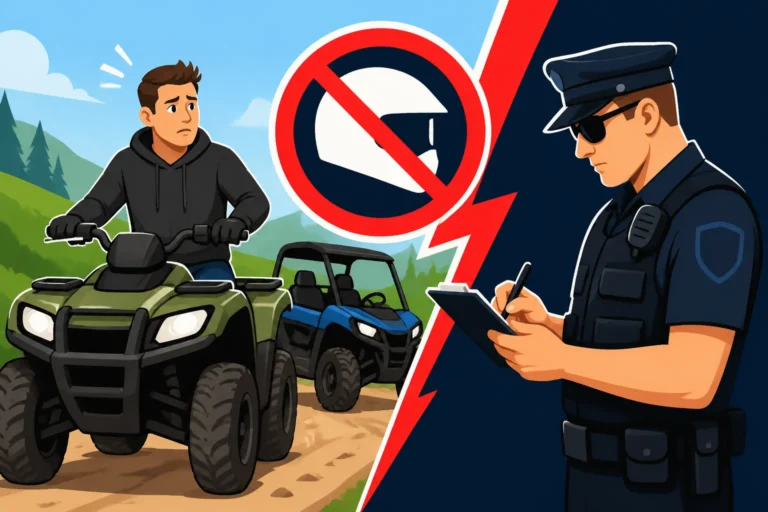
| Missing/Defective Helmet/Visor | Medium | Increased injury risk, immediate remedy required |
| Excessive Noise (Muffler) | Medium | Required repair/replacement, potential for repeat fines |
| Missing/Defective Lights/Mirrors | Low-Medium | Required repair/replacement |
| Exceeding Speed Limit | Medium-High | Escalating fines, demerit points, potential licence suspension |
| Riding Outside Permitted Hours | Medium | Noise complaints, reduced trail access |
| Trespassing / Riding Off-Trail | High | Landowner complaints, trail closures, potential civil action |
| No Valid FQCQ Trail Pass | Medium-High | Required purchase of pass, potential for denial of trail access |
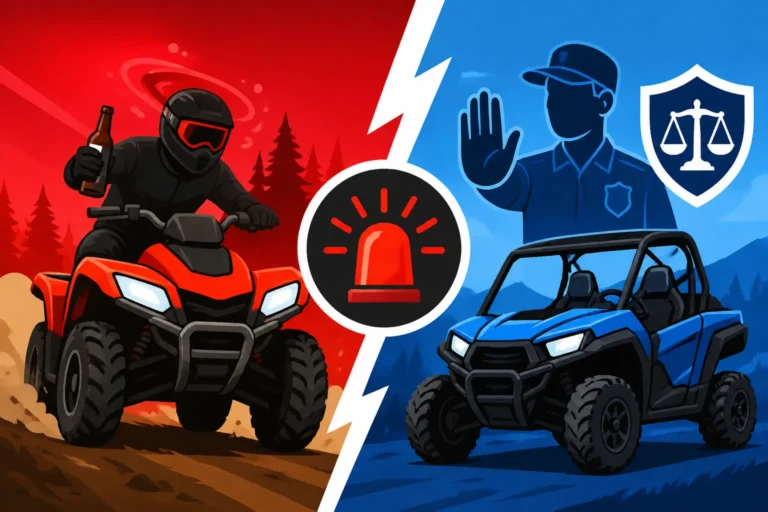
| Impaired Riding (Alcohol/Drugs) | Extremely High | Criminal charges, licence suspension, vehicle impoundment, jail |
What Happens After You Get a Ticket?
Getting a ticket can be a jarring experience. Your first instinct might be frustration, anger, or even confusion. But understanding the process that follows can help you navigate it more effectively and minimize further stress or penalties.
The Immediate Aftermath and Your Options
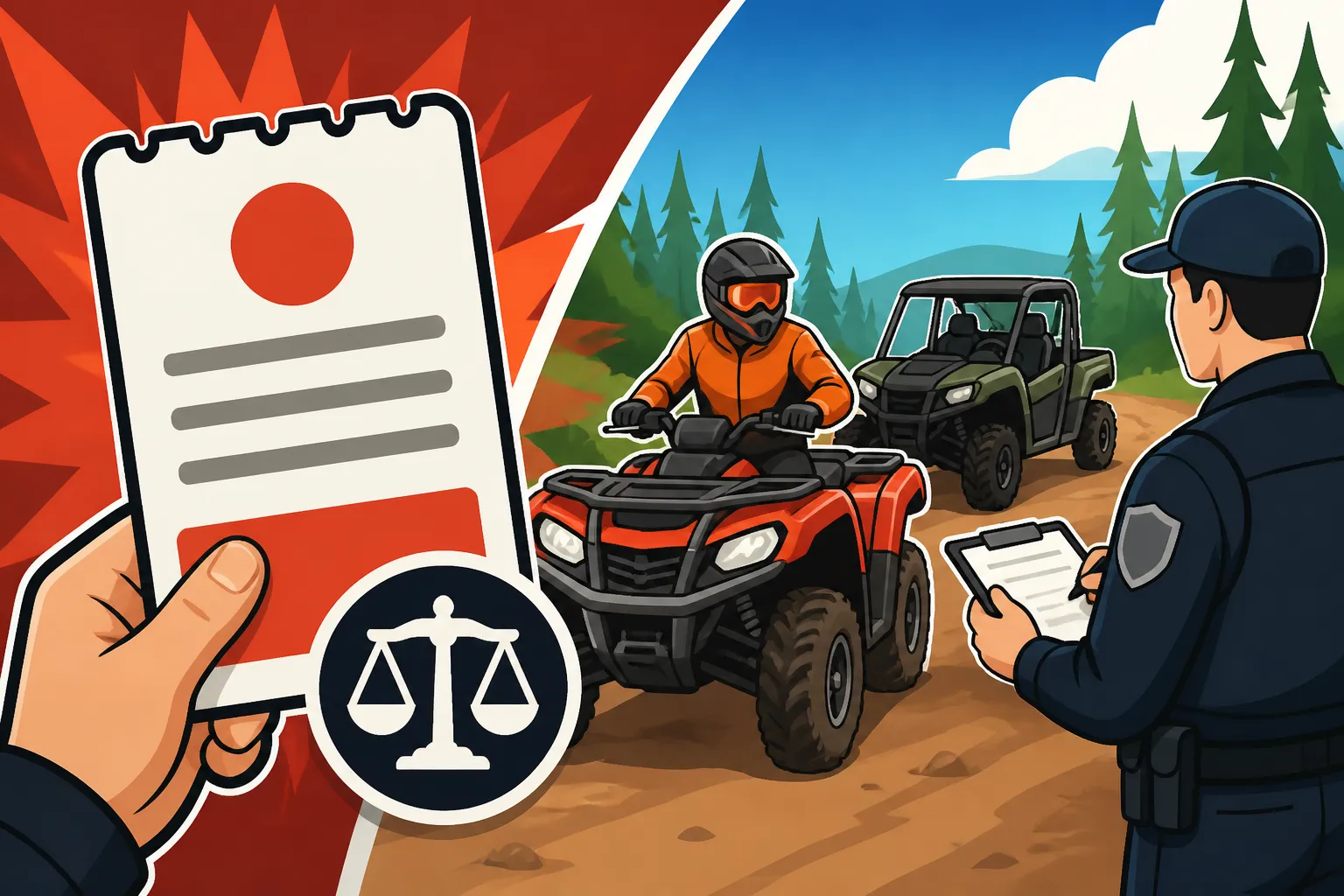
Once a patrol officer or police officer hands you a ticket, it contains vital information: the nature of the alleged infraction, the date and time, the location, and the amount of the fine. It will also outline your options for responding. Generally, you have a set period—usually 30 days—to either pay the fine or contest it. Ignoring a ticket is never a good idea; it will only lead to escalating penalties, including late fees, collection agency involvement, and potentially even suspension of your driver's licence.
If you believe the ticket was issued unfairly or mistakenly, you have the right to contest it. This usually involves notifying the court within the specified timeframe, often by mail or online, that you intend to plead not guilty. You’ll then be scheduled for a court date. It's crucial to gather any evidence you might have to support your case, such as photos, witness statements, or documentation proving compliance. For example, if you were ticketed for no registration but had just renewed it, bring your proof of payment and the temporary document. Consulting with a legal professional who specializes in traffic or off-highway vehicle infractions can be a wise move, especially if the fine is substantial or if demerit points are involved.
If you choose to pay the fine, which many riders do if they know they were in the wrong, simply follow the instructions on the ticket. This typically involves online payment, banking, or mail. Paying the fine means you are admitting guilt to the infraction. While it closes the chapter on that specific incident, be aware that some infractions, like those involving speed or operating without a valid licence, may also carry demerit points that will be added to your driving record. Always review the implications before making your decision.
Understanding the Court Process and Penalties
Should you decide to contest your ticket, you'll eventually receive a summons to appear in court. This isn't usually a full-blown trial, especially for minor infractions, but it is a formal legal proceeding. You'll present your case to a judge, and the officer who issued the ticket will also present their account of the events. It's your opportunity to explain why you believe you are not guilty and provide any supporting evidence. The judge will listen to both sides and then make a ruling.
If the judge finds you guilty, you will be ordered to pay the original fine, potentially with added court costs and administrative fees. In some cases, depending on the severity of the infraction, the judge might also impose a higher fine than the initial ticket or other penalties, such as a suspension of your right to operate an off-highway vehicle. For very serious offenses, such as [Quebec Impaired Riding Penalties], the consequences can be much more severe, including criminal charges, significant licence suspensions, and even jail time.
The biggest takeaway here is that an ATV or UTV ticket isn't just a slap on the wrist. It’s a formal legal document with real consequences. Ignoring it will only compound your problems. Whether you pay or contest, address it promptly and thoughtfully. Understanding the potential outcomes helps you make the best decision for your situation and avoid further headaches down the road.
Avoiding Tickets: Staying Compliant on Quebec Trails
Nobody wants a ticket. They’re expensive, time-consuming, and can really sour your riding experience. The good news is that most tickets are entirely preventable with a bit of preparation and a commitment to responsible riding.
Pre-Ride Checklist for Peace of Mind
Before you even load up your machine or head to the trailhead, having a thorough pre-ride checklist can save you a lot of hassle. Start with your documentation: do you have your valid driver's licence, your ATV's SAAQ registration certificate, and your current FQCQ trail pass? Remember, for [Quebec SAAQ Is Registrar and Insurer], so both aspects are covered by one document. Make sure these are easily accessible and, ideally, protected from the elements while you’re riding. A small waterproof pouch in your glove box or cargo area is a great idea. [Carrying an Insurance Certificate on Every Ride] is a legal requirement.
Next, check your machine’s equipment. Are your headlights and taillights working? Is your muffler intact and not excessively loud? Do you have at least one rearview mirror, typically on the left side, securely fastened and providing a clear view? For side-by-sides, are your seatbelts functional and being used? It's also wise to check your tire pressure and general machine condition, not just for compliance but for safety. If you’ve made any modifications with aftermarket parts from a brand like SuperATV, double-check that they meet Quebec's specific dimensional and operational requirements to avoid any questions from patrols.
Finally, confirm the legal status of your riding area. If you're on a federated trail, ensure it’s open – [Quebec's Spring Thaw Closure] periods are strictly enforced, and riding during this time will absolutely get you a fine. Check the FQCQ website or the iQuad app for current trail conditions and closures. If you're planning to ride on municipal roads for short distances to access trails or services, confirm that the municipality has passed a by-law permitting it and that you understand the specific rules for that stretch, such as distance limits or speed. A little preparation goes a long way to ensuring a fun and ticket-free ride.
Riding Etiquette and Respecting the Rules
Beyond the letter of the law, good riding etiquette plays a huge role in minimizing negative interactions and avoiding tickets. This starts with speed. While 50 km/h is the general limit, often conditions warrant riding slower. Be mindful of dust clouds, especially when riding in a group or near homes, and slow down to pass other trail users safely. [Passing Safely on a Blind Corner] means anticipating potential hazards, not just reacting to them.
Respecting private property and avoiding trespassing is paramount. Many trails in Quebec cross private land, and landowners graciously grant access. Abusing this privilege by riding off-trail, making excessive noise near dwellings, or littering can lead to landowners withdrawing their permission, resulting in permanent trail closures for everyone. [Leaving Gates as You Found Them] is a small but critical act of respect.
Lastly, be courteous and cooperative with any trail patrols or law enforcement you encounter. They’re there to ensure safety and preserve the trail system. Being polite, having your documents ready, and answering questions honestly will almost always lead to a smoother interaction, even if you’ve made a minor mistake. They often prefer to educate and warn rather than fine, especially for first-time offenders who are genuinely trying to comply. A respectful attitude can make all the difference, helping to preserve the positive image of the quad community in Quebec.
Disclaimer
This article is for general informational purposes only and does not constitute professional advice. Laws, prices and regulations vary by location and change over time. Consult a qualified professional for guidance on your specific situation.